





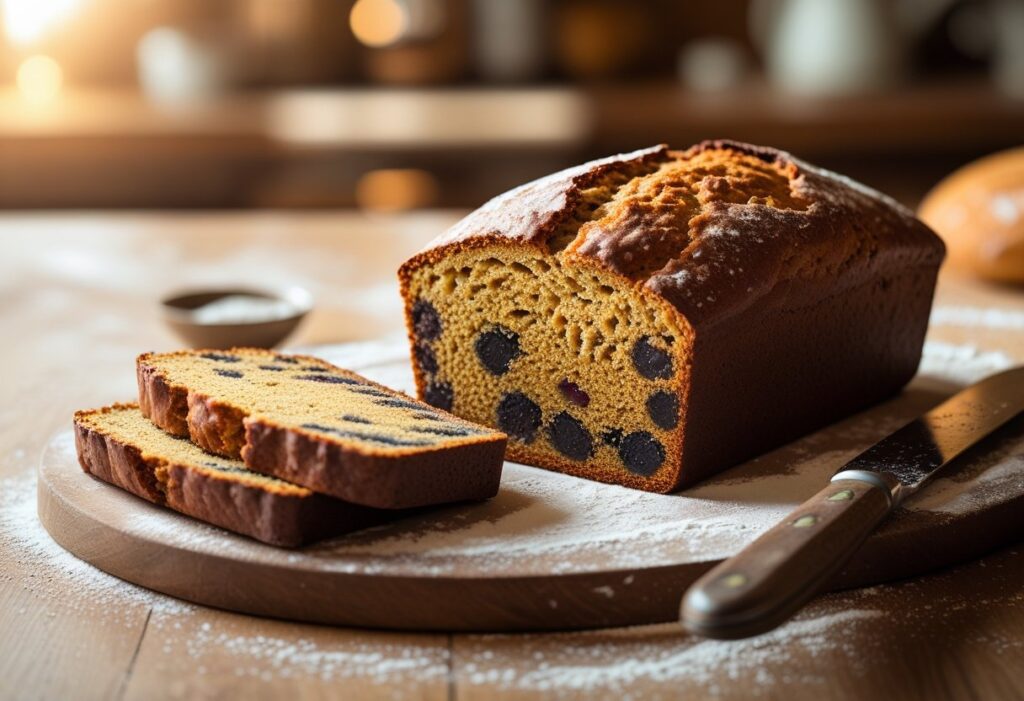
Fruit Loaf My Scottish Gran’s Recipe is a timeless example of traditional Scottish baking that focuses on simple ingredients, careful technique, and comforting flavor. This classic fruit loaf has been passed down through generations and remains popular because it delivers a soft, moist texture without being overly sweet. Unlike modern fruit cakes, this traditional Scottish fruit loaf is designed for everyday enjoyment, making it perfect for breakfast, afternoon tea, or a cozy homemade treat.
The recipe begins by soaking mixed dried fruits such as currants, sultanas, and raisins in strong black tea. This essential step rehydrates the fruit, enhances flavor, and ensures the loaf stays moist after baking. Once soaked, the fruit is combined with self-raising flour, brown sugar, mixed spice, a pinch of salt, egg, and melted butter or margarine. The batter is gently mixed to avoid overworking the flour, which helps maintain a soft crumb and classic tea bread texture.
The mixture is transferred to a prepared loaf tin and baked slowly at a moderate temperature. Slow baking allows the loaf to cook evenly, developing rich aroma and balanced sweetness. After baking, the loaf is cooled and rested, a traditional step that improves both flavor and texture by allowing moisture to distribute evenly.
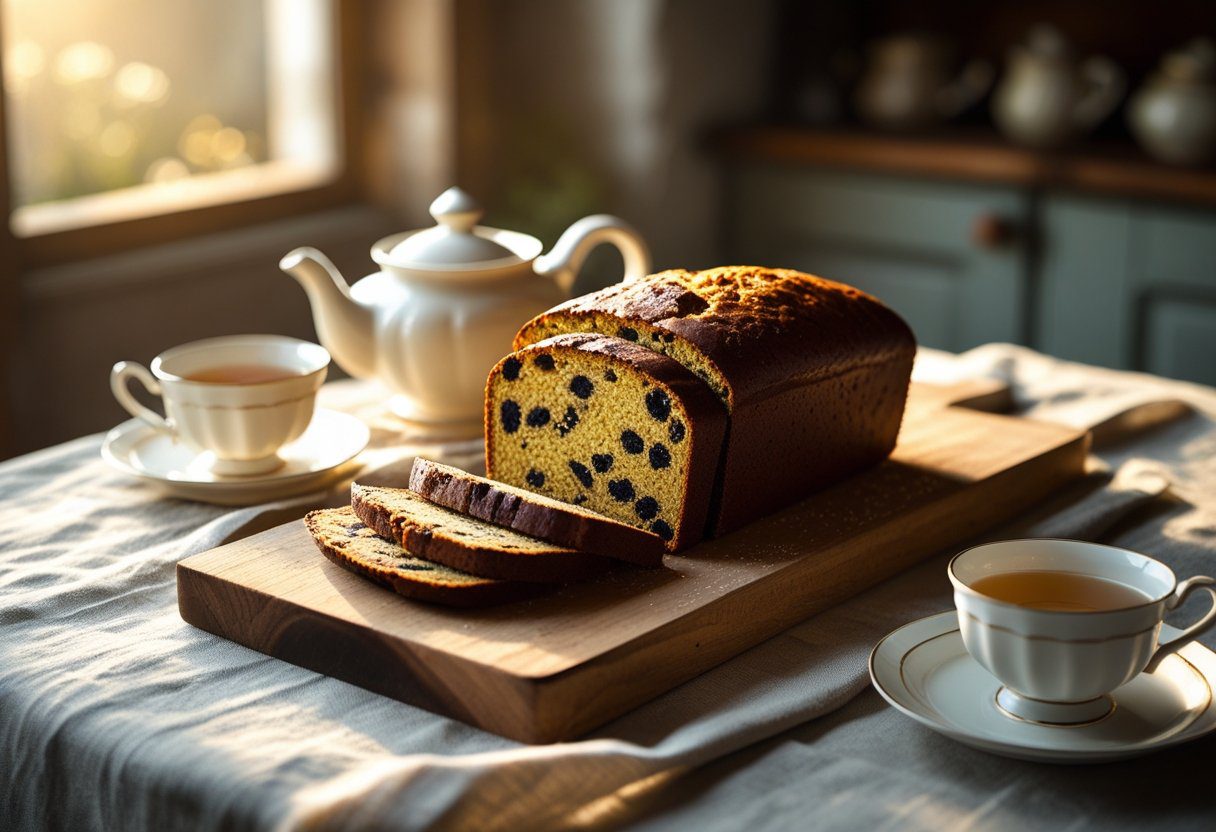
This authentic home-baked fruit loaf is best served sliced thick with butter and paired with tea. It stores well, improves the next day, and reflects true heritage baking. Complete recipe in given below
The Role of Fruit Loaf in Scottish Home Baking
In traditional Scottish households, fruit loaf was not reserved for celebrations. It was everyday baking. It appeared at breakfast tables, during afternoon tea, and whenever visitors arrived unannounced. Unlike rich fruit cakes made for holidays, fruit loaf was lighter, softer, and designed to be eaten often.
This type of loaf is often described as a tea bread fruit loaf because tea plays a central role in both flavor and preparation. It reflects a time when ingredients were modest, waste was avoided, and baking was practical rather than decorative. That practicality is what gives the loaf its lasting appeal.
What Makes This Recipe Authentically Scottish
Authenticity does not come from strict measurements or expensive ingredients. It comes from technique. This recipe stays true to traditional Scottish baking by respecting a few core principles.
The dried fruit is soaked in strong tea rather than alcohol. The loaf is gently sweetened, allowing the fruit to provide most of the flavor. Spices are used sparingly, and the loaf is baked slowly to maintain moisture. Finally, it is rested after baking so the texture improves with time.
These steps are often skipped in modern adaptations, but they are essential if you want an authentic home bake rather than a generic fruit loaf.
Understanding the Ingredients and Their Purpose
Every ingredient in this recipe plays a specific role, and understanding that role helps you bake with confidence.
Mixed Dried Fruits
A blend of currants, sultanas, and raisins gives the loaf depth and balance. Currants add slight sharpness, sultanas bring softness, and raisins contribute sweetness. This combination creates a well-rounded flavor and texture.
Strong Black Tea
Tea is the foundation of the loaf’s moisture. When dried fruit is soaked in hot tea, it becomes plump and tender. During baking, the fruit releases moisture back into the loaf, preventing dryness and improving shelf life. Tea also adds subtle bitterness, which balances the sweetness of the fruit.
Self-Raising Flour
Traditional Scottish fruit loaf often relies on self-raising flour rather than yeast. This keeps the crumb soft and tender while making the recipe accessible to home bakers of all skill levels.
Brown Sugar
Brown sugar supports the natural sweetness of the fruit while adding moisture and a gentle caramel note. White sugar lacks the depth needed for this style of loaf.
Butter or Margarine
My gran often used margarine, which produced a softer crumb and was widely available at the time. Butter adds richness, but both options work well in an authentic context.
Mixed Spice
Spice should never dominate this loaf. A light hand with cinnamon, nutmeg, or mixed spice provides warmth without overpowering the fruit.
Fruit Loaf My Scottish Gran’s Recipe – Authentic Home Bake
Ingredients
Mixed dried fruits
Strong black tea
Self-raising flour
Brown sugar
Mixed spice
Egg
Butter or margarine
Pinch of salt
This recipe allows flexibility, which is true to its heritage. Traditional bakers adjusted quantities based on experience rather than strict measurements.
Step-by-Step Method Of Moist Fruit Loaves Recipes
Step 1: Soaking the Dried Fruit
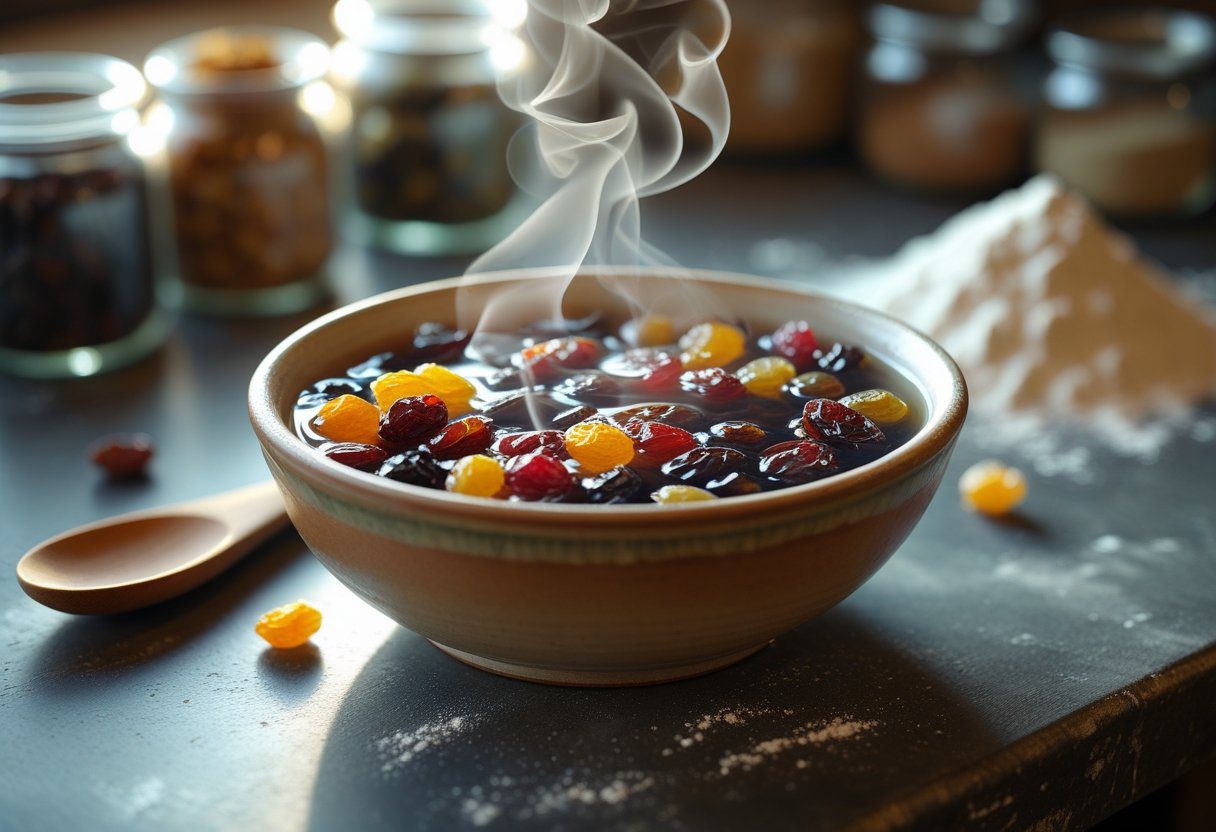
The most important stage happens before any mixing begins. The dried fruit is placed into a large bowl and completely covered with freshly brewed strong black tea. The heat of the tea immediately starts softening the fruit, while time completes the process.
Ideally, the fruit should soak for several hours, but overnight soaking produces the best results. During this time, the fruit absorbs liquid, swells, and becomes tender. This ensures that during baking, the fruit releases moisture instead of absorbing it from the batter. Skipping this step almost always leads to a dry loaf, which is why experienced bakers never rush it.
Step 2: Preparing the Dry Ingredients
Once the fruit is fully soaked, the dry ingredients are prepared. Self-raising flour, brown sugar, mixed spice, and a pinch of salt are combined in a large mixing bowl. Thorough mixing at this stage ensures that sweetness and spice are evenly distributed throughout the loaf.
This step is essential for achieving a consistent crumb. Uneven mixing can result in dense patches or concentrated spice, which disrupts the traditional balance of flavor.
Step 3: Combining the Batter
The soaked fruit is added to the dry ingredients along with all the remaining tea. This liquid carries flavor and moisture into the batter. A beaten egg is added next, followed by melted butter or margarine.
The mixture should be stirred gently until just combined. Overmixing develops excess gluten, which can make the loaf tough rather than tender. The batter should feel thick, heavy with fruit, and richly aromatic.
Step 4: Preparing the Tin and Filling
A loaf tin is greased and lined carefully. The batter is spooned into the tin and gently leveled without pressing it down. Pressing or compacting the batter can restrict rising and affect texture.
The appearance at this stage should be rustic rather than polished. This loaf is about substance, not presentation.
Step 5: Baking Slowly and Evenly
The loaf is baked at a moderate temperature rather than a high one. Slow baking allows the interior to cook thoroughly while preventing the outside from hardening too quickly.
As it bakes, the kitchen fills with the scent of tea, dried fruit, and spice. Toward the end of baking, a skewer inserted into the center should come out clean. If the top browns too quickly, it can be loosely covered to prevent over-coloring.
Step 6: Cooling and Resting
Once baked, the loaf is allowed to cool briefly in the tin before being transferred to a wire rack. At this point, patience is important. Cutting the loaf too soon can result in a gummy texture.
Wrapped and left overnight, the loaf improves significantly. The moisture redistributes, the crumb settles, and the flavor deepens. This resting period is a hallmark of traditional fruit loaf baking.
Texture, Flavor, and Eating Experience
A properly baked Scottish fruit loaf should be moist but not wet, soft yet firm enough to slice cleanly. The sweetness should come primarily from the fruit, supported by subtle spice and tea notes.
It should feel comforting rather than heavy, making it suitable for everyday enjoyment.
Serving Suggestions from Experience
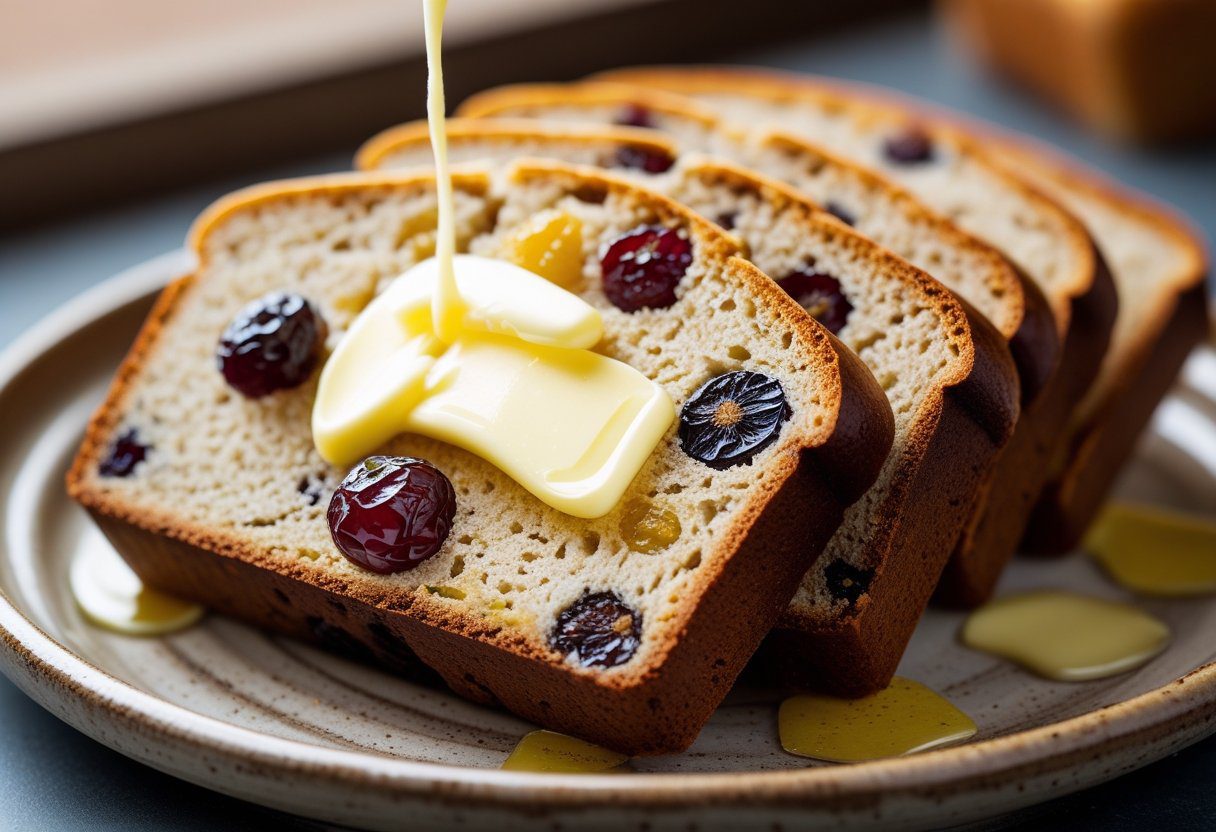
The best way to serve this loaf is simply. Thick slices spread with salted butter highlight the fruit’s natural sweetness. Light toasting brings out aroma and revives slices after a few days.
Strong tea is the traditional accompaniment, and for good reason. The loaf was designed with tea in mind.
Storage and Shelf Life
Wrapped tightly, the loaf keeps well at room temperature for several days. The soaked fruit helps prevent staleness. It also freezes extremely well, making it ideal for baking ahead.
Why This Recipe Still Belongs in Modern Kitchens
Despite changing food trends, this recipe endures because it is reliable. It uses simple ingredients, proven technique, and rewards patience rather than speed.
Fruit Loaf My Scottish Gran’s Recipe – Authentic Home Bake is not about perfection. It is about warmth, tradition, and food that feels honest.
Related About moist fruit loaf recipe
Traditional Scottish Tea Soaked Fruit Bread
Traditional Scottish tea soaked fruit bread is rooted in everyday home baking rather than festive occasions. What defines this bread is the use of strong brewed tea to rehydrate dried fruit before mixing it into the batter.
This technique, common in old Scottish kitchens, ensures a soft crumb and deep flavor without relying on alcohol or excess sugar. Tea-soaked fruit releases moisture gradually during baking, preventing dryness and improving shelf life. This method reflects traditional Scottish baking values where patience and simplicity mattered more than decoration.
Moist Scottish Heritage Fruit Loaf Baking
Moisture is the defining quality of a properly baked Scottish heritage fruit loaf. Achieving this texture depends more on preparation technique than on excess fat or sweeteners. Soaking dried fruit in tea and baking the loaf slowly allows natural moisture to remain locked into the crumb.
Unlike modern commercial loaves that rely on syrups, this traditional approach produces a soft fruit loaf that stays tender for several days, making it ideal for everyday slicing and serving.
Overnight Tea Infused Dried Fruit Loaf
An overnight tea infused dried fruit loaf benefits greatly from extended soaking time. Leaving dried fruits in hot tea for several hours or overnight allows them to absorb liquid fully, plump up, and develop deeper flavor. This prevents the fruit from drawing moisture from the batter during baking, which is a common reason fruit loaves turn dry. The slow infusion also enhances aroma, giving the finished loaf a rich, comforting character.
Scottish Gran Fruit Cake No Yeast
A Scottish gran fruit cake made without yeast sits perfectly between bread and cake. Instead of yeast fermentation, this recipe uses self-raising flour to provide lift, resulting in a soft, sliceable texture. This no-yeast method was popular in traditional homes because it was reliable and required minimal effort. The loaf bakes evenly and develops a tender crumb that improves with resting, making it a dependable choice for home baking.
Easy Beginner Scottish Tea Bread Recipe
An easy beginner Scottish tea bread recipe is designed to be forgiving and accessible, even for those new to baking. There is no kneading, proofing, or complex timing involved. The batter comes together quickly and tolerates small measurement variations without failure. This simplicity is why tea bread was often one of the first recipes passed down in Scottish households, valued for its consistent results and comforting flavor.
Vegan Scottish Fruit Loaf Flax Egg
A vegan Scottish fruit loaf made with a flax egg stays true to traditional texture while meeting modern dietary needs. Ground flaxseed mixed with water replaces the binding role of eggs without drying out the loaf. Combined with tea-soaked fruit and plant-based fat, the loaf remains moist and flavorful. This adaptation respects the original method while making the recipe accessible to vegan bakers.
Gluten Free Scottish Tea Time Loaf
A gluten free Scottish tea time loaf can be successfully baked by using a balanced gluten-free flour blend. The moisture provided by tea-soaked dried fruit helps counter the dryness often associated with gluten-free baking. Baking at a moderate temperature and allowing the loaf to rest after baking are essential steps for maintaining structure and texture, ensuring a satisfying result suitable for tea time.
Low Sugar Scottish Dried Fruit Bread
Low sugar Scottish dried fruit bread relies on the natural sweetness of dried fruits rather than heavy added sugar. Historically, Scottish baking used sugar sparingly, making this loaf naturally balanced in flavor. Tea soaking enhances the fruit’s sweetness perception, allowing the loaf to taste rich without being overly sweet. This makes it suitable for those seeking a more traditional and lighter baked option.
Best Currants Sultanas Raisins Scottish Loaf
The best Scottish fruit loaf uses a thoughtful combination of currants, sultanas, and raisins. Each dried fruit contributes a unique texture and flavor, creating balance in every slice. Currants add depth, sultanas provide softness, and raisins bring gentle sweetness. Together, they create a loaf that is rich yet restrained, reflecting the careful ingredient choices typical of traditional Scottish baking.
Frequently Asked Questions – Fruit Loaf My Scottish Gran’s Recipe
1. What makes Fruit Loaf My Scottish Gran’s Recipe truly authentic?
What makes this recipe genuinely authentic is not just the ingredients, but the method and mindset behind it. Traditional Scottish fruit loaf relies on tea-soaked dried fruit, gentle sweetness, and slow baking rather than shortcuts or modern enhancements. Unlike commercial versions, this loaf is not overloaded with sugar or spice. It reflects everyday Scottish home baking, where flavor developed naturally through time and technique. The resting period after baking is also crucial, as it allows the loaf to mature and improve, which is a hallmark of heritage Scottish recipes.
2. Why is soaking dried fruit in tea so important for fruit loaf?
Soaking dried fruit in strong black tea is one of the most critical steps in making an authentic Scottish fruit loaf. This process rehydrates the fruit, allowing it to become soft and plump before baking. When properly soaked, the fruit releases moisture into the loaf during baking instead of absorbing it from the batter. This is what creates a moist fruit bread texture that stays fresh for days. Tea also adds subtle depth and balances sweetness without the need for extra sugar or alcohol.
3. Can beginners successfully bake this Scottish fruit loaf?
Yes, this recipe is especially suitable for beginners because it does not rely on yeast, complex kneading, or precise timing. Using self-raising flour simplifies the process, and the batter-based method is very forgiving. Even if measurements are slightly adjusted, the loaf still turns out well because the soaked fruit provides moisture and structure. This is one reason why fruit loaf has been a staple in Scottish households for generations—it was designed to be reliable and practical.
4. How is Scottish fruit loaf different from traditional fruit cake?
Scottish fruit loaf is much lighter and less sweet than traditional fruit cake. Fruit cake is typically dense, rich, and made for special occasions, often using alcohol-soaked fruit and heavy spices. In contrast, fruit loaf is an everyday bake with a soft, bread-like crumb. The sweetness comes mainly from dried fruit rather than added sugar, and the loaf is meant to be sliced thickly and eaten with butter, not decorated or iced.
5. Why does fruit loaf taste better the next day?
Fruit loaf improves with time because moisture and flavors redistribute as the loaf rests. When freshly baked, the crumb is still settling, and the fruit has not fully integrated with the surrounding dough. After resting overnight, the loaf becomes softer, more cohesive, and more flavorful. This is why traditional bakers often recommend wrapping the loaf and waiting before slicing. It is a key characteristic of authentic home-baked fruit loaf.
6. Can I reduce the sugar in this recipe without affecting the result?
Yes, sugar can be reduced safely because the dried fruit provides most of the sweetness. Many traditional Scottish recipes used minimal added sugar, relying instead on raisins, currants, and sultanas for flavor. Reducing sugar will not significantly affect texture as long as the fruit is well soaked. This makes fruit loaf a naturally balanced option compared to modern sweet bakes.
7. What is the best way to store Scottish fruit loaf?
The best way to store fruit loaf is at room temperature, wrapped tightly in parchment paper or foil. Refrigeration is not recommended, as it can dry out the loaf. Thanks to the tea-soaked fruit, the loaf stays moist for several days. It also freezes exceptionally well, either whole or sliced, making it ideal for baking ahead and enjoying later without loss of quality.
8. Can this recipe be adapted for dietary needs?
Yes, this recipe adapts well to different dietary preferences. It can be made vegan by replacing the egg with a flax egg and using plant-based margarine. Wholemeal flour can be substituted for part of the white flour to add fiber, though the loaf may become slightly denser. These adaptations still respect the traditional structure and flavor of Scottish fruit loaf when done carefully.
9. What is the best way to serve Fruit Loaf My Scottish Gran’s Recipe?
The most traditional way to serve this fruit loaf is sliced thickly and spread with salted butter. Light toasting enhances aroma and texture, especially after the second or third day. It pairs perfectly with strong black tea, which complements the loaf’s mild sweetness and spice. This simple serving method reflects how the loaf was intended to be enjoyed—comforting, unpretentious, and satisfying.