





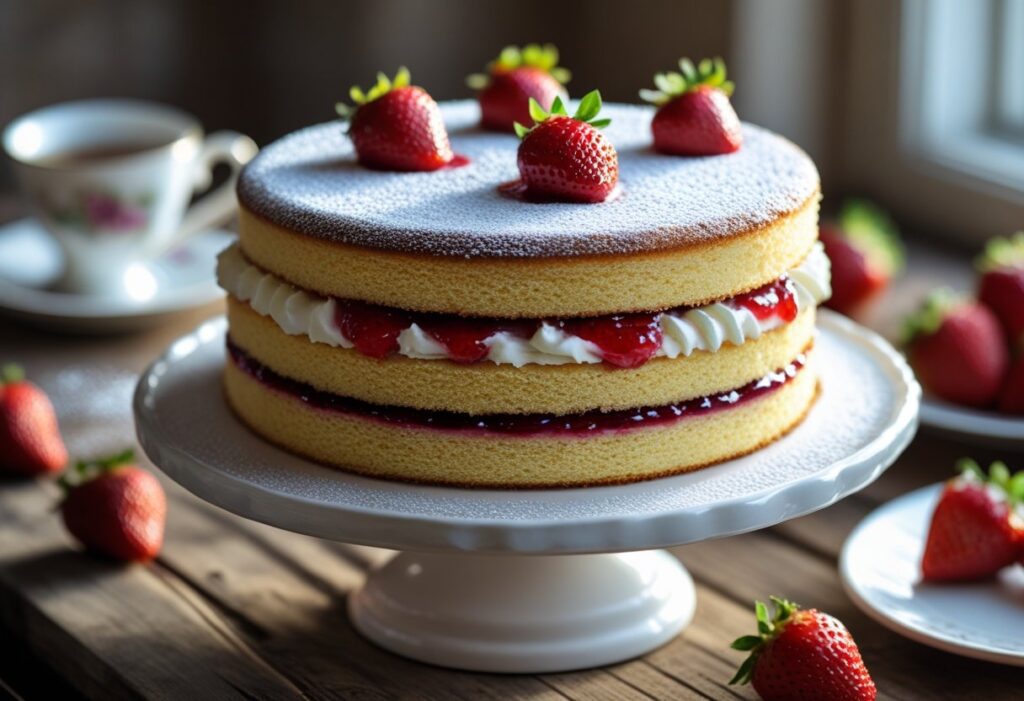
There’s something wonderfully comforting about a classic Victoria sponge. It’s the kind of cake that brings back memories of afternoon tea, family gatherings, and that unmistakable smell of vanilla and warm butter filling the kitchen. If you’ve ever sliced into a sponge and felt disappointed by a dense texture or uneven rise, you’re not alone. The good news? With this Mary Berry Victoria Sponge Easy Recipe Perfect Rise Every Time, you’ll learn exactly how to bake a light, fluffy, beautifully balanced cake — even if you’re a beginner.
This guide is detailed, practical, and written in plain, everyday language so anyone can follow it. Whether you’re baking for the first time or simply want to master a true British classic, this step-by-step recipe will give you consistent, bakery-style results.
Why This Victoria Sponge Recipe Works
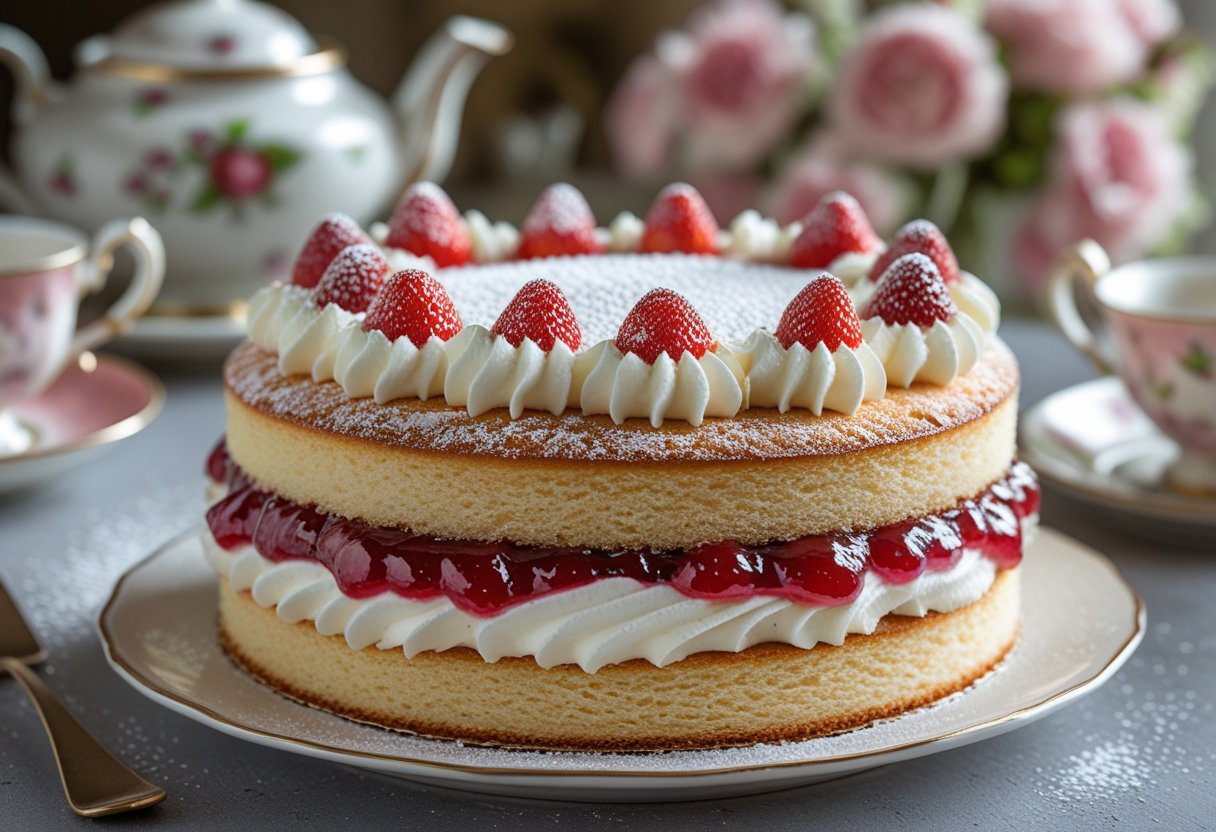
The Victoria sponge is one of the most loved traditional British cakes. In fact, the <a href=”https://en.wikipedia.org/wiki/Victoria_sponge_cake” target=”_blank”>Victoria sponge cake</a> has been a tea-time favorite since the 19th century. But what makes Mary Berry’s version stand out?
It’s simple.
It’s reliable.
And most importantly, it gives you a perfect rise every single time.
Mary Berry’s approach uses the all-in-one method, which means you mix everything together in one bowl. That alone removes so many common mistakes. No complicated techniques. No unnecessary steps. Just straightforward baking.
And yet, the result is incredibly elegant — soft sponge layers, sweet jam, lightly whipped cream, and a delicate dusting of icing sugar.
Ingredients You’ll Need
Before we begin, let’s break down the ingredients and why each one matters.
For the Sponge:
- 225g self-raising flour
- 225g caster sugar
- 225g unsalted butter (softened)
- 4 large eggs
- 2 teaspoons baking powder
- 2 tablespoons milk
- 1 teaspoon vanilla extract
For the Filling:
- 150ml double cream
- 2 tablespoons icing sugar
- 4–5 tablespoons strawberry or raspberry jam
For Finishing:
- Icing sugar for dusting
Simple pantry staples. That’s the beauty of this cake.
Step-by-Step: How to Make Mary Berry Victoria Sponge
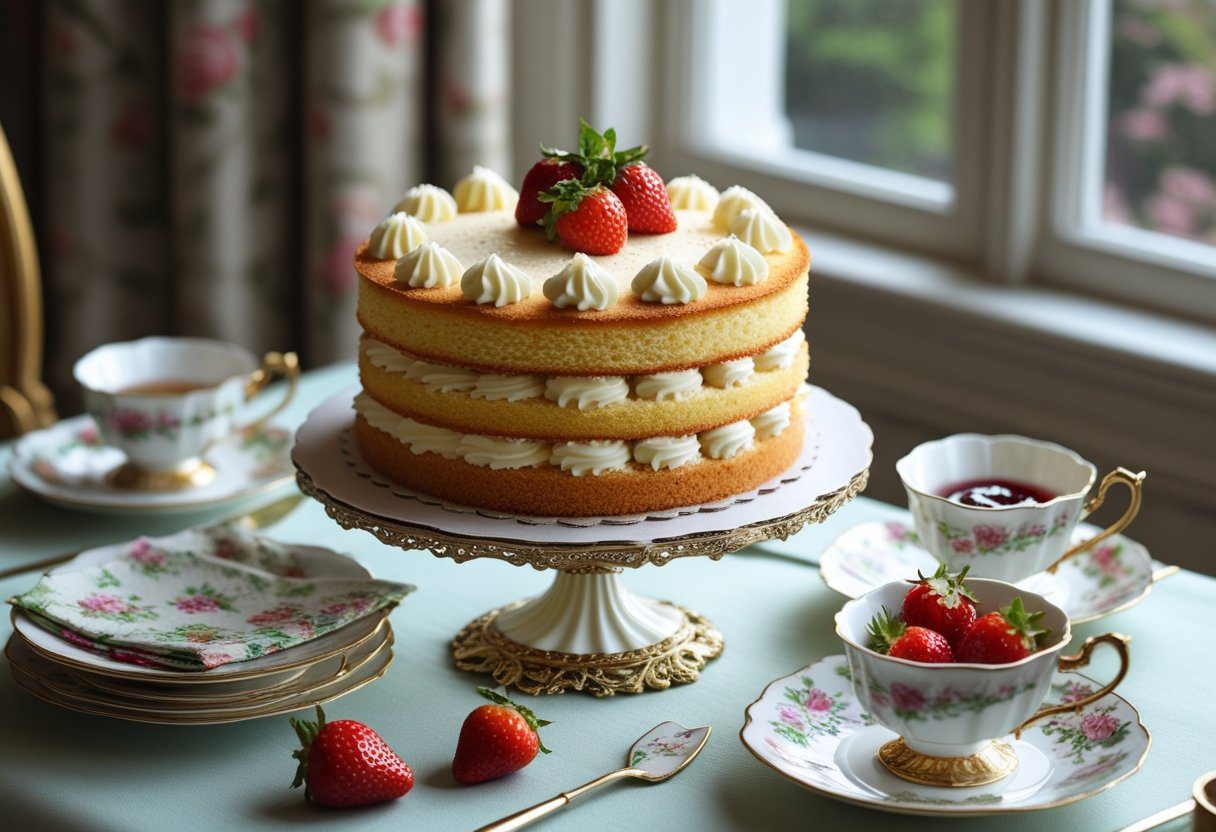
Let’s walk through this carefully so you understand not just what to do, but why you’re doing it.
Step 1: Prepare Your Oven and Tins
First, preheat your oven to:
- 180°C (160°C fan)
This step matters more than people think. A properly preheated oven ensures the cake rises evenly from the start. If the oven isn’t hot enough, the sponge may turn dense.
Grease two 20cm round sandwich tins and line the bottoms with baking paper. This prevents sticking and guarantees a clean release.
Pro Tip: Lightly grease the parchment too. It makes removal effortless.
Step 2: Mix the Batter (The All-in-One Method)
Here’s where this recipe becomes wonderfully easy.
Add all the sponge ingredients into a large bowl:
- Flour
- Sugar
- Butter
- Eggs
- Baking powder
- Milk
- Vanilla
Using an electric mixer, beat everything together for about one minute until smooth and pale.
That’s it.
However, don’t overmix. Once the batter looks creamy and evenly combined, stop. Overbeating knocks out air and can make the cake heavy.
A small anecdote here — the first time I made a Victoria sponge, I kept mixing because I thought “smoother must be better.” The result? A slightly dense cake. Ever since I learned to stop early, my sponge has been beautifully light.
Step 3: Divide and Level
Divide the batter evenly between your tins. If you want absolute perfection, weigh the batter in each tin.
Gently level the tops using a spatula. Don’t press down — just smooth the surface lightly.
This ensures:
- Even baking
- Equal layers
- Professional-looking finish
Step 4: Bake to Golden Perfection
Place both tins on the middle shelf.
Bake for 20–25 minutes.
You’ll know they’re ready when:
- The tops are lightly golden
- The cakes spring back when gently pressed
- The edges slightly pull away from the sides
Avoid opening the oven door too early. That sudden temperature drop can cause sinking.
Step 5: Cooling Is Crucial
Remove the cakes and leave them in their tins for 5 minutes.
Then carefully turn them out onto a wire rack. Peel off the baking paper and allow them to cool completely.
This step is important. If you add filling while warm, the cream will melt and the jam will slide.
Patience pays off here.
Making the Filling
Once the sponges are completely cool, it’s time for the magic.
Whip the double cream with icing sugar until soft peaks form. You want it thick but not stiff.
Spread jam evenly over one sponge layer. Then gently spread or pipe the whipped cream on top.
Place the second sponge on top and dust lightly with icing sugar.
And just like that, your Mary Berry Victoria Sponge Easy Recipe Perfect Rise Every Time is ready to impress.
Why Your Sponge Might Not Rise (And How to Fix It)
Even simple recipes can go wrong. Here’s how to avoid common mistakes.
1. Dense Texture
Usually caused by:
- Overmixing
- Cold butter
- Low oven temperature
Solution: Use softened butter and stop mixing once smooth.
2. Cake Sinks in the Middle
Often due to:
- Opening oven door too early
- Expired baking powder
- Too much liquid
Always check your baking powder is fresh.
3. Uneven Layers
Weigh the batter before baking. It makes a huge difference.
Butter vs Margarine — Which Is Better?
Interestingly, baking spread can sometimes produce a lighter texture in the all-in-one method.
Butter gives:
- Richer flavour
- Traditional taste
Margarine gives:
- Slightly softer crumb
- More moisture
Both work. Choose based on preference.
Whipped Cream or Buttercream?
Classic Victoria sponge traditionally uses jam and sometimes whipped cream.
Whipped cream:
- Light and fresh
- Best eaten same day
Buttercream:
- More stable
- Better for warm weather
- Lasts longer
If serving at a summer gathering, buttercream may be safer.
Serving Suggestions
This cake shines in simplicity. However, you can elevate it easily.
- Serve with fresh strawberries
- Add a side of clotted cream
- Pair with Earl Grey tea
- Turn it into a birthday cake with extra layers
I once served this cake at a small family tea gathering. Nothing fancy — just a clean white plate and a dusting of icing sugar. It disappeared within minutes. That’s the power of a well-made sponge.
Storage Tips
Room Temperature
Store in an airtight container for up to 24 hours.
Refrigerator
Keep chilled for up to 2 days if filled with cream. Bring to room temperature before serving.
Freezing
Freeze only the plain sponge layers. Wrap tightly and freeze up to 3 months.
Nutritional Overview (Approximate)
- Calories: 420 kcal
- Carbohydrates: 38g
- Protein: 6g
- Fat: 28g
- Saturated Fat: 17g
- Sodium: 180mg
Values vary depending on ingredients used.
Frequently Asked Questions
1. What makes Mary Berry’s Victoria sponge rise perfectly every time?
The secret to a perfect rise in the Mary Berry Victoria Sponge Easy Recipe Perfect Rise Every Time is the balanced ratio of butter, sugar, eggs, and self-raising flour. Using room temperature ingredients and a fully preheated oven also ensures even baking and proper lift.
2. Can I make Mary Berry Victoria sponge without self-raising flour?
Yes, you can substitute self-raising flour with plain flour. Simply add 2½ teaspoons of baking powder to maintain the correct rise and texture.
3. Why did my Victoria sponge turn out dense instead of light and fluffy?
A dense sponge is usually caused by overmixing the batter, using cold butter, or baking at too low a temperature. Mix only until smooth and always preheat your oven for best results.
4. Should I use buttercream or whipped cream in a traditional Victoria sponge?
Traditionally, a Victoria sponge uses jam and sometimes whipped cream. Whipped cream gives a lighter texture, while buttercream is more stable and better for warmer weather.
5. How do I prevent my Victoria sponge from sinking in the middle?
To avoid sinking, do not open the oven door during the first 15–20 minutes of baking. Also, make sure your baking powder is fresh and measure ingredients accurately.
6. Can I bake Mary Berry Victoria sponge in one tin instead of two?
Yes, you can bake it in one deep tin and slice it in half once cooled. However, baking in two tins gives a more even rise and reduces baking time.
7. How long does a Victoria sponge stay fresh?
If filled with cream, it stays fresh for up to 2 days in the refrigerator. Without cream, the sponge layers can last 3–4 days in an airtight container at room temperature.
8. Can I freeze Victoria sponge cake?
You can freeze the plain sponge layers for up to 3 months. Wrap them tightly in cling film and defrost completely before adding jam and cream.
9. What jam is best for a classic Victoria sponge?
Strawberry jam is the traditional choice, but raspberry jam also works beautifully and adds a slightly sharper flavour.
10. Is the all-in-one method better than the creaming method?
The all-in-one method is quicker and beginner-friendly, making it perfect for home bakers. The creaming method may give slightly more structure, but the difference is minimal when done correctly.
Why This Recipe Is Perfect for Beginners
The brilliance of Mary Berry Victoria Sponge Easy Recipe Perfect Rise Every Time lies in its simplicity.
No complicated techniques.
No advanced baking skills required.
Just reliable steps and balanced ingredients.
Moreover, the equal ratio of flour, sugar, butter, and eggs creates structural harmony. The baking powder adds lift. The milk ensures smooth consistency. And the vanilla enhances aroma.
Everything works together beautifully.
Final Thoughts
Baking a Victoria sponge shouldn’t feel intimidating. In fact, it should feel joyful.
With this Mary Berry Victoria Sponge Easy Recipe Perfect Rise Every Time, you’re not just following instructions — you’re learning the small details that guarantee success. From preheating the oven properly to understanding why overmixing ruins texture, each step builds your confidence.
And once you’ve mastered this cake, you’ll realize something important:
The best recipes aren’t always complicated.
Sometimes, they’re simple classics done right.
So preheat your oven, gather your ingredients, and enjoy the process. Because when you slice into that perfectly risen sponge and see those soft, even layers, you’ll know — this one’s a keeper.