


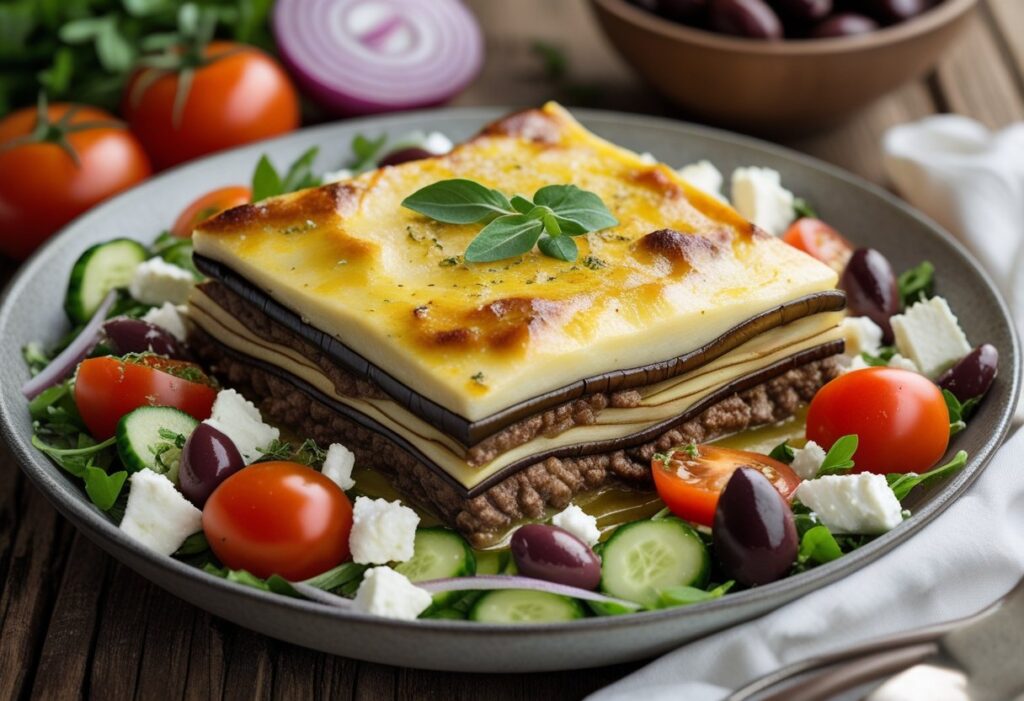
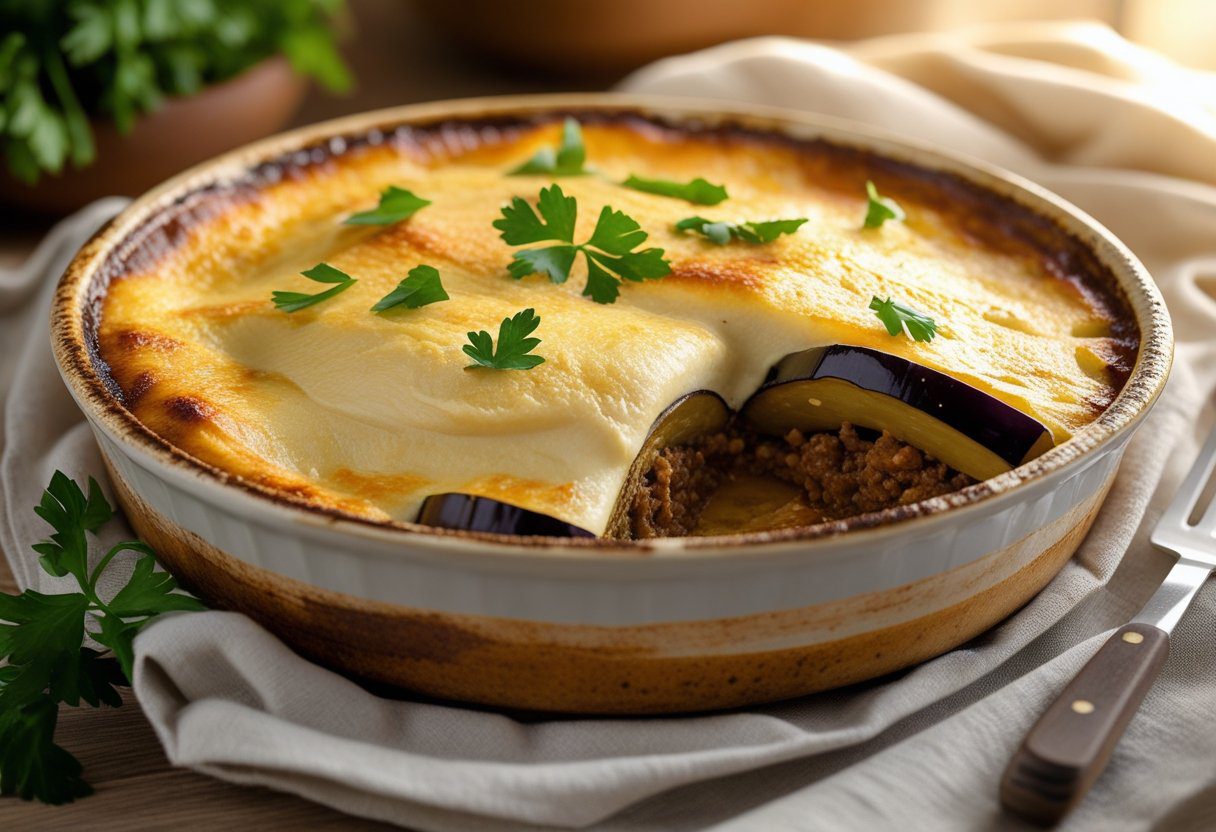
If you’re craving a hearty and flavorful Mediterranean dish, this Authentic Greek Moussaka Recipe with Potatoes is a must-try. This classic Greek casserole combines layers of tender potatoes, roasted eggplant, a rich and aromatic lamb or beef meat sauce, and a creamy, golden béchamel topping. Perfectly balanced with warm spices like cinnamon and oregano, this dish brings together traditional Greek comfort food flavors that are loved both at home and in tavernas.
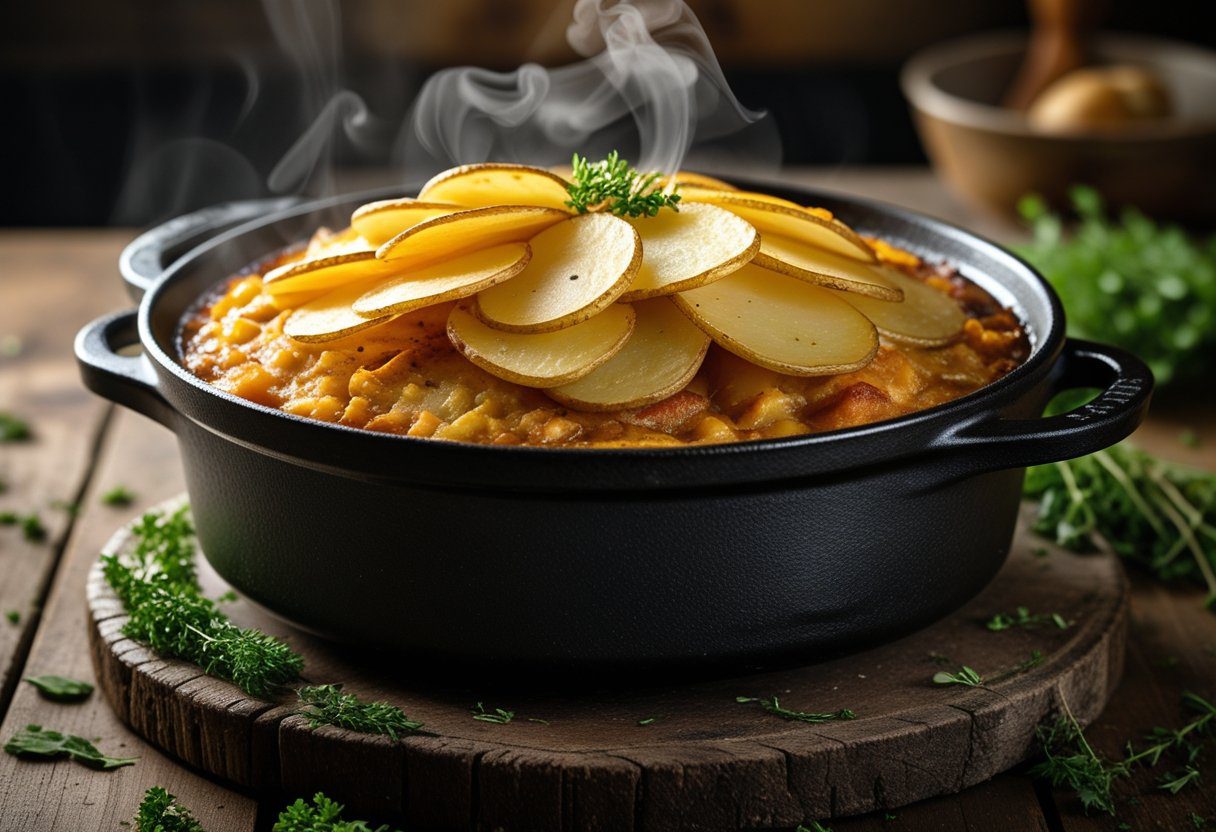
To make this moussaka, start by slicing and roasting your potatoes until golden, then layer them at the base of your casserole. Roast or lightly fry eggplant slices to remove bitterness, while preparing a savory meat sauce with onions, garlic, tomatoes, red wine, and classic Mediterranean spices. A smooth béchamel sauce with nutmeg and cheese is poured on top to create a rich, creamy crust. Layer carefully for that authentic texture and bake until the top is golden brown. Let it rest before slicing to ensure clean, beautiful portions.
Serving suggestions include a fresh Greek salad or tzatziki for a complete Mediterranean meal. This dish not only satisfies cravings but also brings a touch of Greek culinary tradition to your table.
For those looking to experience the full flavors and detailed step-by-step instructions, the complete recipe is given below for you to master this traditional Greek moussaka with potatoes.
What Makes Greek Moussaka Special?
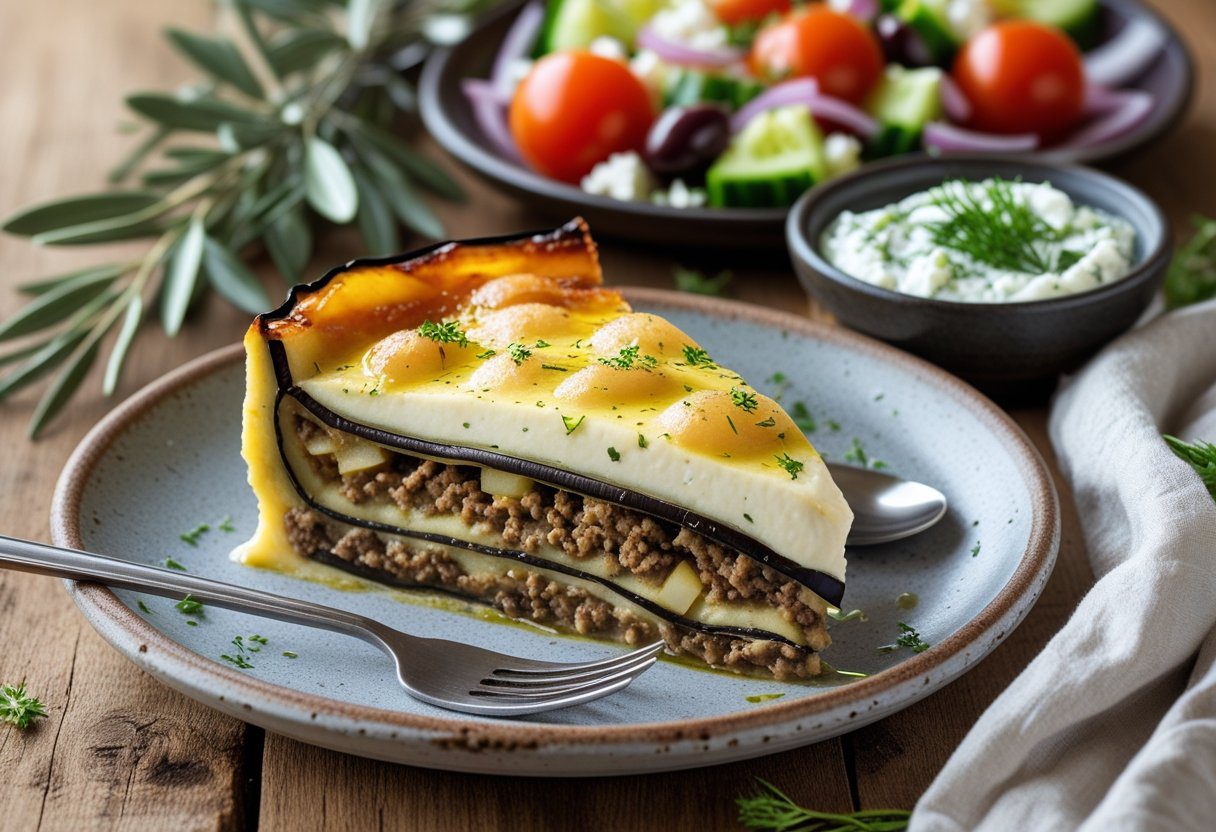
Moussaka is more than “just a casserole” — it’s a symbol of Greek comfort cuisine. At its heart, moussaka is a layered bake that combines:
- Rooted Mediterranean flavors (herbal, earthy, and savory)
- A complex meat sauce with warm spices
- Creamy béchamel sauce that browns into a golden crust
The Greek version — as opposed to Turkish or Balkan variations — is defined by its béchamel topping and often includes potatoes to add texture and heartiness.
Why Include Potatoes?
There’s friendly debate in Greek kitchens over potatoes — some purists focus only on eggplant, while others add potatoes for structure and flavor. When used cleverly, potatoes:
- Absorb savory juices from the meat sauce
- Add a textural balance to soft eggplant and creamy béchamel
- Make the dish more filling and accessible to home cooks
No matter which side you lean toward, including potatoes in your moussaka layers is authentic and delicious — just be mindful of how you prepare them.
Ingredients You’ll Need
Here’s a breakdown of layers and components. I encourage you to use high‑quality ingredients — they make a noticeable difference in flavor.
Base Layer – Potatoes
- 4–5 medium starchy potatoes (Russet or Yukon Gold work best)
- Olive oil, salt, and pepper for roasting or frying
- Optional herbs (e.g., oregano) to season
Starchy potatoes hold up under baking and crisp slightly before absorbing meat juices — which gives moussaka its distinct texture.
Vegetable Layers
- Eggplant (or zucchini, for variation) — sliced and roasted or lightly fried
- Salt eggplant ahead of time to draw out bitterness
Eggplant is traditionally central to moussaka, adding sweetness and a creamy mouthfeel under the sauce and béchamel.
Meat Sauce
Classic Greek recipes use:
- Ground lamb or a lamb‑beef mix
- Onion, garlic, and olive oil
- Tomatoes (diced or passata)
- Red wine (optional but recommended)
- Warm spices: cinnamon, oregano, allspice
- Salt and pepper
This aromatic meat sauce is rich and fragrant — it’s what gives moussaka its soulful character.
Béchamel Sauce
The creamy topping that sets Greek moussaka apart:
- Butter
- Flour
- Warm milk
- Egg yolks for richness
- Nutmeg, salt, pepper
- Parmesan or Greek cheese (kefalotyri or kasseri) for browning
This sauce brews a silky, custard‑like finish that contrasts beautifully with robust meat and roasted vegetables.
Step‑by‑Step Cooking Process
Here’s my professional take on the best way to assemble and bake your authentic Greek moussaka with potatoes.
1️⃣ Prepare the Potatoes
Peel and slice potatoes ~1/4 inch thick. Brush with olive oil, season with salt and pepper, and roast or pan‑fry until lightly golden. This pre‑cooking step:
- Ensures potatoes cook evenly
- Prevents sogginess once baked beneath heavier layers
2️⃣ Roast Eggplants & Vegetables
Salt and rest eggplant slices for 20–30 minutes to remove bitterness. Then:
- Brush or pan‑fry until soft
- Drain excess oil on paper towels
This technique improves texture and intensifies flavor.
3️⃣ Make the Meat Sauce
In a large pan:
- Saute onion and garlic in olive oil
- Add lamb (or lamb‑beef mix) until browned
- Stir in tomato paste, diced tomatoes, spices, and wine
- Simmer until thick and aromatic
This rich Mediterranean tomato meat sauce is key — don’t rush this step.
4️⃣ Béchamel Perfection
In a saucepan:
- Melt butter and whisk in flour to make a roux
- Gradually add warm milk, whisking constantly
- Remove from heat and temper in egg yolks
- Add nutmeg, salt, and grated cheese
The goal is silky, lump‑free sauce with a golden finish on bake.
5️⃣ Layering Like a Pro
In your baking dish:
- Potato layer
- Half the meat sauce
- Eggplant layer
- Remaining meat sauce
- Pour béchamel evenly over the top
Sprinkle extra cheese on top for a golden crust.
6️⃣ Baking
Bake at ~350°F (175°C) for 40–50 minutes until the béchamel is firm and lightly browned. Let rest before cutting — this helps the layers set and slice beautifully.
Serving & Enjoying
Greek moussaka is best served warm with a fresh Greek salad or tzatziki on the side. Its layered textures and aromas pair beautifully with a crisp white wine or a light rosé.
Tips From the Experts
- Salt eggplant to remove moisture and bitterness — this improves texture and flavor.
- Use quality olive oil — it significantly impacts the taste profile.
- Let the casserole rest after baking — it firms up and becomes easier to slice.
- Customize spices slightly — cinnamon and oregano bring out rich Mediterranean character.
10 FAQs About Authentic Greek Moussaka with Potatoes
- Is potato truly authentic in Greek moussaka?
Yes — many Greek households include a potato layer, and it’s widely accepted in authentic recipes. - Can I make moussaka without eggplant?
Yes, some versions use only potatoes and zucchini, though eggplant remains traditional. - What type of potato is best?
Starchy varieties like Russet or Yukon Gold hold shape well under baking. - Can I bake vegetables instead of frying?
Absolutely — roasting in the oven is healthier and still flavorful. - Is lamb necessary?
Traditional Greek recipes prefer lamb, but beef or a mix works well too. - Why is béchamel sauce important?
It gives Greek moussaka its signature creamy top and rich flavor. - Can I make this vegetarian?
Yes! Use lentils or mushrooms instead of meat and a plant‑based béchamel. - How do I prevent soggy moussaka?
Pre‑cook potatoes and eggplant and avoid overcrowding the pan. - What spices are essential?
Oregano, cinnamon, and nutmeg (in béchamel) are classic. - Can I prepare it ahead of time?
Yes — it often tastes better the next day as flavors develop.