

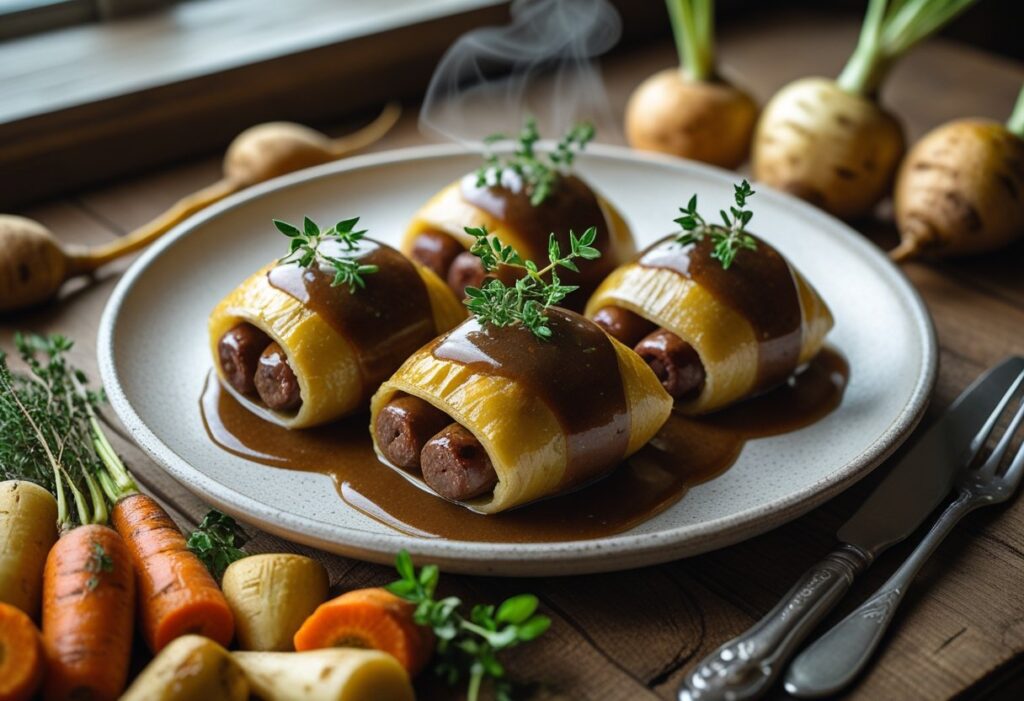
Beef Olives Simple Scottish is a timeless comfort dish that combines tender beef, savory stuffing, and rich gravy to create a hearty, satisfying meal. This Scottish classic has been enjoyed for generations and remains a favorite for family dinners, cozy weeknights, or special occasions.
The key to this recipe is using thin-cut beef steaks rolled around flavorful stuffing such as sausage meat, oatmeal-based skirlie, or even traditional haggis, secured with twine, then slowly cooked to perfection.
To make this dish, start by flattening the beef slices and seasoning them with salt and pepper. Prepare the stuffing by mixing sausage meat or breadcrumbs with herbs, onions, and garlic. Place the stuffing on each steak slice, roll carefully, and tie securely to hold everything in place.
Next, brown the beef parcels in a pan to lock in flavor and juices, then prepare a simple sauce using onions, carrots, beef stock, and optional red wine. Transfer the browned Scottish beef olives into the sauce and bake or simmer slowly until the beef is tender and the stuffing is fully cooked.
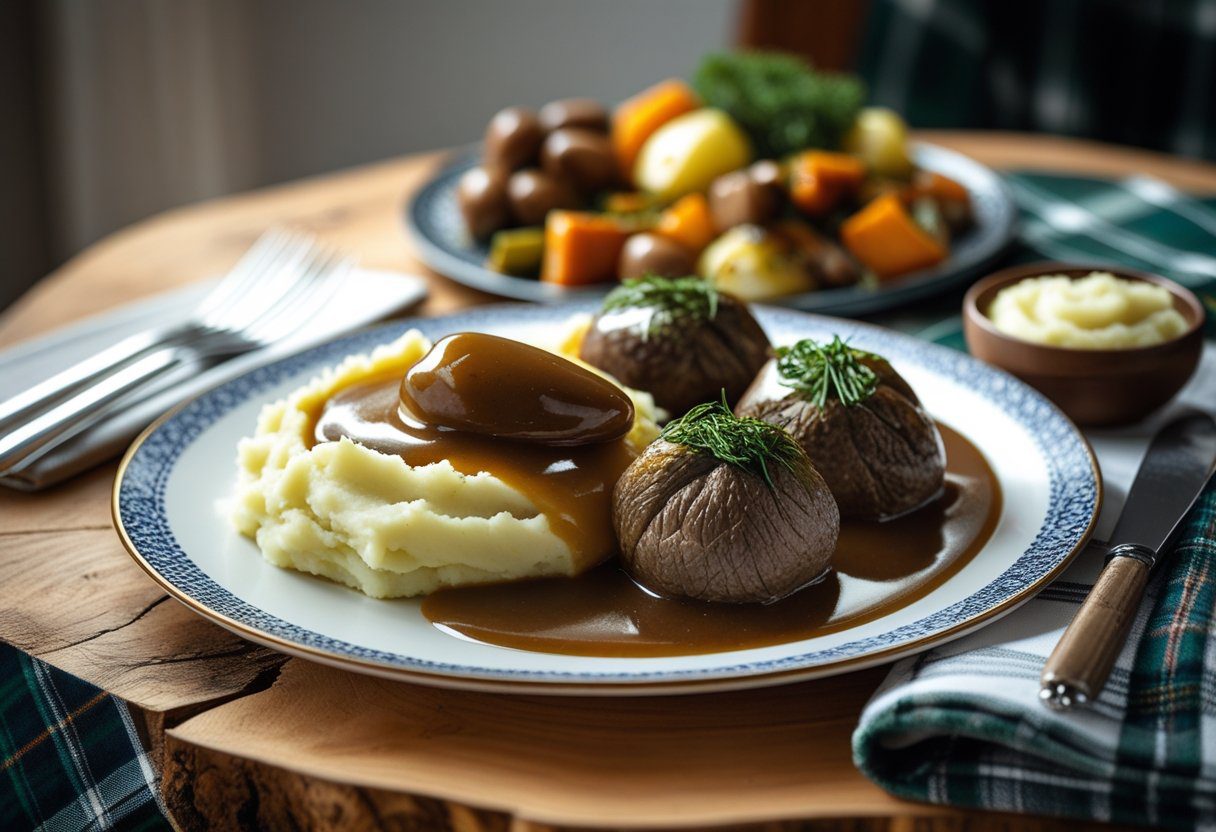
Serve your Beef Olives with classic sides such as mashed potatoes, roasted root vegetables, or steamed greens for a complete and satisfying meal. This recipe is highly flexible, allowing for variations in stuffing and sauces to suit your taste while maintaining the authentic Scottish touch.
For those craving a complete guide with ingredients, step-by-step instructions, and cooking tips, the full haggis beef olives Simple Scottish Classic Quick & Tasty Recipe is provided in the complete recipe below.
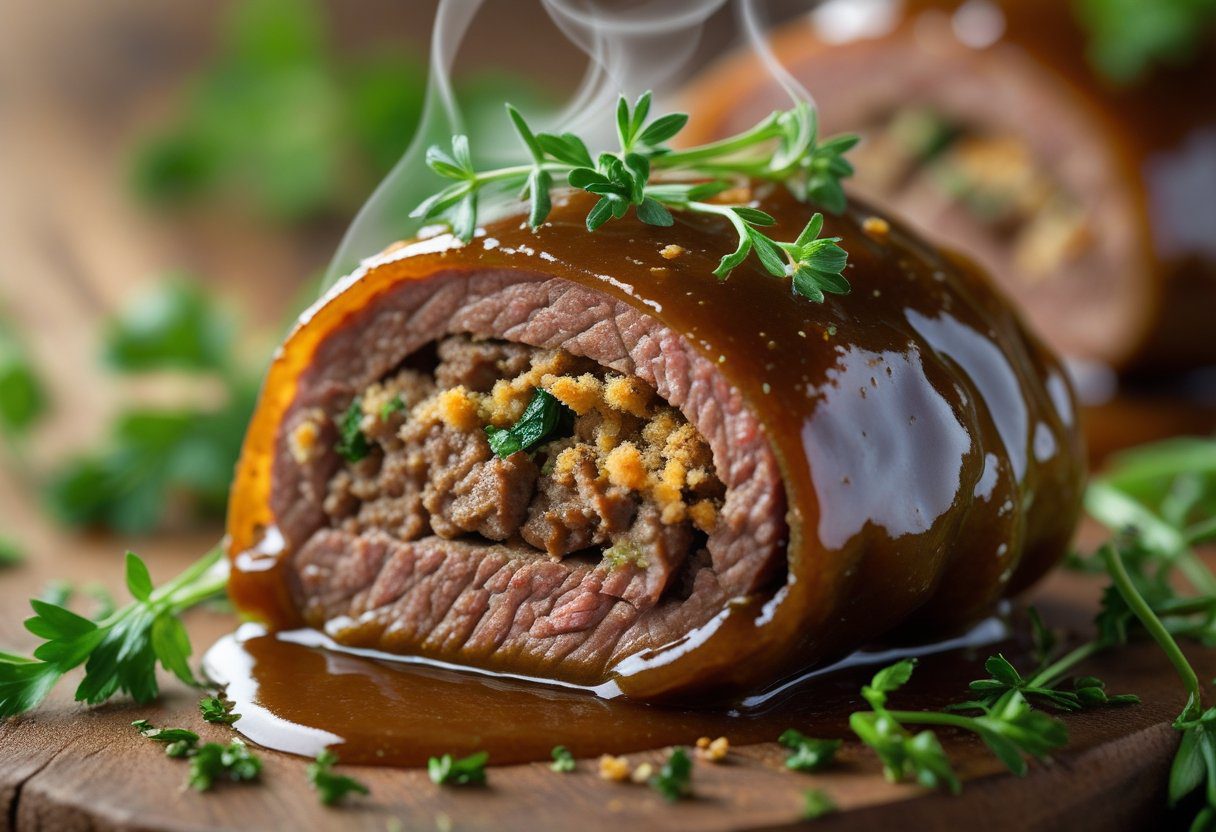
How To Cook Beef Olives In Slow Cooker Uk?
Using a slow cooker ensures the meat stays tender, juicy, and infused with rich flavors, making it an ideal choice for those who love traditional British cuisine with minimal effort. By following this method, you’ll achieve perfectly cooked beef olives without spending hours in the kitchen.
To begin, select high-quality beef slices and fill them with a savory stuffing, typically made from onions, herbs, and breadcrumbs. Secure each roll with cooking twine or toothpicks to maintain their shape. Browning the beef olives lightly before placing them in the slow cooker enhances the depth of flavor. Add your choice of stock, wine, and seasonings, allowing the slow cooker to gently cook the meat over several hours. The long, slow cooking process helps the stuffing meld beautifully with the beef, creating a rich and satisfying gravy.
This method also allows for easy variations, including adding mushrooms, carrots, or a splash of Worcestershire sauce for extra taste. Serve your beef olives alongside creamy mashed potatoes, roasted vegetables, or a fresh green salad for a complete, wholesome meal.
Why Beef Olives Are So Irresistible
Let me break it down for you. Why should EASY Beef Olives make it to your weekly meal plan?
- Comfort food at its best: Soft, tender beef envelops a juicy, flavorful stuffing, all simmered in rich gravy. It’s satisfying in a way that’s hard to beat.
- Flexible recipe: The stuffing is completely adaptable. You can mix sausage meat with herbs, breadcrumbs, or even haggis or oatmeal (skirlie) if you want to be traditional.
- Perfect for weeknights and weekends: Once the beef parcels are prepared, you can slow-cook or bake them. Perfect for easy weeknight dinners, or a cozy weekend meal for friends and family.
- No fancy ingredients needed: Thin beef steaks, basic stuffing components, and simple vegetables for the sauce — that’s it. No obscure spices or hard-to-find items.
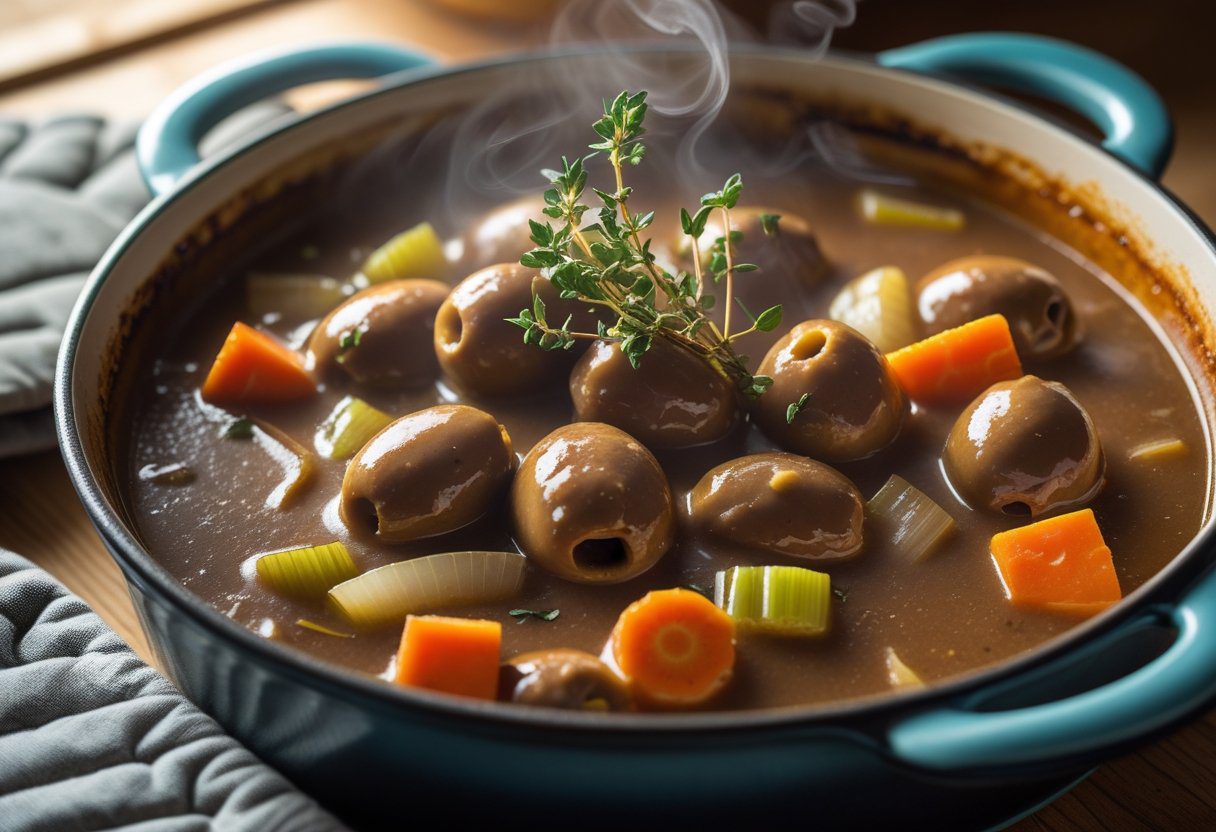
Honestly, IMO, it’s the kind of recipe that makes you feel like a chef without the stress.
Ingredients for Homemade Beef Olives
Before we dive into cooking, let’s make sure your kitchen is stocked.
For the Beef Olives:
- 4 thin-cut beef steaks (flank, topside, or minute steaks)
- 250g sausage meat (or a mix of breadcrumbs, finely chopped onions, herbs, and garlic)
- Optional: haggis or skirlie for a traditional Scottish touch
- Salt and pepper to taste
- Kitchen twine or toothpicks to secure
For the Sauce:
- 2 medium onions, sliced
- 2 carrots, chopped
- 2–3 parsnips or turnips (optional, adds sweetness and depth)
- 2 cups beef stock
- 1/2 cup red wine (optional, but recommended for depth)
- 1–2 tbsp flour for thickening
- Fresh thyme or sage
- Salt and pepper to taste
- Olive oil or vegetable oil for browning
Optional sides: Mashed potatoes, roasted root vegetables, steamed greens, crusty bread.
Step-by-Step Cooking Instructions family dinner recipe beef olives
Step 1: Prepare and Flatten the Beef
Start by laying your beef steaks on a clean chopping board. Season each side generously with salt and pepper. Using a meat mallet or rolling pin, gently flatten each steak to an even thickness. This ensures they’re easy to roll and that the stuffing won’t leak out. Don’t go overboard — just enough to make them pliable. The even thickness also helps them cook uniformly, giving you tender, juicy beef olives every time.
Step 2: Make the Stuffing
If you’re using sausage meat, mix it with breadcrumbs, finely chopped onions, minced garlic, and fresh herbs like sage or thyme. Season lightly with salt and pepper. This mixture should be slightly sticky, not dry. If you prefer a traditional Scottish take, haggis or skirlie works beautifully — it adds a rustic, hearty flavor. Your stuffing is the star of the dish, so take a moment to taste and adjust seasoning before rolling.
Step 3: Roll and Secure the Beef
Place a generous spoonful of stuffing at one end of each flattened steak. Carefully roll the beef over the stuffing, tucking in the sides as you go. Once rolled, secure each parcel with kitchen twine or toothpicks. It’s important to keep the stuffing inside while cooking. This step requires a little patience, but trust me, the payoff is worth it.
Step 4: Brown The Comfort Food Beef Olives
Heat a little oil in a large frying pan over medium heat. Add each beef parcel and brown on all sides — usually around 2–3 minutes per side. Browning develops deep, rich flavor and helps seal in juices, which keeps your beef olives tender. Don’t overcrowd the pan; do this in batches if necessary. The aroma at this stage is honestly mouthwatering.
Step 5: Prepare the Sauce
In the same pan, add onions, carrots, and other root vegetables. Sauté until slightly softened, then sprinkle in flour to create a roux. Slowly pour in beef stock and red wine (if using), stirring constantly to avoid lumps. Bring the sauce to a gentle simmer, seasoning with fresh thyme, sage, salt, and pepper. This sauce will coat the traditional British dish beef olives and create a rich, comforting gravy.
Step 6: Cook the Beef Olives stuffing Slowly
Transfer the browned beef olives family favourite to an oven-safe dish and pour the prepared sauce over them. Cover with a lid or aluminum foil. Bake in a preheated oven at 170–180 °C (325–350 °F) for 1–1.5 hours until the beef is tender and the flavors meld beautifully. You can also cook them on the stovetop at low heat, covered, for the same duration. Slow cooking allows the flavors to develop fully, and the beef becomes melt-in-your-mouth tender.
Step 7: Serve and Enjoy
Once cooked, remove the twine or toothpicks and transfer the beef olives to plates. Pour over the sauce, and serve alongside mashed potatoes, roasted root vegetables, or steamed greens. Don’t forget a slice of crusty bread to soak up every last drop of gravy — because leaving gravy behind is basically a crime. 😄
Tips for Perfect Beef Olives Every Time
- Prevent dryness: Cook slow and low. High heat will toughen the beef.
- Secure stuffing: Don’t overfill. Use twine to prevent leaks.
- Flavor boost: A splash of red wine adds depth, but it’s optional.
- Make ahead: Roll the beef and prep the stuffing a few hours ahead — store in fridge until ready to cook.
- Reheating: Gentle reheating in the oven or stovetop keeps the beef tender. Microwave? Meh… avoid if possible.
Variations to Try
The best part about Beef Olives is their adaptability. Here are some ideas:
- Mushroom & bacon stuffing: Rich, umami-heavy twist.
- Haggis: Traditional Scottish flair.
- Skirlie (oatmeal) stuffing: Earthy and hearty.
- Sauce variations: Classic gravy, red wine reduction, or even tomato-based sauces.
Mix and match according to your taste or pantry. No rules, just deliciousness.
Why Beef Olives Belong in Your Weekly Rotation
Beef Olives are flexible, hearty, and steeped in tradition. They give you the satisfaction of home cooking with surprisingly little effort. They’re perfect for family dinners, date nights at home, or even a cozy solo feast.
And the beauty? The recipe is forgiving. You can tweak the stuffing, sauce, or cooking method without sacrificing flavor. It’s classic, adaptable, and just plain tasty.
Related About Slow Cooked Beef Olives
Traditional Beef Olives with Sausage Meat Stuffing
When it comes to traditional Beef Olives, sausage meat stuffing is the classic choice. This Scottish favorite combines thin beef slices rolled around a savory filling of seasoned sausage, breadcrumbs, fresh herbs, and onions. The parcels are then browned to lock in flavor and slowly cooked in rich gravy or stock, creating a hearty and flavorful dish. Traditional beef olives with sausage meat are perfect for family dinners or festive meals, giving a taste of authentic Scottish home cooking that has been passed down through generations.
Quick Beef Olives Scottish Style Oven Baked
For busy cooks, quick beef olives Scottish style oven baked is a lifesaver. Using minute steaks or thin flank steak, you can assemble and bake the stuffed beef parcels in under an hour. The oven-baking method ensures even cooking and a tender, juicy result while cutting down on stovetop babysitting. . This quick version retains all the traditional flavors while making it approachable for modern, fast-paced kitchens.
Authentic Haggis Stuffed Beef Olives Recipe
If you want to get truly Scottish, try an authentic haggis stuffed beef olives recipe. Here, haggis replaces the usual sausage meat, giving the beef parcels a rich, earthy, and deeply traditional flavor. The thin beef slices are rolled around the haggis, secured with kitchen twine, and braised slowly in beef stock or gravy. This variation is ideal for a special occasion dinner or for those wanting to impress with classic Scottish flavors.
Simple Beef Olives Using Minute Steaks
For those short on time or looking for a lighter version, simple beef olives using minute steaks are perfect. Minute steaks are thin, easy to roll, and cook very quickly, making them ideal for a fast yet satisfying Scottish-style meal. Stuffed with a simple mixture of breadcrumbs, onions, and herbs, these beef olives are ready in less than an hour.
Beef Olives with Skirlie Oatmeal Filling
For a truly authentic Scottish touch, try beef olives with skirlie oatmeal filling. Skirlie is a traditional Scottish oatmeal-based stuffing made with onions, butter, and seasonings, giving the beef parcels a nutty, hearty flavor. The beef is rolled around this filling and slowly baked or simmered in gravy until tender.
Slow Cooked Beef Olives in Rich Gravy
Slow cooked beef olives in rich gravy are ideal for a comfort food dinner. The key is low and slow cooking, which allows the beef to become melt-in-your-mouth tender while the stuffing absorbs the flavors of the gravy. Using a mix of sausage meat, breadcrumbs, and herbs, these rolled beef parcels create a deep, savory experience.
Homemade Scottish Beef Olives Family Dinner
A homemade Scottish beef olives family dinner is all about bringing loved ones together. Preparing rolled beef parcels with your favorite stuffing and simmering in homemade gravy creates a sense of nostalgia and culinary satisfaction. This dish pairs beautifully with mashed potatoes, roasted vegetables, or green beans, making it a complete hearty dinner solution for weeknights or holidays.
Beef Olives Recipe with Red Wine Sauce
Elevate your meal with a beef olives recipe with red wine sauce. The rich, slightly acidic sauce complements the savory beef and stuffing, adding depth of flavor. Simply brown the beef rolls, make a sauce with onions, beef stock, and red wine, and simmer until tender. This version adds sophistication to the traditional Scottish beef olive, perfect for dinner parties or special occasions.
Thin Flank Steak Rolled Beef Olives
Using thin flank steak rolled beef olives ensures even cooking and tender beef. The steak slices are ideal for rolling around sausage, skirlie, or haggis stuffing, and when braised or oven-baked, the result is juicy, flavorful parcels. This technique is popular among home cooks and traditional Scottish chefs, offering a foolproof method for preparing this beloved dish.
Final Thoughts
If you’ve been hunting for a simple Scottish classic that’s quick, tasty, and a bit nostalgic, Beef Olives are your answer. Tender beef, savory stuffing, rich gravy — it’s a dish that’s sure to impress. Whether you stick to the traditional recipe or experiment with creative twists, this is a meal that hits all the right notes.
So next time you’re in the mood for comfort food with a touch of history, give Beef Olives a try. And remember: the only rule is to enjoy every bite.
Frequently Asked Questions (FAQ) about Beef Olives
Q1: What exactly are Beef Olives — and why are they called “olives” when there’s no olive in the dish?
A: The short (and mildly hilarious) answer: there are no olives in Beef Olives. The name refers to thin slices of beef rolled around a stuffing (sausage meat, oatmeal stuffing, haggis, or other fillings), tied or secured, and then cooked slowly.
Historically, the term “olive” seems to come from a corruption of old words like “aloes” or “allowes” (from Old French alou, alouette, meaning “lark”). Those original recipes — from as early as the 16th century — used veal or mutton, stuffed and rolled, so that the parcels resembled small birds rather than anything to do with actual olives.
So yes — Beef Olives = stuffed meat parcels, not a fruit + meat combo. Confusing name, delicious results.
Q2: Where did Beef Olives originate? Are they truly Scottish?
A: The origin story is a bit tangled — but interesting. Beef (or veal) rolls stuffed with forcemeat and braised were popular in Britain from the 16th century onward. That means Beef Olives date back centuries.
While many people associate Beef Olives with Scotland, the dish has roots across Britain. Over time, beef replaced veal as the standard meat, making Beef Olives the version most people know today.
So yes — calling them a “Scottish classic” is reasonable (many Scottish butchers and families kept making them across generations) — but don’t be surprised if you find similar stuffed‑meat rolls elsewhere in Britain or Europe (think roulades, bragioli, etc.).
Q3: What kinds of stuffing (filling) can you use for Beef Olives?
A: That’s one of the fun bits — there’s no single “right” stuffing. People customize based on preference, what they have on hand, or how traditional they want to go. Common stuffing types include:
- Sausage‑meat stuffing — often with breadcrumbs, herbs (sage, thyme), onions/garlic. This is probably the most common modern version.
- Oatmeal‑based stuffing / “skirlie” — a traditional Scottish option, rustic and hearty. Some butchers even sell ready-made beef olives with oatmeal / skirlie stuffing
- Haggis stuffing — for the adventurous or traditional cook, haggis (or similar) stuffing gives a deeply Scottish flavor. Many classic versions feature a mix of sausage‑meat and haggis.
- Vegetable / Mushroom / Bacon / Stilton‑style stuffing — some recipes go more gourmet: mushrooms, bacon, cheese (like Stilton), herbs, even veggies can go inside. Great if you want a richer or more indulgent version.
Bottom line: Beef Olives are versatile. Use what you like (or what you have) — and you’re likely to end up with something delicious.
Q4: Which cuts of beef work best for Beef Olives? And can you use veal or other meats instead of beef?
A: Great question. Traditionally, these rolls used veal or mutton (especially in the earliest recipes). Over time, beef became the standard — unlikely to change now.
As for cuts: use thin‑cut beef steaks — flank, topside, minute‑steak, or thinly sliced round/top round. The idea is that the steak should be thin enough to flatten, roll, and encase the stuffing without being bulky. Many modern Beef Olives packs sold in shops (butchers) use thin, lean slices for easier rolling and cooking.
If you have veal (or maybe even lamb) steak thin‑slices, historically it works — but beef remains most available and reliable for home cooks.
Q5: Can I make Beef Olives without a fancy sauce or red wine? What happens if I skip the sauce?
A: Yep — you can. The sauce or gravy is traditional (and guards against dryness), but it’s not mandatory. Some people cook their beef olives wrapped in foil or casserole without a heavy sauce. As long as the parcels are secured well and you monitor cooking carefully (turning if needed), you can get decent results.
That said, a sauce — whether beef stock + wine + gravy, or a simpler onion‑carrot-stock combo, or even a tomato-based sauce — adds depth, moisture, and a comforting richness. It helps the meat stay tender and infuses flavor from the stuffing into the sauce. If you skip the sauce, just watch moisture carefully (you may need to baste or turn the parcels), and ideally use a cut of beef that’s not super lean.
Q6: How do I prevent the stuffing from leaking out or the beef from drying out — common mistakes to avoid?
A: From what folks (and I) have learned over time, here are the key tips:
- Use thin, even-cut beef slices — flatten them if needed. This ensures rolling is neat and stuffing stays contained.
- Pack the stuffing appropriately — not too little, not too much. Overstuffing = risk of bursting.
- Secure the roll well — kitchen twine or toothpicks work. Don’t skip this.
- Brown first, then cook slow + low — high heat throughout dries out beef; a quick browning then slow simmer/braise (or oven bake) locks moisture inside.
- Use some liquid or gravy — liquid in the cooking dish helps keep parcels moist; especially useful with lean cuts.
If you follow these, you decrease the chance of dryness or stuffing leak — and increase the chance of juicy, flavorful Beef Olives.
Q7: Can I prepare Beef Olives ahead of time (like flatten meat, roll, tie) and cook later?
A: Absolutely. Many cooks — including traditional butchers — prep Beef Olives ahead: flatten steaks, prepare stuffing, roll & tie parcels in advance, then refrigerate. When ready to cook, just brown + bake/simmer. This makes them excellent for meal planning or busy days when you don’t want long prep. Several sources confirm this flexibility. Note: If you store them before cooking, keep them covered and cold (or freeze if not using within a day or two). When ready, ensure they reach proper cooking temperature — especially if they contain sausage meat, haggis or other perishable fillings.
Q8: How long does cooking usually take, and what cooking methods work best?
A: Cooking times vary depending on method, but typical guidance is:
- Browning: a few minutes per side (just to seal in juices and develop flavor).
- Slow cooking / baking / braising: 1 – 2 hours — lots of Beef Olives recipes call for a covered oven bake (~170–180 °C / 325–350 °F) for ~1–1.5 hours, or a slow simmer on stove/lid-on casserole for similar time.
- If you skip sauce (less moisture), cooking carefully and turning periodically helps.
So yes — it’s not a 20-minute dish (unless you buy ready-made from butcher), but the results are worth the wait.
Q9: What are good side dishes or serving suggestions for Beef Olives?
A: Beef Olives shine as a comforting, hearty meal — so sides that match that vibe work great:
- Mashed potatoes — classic pairing. The gravy from the Beef Olives mixes beautifully with creamy mash.
- Roasted or boiled root vegetables — carrots, turnips, parsnips, peas, etc. Add texture and natural sweetness.
- Steamed greens — broccoli, green beans or peas add freshness and balance richness.
- Crusty bread — perfect for soaking up gravy (and you don’t want to waste that!).
- For a more rustic or traditional serving — try roasted veg + gravy + perhaps a simple salad or greens.
Honestly, I usually go mash + carrots + gravy — cozy and satisfying, especially on a chilly evening.
Q10: Are Beef Olives healthy? What about nutrition / diet considerations?
A: As with many comfort‑food classics — Beef Olives are rich, hearty, and filling, but they are not “light.” Because of the meat, stuffing (often sausage/haggis/oatmeal), and gravy or sauce — they carry a fair amount of protein and fat.
Commercial ready‑made versions (from butchers or stores) often include beef plus sausage-meat or rusk-based stuffing, and sometimes preservatives or additive ingredients (depending on brand).
If you want a healthier-ish version:
- Choose lean beef cuts (instead of fatty ones)
- Use oatmeal‑based stuffing or vegetable/mushroom stuffing instead of heavy sausage/haggis
- Go easy on very fatty sauces — choose lighter stock-based gravies instead of heavy cream or lots of butter
In short: you can tweak Beef Olives for a bit healthier balance — but it will remain a comfort meat dish at core.
Q11: Can I freeze Beef Olives or store leftovers? How well do they reheat?
A: Yes — many butcher‑supplied Beef Olives are freeze‑friendly. For home‑made ones, once assembled (but not cooked), you can freeze (or refrigerate short-term) and cook later. Some producers explicitly recommend freezing if not used immediately If you have leftovers after cooking: reheating is possible, but a bit tricky. Because of the stuffing and meat, reheating improperly can make them dry or uneven — especially in a microwave. Many sources suggest reheating gently in oven or on stovetop, and checking that stuffing is heated through, especially if it contains sausage or haggis.