
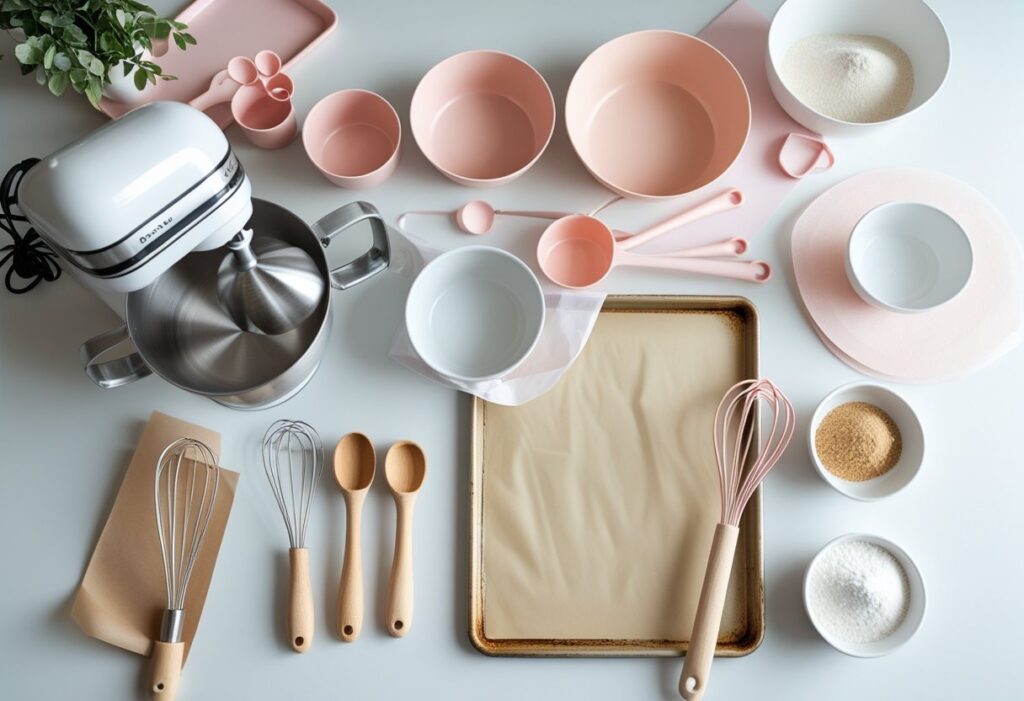
If you’re just beginning your baking journey, you might be wondering where to start or which tools you actually need. The truth is, you don’t need an entire professional kitchen to make delicious cookies, soft cakes, or homemade bread.
All you need is the best baking tools for beginners at home, a bit of practice, and the right guidance — which is exactly what this guide will give you.
To make things easier, we’ll look at each tool with clear explanations, simple language, useful anecdotes, and step-by-step tips to help you pick the right items without overspending.
Let’s begin.
Why the Best Baking Tools for Beginners at Home Matter
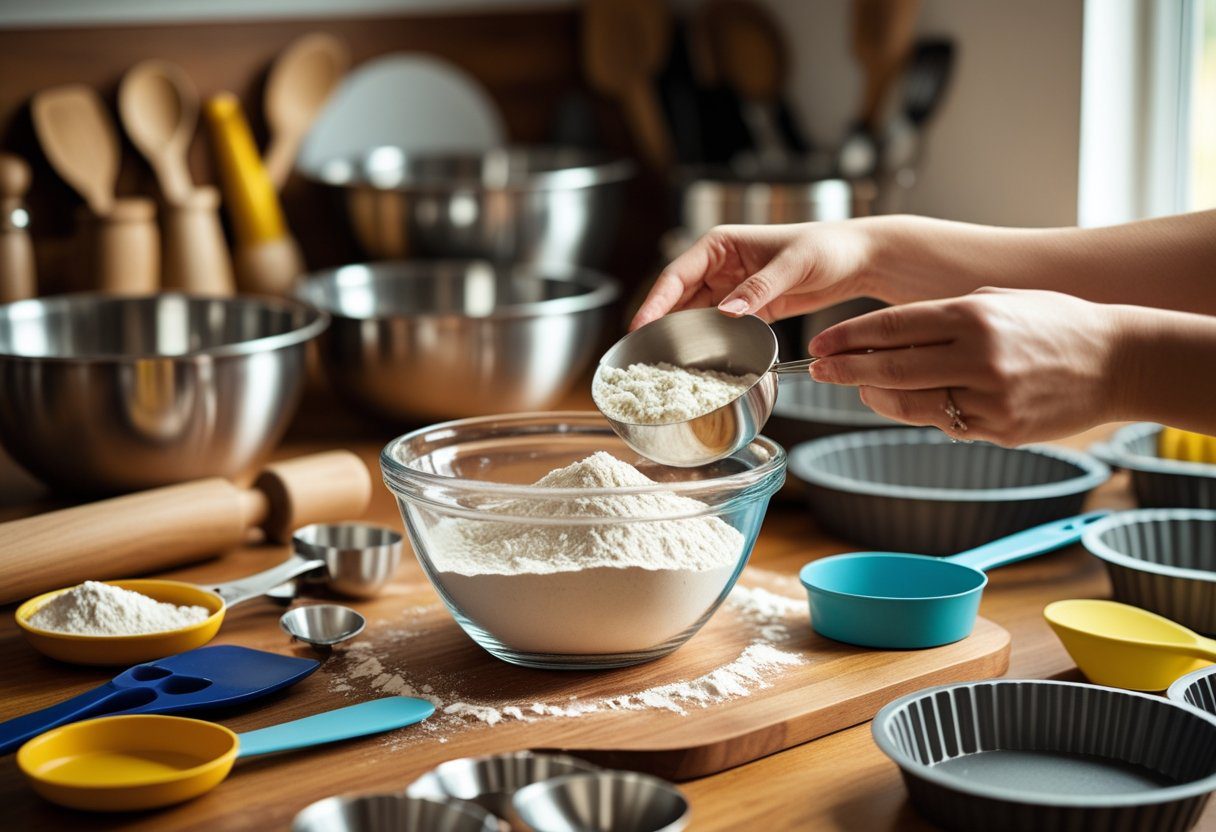
When I baked my first ever batch of brownies, I remember eyeballing most of the ingredients, mixing with a random spoon, and hoping for the best.
Spoiler:
They came out dry, uneven, and tasted like chocolate-flavored disappointment.
It wasn’t because I was bad at baking — I was simply using the wrong tools.
Once I got a few essential baking tools, everything changed. Suddenly my brownies were fudgy, cakes rose beautifully, and cookie dough stopped spreading like pancakes.
So before you dive deep into baking, start by building a basic but powerful toolkit
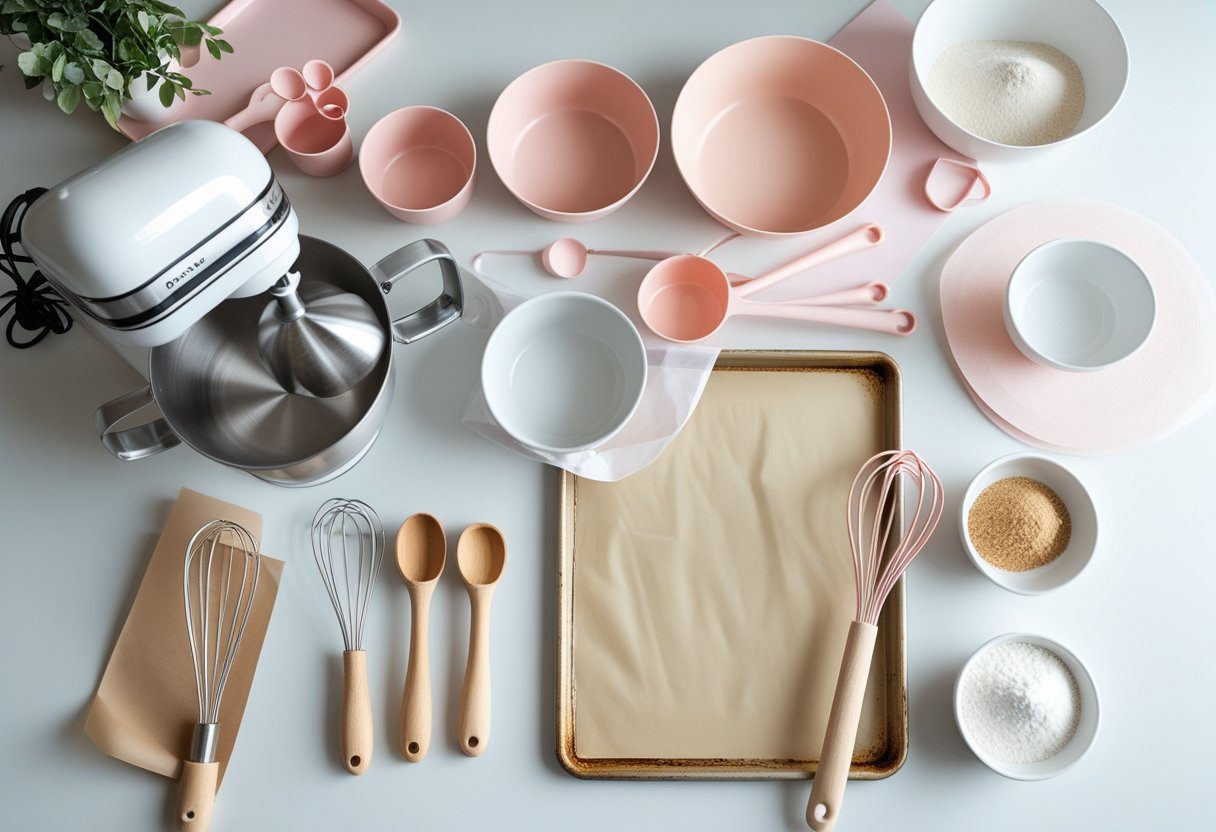
1. Electric Mixer – The Heart of Every Home Baking Setup
Whether you choose a hand mixer or a stand mixer, this tool is the real game-changer for beginners.
✔ Why an Electric Mixer Matters
A good mixer can help you:
- Cream butter and sugar correctly
- Whip egg whites or cream
- Mix thick cookie dough
- Save energy and time
When I first bought my mixer, I remember thinking, “Was baking always supposed to be this easy?”
✔ Hand Mixer vs Stand Mixer (Quick Comparison)
Hand Mixer
- More affordable
- Lightweight
- Perfect for small batches
Stand Mixer
- Hands-free
- More power
- Great for bread dough, frosting, and large batches
⭐ Step-by-Step Tip
Use low speed first, then work your way up. This prevents splashing and gives smoother mixtures.
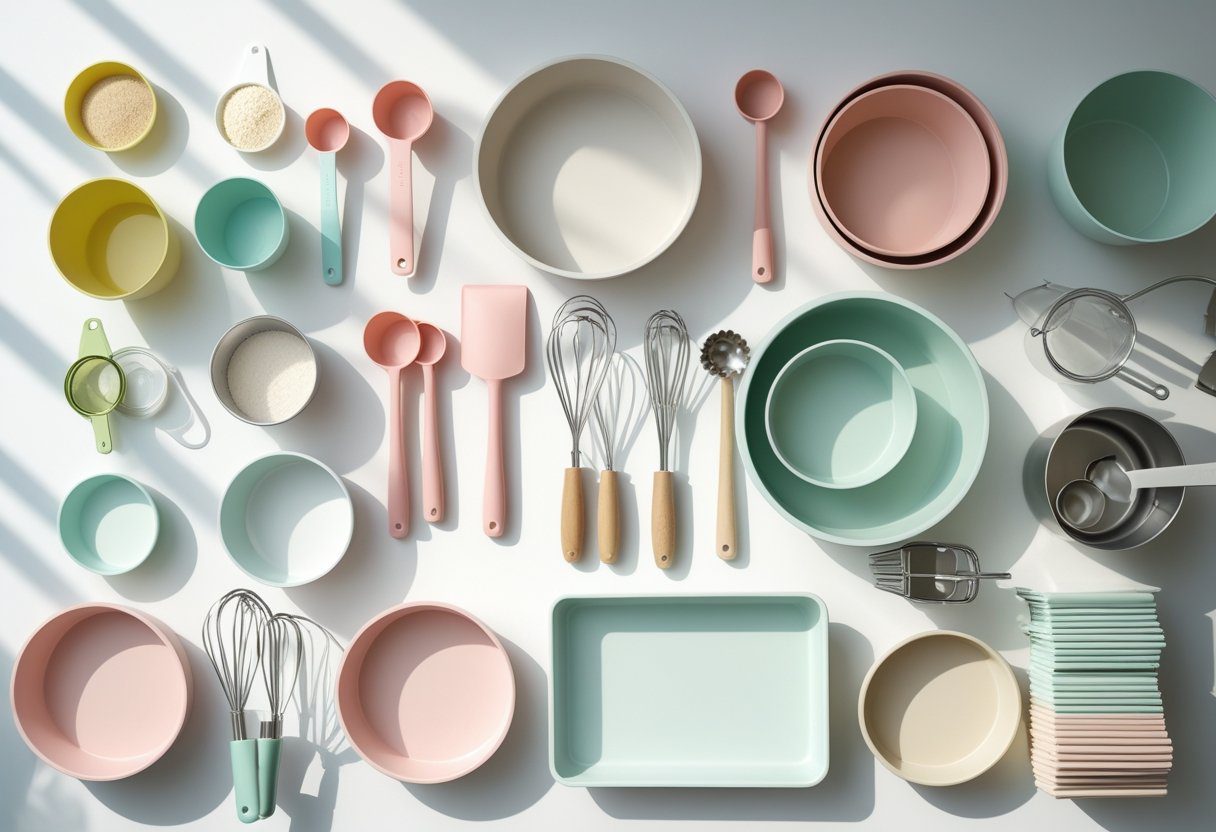
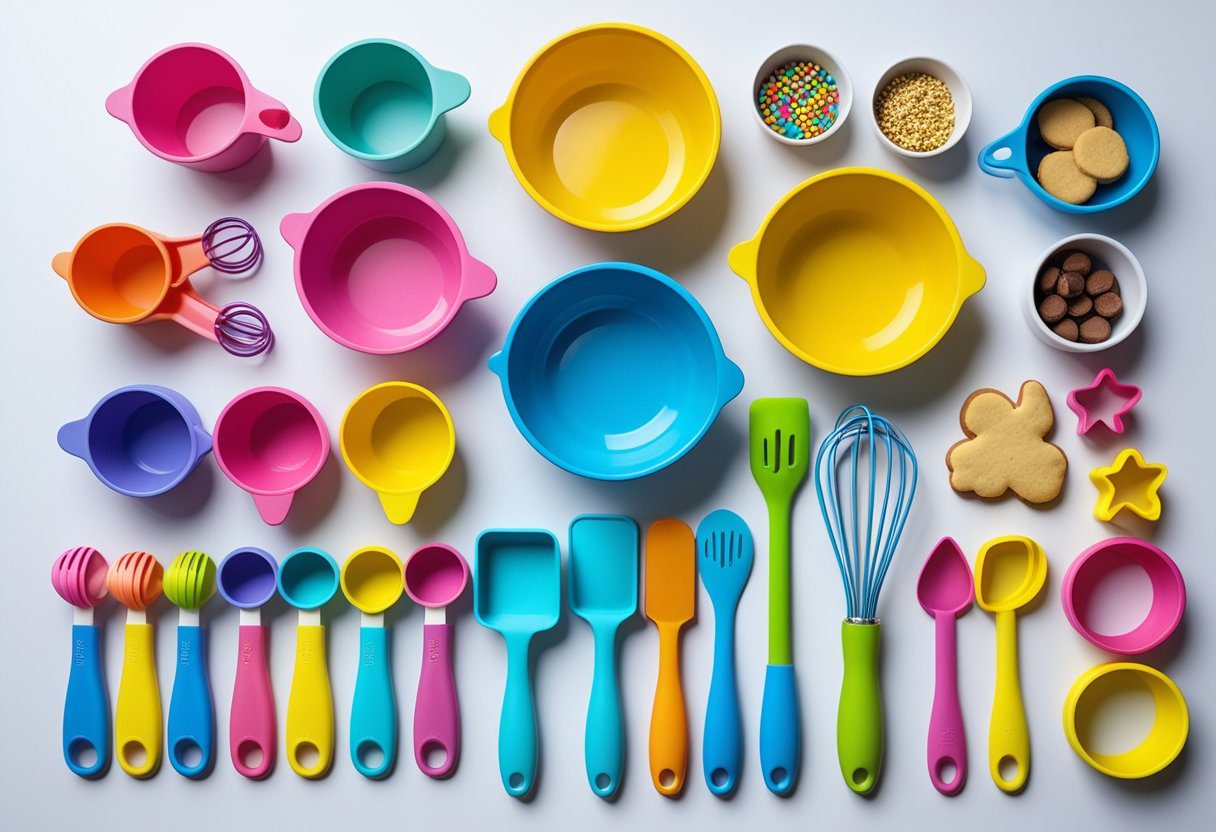
2. Measuring Cups & Spoons – Accuracy Tools for Beginner Bakers
Among all beginner baking equipment, these are non-negotiable.
✔ Why They’re Essential
Baking is science.
A teaspoon too much baking powder or too little flour can completely ruin a recipe.
✔ What to Look For
- Stainless steel lasts longer
- Easy-to-read labels
- Includes 1/8 tsp (many sets don’t!)
Anecdote
I once used a tablespoon instead of a teaspoon while making muffins and ended up with batter volcanoes exploding out of the cups.
After that, I promised myself I’d never guess again.
3. Kitchen Scale – The Most Underrated Tool for New Bakers
Every home baker eventually learns that a digital kitchen scale is more accurate than cups.
✔ Why It Matters
- Gives consistent results
- Prevents dense cakes
- Helps with international recipes
✔ Pro Tip
Look for one that:
- Switches between grams/ounces
- Is lightweight
- Has a large, visible display
Step-by-Step
- Place your bowl on the scale
- Press “tare”
- Add ingredients one by one
- Press “tare” after each addition
Perfect for mess-free baking!
4. Mixing Bowls – Your Everyday Baking Companions
You’ll use mixing bowls more than any other tool.
✔ What You Need
- At least three sizes (small, medium, large)
- Glass or stainless steel
- Microwave-safe (very useful!)
- Stackable for easy storage
✔ Story Time
My very first mixing bowl cracked when I placed warm butter in it. After that incident, I only use heat-proof bowls — and I recommend you do the same.
5. Silicone Spatulas & Whisks – Small Tools With a Big Impact
✔ Why They Matter
A good silicone spatula helps you:
- Scrape every bit of batter
- Fold ingredients gently
- Mix without scratching bowls
A stainless-steel whisk helps with:
- Mixing dry ingredients
- Creating airy batters
- Making sauces, curds, and custards
✔ Tip
Get at least:
- 1 large spatula
- 1 medium spatula
- 1 whisk
- 1 silicone whisk (for non-stick pans)
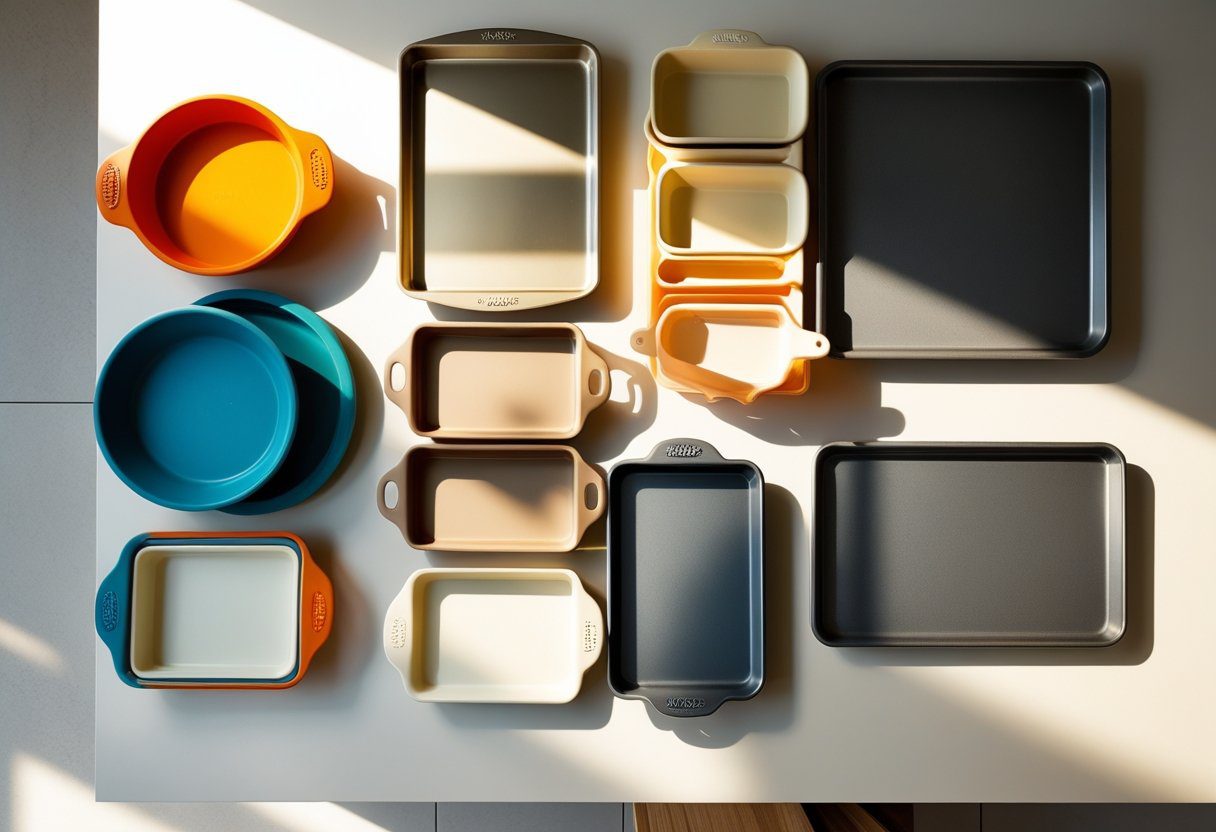
6. Baking Pans – Essential Baking Equipment for Beginners
Every recipe needs the right pan.
✔ Must-Have Baking Pans
- 8-inch round cake pans
- 9×13 baking pan
- Muffin pan
- 8×8 brownie pan
✔ Why Pan Quality Matters
A cheap pan heats unevenly, burns edges, and ruins cakes.
Choose non-stick, heavy-duty, rust-free pans for perfect results.
7. Cookie Sheets / Half Sheet Pans – The Backbone of Home Baking
These pans are used for:
- Cookies
- Sheet cakes
- Roasting vegetables
- Even reheating food
A high-quality sheet pan will last years. Mine has survived more cookies than I can count.
✔ Tip
Get two sheet pans so you can bake multiple batches without waiting.
8. Parchment Paper – Small Tool, Massive Difference
If you want perfectly-shaped cookies and cakes that never stick, parchment paper is your best friend.
✔ Why Beginners Love It
- Prevents burning
- Makes cleanup easy
- Helps cookies hold shape
- Keeps cakes from sticking
9. Rolling Pin – Simple but Essential Baking Tool
Even if you’re not making bread, rolling pins help with:
- Cookie dough
- Pie crust
- Cinnamon rolls
- Flattening ingredients
✔ Types
- Wooden
- Stainless steel
- Adjustable rings
Pick one that feels comfortable and balanced in your hands.
10. Cooling Racks – The Secret to Non-Soggy Bakes
Letting your cookies, cakes, and breads cool properly changes their texture.
✔ Why Use Cooling Racks
- Prevent soggy bottoms
- Allow even airflow
- Keep baked goods firm
✔ Tip
Let cookies rest for 10 minutes on the tray before transferring them.
This prevents breakage.
11. Cookie Scoops – Beginner Bakers’ Best Friend
Perfect for:
- Cookies
- Cupcake batter
- Meatballs (yes!)
- Ice cream
✔ Sizes to Buy
- Small
- Medium
- Large
Using scoops keeps your cookies even-sized, meaning they bake perfectly every time.
12. Pastry Blender – Optional but Very Useful
This tool helps you cut cold butter into flour — perfect for:
- Pie crust
- Biscuits
- Scones
- Crumbles
Step-by-Step: Building Your Beginner Baking Toolkit
Here’s exactly what you should do as a new baker:
Step 1 — Start With the Basics
Buy:
- Mixer
- Measuring tools
- Mixing bowls
These three alone let you bake 90% of simple recipes.
Step 2 — Add the Baking Essentials
Get:
- Baking pans
- Cookie sheets
- Spatulas
- Parchment paper
Now you can make cookies, brownies, cakes, muffins, and more.
Step 3 — Upgrade Slowly
Once you bake more often:
- Cooling racks
- Rolling pin
- Pastry blender
- Kitchen scale
These help you bake more efficiently and with more accuracy.
Final Thoughts: Your Beginner Baking Journey Starts Here
Getting the best baking tools for beginners at home doesn’t need to be overwhelming or expensive. Start with the essentials, learn as you go, and soon you’ll notice dramatic improvements in your results.
Every tool in this guide has a purpose — and by choosing wisely, you’ll save time, avoid frustration, and enjoy baking so much more.
FAQs — Best Baking Tools for Beginners at Home
1. What are the must-have baking tools for beginners at home?
Beginners should start with a hand mixer or stand mixer, measuring cups and spoons, mixing bowls, a baking pan, cookie sheets, silicone spatulas, and parchment paper. These basics are enough to bake cookies, cakes, muffins, brownies, and simple bread recipes successfully.
2. Do I need a stand mixer as a beginner?
Not necessarily. A hand mixer works perfectly fine for most beginner recipes like cakes, cookies, and cupcakes. You only need a stand mixer if you bake frequently or want to knead bread dough, whip large batches of frosting, or save time.
3. Why is a kitchen scale important for baking?
A kitchen scale ensures precise measurements, which is essential because baking is all about accuracy. Measuring ingredients by weight helps prevent dense cakes, dry cookies, or failed doughs — a common issue for beginners using cups.
4. Can I bake without special tools?
You can bake a few simple recipes with very basic tools, but having the right baking equipment makes your baking easier, faster, and far more consistent. Tools like spatulas, mixing bowls, and measuring spoons make a big difference in the final results.
5. What size baking pans should beginners buy?
A good starter set includes:
- 8×8-inch square pan (brownies, bars)
- 9×13-inch pan (cake, casseroles)
- Two 8-inch or 9-inch round cake pans
- 12-cup muffin pan
These sizes cover 90% of beginner baking needs.
6. Should I choose glass, metal, or ceramic baking pans?
For beginners, metal pans are the best choice because they heat evenly, are lighter, and bake cakes and cookies more consistently. Glass is great for casseroles or brownies, but it heats slower. Ceramic is beautiful but heavy and not ideal for beginners.
7. What type of mixing bowls are best for beginner bakers?
The best choices are glass and stainless steel mixing bowls. They are durable, heat-resistant, easy to clean, and safe for the microwave. Plastic bowls may stain, warp, or absorb odors over time.
8. Are silicone baking mats better than parchment paper?
Both have advantages, but for beginners:
- Parchment paper helps cookies hold their shape and prevents sticking.
- Silicone mats are reusable and eco-friendly but can sometimes cause cookies to spread more.
Most new bakers prefer parchment paper for consistent results.
9. Why do I need cooling racks for baking?
Cooling racks prevent cakes and cookies from becoming soggy by allowing air to circulate underneath. This helps baked goods cool evenly and maintain their texture.
10. Do cookie scoops really make a difference?
Absolutely! Cookie scoops help measure perfect portions so all your cookies bake evenly. They’re also useful for portioning cupcake batter, making stuffed cookies, and serving ice cream.