
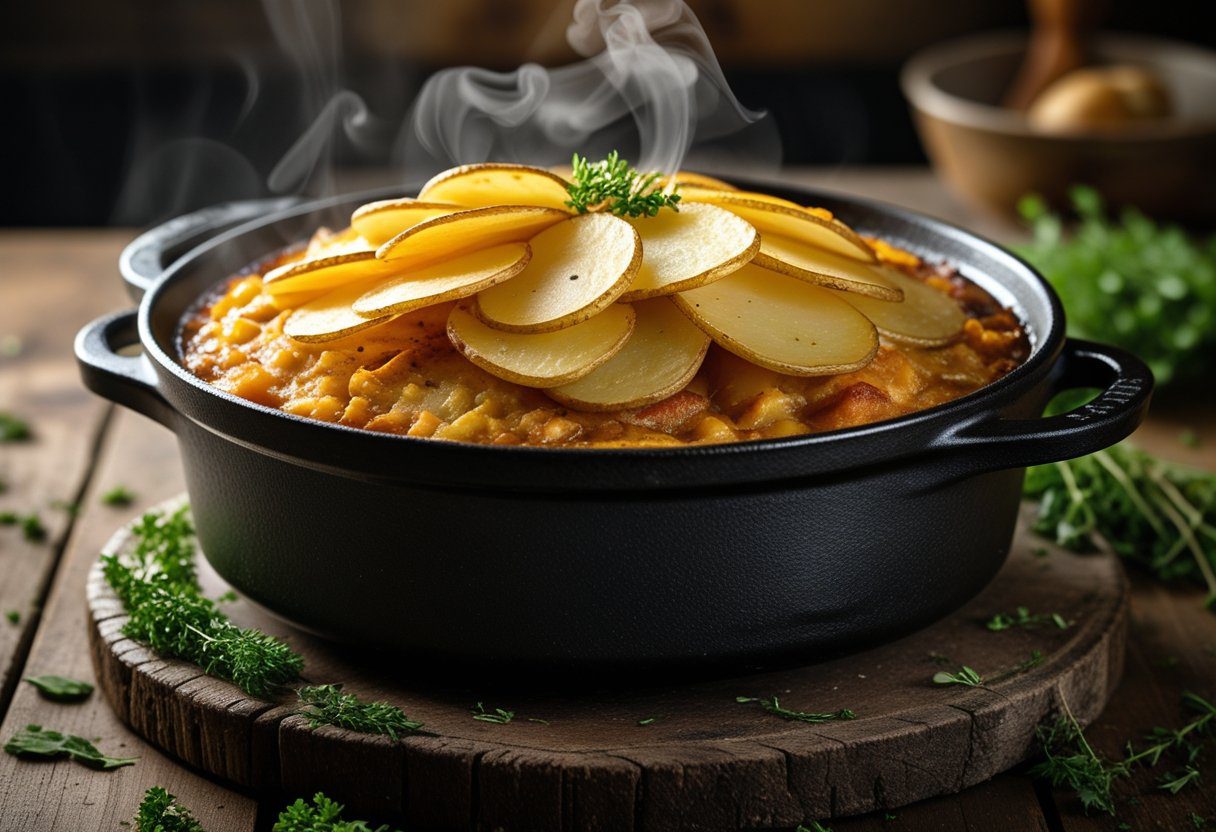
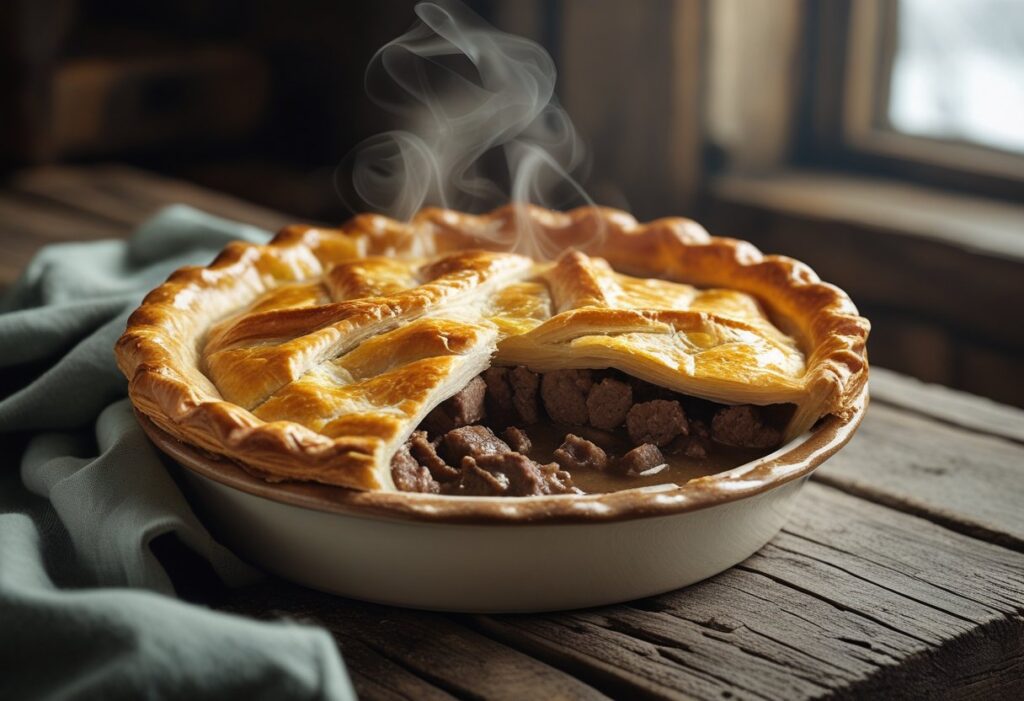
The Steak and Sausage Pie Scottish Recipe is a timeless classic of Scottish comfort food, known for its rich gravy, tender chunks of slow-cooked beef, and golden puff pastry topping. Deeply rooted in traditional Scottish cuisine, this hearty pie is often served during cold winter evenings, family dinners, and festive occasions such as Hogmanay. What sets this recipe apart is its focus on proper technique, patience, and authentic ingredients rather than shortcuts, resulting in a deeply flavorful and satisfying dish.
To make this traditional steak and sausage pie, the process begins with browning chunky cuts of braising steak to develop a strong savory base. Quality pork sausages are then lightly browned to release their flavor before onions are slowly cooked until soft and aromatic. Flour is added to create the foundation of a thick gravy, followed by beef stock, Worcestershire sauce, and classic herbs such as thyme and bay leaf. The beef and sausages are returned to the pot and gently simmered for an extended period, allowing the meat to become tender and the gravy to thicken naturally.
Once the filling is rich and glossy, it is transferred to a pie dish and topped with puff pastry, a traditional Scottish choice that bakes into a crisp, flaky finish. The pie is baked until golden and bubbling, creating a hearty meal best served with mashed potatoes and simple vegetables.
This authentic dish showcases slow cooking, traditional methods, and comforting flavors. For the complete recipe in given below, this is the most authentic and tasty steak and sausage pie recipe
Why This Steak and Sausage Pie Recipe Is Considered Authentic
Authenticity in Scottish cooking is not about fancy ingredients; it is about technique and tradition. A true Scottish steak and sausage pie uses chunky cuts of beef rather than minced meat, combined with sliced sausages that release flavor into the gravy as they cook. The filling is slow simmered until the beef becomes tender enough to cut with a spoon, and the gravy thickens naturally without shortcuts.
Another defining feature is the pastry. In Scotland, the pie is topped with puff pastry, not fully enclosed. This allows steam to escape, keeps the pastry crisp, and ensures the filling remains rich rather than watery. These small details are what separate an authentic Scottish recipe from a generic meat pie.
Ingredients for a Hearty Scottish Steak and Sausage Pie
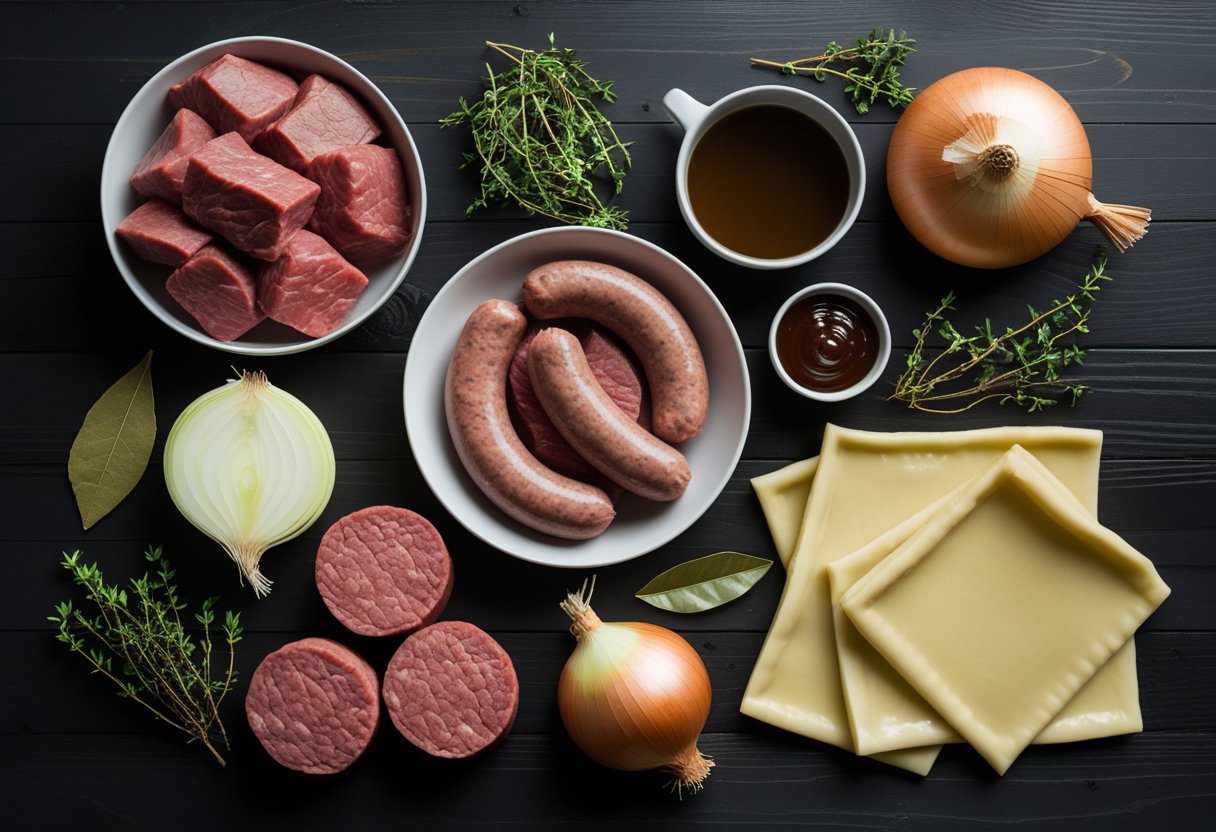
- Braising steak (chuck, blade, or similar slow-cook cut)
- Quality pork sausages, mildly seasoned
- Onions
- Plain flour
- Beef stock
- Worcestershire sauce
- Black pepper and salt
- Thyme and bay leaf
- Beef dripping or neutral cooking oil
Pastry
- Ready-rolled puff pastry
- Egg for glazing
Every ingredient plays a role. Cheap sausages or lean beef will result in a dry filling, while rushed gravy will taste flat. When cooked properly, these ingredients work together to create one of the most comforting dishes in Scottish cuisine.
Step-by-Step: How to Make Steak and Sausage Pie the Traditional Scottish Way
Step 1: Preparing and Browning the Beef
Begin by cutting your braising steak into generous, chunky pieces. Scottish steak pie is known for its hearty texture, so avoid cutting the beef too small. Heat beef dripping or oil in a heavy-bottomed pot until hot but not smoking. Add the beef in small batches and brown it thoroughly on all sides.
This step is crucial. Browning the beef creates deep, savory flavors that form the foundation of the entire dish. If you overcrowd the pan, the meat will steam rather than brown, resulting in a pale, flavorless filling. Take your time here. Each piece should develop a rich, dark crust before being removed from the pot.
Step 2: Browning the Sausages for Flavor Depth
Once the beef is browned and set aside, add the sliced sausages to the same pot. Allow them to cook until lightly golden on the edges. You are not cooking them fully at this stage; you are simply developing flavor.
The sausages release fat and seasoning into the pot, which will later enrich the gravy. This step adds another layer of depth and ensures the sausage flavor carries through the entire pie rather than tasting separate from the beef.
Step 3: Cooking the Onions Slowly and Properly
With the sausages removed, add the sliced onions to the pot. Cook them gently over medium heat, stirring regularly. The goal is to soften and lightly caramelize the onions, not to brown them aggressively.
As the onions cook, they absorb the flavors left behind from the beef and sausages. This creates a natural sweetness that balances the richness of the meat. Rushing this step will result in sharp onion flavor rather than the mellow, savory base that an authentic Scottish steak and sausage pie requires.
Step 4: Building the Gravy Base
Once the onions are soft and fragrant, sprinkle the flour evenly over them and stir continuously. This step removes the raw taste of the flour and creates the thickening base for your gravy.
Gradually pour in the beef stock while stirring to prevent lumps. Add Worcestershire sauce, black pepper, thyme, and the bay leaf. Return the beef and sausages to the pot, ensuring everything is fully submerged in the liquid.
At this point, the mixture may look thin. Do not worry. A Scottish steak pie gravy thickens slowly and naturally as it simmers.
Step 5: Slow Simmering for Tender Beef
Lower the heat, cover the pot, and allow the filling to simmer gently for at least 90 minutes, stirring occasionally. This slow cooking process breaks down the connective tissue in the beef, resulting in tender, melt-in-the-mouth pieces.
This is where many home cooks go wrong by rushing. If the beef is still firm, it is not ready. The longer, slower simmer develops flavor and creates that rich, hearty texture associated with traditional Scottish comfort food.
Step 6: Final Gravy Adjustment
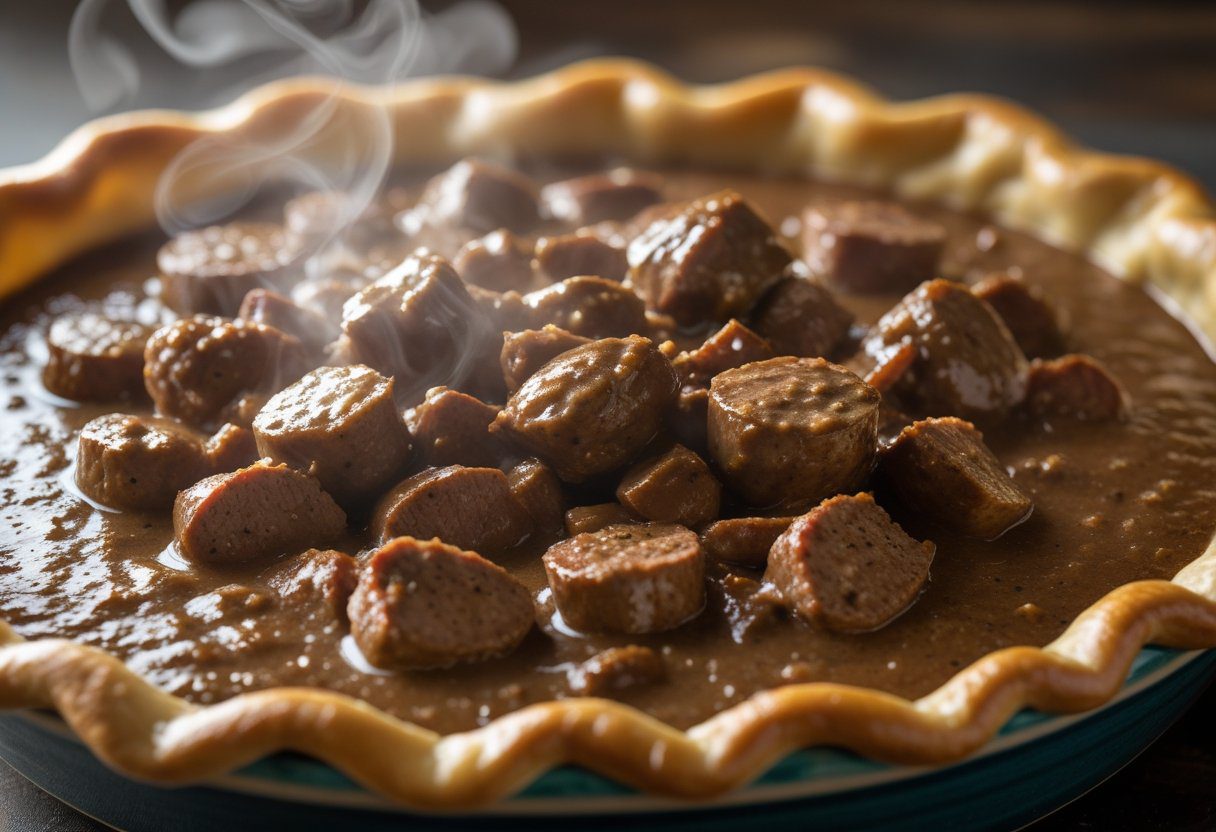
After simmering, remove the lid and allow the filling to cook uncovered for an additional 20–30 minutes. This reduces the liquid and concentrates the flavors, producing a thick, glossy gravy that coats the meat perfectly.
Taste and adjust seasoning with salt and pepper. The gravy should be rich but balanced, savory without being overpowering. If your spoon stands briefly in the gravy, you have achieved the correct consistency.
Step 7: Assembling the Pie
Transfer the finished filling into a deep pie dish and allow it to cool slightly. Cooling prevents the puff pastry from melting before baking.
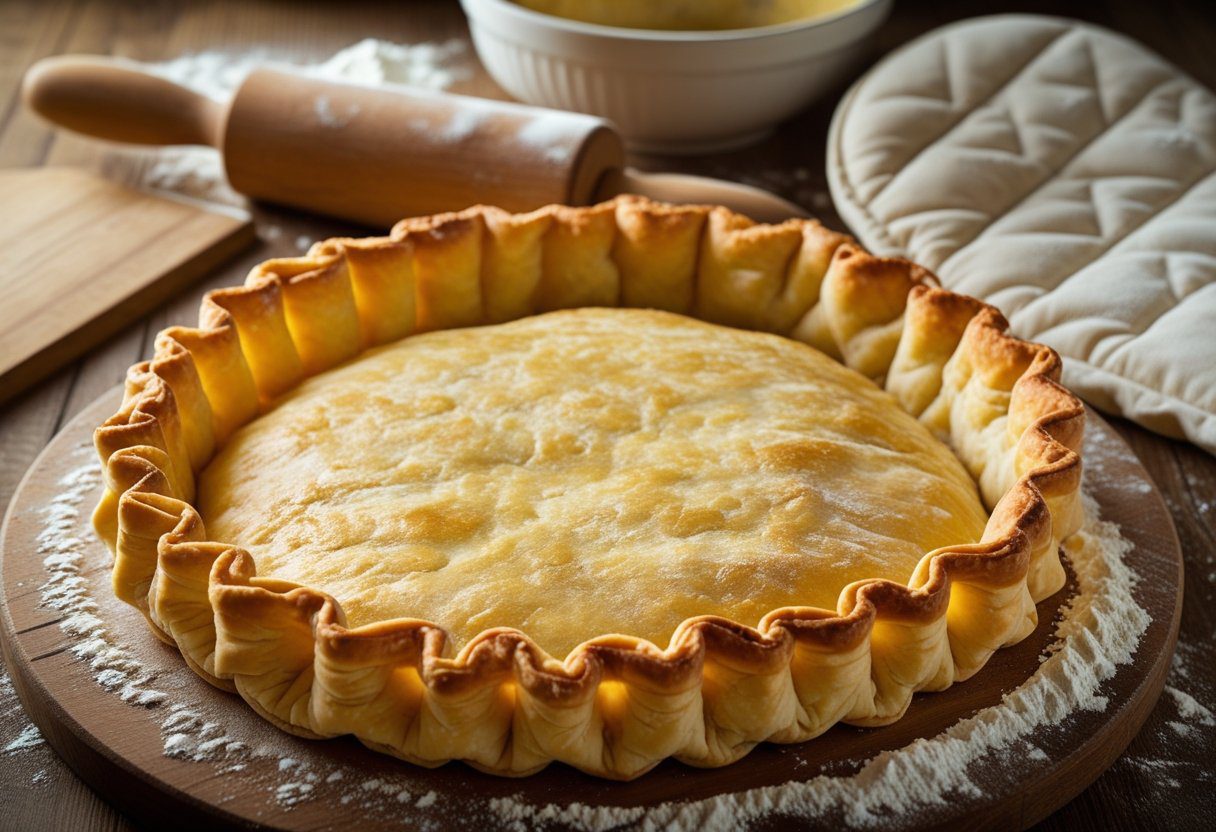
Lay the puff pastry over the top, trimming the edges neatly. Crimp gently and cut a small slit in the center to allow steam to escape. Brush generously with beaten egg to ensure a golden, glossy finish.
Step 8: Baking to Golden Perfection
Bake the pie in a preheated oven until the pastry is well risen, deeply golden, and crisp. The filling should be bubbling gently underneath the pastry, releasing a rich aroma that fills the kitchen.
This final stage transforms the dish from a stew into a true Scottish steak and sausage pie.
Serving the Scottish Steak Pie With Sausages Recipe
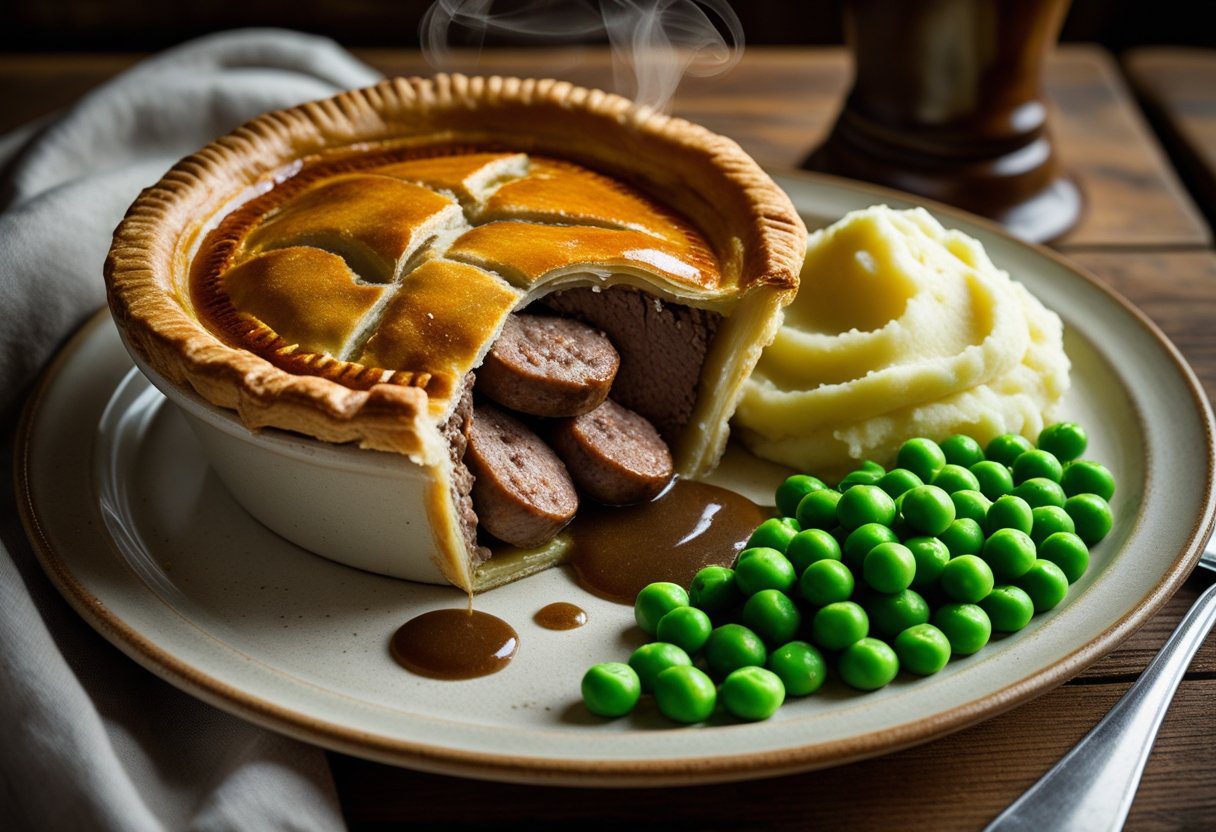
Serve hot with creamy mashed potatoes, buttered vegetables, or peas. In Scotland, this pie is often enjoyed as a stand-alone centerpiece, requiring little more than a spoon and good company. i hope you enjoying steak pie with sausages Recipe
Storage and Make-Ahead Tips
The filling can be made one or two days ahead and stored in the refrigerator. In fact, the flavor improves overnight. Always add the pastry just before baking for best results.
Related About Scottish Steak Pie Recipe With Sausages
Gluten-Free Puff Pastry Topping for Scottish Steak Pie
A gluten-free puff pastry topping is one of the best ways to recreate the traditional look and texture of a Scottish steak pie while keeping the recipe suitable for gluten-free diets. Traditional puff pastry relies on wheat gluten for elasticity and lift, but gluten-free versions use carefully balanced flour blends and fats to achieve similar flaky layers. When used as an open topping rather than a fully enclosed crust, gluten-free puff pastry performs especially well, allowing steam to escape and keeping the pastry crisp. For Scottish steak pie, this method stays close to tradition while avoiding the common issues of dense or soggy gluten-free pastry. Proper chilling before baking and a well-heated oven are key to achieving the best rise and texture.
Authentic Braising Chuck Steak in Gluten-Free Scottish Meat Pie
Braising chuck steak is essential for maintaining authenticity in a gluten-free Scottish meat pie. This cut of beef is naturally free from gluten and well suited to long, slow cooking. As it simmers, the connective tissue breaks down, resulting in tender, flavorful meat that forms the heart of the pie. Chuck steak also contributes richness to the gravy without the need for flour-based coatings. Browning the beef properly before slow cooking is critical, as it develops depth of flavor and enhances the overall character of the finished dish. Choosing the correct cut ensures the pie remains hearty, satisfying, and true to Scottish tradition.
Xanthan Gum Thickened Gravy for Gluten-Free Steak Pie
Xanthan gum is an effective alternative to wheat flour for thickening gravy in a gluten-free steak pie. When used in very small quantities, it produces a smooth, cohesive texture without altering flavor. The key is to add it gradually while stirring continuously, as overuse can lead to an overly thick or sticky consistency. This method allows the gravy to remain rich and glossy while fully coating the beef and sausages. Xanthan gum works particularly well when combined with slow reduction, ensuring the gravy has depth, body, and balance without relying on traditional flour.
Slow Cooked Beef Filling Gluten-Free Scottish Pie Recipe
A slow cooked beef filling is the foundation of a successful gluten-free Scottish pie. Gentle simmering over an extended period allows flavors to develop naturally while ensuring the beef becomes tender and succulent. Without gluten-based thickeners, time and reduction play a crucial role in achieving the correct consistency. Aromatics such as onions and herbs infuse the cooking liquid, creating a deeply savory filling that feels rich and comforting. Patience during this stage is essential, as rushing the process can result in tough meat and thin gravy.
Homemade Gluten-Free Shortcrust Base for Scottish Steak Pie
A homemade gluten-free shortcrust base provides a sturdy option for those who prefer a bottom crust in their Scottish steak pie. This type of pastry relies on the correct balance of fat and moisture rather than elasticity. Keeping ingredients cold and handling the dough gently helps prevent crumbling. Pre-baking the base slightly before adding the filling can also improve texture and prevent sogginess. While not traditional for all Scottish steak pies, a well-made gluten-free shortcrust base can offer structure and reliability.
Rice Flour and Maize Starch Pastry for Open-Top Pies
Rice flour combined with maize starch creates a light yet stable pastry suitable for open-top pies. Rice flour contributes a neutral flavor and crisp texture, while maize starch softens the dough and improves flexibility. This blend works particularly well for pie toppings that do not need to stretch or seal. When baked at a high temperature, the pastry develops a pleasant crispness that complements rich meat fillings. Proper hydration and resting time are important to avoid dryness or cracking.
Egg Wash Alternatives for Dairy-Free Scottish Gluten-Free Pie Crust
For those avoiding eggs or dairy, there are effective alternatives to traditional egg wash for finishing a gluten-free Scottish pie crust. Plant-based milk, oil, or light syrups can provide shine and help the pastry brown evenly in the oven. These options work especially well with gluten-free pastry, which can otherwise appear pale when baked. Applying the wash gently and evenly improves the final appearance without affecting flavor or texture.
Filo Pastry Substitute for Crisp Gluten-Free Steak Pie Topping
Although traditional filo pastry is not gluten-free, layered thin gluten-free sheets can be used to create a crisp topping for steak pie. Brushing each layer lightly with oil before stacking helps achieve a flaky, crackly texture once baked. This approach offers a lighter alternative to puff pastry while still providing contrast to the rich filling underneath. Careful layering and controlled baking temperature are essential to prevent excessive drying or burning.
FAQs fOR Traditional Steak And Sausage Pie Recipe
1. What makes a steak and sausage pie authentically Scottish?
An authentic steak and sausage pie Scottish recipe is defined by its use of chunky cuts of slow-cooked beef rather than minced meat, combined with sliced pork sausages that simmer directly in a rich gravy. The cooking method is equally important. Traditional Scottish pies are cooked slowly to allow the beef to become tender and the gravy to thicken naturally. Another key feature is the pastry topping. Scottish steak and sausage pies are topped with puff pastry rather than being fully enclosed, which keeps the pastry crisp and prevents the filling from becoming soggy. These elements together create the hearty texture and deep flavor associated with Scottish comfort food.
2. What is the best cut of beef for steak and sausage pie?
The best cuts of beef for a steak and sausage pie Scottish recipe are those designed for slow cooking, such as chuck steak, blade steak, or shin beef. These cuts contain connective tissue that breaks down during long, gentle simmering, resulting in tender, flavorful meat. Lean cuts of steak should be avoided because they tend to become dry and tough when cooked for extended periods. Using the correct cut of beef ensures that the pie filling remains rich, moist, and satisfying, which is essential for an authentic and hearty result.
3. Why is puff pastry traditionally used instead of shortcrust pastry?
Puff pastry is traditionally used in Scottish steak and sausage pie because it provides a light, flaky contrast to the rich and dense filling underneath. Unlike shortcrust pastry, puff pastry is typically used only as a topping, allowing steam to escape while baking. This prevents condensation from soaking into the pastry and helps maintain a crisp texture. Puff pastry also rises beautifully in the oven, giving the pie its characteristic golden, layered appearance that is closely associated with traditional Scottish steak pies.
4. Can steak and sausage pie be made ahead of time?
Yes, a steak and sausage pie Scottish recipe is ideal for making ahead of time. The filling can be prepared one or even two days in advance and stored in the refrigerator. In fact, allowing the filling to rest overnight often improves the flavor, as the beef, sausages, and gravy continue to develop depth. When you are ready to serve, simply reheat the filling, top it with puff pastry, and bake until golden. Making the pie in stages also helps prevent soggy pastry and makes preparation more manageable.
5. How do I ensure the gravy is thick and rich, not watery?
Achieving a thick, rich gravy is essential for an authentic steak and sausage pie. The key is slow cooking and natural reduction rather than relying on artificial thickeners. Flour added during the onion-cooking stage helps create a base, while extended simmering allows excess liquid to evaporate and flavors to concentrate. Removing the lid during the final stage of cooking encourages the gravy to thicken further. The finished gravy should coat the meat rather than pool at the bottom of the dish, creating the hearty texture associated with traditional Scottish pies.
6. Is steak and sausage pie traditionally eaten on special occasions?
Yes, steak and sausage pie holds a special place in Scottish food culture and is commonly served during celebrations such as Hogmanay, family gatherings, and winter holidays. It is considered a dish that brings people together, often prepared in large quantities to feed a group. While it can certainly be enjoyed as an everyday comfort meal, its rich, hearty nature and traditional roots make it particularly popular during colder months and festive occasions.
7. Can vegetables be added without losing authenticity?
While traditional steak and sausage pie Scottish recipes focus primarily on meat and gravy, small amounts of vegetables can be added without straying too far from authenticity. Carrots or mushrooms are the most commonly accepted additions, as they complement the richness of the beef and sausages without overpowering the dish. However, large quantities of vegetables or strongly flavored additions may alter the traditional balance. For a truly authentic version, it is best to keep vegetables minimal and let the meat remain the star of the pie.
8. Can steak and sausage pie be frozen and reheated successfully?
Yes, steak and sausage pie can be frozen successfully, particularly the filling. For best results, freeze the cooked filling without the pastry, as puff pastry does not always freeze and reheat well once baked. When ready to serve, thaw the filling completely, reheat it gently, and then add fresh puff pastry before baking. This method preserves the texture of both the filling and the pastry, ensuring that the pie remains hearty, flavorful, and close to freshly made.
Final Thoughts From Experience
A Steak and Sausage Pie Scottish Recipe – Authentic & Hearty is a dish that rewards patience. When cooked slowly and with care, it delivers bold flavor, tender meat, and true comfort. This is the kind of recipe that becomes part of a family’s tradition — cooked again and again, each time better than the last.
If you cook it once the proper way, you will understand why this pie has remained a Scottish classic for generations.