

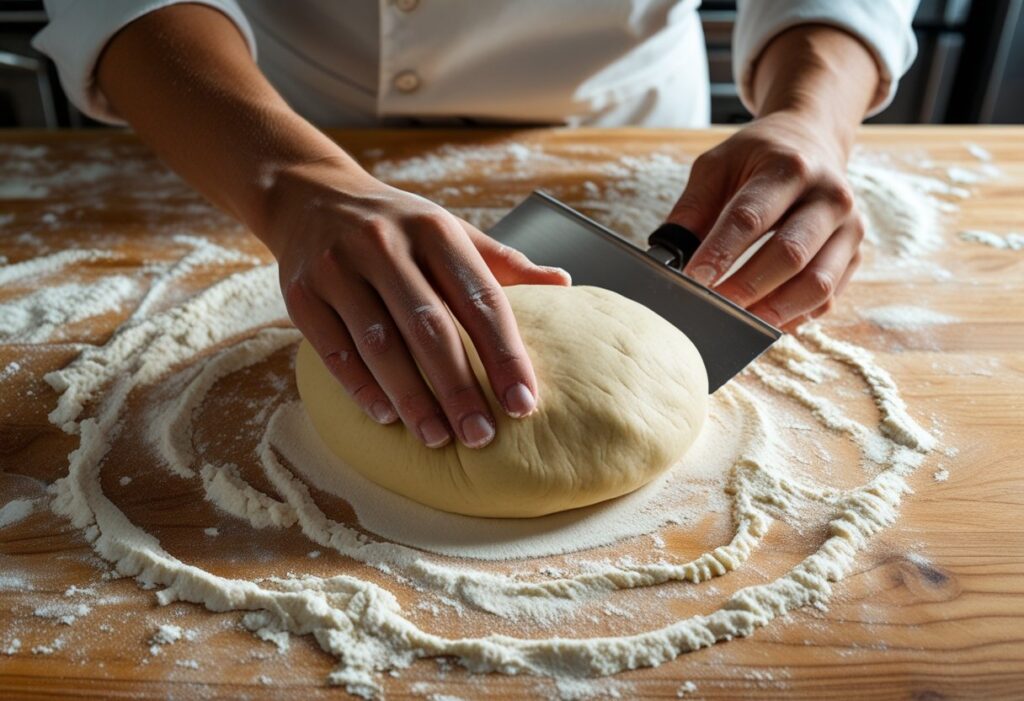
If you’re learning How to Use a Dough Scraper for Baking, you’re on the path to cleaner counters, smoother dough handling, and bakery-quality results. Whether you’re kneading bread dough, shaping pastry, or tired of sticky messes, this tool can transform the way you bake.
In this complete guide, you’ll learn the best methods for kneading efficiently, folding and turning dough, handling high-hydration dough, dough dividing techniques, and shaping dough professionally. You’ll also discover the baking science behind gluten development technique, dough shaping workflow, and scraper-assisted kneading.
What Is a Dough Scraper?
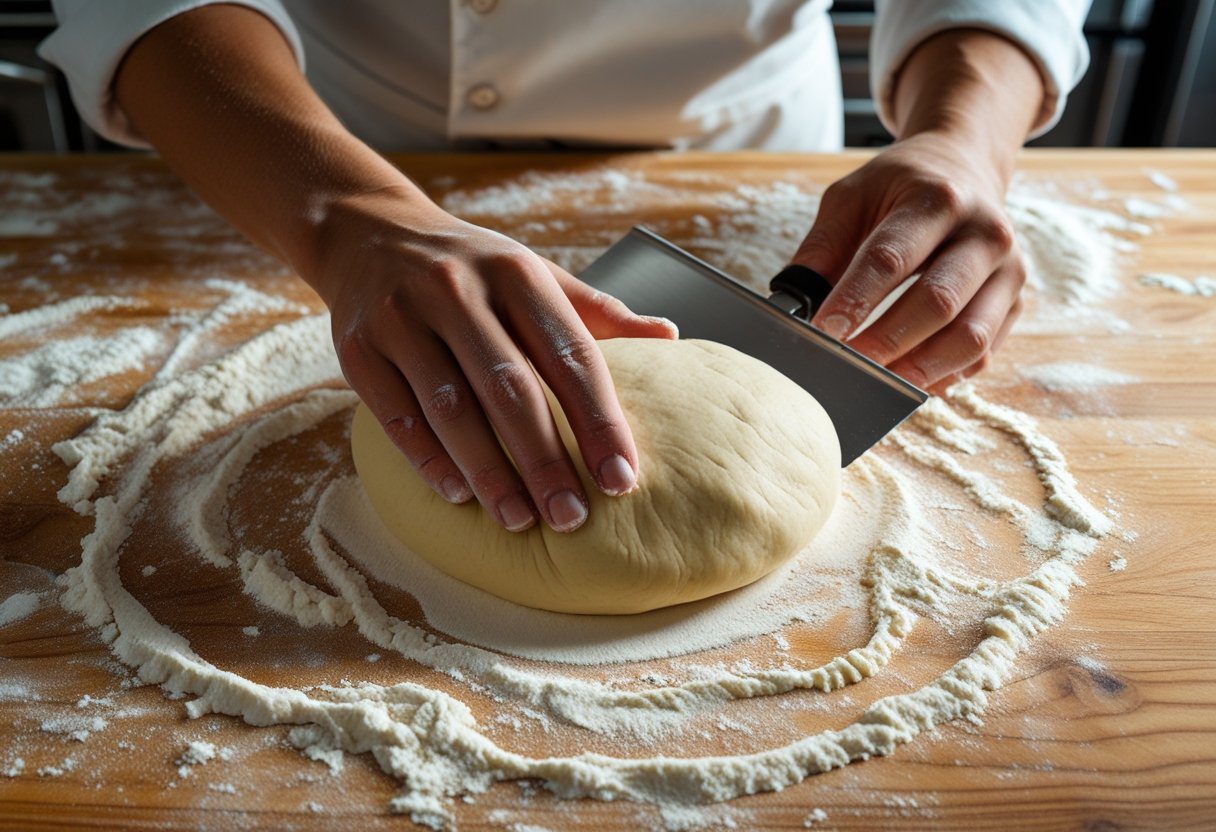
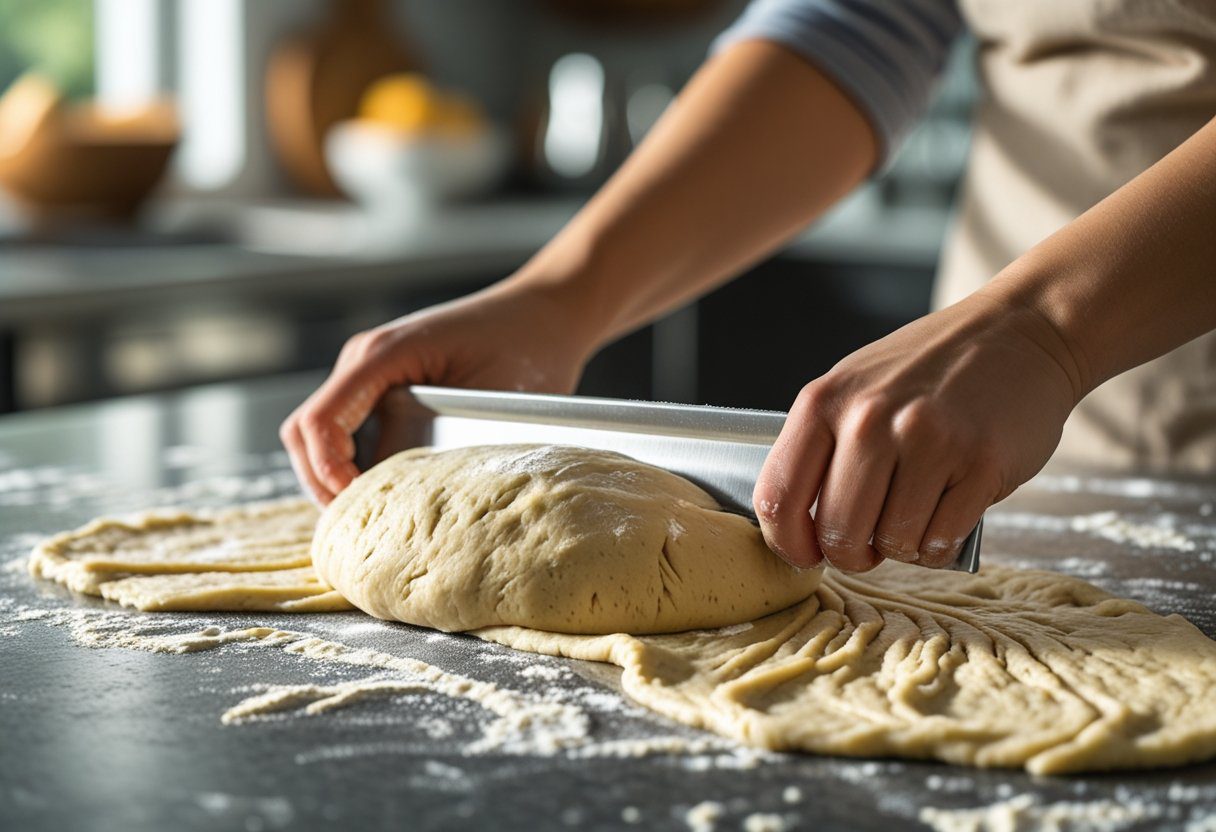
A dough scraper—sometimes called a bench scraper—is a flat, straight-edged tool used for controlling, lifting, dividing, and shaping dough. It plays a major role in:
- dough handling tools
- removing sticky dough
- maintaining a cleaner baking surface
- supporting the dough preparation process
- assisting the dough folding method
- improving bread dough control
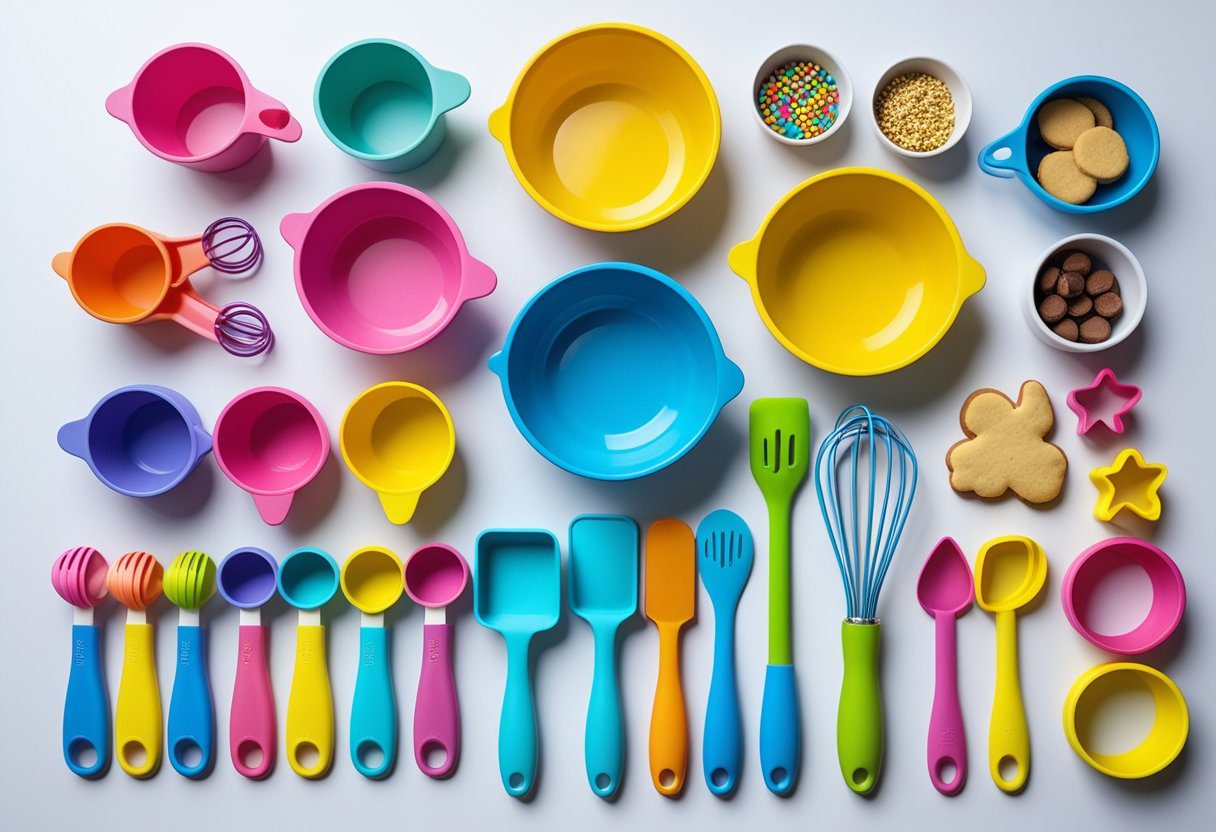
Types of Dough Scrapers
Stainless steel bench scraper
Best for: bread baking, dough dividing, counter cleanup.
Plastic dough scraper
Best for: bowls, delicate pastry handling.
Flexible bowl scraper
Designed to fit curved surfaces and remove sticky dough efficiently.
Metal scraper for baking
Durable, sturdy, ideal for heavy dough tasks.
Silicone dough scraper
Nonstick, gentle, perfect for soft or enriched doughs.
Understanding these helps you apply advanced dough scraper techniques during different baking tasks.
Why a Dough Scraper Is Essential
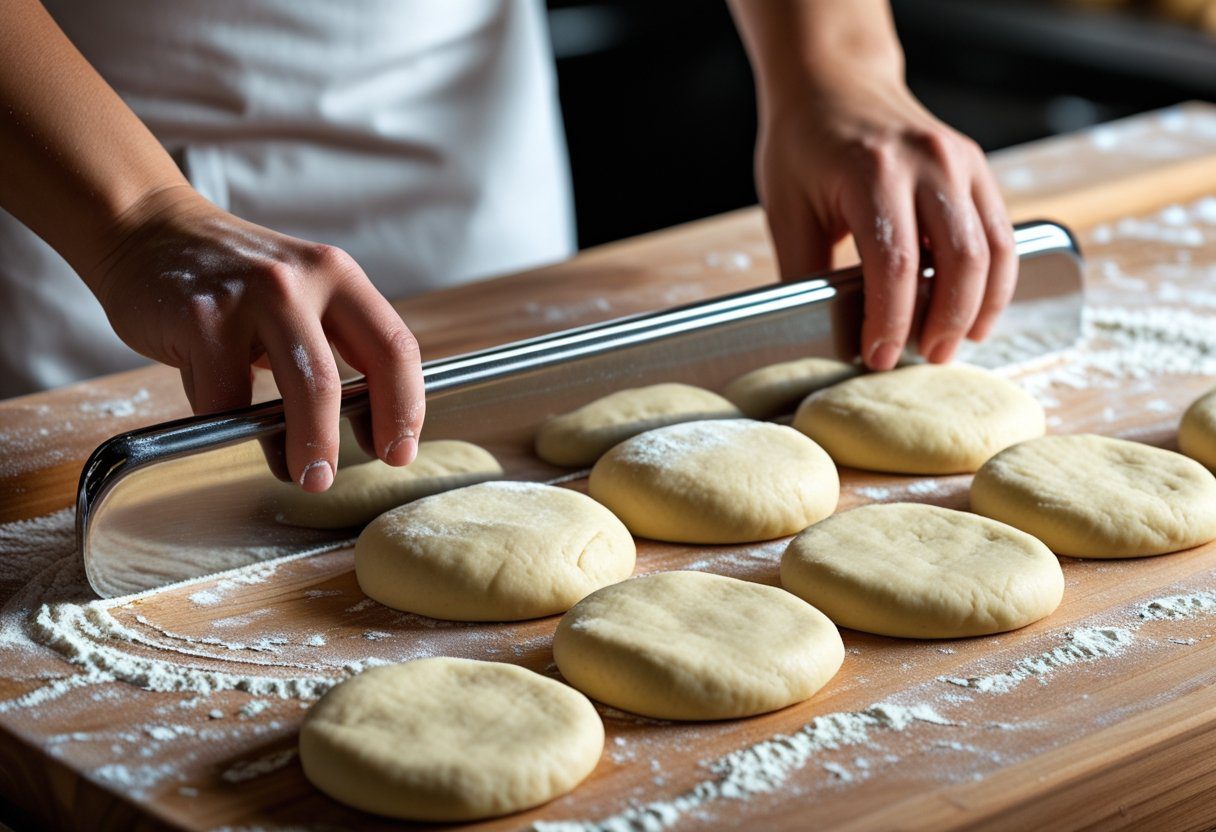
Bakers rely on this tool because it improves workflow and enhances results.
Reduces Mess & Stickiness
The scraper is essential for sticky dough management, especially when learning how to handle sticky dough. It prevents dough from sticking everywhere and keeps your workspace clean.
Saves Time
You avoid washing hands repeatedly, making kneading much faster and smoother.
Improves Gluten Development
Gentle stretching and folding supports the gluten development technique naturally.
Helps Shape Dough Like a Pro
It provides better control during artisan dough shaping, shaping bread loaves, and rotating dough cleanly.
Creates Clean Cuts
Perfect for how to cut dough evenly, producing consistent portions.
Cleans Surfaces Instantly
Use it for fast baking surface cleanup and removing cleaning flour residue.
When comparing dough scraper vs bench scraper, the main difference is that bench scrapers are sturdier and often made from steel, but both serve similar functions.
How to Use a Dough Scraper for Baking
This section provides a professional, practical guide for beginners and experienced bakers.
Step-by-Step Guide: Using a Dough Scraper Properly
1. Prepare Your Work Surface
Lightly flour your counter to prevent excessive sticking.
Avoid over-flouring, which can ruin smooth dough texture and affect perfect dough consistency.
2. Hold the Scraper Correctly
Grip the scraper firmly with the blade slightly angled toward the dough. This gives you:
- better leverage
- controlled scraping
- clean lifting
- stable dough handling
A proper grip is essential for any bench tool for baking.
3. Kneading Dough with a Scraper
(kneading dough with a scraper, scraper-assisted kneading, baking tool for kneading)
The following method is used by professional bakers:
Stretch and Fold Kneading
- Slide scraper under the dough
- Lift gently
- Stretch upwards
- Fold toward the center
- Rotate 90°
- Repeat 5–8 minutes
This improves dough elasticity and supports strong gluten formation through the gluten development technique.
4. How to Fold Dough with a Scraper
Folding helps build structure and aerate the dough.
Technique:
- Lift the dough edge
- Fold toward the center
- Rotate
- Repeat fold cycles
This helps create an even crumb and supports artisan dough shaping.
5. Dividing Dough with a Scraper
For perfect portioning:
- Press scraper straight down
- Lift pieces cleanly
- Transfer without tearing
- Shape smoothly
This ensures:
- even dough portions
- consistent rolls and buns
- predictable baking results
6. How to Shape Dough with a Scraper
The scraper gives you excellent control during shaping:
- Sweep dough gently with scraper
- Rotate into a tight ball
- Build surface tension
- Lift dough cleanly
Your dough will look smoother and more uniform.
How to Handle Sticky Dough
To manage sticky or high-hydration dough:
- Use quick, confident scraper movements
- Keep scraper clean
- Avoid pressing with fingers
- Don’t add excessive flour
- Let the scraper lift and rotate the dough
With practice, working with stretchier dough becomes easy and enjoyable.
Using a Scraper for Pastry Dough
A scraper helps with:
- lifting chilled pastry
- turning laminated dough
- cutting pastry dough cleanly
- maintaining delicate layers
It is especially useful when working with croissants, puff pastry, pie crusts, and Danish doughs.
Cleaning Dough with a Bench Scraper
The scraper is also your best cleaning tool for:
- dried dough
- wet sticky dough
- flour patches
- crumbs
- surface buildup
Cleaning the scraper:
- Wash with warm soapy water
- Avoid abrasive scrubbers
- Dry properly
Stainless Steel Dough Scraper Uses
A stainless steel dough scraper is the most powerful and versatile tool for:
- shaping dough
- portioning bread
- cleaning counters
- heavy kneading support
- cutting dense dough
- laminated dough work
Its strength makes it ideal for more demanding baking tasks.
Dough Scraper Tips for Beginners
Practical beginner tips:
- Start with a metal scraper for the counter
- Use plastic or silicone scrapers for bowls
- Clean the scraper throughout baking
- Use downward, not angled, cuts
- Move slowly at first
- Use the scraper to rotate dough with one hand
- Practice shaping tension
These easy dough scraper tips help beginners bake confidently.
Creative Dough Scraper Techniques for Home Bakers
Useful alternative applications:
- moving chopped ingredients
- lifting cookies
- smoothing icing
- scraping bowls
- flattening butter for laminated dough
- removing stuck dough from trays
It’s one of the best simple baking tools for beginners.
Dough Scraper vs Bench Scraper
Summary Table
| Feature | Dough Scraper | Bench Scraper |
| Materials | Plastic, silicone, metal | Mostly stainless steel |
| Flexibility | More flexible | More rigid |
| Best For | Pastry, bowls | Bread, dividing, cleanup |
| Handling | Gentle | Strong & precise |
| Typical Use | Everyday baking | Professional shaping |
Final Takeaway: A Small Tool with Big Results
Understanding How to Use a Dough Scraper for Baking helps you:
- bake cleaner
- knead faster
- shape dough professionally
- achieve consistent portioning
- improve dough structure
- reduce mess and stress
With scraper-assisted kneading, dough folding method, and dough shaping workflow, your baking becomes easier, more precise, and more enjoyable.
FAQs About How to Use a Dough Scraper for Baking
1. What is a dough scraper used for in baking?
A dough scraper is used for lifting, dividing, shaping, and cleaning dough. It helps manage sticky dough, improves kneading efficiency, and keeps your baking surface clean. Bakers also use it for cutting pastry dough, shaping bread loaves, and maintaining a smooth dough texture.
2. How do beginners use a dough scraper?
Beginners should start by using the scraper to lift dough from the counter, rotate it during kneading, and divide it into even portions. Keeping the scraper clean and using slow, controlled movements helps build confidence while learning basic dough scraper techniques.
3. Is a stainless steel dough scraper better than a plastic one?
A stainless steel dough scraper is stronger and ideal for bread making, dividing dough, and counter cleanup. Plastic or silicone scrapers are more flexible and perfect for bowl scraping and delicate pastry dough manipulation. The best choice depends on your baking habits.
4. Can I knead dough entirely with a scraper?
Yes. High-hydration or sticky dough can be kneaded entirely using the scraper through the stretch-and-fold method. This reduces mess, prevents sticking, and supports proper gluten development.
5. How do I divide dough evenly with a scraper?
Press the scraper straight down to cut the dough cleanly. Avoid dragging the blade. Use a kitchen scale for accuracy if you need identical dough portions for rolls, buns, or pastries.
6. How do I keep dough from sticking to my scraper?
Clean the scraper frequently, use quick lifting motions, and lightly flour the edge if needed. Avoid adding too much flour to the dough itself—rely on the scraper for sticky dough management.
7. Can a dough scraper help shape bread dough?
Absolutely. A scraper helps rotate the dough while building surface tension, making it easier to form smooth boules, batards, or sandwich loaves. It also helps lift dough without tearing or deflating it.
8. What’s the difference between a dough scraper and a bench scraper?
A dough scraper may be plastic, silicone, or metal and is often flexible. A bench scraper is usually stainless steel and rigid. Both perform similar tasks, but bench scrapers offer stronger cutting power and better control during bread shaping.