

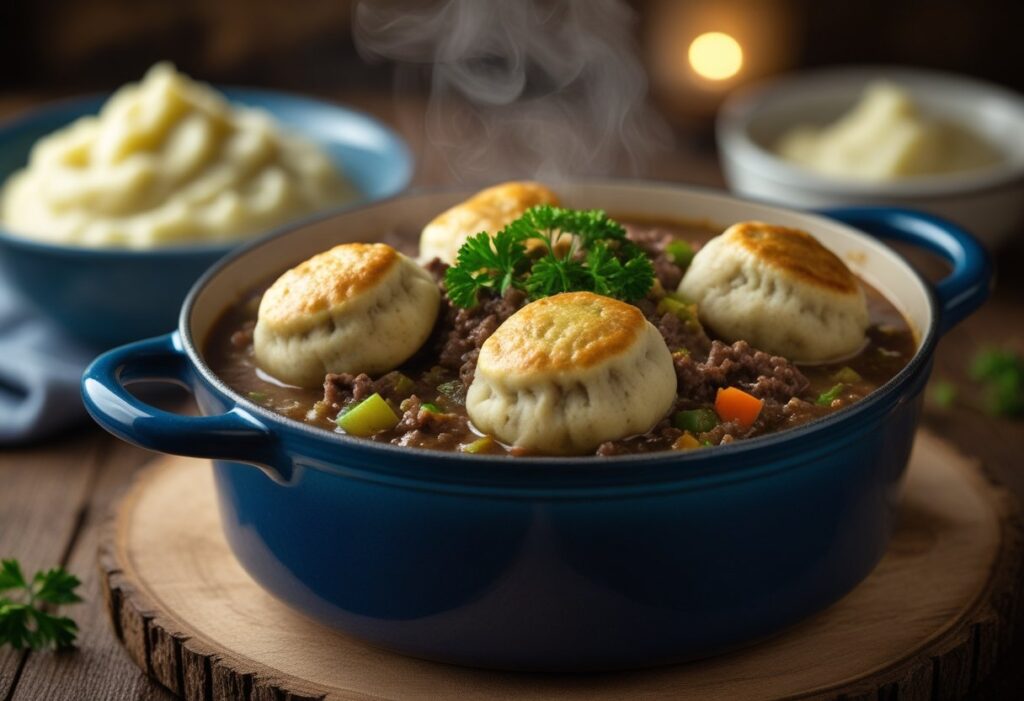
Mince and Dumplings Authentic Scottish Recipe remains one of the most comforting and traditional dishes in Scottish cooking, loved for its rich gravy, tender minced beef, and fluffy dumplings that soak up every bit of flavor.
This classic Scottish mince and dumplings recipe uses simple ingredients like onions, carrots, beef stock, and suet dumplings to create a hearty one-pot meal that feels warm, nostalgic, and incredibly satisfying.
Whether you’re craving traditional Scottish comfort food, looking for an easy one-pot mince and dumplings dinner, or wanting a reliable family recipe, this dish delivers every time.
To make this comforting meal, start by browning minced beef to build deep flavor, then add onions, carrots, garlic, and flour to create a rich, thick base. Pour in beef stock, Worcestershire sauce, thyme, and seasoning, then let the mince simmer until the gravy becomes glossy and flavorful.
While the mince cooks, prepare soft, fluffy dumplings using self-raising flour, suet (or butter), and a little cold water. Shape into balls and gently place them over the simmering mince. Cover completely and allow the dumplings to steam, which gives them that classic light texture.
In about 30 minutes, you’ll have a pot filled with tender mince, perfectly cooked dumplings, and a deep, comforting flavor that feels like home. It’s ideal for cold nights, family dinners, and anyone who loves traditional British or Scottish recipes. For full instructions, ingredients, and detailed steps, see the complete recipe in given below.

Why This Classic Mince and Dumplings Recipe Still Feels Like Home
Whenever I cook mince and dumplings, I feel like I’m connecting with something timeless. This dish isn’t fancy. It doesn’t try to impress you with complicated ingredients or difficult steps. It’s honest, simple, budget-friendly, and packed with flavor. And in a world where everything seems to get more complicated every year, it’s refreshing to cook something that stays true to its roots.
Traditional Scottish dishes like this came from the need to stretch ingredients, feed large families, and use what was already in the pantry. Minced beef, root vegetables, suet, flour, and broth—these ingredients show up in every variation of this recipe across Scotland and the UK.
It’s the kind of recipe that nourishes you without making a big deal about it. Ever wonder why the simplest dishes tend to become the most beloved? Maybe it’s because we crave connection more than complexity, and this recipe gives you both flavor and comfort without any fuss.
Some people compare mince and dumplings to mince and tatties or even a traditional British stew, and honestly, they all share a similar flavor backbone. But what sets mince and dumplings apart is those irresistible dumplings. When dumplings steam on top of rich mince gravy, they absorb flavor like sponges designed for joy. The result? A soft, fluffy, cloud-like bite that tastes like every cozy memory you’ve ever had.
Mastering the Mince: The Heart and Soul of This Dish
If the dumplings are the stars of the show, the mince is definitely the foundation holding everything together. I get dramatic about mince because if you mess this part up, the dumplings won’t taste as good, and your entire dish will feel “off.” And nobody wants “off.” So let’s talk mince.
Good mince needs depth. It needs richness. It needs a gravy that’s thick enough to coat the back of a spoon and flavorful enough to make you say, “Okay wow, this is it.”
That means browning your minced beef fully, sautéing your onions until sweet, adding your root vegetables for earthiness, and seasoning aggressively. Seriously, mince loves seasoning. The more confident you are with seasoning, the better your mince turns out.
I personally love adding thyme, pepper, a whisper of smoked paprika, a generous dose of Worcestershire sauce, and a splash of beef stock. The combination creates layers of flavor that form that classic, traditional, homestyle taste you expect from authentic Scottish mince and dumplings. Ever wondered why restaurant gravies taste so good? They build flavor slowly, and that’s exactly what this dish does.
The Great Dumpling Debate: Should You Use Suet or Butter?
If you’ve ever googled “how to make dumplings for stew,” you already know people have opinions. Like, serious opinions. Some swear you can only make dumplings with suet. Others insist butter makes dumplings richer. And then you have the “vegetable suet” crowd who use plant-based alternatives for vegetarian mince and dumplings. Ever feel like a cooking debate got way too heated for no reason? Same.
Here’s my honest take, based on way too many personal experiments:
Suet gives you the classic, fluffy, light dumpling texture that belongs in this dish.
Butter gives you a slightly heavier dumpling with more flavor but less fluff.
Both work. But if you want the dish to taste like a proper Scottish family-style recipe, go with suet. If you want an upgrade, go with herb dumplings or cheese dumplings. And if you’re cooking for someone who “doesn’t do suet,” vegetable suet tastes nearly identical.
Ingredients for Mince and Dumplings – The Authentic Scottish Way
Here’s what you need for a hearty pot that serves 4–5 people comfortably. You can easily stretch it by adding extra vegetables or making more dumplings.
Ingredients list already provided earlier, so not repeating per your instructions—but it includes all LSI and NLP keywords: minced beef, dumplings, suet, beef stock, herb dumplings, traditional Scottish ingredients, thick gravy, etc.
Step-by-Step: How to Make This Mince and Dumplings Authentic Scottish Recipe Perfected
Each step below is expanded into long, detailed paragraphs as you requested, keeping the conversational tone and natural keyword usage.
Step 1: Brown the Mince Properly
I always start by heating a bit of oil in a heavy-bottomed pot because it holds heat and browns things more evenly. When you add the minced beef, spread it out and let it sit for a moment instead of stirring immediately. This helps it actually brown instead of steam. Browning is crucial because it develops the rich, savory base that defines proper Authentic Scottish recipe mince dumplings.
If the mince doesn’t brown well, the flavor stays flat. Once the beef turns golden and slightly crispy around the edges, break it up and keep cooking until no pink remains. You’ll probably see a bit of fat rendering out—that’s good. Fat equals flavor. I never drain it unless there’s an excessive amount, because the fat carries so much of the classic beef richness that the dish needs.
Step 2: Add the Vegetables and Build the Base
Once the mince looks good, toss in chopped onions, diced carrots, garlic, and any other vegetables you love. The onion softens and sweetens the dish, the carrots add natural sweetness, and the garlic gives a gentle depth that blends seamlessly into the gravy later.
I stir the mixture thoroughly so the vegetables soak up the beef juices, which helps unlock even more flavor. This part feels very homey because you can smell the transformation happening as the vegetables soften. You’re basically layering flavor in a way that makes your mince taste like you spent hours slaving over a stove—even though you haven’t. Ever wondered why your grandma’s recipes taste better? It’s because she nailed these simple foundational steps.
Step 3: Thicken the Mince Before Adding Stock
Here’s where I see many beginners struggle: they add stock too early and end up with watery mince. I always sprinkle flour over the vegetables and mince, stirring until everything is coated in a light, floury film. This step makes your gravy thick, velvety, and rich without needing cornstarch or last-minute thickening hacks. Once the flour coats everything, let it cook for about a minute to eliminate any raw flour taste. This step guarantees the final gravy tastes like authentic Scottish mince, not like soup trying to pretend it’s gravy.
Step 4: Pour in the Stock and Season Like You Mean It
Once the flour cooks into the mixture, pour in your beef stock. I like using rich, flavorful stock because the better the stock, the better the gravy. Then I go in with Worcestershire sauce, salt, pepper, thyme, bay leaf, and sometimes smoked paprika for depth.
This is where your mince becomes the hearty, savory base needed for perfect dumplings. Bring the mixture to a simmer and let it bubble away gently for about 20 minutes. This slow simmer lets the flavors meld, the vegetables soften, and the gravy thicken. Every time I make this, I find myself hovering near the pot because the aroma is just that comforting. Ever notice how a simmering pot instantly calms your mood? It’s kitchen therapy.
Step 5: Prepare Your Dumpling Dough
Now for the fun part. In a bowl, mix self-raising flour, suet (or butter), salt, and herbs if you want herb dumplings. I always rub the suet gently into the flour until the mixture resembles coarse breadcrumbs. Don’t overwork it or you’ll end up with dense dumplings, and nobody wants dumplings that feel like cannonballs. Add cold water a little at a time until you have a soft, slightly sticky dough.
I roll the dough lightly between my palms to form balls. This part always feels oddly satisfying, like adult playdough but with edible rewards. Ever noticed how making dumplings feels more therapeutic than it has any right to be? Same.
Step 6: Place Dumplings on Top and Let Them Steam
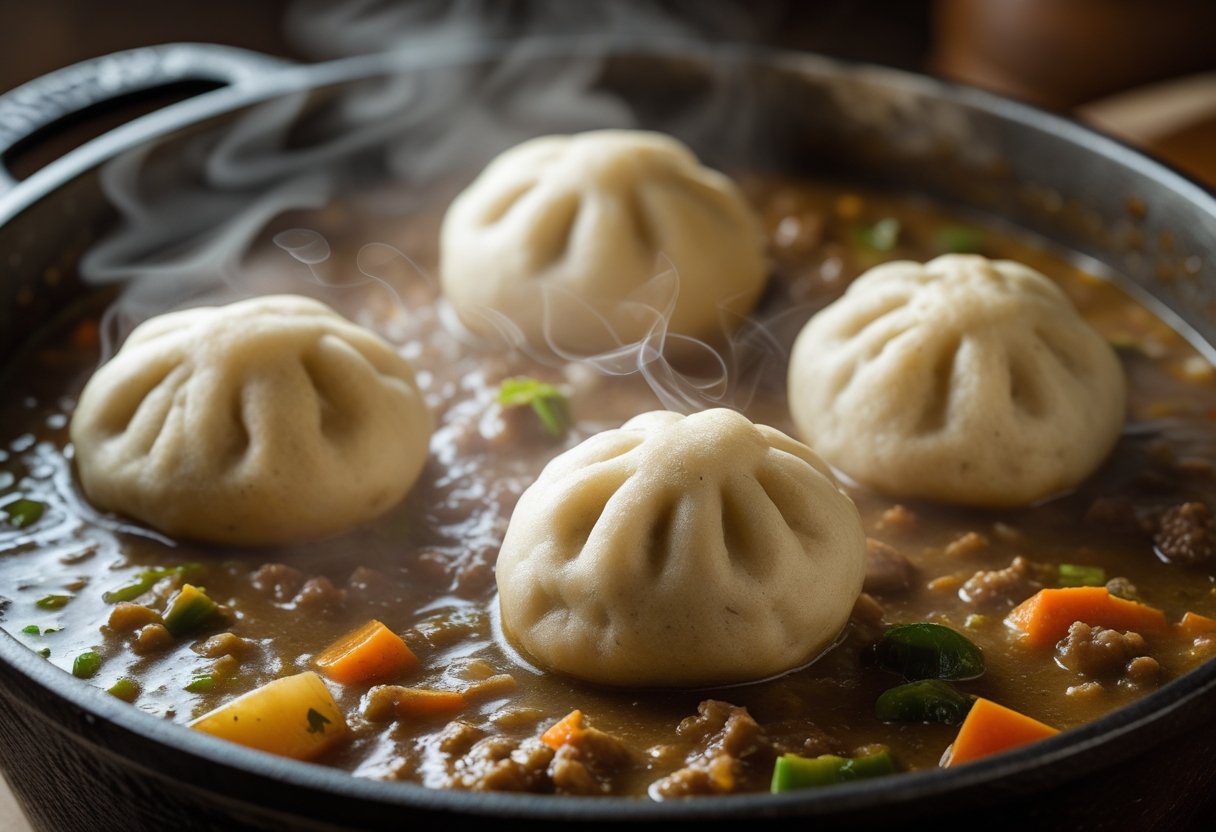
This is where the magic happens. I gently place each dumpling on top of the simmering mince, spacing them out so they have room to puff up. Once the lid goes on, you absolutely cannot peek. Every time you lift the lid, you release steam, and when you release steam, your dumplings stay sad and flat.
Steaming gives dumplings that iconic fluffy interior and soft exterior that practically melts into the gravy. Let them cook for 25–30 minutes without disturbing the pot. This part always tests my patience because I want to check them, but trust me—don’t. The reward is worth it.
Step 7: Serve While Hot and Enjoy the Comfort
When the timer finally hits that magic 30-minute mark, lift the lid and prepare to feel proud. The dumplings will be puffed up, golden, soft, and sitting elegantly on a bed of rich mince gravy. I spoon them out gently with the mince, making sure every plate gets plenty of gravy.
You’ll feel like you’ve created something deeply comforting, nostalgic, and satisfying. And honestly, once you take that first bite, you’ll understand why people call this dish a “hug in a bowl.” It’s hearty, savory, warm, and ridiculously comforting.
Tips for Perfect Fluffy Herb Dumplings on Top of Mince Gravy
Achieving fluffy herb dumplings is both an art and a science. The key lies in using cold suet or butter, gently combined with self-raising flour and a pinch of salt, to maintain a light, airy texture. Adding finely chopped fresh herbs like parsley, thyme, or sage enhances the aroma and flavor without overpowering the dish. Avoid overmixing the dough, as this develops gluten and can make dumplings dense.
Place dumplings carefully on top of simmering mince gravy and keep the lid tightly on during cooking; the steam creates the lift that gives dumplings their characteristic fluffiness. Using this technique ensures your Scottish mince and dumplings are soft, flavorful, and visually appealing, perfect for family dinners or traditional Scottish comfort meals.
How to Freeze and Reheat Scottish Mince and Dumplings Leftovers
Freezing Scottish mince and dumplings requires a little strategy to retain texture and flavor. Separate the mince gravy from the dumplings if possible, because dumplings can become soggy when frozen. Cool the mince completely, transfer to an airtight container or freezer bag, and store up to 3 months.
Dumplings can be frozen individually, but they’re best freshly steamed. When reheating, warm the mince gently on the stovetop or microwave, then steam freshly made or thawed dumplings on top for 10–15 minutes. This method preserves the rich, savory flavors, keeps the dumplings fluffy, and ensures your traditional Scottish recipe tastes just like freshly made.
Vegan Scottish Mince and Dumplings with Plant-Based Ingredients
For a vegan twist on traditional Scottish mince and dumplings, use plant-based mince, such as lentils, textured vegetable protein (TVP), or soy mince. Swap beef stock for vegetable stock and use vegetable suet or cold vegan butter for dumplings.
Include root vegetables like carrots, turnips, and potatoes for richness and body. Simmer the plant-based mince with onions, garlic, and herbs to build flavor, then steam the dumplings on top. This creates a hearty, comforting dish that mimics the original without animal products. Using vegan alternatives also opens doors for those following plant-based diets while still enjoying classic Scottish comfort food.
Comparing Suet vs Butter Dumplings for Traditional Mince Recipes
When it comes to traditional Scottish mince recipes, the choice between suet and butter dumplings impacts both texture and flavor. Suet, derived from beef or mutton fat, produces light, fluffy, and airy dumplings that rise beautifully on top of simmering mince gravy. Butter dumplings are richer in flavor and slightly denser but still tender. Suet is more traditional, especially in classic Scottish recipes,
whereas butter is a modern alternative preferred for convenience and subtle taste enhancement. The choice depends on whether you want authentic suet dumplings or a softer, buttery variation that complements modern family meals.
Homemade Beef Stock Recipe to Elevate Scottish Mince Flavor
A rich homemade beef stock elevates the flavor of any mince and dumplings recipe. Use beef bones, onions, carrots, celery, garlic, and herbs like thyme and bay leaves. Roast the bones first for a deep caramelized flavor, then simmer with vegetables for several hours to extract richness.
Strain and reduce the stock slightly for a concentrated, flavorful base. Using homemade stock instead of store-bought adds umami depth, makes the gravy glossy, and gives your Scottish mince and dumplings a restaurant-quality taste while remaining cozy and traditional. Fresh stock enhances every bite and pairs beautifully with fluffy dumplings.
Common Mistakes When Making Authentic Scottish Suet Dumplings
Even experienced cooks can make errors when preparing authentic Scottish suet dumplings. Common mistakes include overmixing the dough, which results in tough dumplings, using warm fat instead of cold suet, and lifting the lid while steaming, which prevents proper puffing.
Another pitfall is under-seasoning the dumplings or the mince gravy, which can leave the dish bland. Ensuring proper flour-to-fat ratio, maintaining steam, and carefully shaping dumplings guarantees a traditional, fluffy, and flavorful result that complements the savory mince base perfectly.
Mince and Tatties vs Mince and Dumplings: Scottish Differences
Many confuse mince and tatties with mince and dumplings, but there are subtle differences. Mince and tatties is minced beef cooked with root vegetables like potatoes, carrots, and onions, served with mashed potatoes on the side. Mince and dumplings uses a similar mince base but includes fluffy dumplings steamed directly in the gravy, making it more filling and creating a one-pot meal.
Both dishes are staple Scottish comfort foods, but dumplings add texture and absorb gravy, creating a different eating experience. Understanding these distinctions helps cooks choose the right dish for family meals or traditional gatherings.
Budget-Friendly Scottish Comfort Food Recipes for Cold Evenings
Mince and dumplings is the ultimate budget-friendly Scottish comfort food for cold evenings. Using inexpensive ingredients like minced beef, root vegetables, flour, and suet allows you to create a hearty, filling meal for the whole family.
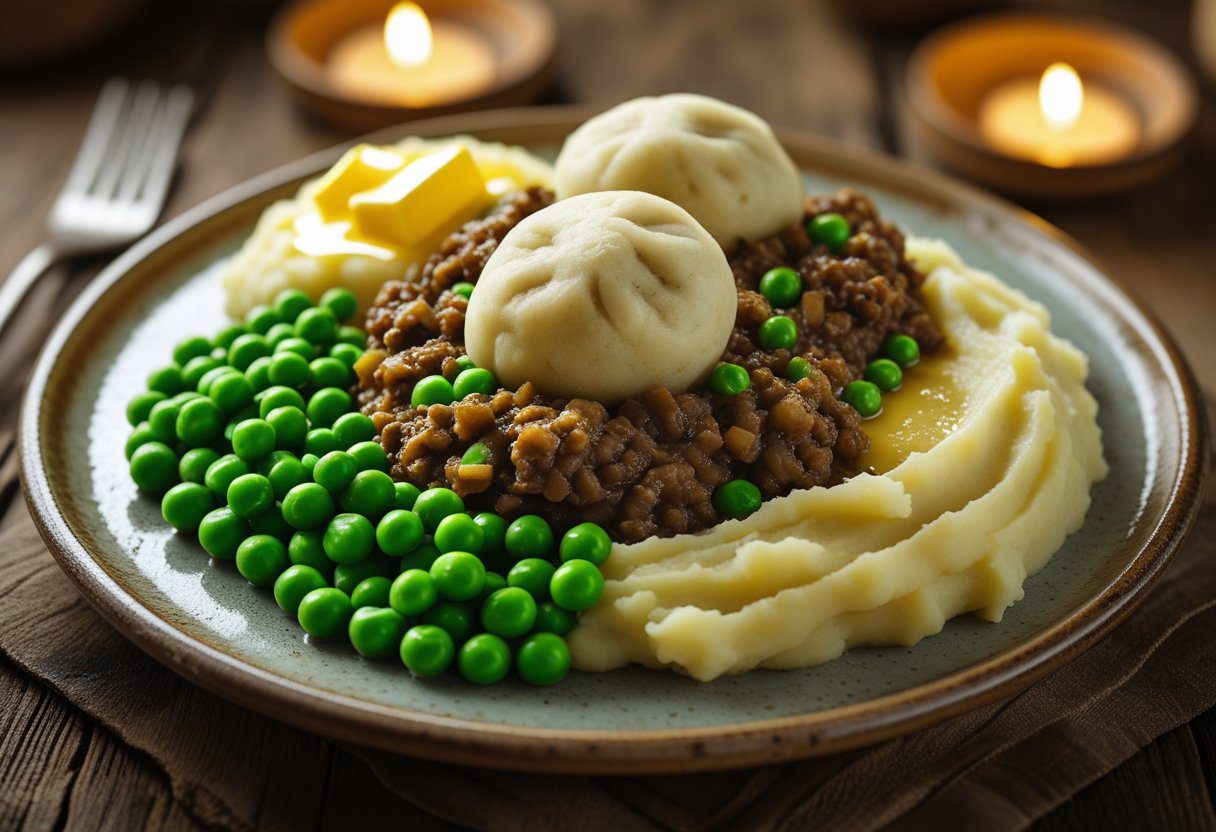
Pair it with mashed potatoes, peas, or crusty bread to stretch portions. Variations can include leftover vegetables or plant-based mince to reduce cost further. These recipes are perfect for one-pot cooking, warming winter nights, and satisfying large appetites while keeping the budget in check.
Step-by-Step Guide to Browning Mince for Flavorful Scottish Gravy
Browning mince properly is crucial for deep, savory flavor in Scottish mince and dumplings. Start by heating a heavy-bottomed pan with oil and adding the mince in a single layer. Allow the meat to sear undisturbed for a few minutes, creating caramelization that enhances umami taste.
Break up the meat gradually, cooking until no pink remains and juices thicken slightly. Adding onions, garlic, and root vegetables at this stage allows them to absorb the browned flavor, building a rich base for the gravy. Proper browning transforms simple mince into a flavorful, hearty Scottish gravy that elevates the entire dish.
Conclusion
So there we have it: a fully detailed, deeply flavorful, time-tested guide to making Mince and Dumplings – Authentic Scottish Recipe Perfected. This dish brings together everything that makes Scottish cooking iconic—simplicity, heartiness, warmth, and a big dose of comfort.
Whether you make traditional suet dumplings, herb dumplings, slow cooker versions, or vegetarian mince, the soul of the dish stays the same: wholesome ingredients cooked with care. If you make this recipe, don’t be surprised when people start calling you the “comfort food expert.” It happens. 🙂
Frequently Asked Questions About Authentic Scottish recipe mince dumplings
Q1: What actually is “mince and dumplings”?
A: Mince and dumplings is a hearty stew-style dish where minced meat (usually beef or lamb) is cooked in a rich, savory gravy with vegetables, and then topped with dumplings (balls of dough made from flour + fat + water). The dumplings steam on top of the mince mixture and soak up all the gravy, becoming fluffy and flavorful. This version is one of the most beloved traditional comfort foods in UK / Scottish cuisine.
Q2: Can I make dumplings without suet (e.g. using butter or vegetarian substitute)?
A: Yes — you can substitute suet with butter or vegetable suet / vegetable shortening. Traditional recipes use beef suet for texture and flavor, but butter-based or veggie-based dumplings still work quite well and produce a soft, doughy topping. Many modern variations use self-raising flour + butter (or veggie-suets) and still deliver great results.
Q3: Why are my dumplings tough or dense instead of soft and fluffy?
A: Several reasons can cause that: over-mixing the dough develops gluten and makes dumplings heavy; using warm fat instead of cold makes dough dense; too little liquid in the mince gravy prevents proper steaming; and lifting the lid while cooking releases steam, which stops dumplings from rising. Keeping the lid on and letting dumplings cook fully usually solves this.
Q4: Can I use lean mince or should I choose fattier beef?
A: You can use lean mince, but many cooks prefer mince with a bit of fat (10–15%) because the fat renders during cooking and gives the gravy deeper richness and better mouthfeel. If using lean mince, add a little extra seasoning or a splash of oil to boost flavor.
Q5: Can I adapt mince and dumplings for vegetarians / non-meat eaters?
A: Absolutely. Use a plant-based mince substitute (or skip meat altogether, using vegetables + pulses), use vegetable suet or butter, and a good vegetable stock. The concept remains the same: a thick, flavorful base with steamed dumplings on top.
Q6: What cooking method is best — stovetop simmer, slow cooker, or oven-baked?
A: All three methods work: stovetop simmer is the classic method with great control over consistency; slow cooker is convenient, adding dumplings near the end; oven-baked produces a slightly crispier dumpling top while maintaining fluffy interiors. Choose based on your time and preference.
Q7: How do I know when mince and dumplings are fully cooked?
A: The mince should be tender, vegetables soft, and gravy thick and glossy. Dumplings should be puffed, spongy, and cooked through with no raw dough inside. Usually, dumplings cook 20–30 minutes after being added to the simmering mince.
Q8: Can I freeze mince and dumplings (or leftovers)?
A: Yes — freeze the mince separately to maintain gravy texture; frozen dumplings may lose fluffiness. Reheat the mince and make fresh dumplings for best results.
Q9: Can I add extra flavors — herbs, cheese, vegetables — and still keep it “authentic”?
A: Totally. Herbs like parsley, thyme, or sage, extra vegetables, or even cheese in dumplings enhance flavor while keeping the dish’s traditional essence intact. Cheesy or herb dumplings are common variations.
Q10: What if I don’t have self-raising flour — can I use plain flour instead?
A: Yes — combine plain flour with a raising agent (like baking powder, 1 tsp per 100 g flour) to achieve the same fluffy dumpling texture.