

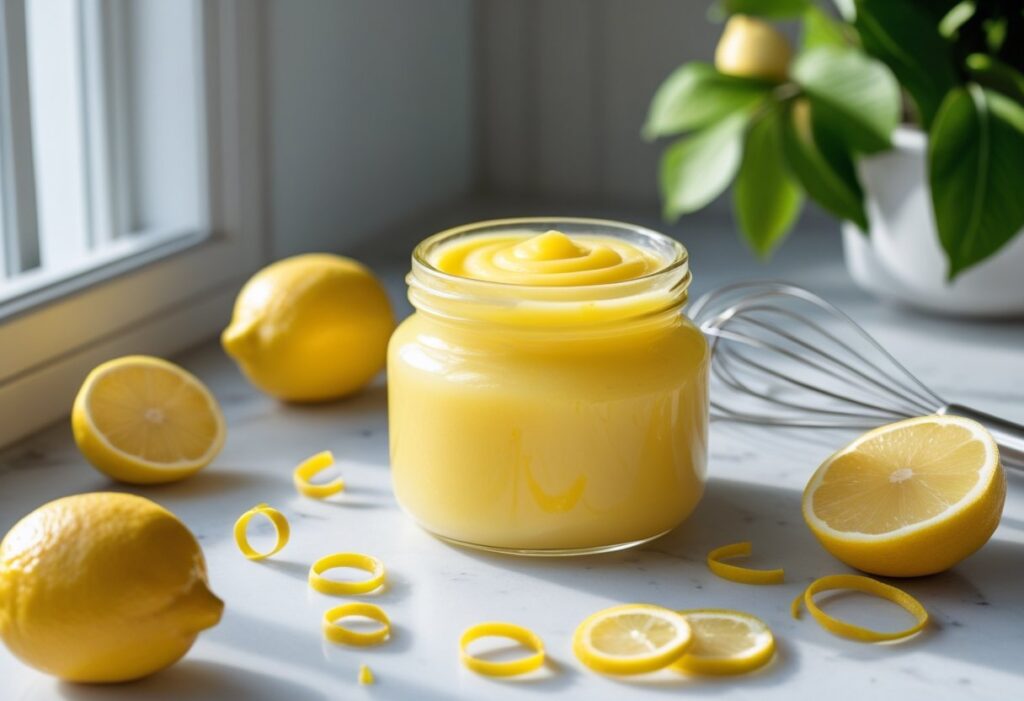
Lemon curd is a classic recipe that looks simple but often goes wrong due to small technique errors. From curdling eggs to ending up with a runny or grainy texture, most lemon curd problems come down to heat control, ingredient balance, and timing. Understanding these mistakes is the key to achieving foolproof, chef-approved results at home.
Lemon curd is made by gently cooking fresh lemon juice, zest, sugar, eggs, and butter until thickened. One of the most common lemon curd mistakes is cooking over high heat, which can scramble the eggs and ruin the texture. Another frequent issue is not stirring constantly, leading to uneven cooking and lumps. Using the wrong pan, especially reactive cookware, can also affect both flavor and consistency.
For smooth, silky lemon curd, low and steady heat is essential. The mixture should be stirred continuously and cooked just until it coats the back of a spoon. Butter is added at the right moment to create a rich, glossy finish, while straining the curd ensures a professional-quality texture. Proper cooling and storage also play a major role in final consistency and shelf life.
By avoiding common lemon curd mistakes and following proven techniques, anyone can make a perfectly balanced curd with bright flavor and smooth texture. This guide helps home cooks understand lemon curd troubleshooting, texture control, and expert techniques so the recipe turns out right every time.
For the complete recipe, step-by-step method, and full instructions, the complete recipe is given below.
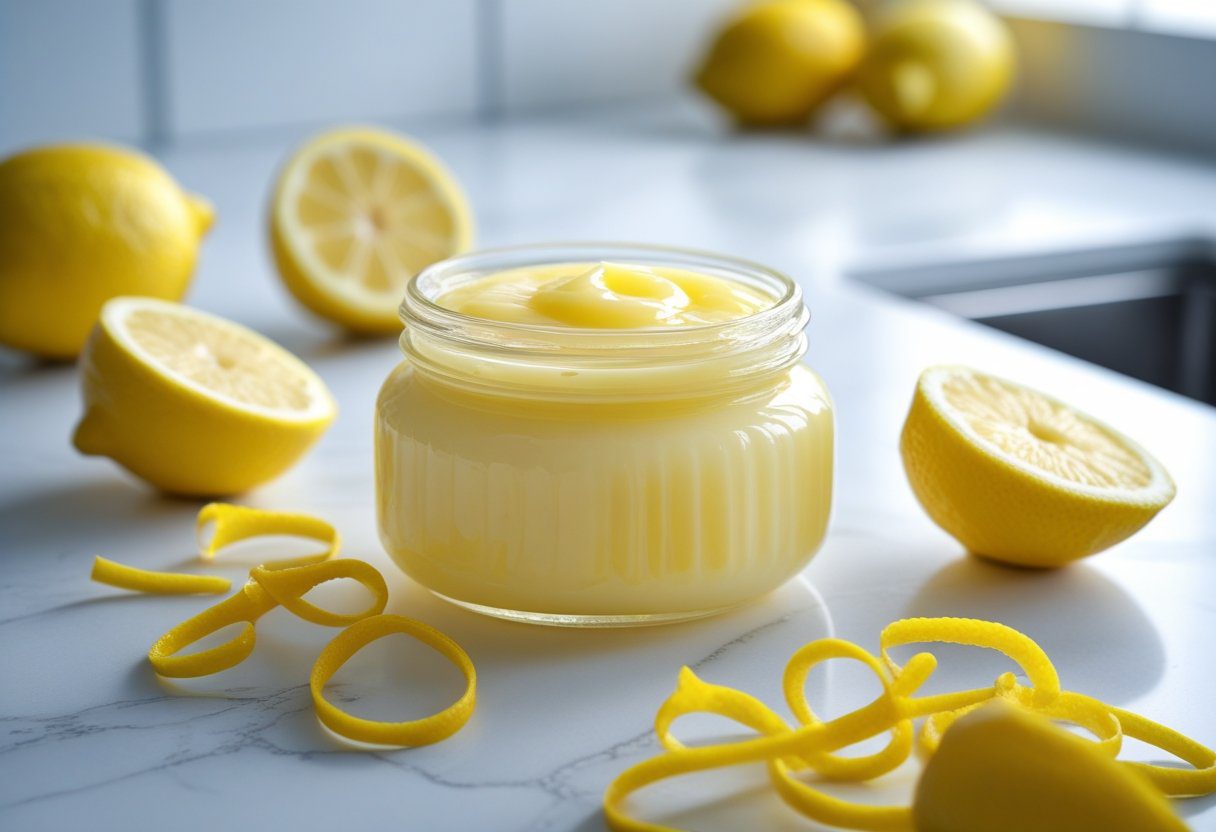
Why Lemon Curd Is Tricky (Even for Good Cooks)
Lemon curd sits at the intersection of three sensitive elements:
- Egg proteins, which thicken but scramble easily
- Acid, which speeds up coagulation
- Heat, which must be tightly controlled
Unlike baked custards, lemon curd gives you no buffer. A few degrees too hot, a few seconds too long, or one rushed step—and the texture is compromised.
That’s why understanding the most common mistakes when making lemon curd matters far more than memorizing a recipe.
Mistake #1: Cooking Lemon Curd Over High Heat
This is the most common and destructive error.
High heat causes eggs to coagulate too quickly, leading to curdling, graininess, or a scrambled-egg texture hidden inside the curd.
What experienced cooks do instead
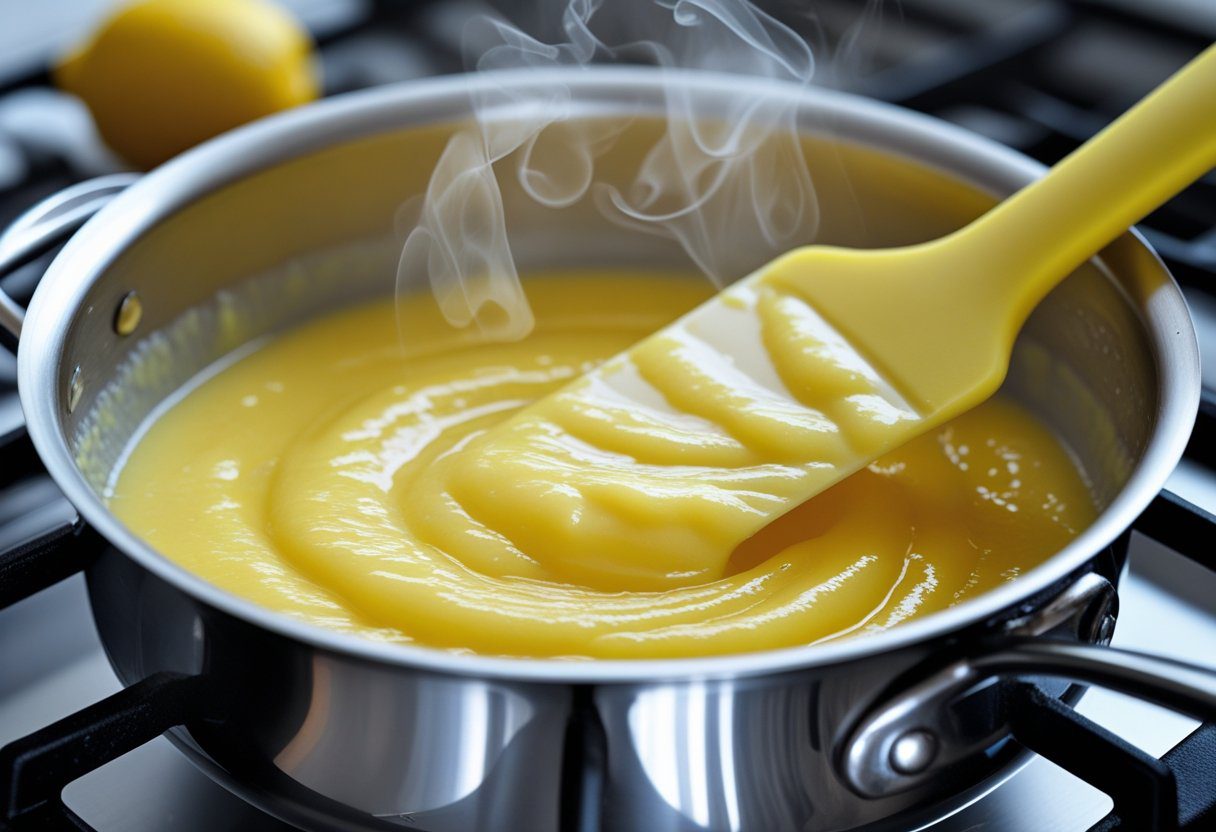
Professional kitchens use gentle heat—often a double boiler—to keep the mixture below a simmer. At home, medium-low heat with constant stirring achieves the same result.
Rule I follow:
If steam is rising aggressively, the heat is too high.
Mistake #2: Leaving the Pan Unattended
Lemon curd is not a “set it and forget it” recipe.
Even a brief pause can cause hot spots at the bottom of the pan, cooking parts of the mixture faster than others.
Why this ruins texture
Eggs cook unevenly without movement. Once small bits of egg overcook, they create lumps that spread through the curd.
Best practice
Stay at the stove. Stir continuously, scraping the bottom and sides of the pan. This single habit prevents more lemon curd failures than any other technique.
Mistake #3: Using Reactive Cookware
This mistake doesn’t always show up visually—but you’ll taste it.
Aluminum and unlined copper react with acidic ingredients like lemon juice, causing a metallic aftertaste and dull flavor.
What to use instead
- Stainless steel
- Enamel-coated pans
This small change dramatically improves flavor clarity and consistency.
Mistake #4: Getting the Egg Ratio Wrong
Eggs are the structure of lemon curd. Too many, and the curd tastes eggy. Too few, and it never thickens.
Common error
Substituting whole eggs when a recipe relies primarily on yolks—or altering quantities without understanding their role.
Professional insight
Egg yolks provide thickness and richness without toughness. Whole eggs introduce whites, which tighten faster and can make the curd rubbery.
Mistake #5: Not Understanding When Lemon Curd Is “Done”
Many cooks expect lemon curd to thicken dramatically in the pan. It won’t.
Lemon curd finishes setting as it cools.
Signs it’s ready
- Coats the back of a spoon
- A finger swipe leaves a clean line
- Looks glossy, not foamy
If you wait for it to look thick like pudding on the stove, you’ve already gone too far.
Mistake #6: Overcooking in Fear of Undercooking
This is a panic-driven mistake I see constantly.
The cook worries the curd is too thin, keeps heating, and crosses the line from thickened to scrambled.
Chef mindset
Trust the process. Stop cooking earlier than you think. Cooling completes the thickening.
Mistake #7: Skipping the Straining Step
Even perfectly cooked lemon curd benefits from straining.
Tiny bits of cooked egg or zest can hide in the mixture. Straining removes them instantly.
Why professionals always strain
- Smoother texture
- Cleaner mouthfeel
- Bakery-quality finish
If there’s one step I never skip, it’s this one.
Mistake #8: Adding Butter Incorrectly
Butter stabilizes lemon curd and gives it that luxurious, silky finish.
Common mistake
Adding butter too early or dumping it all in at once.
Correct approach
Remove the curd from heat, then whisk in cold butter gradually. This creates a smooth, stable emulsion and prevents greasiness.
Mistake #9: Using Bottled Lemon Juice
This shortcut almost always leads to disappointing results.
Bottled juice lacks brightness and often contains preservatives that flatten flavor and interfere with texture.
What makes the difference
Fresh lemon juice + fresh zest. The zest contains aromatic oils that define great lemon curd.
Mistake #10: Judging Texture Before Cooling
Hot lemon curd is deceptive. It always looks thinner than it will be.
What goes wrong
Cooks keep heating to “fix” a problem that doesn’t exist yet.
Correct method
Cool the curd fully—at least four hours—before deciding if it needs adjustment.
Mistake #11: Improper Storage
Even perfect lemon curd can degrade quickly if stored poorly.
Best storage practices
- Airtight glass container
- Refrigerate immediately
- Consume within 1–2 weeks
Exposure to air dulls flavor and affects texture faster than most people realize.
How to Fix Common Lemon Curd Problems
Runny lemon curd
Gently reheat and cook slightly longer, stirring constantly.
Curdled lemon curd
Immediately strain and blend while warm. This sometimes rescues the texture.
Grainy lemon curd
Usually caused by overheating. Straining helps, but prevention is the real solution.
Too sour
Balance with a small amount of sugar after cooling—never while hot.
Chef-Approved Techniques for Foolproof Lemon Curd
After years of making lemon curd professionally, these are the habits I rely on:
- Low, steady heat
- Continuous stirring
- Fresh citrus only
- Straining without exception
- Cooling before judgment
These techniques turn lemon curd from a risky recipe into a dependable one.
Frequently Asked Questions
1. Why did my lemon curd turn grainy?
It was cooked too hot or too long, causing egg proteins to overcook.
2. Why didn’t my lemon curd thicken?
It was undercooked or lacked enough egg yolk.
3. Can lemon curd be fixed if it’s runny?
Yes, gentle reheating often solves the issue.
4. What temperature should lemon curd reach?
About 170–175°F (77–79°C).
5. Can lemon curd be overcooked?
Yes, and it happens faster than most people expect.
6. Why does my lemon curd taste metallic?
Reactive cookware or bottled lemon juice is usually the cause.
7. Is straining lemon curd necessary?
For smooth, professional results—yes.
8. Can lemon curd be frozen?
Yes, though texture may soften slightly after thawing.
9. Why is my lemon curd too sour?
Too much lemon juice or not enough sugar balance.
10. How long does homemade lemon curd last?
Up to two weeks when stored properly in the refrigerator.
Final Thoughts
Understanding what are common mistakes when making lemon curd changes everything. Lemon curd isn’t difficult—it’s precise. Once you respect the balance of heat, timing, and ingredients, it becomes one of the most reliable and rewarding recipes in your kitchen.
From my experience, the cooks who succeed aren’t more talented—they’re more patient.
Master the technique, and lemon curd will never intimidate you again.