





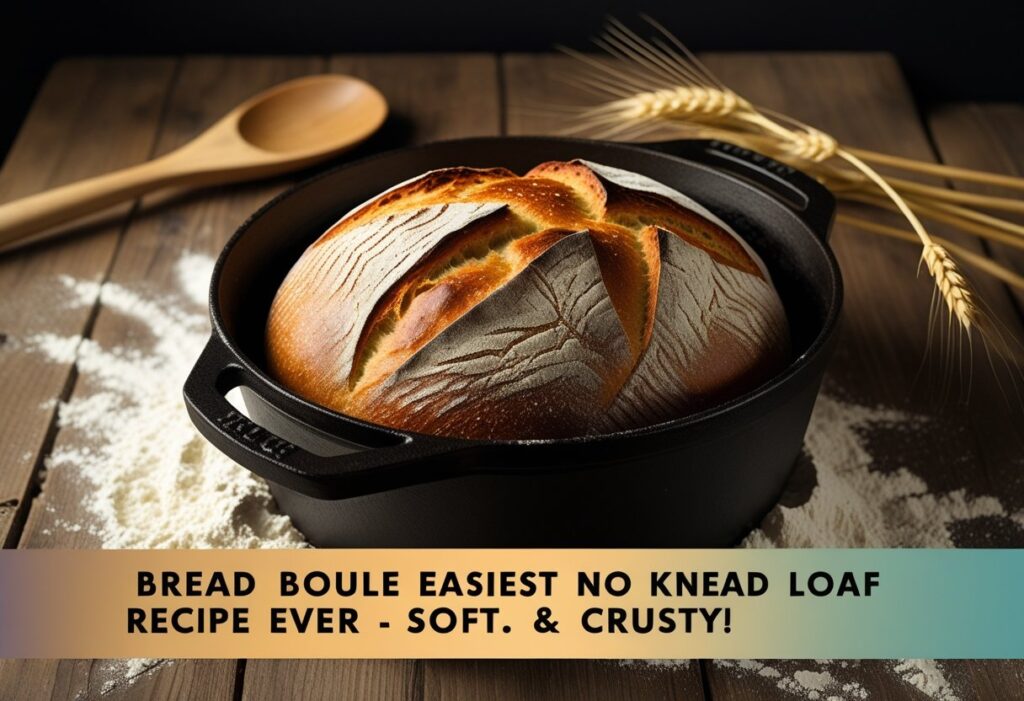
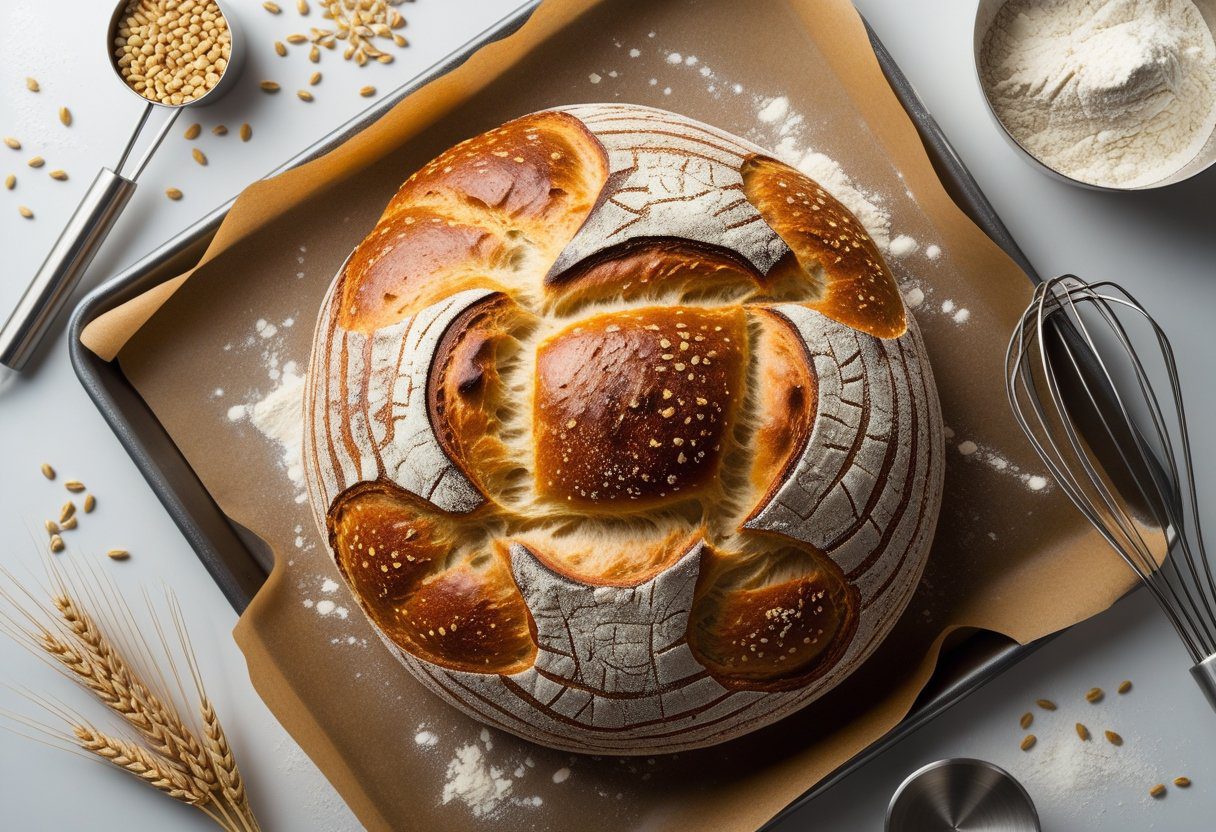
If you’ve ever wanted to bake a bakery-quality loaf at home without hours of kneading, the Bread Boule Easiest Recipe is your perfect solution. This no-knead boule combines simplicity with artisan-quality results, giving you a crusty, golden exterior and a soft, airy interior. Using just flour, water, yeast, and salt, this method allows long fermentation to naturally develop gluten, resulting in a chewy, flavorful crumb. Whether you’re a beginner or an experienced home baker, this recipe makes homemade bread approachable and satisfying.
To start, mix bread flour, salt, and active dry yeast with lukewarm water until a sticky, shaggy dough forms. Cover and let it rest for 12–18 hours at room temperature, giving the yeast time to rise and flavor to develop. After the long fermentation, shape the dough into a round boule by folding the edges under to create surface tension. Allow the dough to rest and proof for about 60–90 minutes while you preheat your oven to 450°F with a Dutch oven inside.
Carefully transfer the dough into the hot Dutch oven, score the top with a sharp knife, and bake covered for 30 minutes, then uncovered for 10–15 minutes until golden brown. Let the loaf cool on a wire rack before slicing to ensure the crumb sets properly. This method guarantees a rustic, artisan-style bread without the hassle of kneading.
For variations, try adding herbs, seeds, or whole wheat flour for extra flavor. A full, detailed, and complete recipe is given below for you to follow step by step.
What Is a Bread Boule?
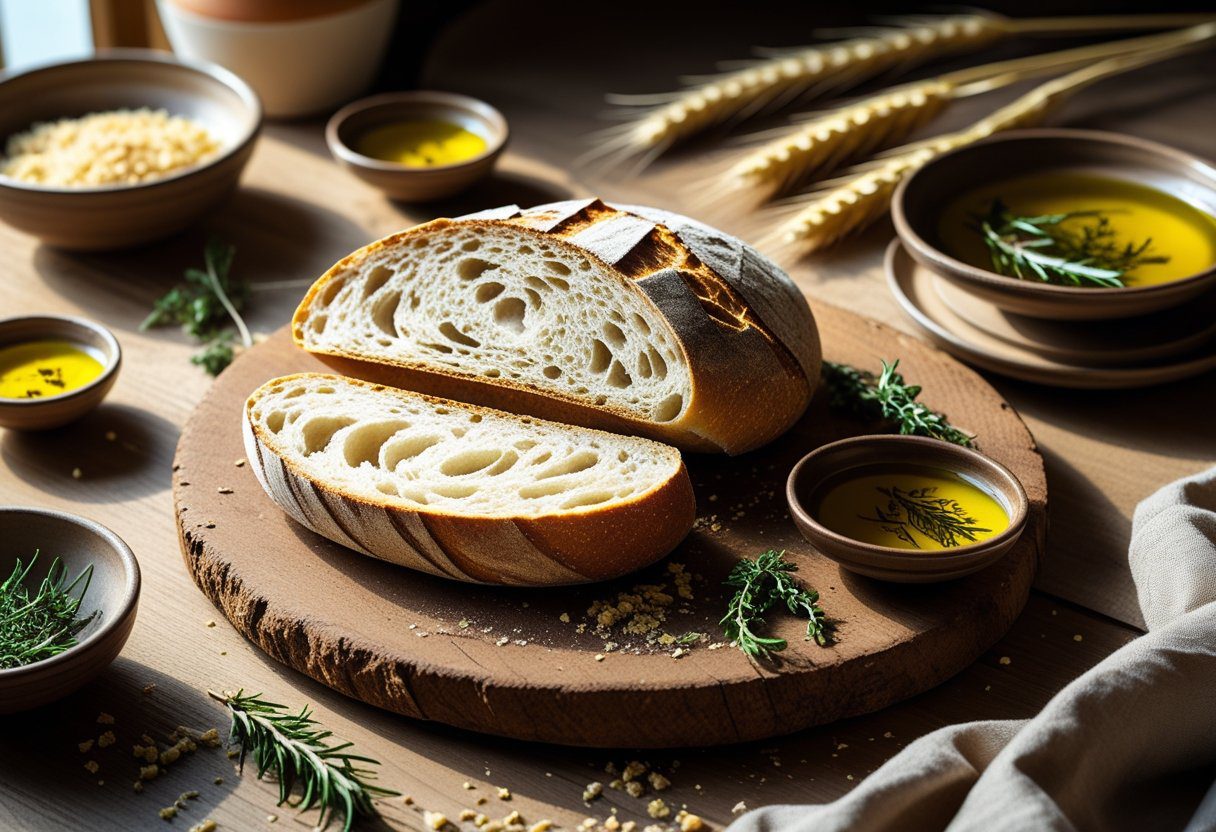
“Boule” (from the French word for ball) refers to the traditional round shape of the loaf, iconic in artisan bread baking. While boules can be made with many methods, the beauty of a no‑knead boule is its simplicity: long fermentation builds gluten and flavor, not your arms.
Why This Is the Easiest No Knead Loaf Ever
Unlike classic bread recipes that demand vigorous kneading to develop gluten, no‑knead dough relies on time and hydration to achieve structure organically. The long rest gives yeast and gluten strands the time they need without the manual work. This results in:
✅ A crusty artisan crust
✅ An open, chewy crumb
✅ Minimal hands‑on time
✅ Fewer tools — just a bowl and a Dutch oven
What Makes This Recipe Work
Here’s the secret: very high hydration dough + long fermentation + hot oven steam.
Instead of kneading, the dough rests and hydrates, allowing gluten to develop slowly. Then, a preheated Dutch oven captures steam in the early bake, creating that characteristic golden, crackly crust you crave.
Ingredients You’ll Need
- 3 cups (380 g) bread flour — higher protein equals better gluten
- 1½ cups (360 ml) lukewarm water — hydration is key
- ½ teaspoon active dry yeast — low yeast content
- 1 ½ teaspoons salt — for flavor and gluten strength
Optional: seeds, herbs, olive oil for flavor variations.
Equipment
You’ll need:
✔ Large mixing bowl
✔ Wooden spoon or dough whisk
✔ Parchment paper
✔ Dutch oven with lid (cast iron works best for steam)
Step‑by‑Step Instructions
1. Mix the Dough (5 minutes)
Combine flour, salt, and yeast in a bowl. Slowly pour in water while stirring until a shaggy dough forms — uneven, sticky, and rustic. That’s perfect.
2. Ferment (12–18 hours)
Cover with plastic wrap and let rest at room temperature. The dough will bubble and grow — that’s the long fermentation happening.
3. Shape the Boule
Flour your surface, turn out the sticky dough, and gently tuck the edges into the center to form a smooth round ball. This is your classic boule shape.
4. Final Rest (60–90 mins)
Place the shaped dough on parchment, cover with a towel, and let it proof until slightly puffy.
5. Preheat the Oven (30–45 mins)
Place your Dutch oven in the oven and preheat to 450°F (230°C). This ensures the pot is searing hot for steam and oven spring.
6. Score and Bake
Use a lame or sharp knife to make shallow cuts on top — this helps control expansion. Bake covered for 30 minutes, then uncovered for 10–15 minutes until deeply golden.
7. Cool Before Slicing
Let the loaf cool on a rack. This sets the crumb and prevents gummy texture.
Pro Tips from an Expert Baker
💡 Beginner Tip:
High‑hydration dough feels sticky and intimidating, but that’s normal. More water means bigger holes and lighter crumb.
🔥 Oven Spring Secret:
A hot Dutch oven with steam is what gives this loaf that dramatic rise and crust. No steam = dull crust.
🌡 Water Temperature:
Water should feel like a warm bath (about body temperature). Too hot kills yeast; too cold slows the rise.
🔪 Scoring Matters:
Not required, but it shapes how your bread expands and adds aesthetic appeal.
Serving Ideas
This loaf is amazing with:
- Olive oil + balsamic for dipping
- Butter and herb salt
- Sandwich fillings
- Soup or stew dunking
Variations to Try
🌿 Herb Infused Boule
Add rosemary, thyme, or oregano to the dough for fragrant layers.
🌾 Whole Wheat Twist
Swap 1 cup of bread flour for whole wheat — more flavor and fiber.
🥜 Seeded Crunch Loaf
Top with sesame or sunflower seeds before baking.
Common Mistakes & How to Fix Them
Dense loaf:
Your dough might be under‑hydrated or under‑proofed.
Flat shape:
This can be due to over‑proofing or improper shaping — ensure your boule has surface tension before proofing.
Soggy bottom:
Try parchment or a wider Dutch oven so heat circulates evenly. A well‑fitting high‑quality Dutch oven helps.
Why This Method Works (Quick Science)
Instead of physical kneading, this recipe uses time and hydration to let gluten develop naturally. The dough’s water absorbs slowly, and the long fermentation gives yeast time to produce gas and flavor — resulting in an airy, chewy crumb with minimal effort.
FAQs — Bread Boule Easiest No Knead Loaf Recipe Ever
1️⃣ How long should I let the dough ferment?
Typically 12–18 hours at room temperature. Cooler rooms may take longer; warmer will rise faster.
2️⃣ Can I shorten the rise time?
Yes — a warmer spot can cut time — but flavor deepens with longer fermentation.
3️⃣ Why does my crust burn?
Your oven may be too hot. Try 425–450°F and watch the bake closely.
4️⃣ Can I use all‑purpose flour?
Yes — bread flour gives better gluten but AP flour works fine.
5️⃣ Do I have to use a Dutch oven?
No — a baking stone and steam tray also work, though results may vary.
6️⃣ What if dough is too sticky?
That’s expected with high hydration. Use wet hands and minimal flour to handle.
7️⃣ How do I store leftover bread?
Wrap at room temperature or slice and freeze.
8️⃣ Can I make this sourdough?
Yes — with a sourdough starter instead of commercial yeast.
9️⃣ Why isn’t my loaf round?
Insufficient surface tension when shaping. Practice helps!
🔟 Is no‑knead bread healthier?
It uses basic ingredients with minimal additives — and the slow fermentation can improve flavor and digestibility.
🏁 Final Thoughts
The Bread Boule Easiest No Knead Loaf Recipe Ever isn’t just a recipe — it’s a gateway into artisan bread baking that’s approachable and satisfying. Whether you’re new to baking or a seasoned enthusiast, mastering this method brings confidence, flavor, and real bakery‑style bread into your home kitchen.
Start today — your first crusty boule is waiting!