Why Grain Free Buns Are So Popular
More people are exploring grain-free eating for digestive comfort, blood sugar management, gluten sensitivity, paleo lifestyles, or simply curiosity. Traditional burger buns often rely on refined wheat flour, sugar, preservatives, and dough conditioners. Homemade grain-free buns strip things back to ingredients you can actually recognize. That matters because when food labels start reading like chemistry homework, many people prefer a simpler option.

There’s also the flexibility factor. A good grain free burger buns recipe can often be adjusted to be dairy-free, lower carb, or paleo-friendly depending on the ingredients you choose. If you use almond flour and tapioca starch, you create a balance between tenderness and elasticity. That means you don’t have to choose between health goals and burger night. You can have both on the same plate.
Better Taste Than Packaged Buns
Let’s be honest: some store-bought gluten-free or grain-free buns taste like flavored cardboard. Consumers online regularly mention dryness, crumbling, or a weird aftertaste in packaged alternatives. Homemade versions solve that problem because you control moisture, freshness, and texture.
Freshly baked buns also smell incredible. That warm bakery aroma turns dinner into an event. Slice one open, toast it lightly, add butter, and suddenly your burger feels restaurant-worthy. That’s the magic of baking from scratch.
What Makes a Great Grain Free Burger Bun
Texture
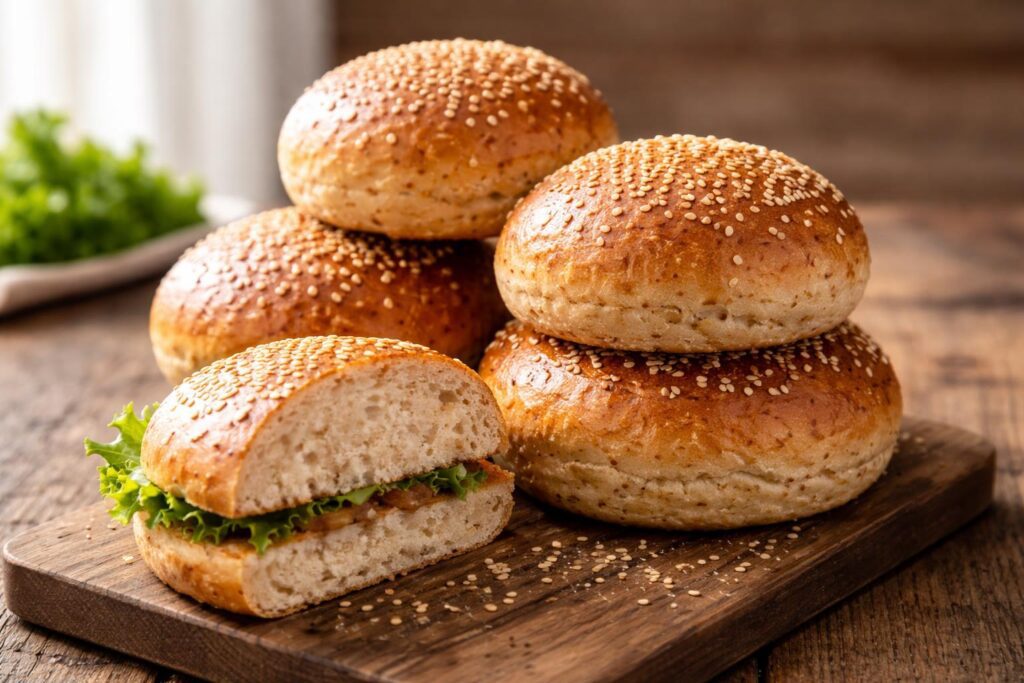
The best bun should be soft enough to bite through easily but not so airy that it collapses. Think pillow on top, structure underneath. Grain-free baking can be tricky because there’s no wheat gluten to trap air bubbles. That’s why smart recipes rely on psyllium husk, eggs, and starches to mimic that elastic network.
When done right, the inside crumb looks light and springy instead of gummy. You press it gently, and it bounces back. That’s the goal.
Strength
A burger bun must survive sauces, juices, pickles, and gravity. If it disintegrates halfway through the meal, it failed its mission. Strong grain-free buns use moisture-retaining ingredients and enough binding agents to hold together. Psyllium husk is especially helpful because it forms a gel-like structure that improves sliceability and durability.
In short, a great bun should carry the burger like a champion carries a trophy.
Best Ingredients for Grain Free Baking
Almond Flour
Almond flour is the star of many grain-free recipes because it adds richness, softness, and mild nutty flavor. It’s naturally gluten-free and contains healthy fats that prevent dryness. Use fine blanched almond flour for best texture. Coarse almond meal can create gritty buns.
Tapioca Starch
Tapioca starch acts like the secret engineer behind the scenes. It adds stretch, chew, and lightness. Without it, many almond flour breads become dense. A little tapioca goes a long way toward making buns feel more bread-like.
Psyllium Husk
This ingredient is a game changer. It absorbs water and creates elasticity that helps replace gluten. Many modern gluten-free and grain-free breads use it to improve rise and structure. Recipes using psyllium often produce softer buns that hold together better.
Eggs and Yeast
Eggs provide lift, moisture, and protein structure. Yeast adds flavor and rise. Some quick buns skip yeast, but yeast-based dough usually tastes more like classic bakery bread. If you miss “real buns,” yeast is your best friend.
Complete Grain Free Burger Buns Recipe
Ingredients
| Ingredient | Amount | Purpose |
| Fine almond flour | 2 cups | Base flour |
| Tapioca starch | 1 cup | Stretch & softness |
| Psyllium husk powder | 2 tbsp | Binding |
| Instant yeast | 2 tsp | Rise |
| Warm water | 1 cup | Hydration |
| Eggs | 3 large | Structure |
| Olive oil | 2 tbsp | Moisture |
| Honey | 1 tsp | Feed yeast |
| Salt | 1 tsp | Flavor |
| Sesame seeds | Optional | Topping |
Step-by-Step Instructions
- In a bowl, combine warm water, honey, and yeast. Let sit 5–10 minutes until foamy.
- In another bowl, whisk almond flour, tapioca starch, psyllium husk, and salt.
- Add eggs and olive oil to the yeast mixture, then pour into dry ingredients.
- Mix thoroughly until a thick dough forms. Let rest 5 minutes so psyllium hydrates.
- Divide into 6 equal portions and shape into buns on parchment paper.
- Cover loosely and let rise 30–45 minutes in a warm spot.
- Brush tops lightly with water or egg wash. Add sesame seeds if desired.
- Bake at 375°F (190°C) for 25–30 minutes until golden brown.
- Cool completely before slicing.
The dough may feel softer than wheat dough. That’s normal. Think of it like sculpting clouds rather than clay.
Common Mistakes to Avoid
Dense Buns
Dense buns usually happen because the dough lacked enough moisture or didn’t rise long enough. Yeast needs warmth and time. If your kitchen is cold, proof the dough in a switched-off oven with the light on. Also measure almond flour carefully—packing the cup can add too much flour.
Crumbly Buns
Crumbles are often caused by skipping psyllium husk or slicing while hot. Let the buns cool fully so structure sets. It’s like cutting cake too soon—it falls apart because it hasn’t finished settling.
Another tip: toast sliced buns lightly before serving. This improves texture and helps resist burger juices.
Storage and Freezing Tips
Fresh grain-free buns are best on day one, but they store well. Keep them in an airtight container at room temperature for one day, then refrigerate for up to five days. Reheat in a toaster oven for best results.
To freeze, slice buns first, then wrap individually. That way you can grab one whenever burger cravings hit. Frozen buns usually reheat beautifully with a quick toast.
Meal preppers love this method because one baking session can power several dinners.
Serving Ideas
These buns are made for burgers, but don’t stop there. Use them for pulled chicken sandwiches, breakfast egg sandwiches, sloppy joes, or mini sliders. They also work well with grilled vegetables and dairy-free spreads.
Want a next-level burger night? Toast the cut sides in a skillet with a little butter or olive oil. That golden surface adds crunch and flavor while protecting the bun from sauces.
Even a simple turkey burger feels upgraded on a homemade bun.
Nutrition Snapshot
Exact nutrition depends on ingredients, but grain-free buns often provide more protein and healthy fats than white-flour buns because of almond flour. They may also be lower in net carbs than traditional bakery buns, especially if sweeteners are minimal.
| Type | Traditional Bun | Grain Free Bun (Estimated) |
| Protein | Lower | Moderate |
| Fiber | Lower | Higher |
| Refined Flour | High | None |
| Healthy Fats | Low | Moderate |
| Gluten | Yes | No |
That makes them attractive for people wanting more balanced meals.
Conclusion
A great grain free burger buns recipe changes everything. Instead of settling for dry packaged substitutes or lettuce wraps, you get a soft, flavorful bun that actually supports your burger from first bite to last. The combination of almond flour, tapioca starch, psyllium husk, eggs, and yeast creates texture that feels satisfying and familiar.
Once you make these at home, burger night becomes something to look forward to again. Your kitchen smells amazing, the buns taste fresh, and everyone at the table wonders why you ever bought store versions. Sometimes the best upgrade isn’t the burger patty—it’s what holds it together.
FAQs
1. Are grain free burger buns the same as gluten free buns?
Not always. Grain-free means no grains like wheat, rice, oats, or corn. Gluten-free only means no gluten.
2. Can I make these dairy-free?
Yes. This recipe already uses olive oil instead of butter.
3. Can I replace almond flour?
Sunflower seed flour can work in some recipes, though flavor and color may change.
4. Why use psyllium husk?
It helps bind the dough, improves elasticity, and reduces crumbling.
5. Can I make slider buns instead?
Absolutely. Divide dough into smaller portions and reduce baking time slightly.