
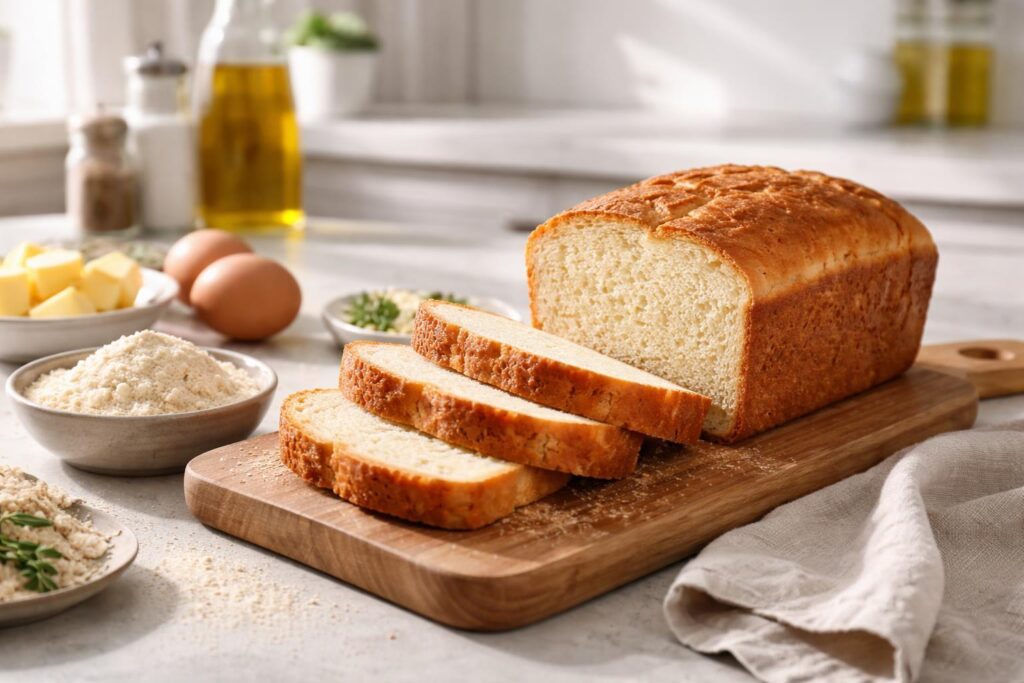
What Is Keto Bread?
If you’ve started a low-carb lifestyle, you already know that regular bread can feel like forbidden treasure. Traditional bread is loaded with wheat flour, which is high in carbohydrates and can quickly use up your daily keto carb allowance. One slice of regular white bread often contains around 12–15 grams of carbs, while many keto diets aim for 20–50 grams total per day. That means just two sandwiches can derail your plan before lunch. Keto bread steps in like a smart substitute, giving you the comfort of bread without the carb overload.

Keto bread is made using low-carb ingredients such as almond flour, coconut flour, flaxseed meal, and psyllium husk instead of wheat flour. These ingredients provide texture, fiber, and structure while keeping net carbs low. Recent recipe trends show that psyllium husk and almond flour remain the most common combination for homemade keto loaves because they create a softer crumb and better sliceability.
The best part? Homemade keto bread allows you to control ingredients, flavor, texture, and freshness. Store-bought keto breads can be expensive, packed with preservatives, or contain hidden starches. Baking it yourself is like growing herbs at home instead of buying dried ones—you simply get better quality and satisfaction.
Why Traditional Bread Doesn’t Fit Keto
Regular bread is built on wheat flour, and wheat flour is carb-heavy. During digestion, those carbs convert into glucose, which can spike blood sugar and interrupt ketosis. Ketosis is the metabolic state where your body burns fat for energy instead of carbs. When you eat regular bread often, it becomes much harder to stay in that fat-burning zone.
That doesn’t mean bread lovers are doomed. Keto bread mimics the experience of bread while avoiding the blood sugar rollercoaster. It gives you the ability to make toast, sandwiches, grilled cheese, and even breadcrumbs without guilt. Think of it as changing the engine of a car while keeping the same sleek body—you still enjoy the ride, but it performs differently.
Ingredients You Need for Keto Bread
The magic of keto bread starts with choosing the right ingredients. Unlike standard baking, you can’t just swap wheat flour one-for-one. Low-carb flours behave differently, absorb moisture differently, and need support from binders.
Best Low-Carb Flours
| Ingredient | Benefits | Approx Carbs |
| Almond Flour | Soft texture, nutty taste | Low |
| Coconut Flour | Very absorbent, fiber-rich | Low |
| Flaxseed Meal | Fiber and omega-3 | Very Low |
| Sunflower Seed Flour | Nut-free option | Low |
Almond flour is the favorite for many bakers because it creates a bread texture closest to traditional loaves. Coconut flour is useful but thirsty—it absorbs lots of liquid, so recipes need more eggs or water.
Essential Binders and Rising Agents
Without gluten, keto bread needs help holding together. That’s where psyllium husk powder, xanthan gum, and eggs come in. Psyllium husk forms a gel when mixed with water, acting like gluten and improving elasticity. Baking powder and baking soda help the bread rise.
Recent recipes highlight psyllium husk as a game changer because it prevents crumbly bread and improves chewiness.
Optional Flavor Boosters
You can also add:
- Garlic powder
- Italian herbs
- Sesame seeds
- Cheese
- Butter
- Apple cider vinegar
Apple cider vinegar is commonly used to help activate leavening agents and soften texture.
Tools Required for Baking Keto Bread
You don’t need a bakery setup. A few simple tools are enough:
- Mixing bowls
- Whisk or hand mixer
- Loaf pan
- Measuring cups or kitchen scale
- Parchment paper
- Cooling rack
A loaf pan is especially helpful because keto dough can be thicker than standard batter. Think of the pan as scaffolding for your bread while it rises.
Step-by-Step Keto Bread Recipe
Preparing the Batter
Here’s a reliable homemade keto bread recipe:
| Ingredient | Amount |
| Almond flour | 2 cups |
| Eggs | 4 |
| Baking powder | 1 tbsp |
| Psyllium husk powder | 1 tbsp |
| Butter (melted) | 1/4 cup |
| Salt | 1/2 tsp |
| Apple cider vinegar | 1 tsp |
| Unsweetened almond milk | 1/4 cup |
Whisk eggs, melted butter, milk, and vinegar in one bowl. In another bowl, combine almond flour, baking powder, psyllium husk, and salt. Slowly mix wet and dry ingredients together until smooth. The batter should be thick but spreadable.
Baking Instructions
Preheat oven to 350°F (175°C). Line a loaf pan with parchment paper. Pour the batter in and smooth the top. Bake for 30–40 minutes until golden brown and a toothpick comes out clean. Multiple recent recipes recommend this temperature range for balanced browning and interior cooking.
Cooling and Slicing
This part matters more than people think. Let the loaf cool for at least 20 minutes before slicing. If you cut it too soon, steam trapped inside can make it gummy. Cooling allows the structure to set, like concrete hardening after being poured.
Common Mistakes to Avoid
Dense Texture Problems
If your bread feels like a brick, the issue is usually too much flour or not enough moisture. Keto flours absorb differently, so accurate measuring matters. A kitchen scale gives better results than cups.
Overmixing can also make the batter heavy. Mix just until combined.
Eggy Smell Issues
Many keto breads use eggs, so a strong egg smell can happen. To reduce it:
- Use room-temperature eggs
- Add vinegar
- Add herbs or spices
- Toast slices before eating
Some bakers prefer extra egg whites instead of whole eggs to lighten flavor and improve rise.
Variations of Keto Bread
Coconut Flour Keto Bread
This version uses coconut flour instead of almond flour. It’s great for nut allergies, but needs more eggs and liquid. Texture is slightly lighter and more cake-like.
Seeded Keto Bread
Add sunflower seeds, pumpkin seeds, flaxseed, or sesame seeds for crunch. This style feels rustic and hearty, similar to artisan grain bread.
Dairy-Free Keto Bread
Use coconut oil or olive oil instead of butter. Unsweetened coconut milk can replace almond milk.
Homemade variations let you tailor flavor exactly how you like it. That’s the beauty of baking—your kitchen becomes a laboratory where the tastiest experiments win.
Storage and Freezing Tips
Fresh keto bread usually lasts:
| Storage Method | Shelf Life |
| Room temperature | 2 days |
| Refrigerator | 5–7 days |
| Freezer | Up to 3 months |
Slice before freezing so you can remove only what you need. Toast directly from frozen for convenience. It’s like having emergency bread on standby.
Nutrition Facts of Keto Bread
Nutrition varies by recipe, but a typical homemade slice contains:
| Nutrient | Approx Amount |
| Calories | 120–180 |
| Net Carbs | 2–4g |
| Protein | 5–8g |
| Fat | 10–14g |
| Fiber | 3–6g |
Some published recipes report as low as 3g carbs per slice, depending on ingredients used.
Conclusion
Learning how to make keto bread at home is one of the smartest moves for anyone following a low-carb lifestyle. It saves money, avoids questionable store ingredients, and gives you total control over taste and texture. Once you understand how almond flour, psyllium husk, eggs, and leavening work together, keto bread becomes much easier than it first appears.
Your first loaf may not look bakery-perfect, and that’s fine. Every baker improves through repetition. Soon you’ll know exactly how moist you like it, how much crunch you want on the crust, and which flavors make your kitchen smell irresistible. Homemade keto bread turns a restrictive diet into something warm, practical, and delicious.
FAQs
1. Can I make keto bread without psyllium husk?
Yes, but the texture may be more crumbly. Xanthan gum or flaxseed can help replace some structure.
2. Why is my keto bread purple?
Some psyllium husk brands react during baking and create a purple tint. It’s harmless.
3. Can keto bread be toasted?
Absolutely. Toasting often improves flavor and texture.
4. Is keto bread gluten-free?
Most homemade keto bread recipes are naturally gluten-free when made with almond or coconut flour.
5. How many slices of keto bread can I eat daily?
It depends on your total carb goals. Check the net carbs per slice and fit it into your daily keto target.