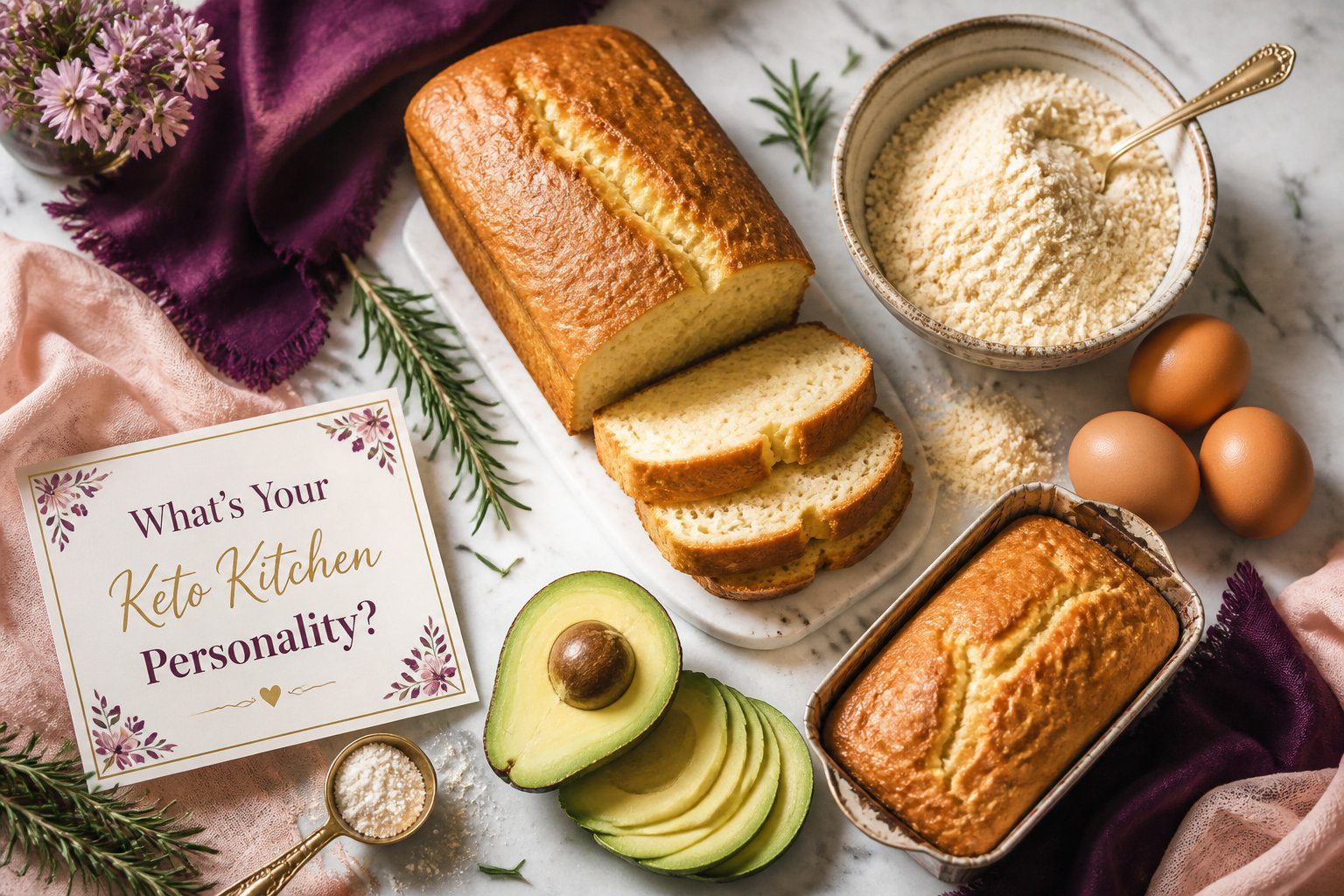

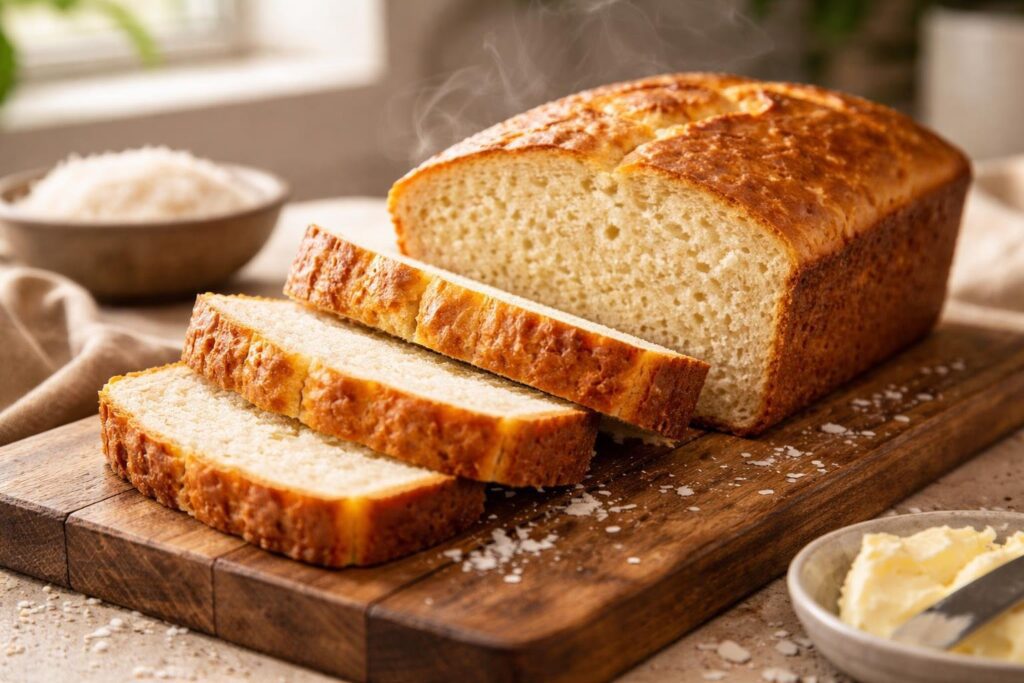
Traditional bread relies on gluten to create stretch and structure. Coconut flour has no gluten, so it needs help from eggs and moisture. Think of coconut flour like a sponge in powder form—it absorbs liquid aggressively. That’s why recipes using it need more eggs and more liquid than almond flour or wheat flour. When balanced properly, though, the result is surprisingly satisfying.

Low-carb eaters love coconut flour because you use much less of it than regular flour. A small amount goes a long way. That means fewer carbs per loaf and more fiber per slice. Instead of feeling like a cheat meal, your toast becomes part of your plan.
Ingredients You Need
For one loaf (8–10 slices):
| Ingredient | Amount |
| Coconut flour | 3/4 cup |
| Eggs | 6 large |
| Melted butter or coconut oil | 1/4 cup |
| Unsweetened almond milk | 1/2 cup |
| Baking powder | 1 tbsp |
| Salt | 1/2 tsp |
| Apple cider vinegar | 1 tsp |
Optional Add-Ins
- Garlic powder for savory bread
- Italian herbs for sandwich loaf
- Sesame seeds on top
- Stevia pinch for sweeter breakfast toast
These extras turn a simple loaf into something memorable.
Step-by-Step Coconut Flour Bread Recipe Low Carb
1. Prep Your Oven
Preheat oven to 350°F (175°C). Line a loaf pan with parchment paper or grease well.
2. Mix Wet Ingredients
In a large bowl, whisk eggs until frothy. Add melted butter, almond milk, and vinegar. Beat until smooth. The airy eggs help lift the loaf, so don’t rush this step.
3. Add Dry Ingredients
In another bowl, combine coconut flour, baking powder, and salt. Slowly add dry ingredients into wet mixture. Stir until no lumps remain.
Let batter rest for 2 minutes. Coconut flour absorbs moisture during this time and thickens dramatically.
4. Bake
Pour batter into loaf pan and smooth top. Bake 35–45 minutes until golden brown and center feels firm.
5. Cool Completely
This is where patience pays off. Let the loaf cool at least 20 minutes before slicing. Cutting too early can make it collapse.
What the Texture Tastes Like
This bread is not identical to white sandwich bread, and pretending otherwise helps no one. It’s denser, slightly moist, and mildly sweet from coconut flour. But toasted? That’s where it shines. Toasting creates a crisp outer edge and tender center that rivals many store-bought keto breads.
Spread avocado, peanut butter, cream cheese, or butter on top and it becomes a breakfast hero.
Estimated Nutrition Per Slice
(10 slices per loaf, varies by ingredients)
| Nutrient | Approx. Amount |
| Calories | 115 |
| Protein | 5g |
| Fat | 8g |
| Total Carbs | 6g |
| Fiber | 4g |
| Net Carbs | 2g |
Many keto coconut bread recipes online also land around 1–3g net carbs per slice depending on formula.
Tips for Best Texture
Use Room Temperature Eggs
Cold eggs can make melted butter harden into little clumps. Room temperature ingredients blend better and bake more evenly.
Don’t Add Extra Coconut Flour
The batter may look thin at first, but give it two minutes. Coconut flour thickens like magic. Adding more too soon often creates dry bread.
Beat Eggs Well
Air equals lift. Whisking eggs properly helps avoid a brick-like loaf.
Toast Before Serving
Even if the loaf is good fresh, toasted slices taste next-level.
Common Mistakes That Ruin Coconut Flour Bread
1. Treating It Like Wheat Flour
Coconut flour is not a 1:1 replacement. Using it that way leads to sadness and dust.
2. Skipping Enough Eggs
Eggs provide structure, moisture, and rise. They’re the engine of this recipe.
3. Underbaking
The top may brown before the center is ready. Test with a toothpick or gentle press.
4. Slicing Hot Bread
Warm bread is tempting, but patience prevents gummy slices.
Easy Variations
Savory Herb Loaf
Add rosemary, thyme, garlic powder, and black pepper.
Dairy-Free Version
Use coconut oil instead of butter and almond milk or coconut milk.
Seeded Bread
Top with chia, flax, pumpkin, or sunflower seeds for crunch.
Breakfast Bread
Add cinnamon and a keto sweetener for a French-toast style loaf.
How to Store It
Low-carb homemade bread usually stores best chilled.
- Counter: 1 day in cool weather
- Fridge: Up to 7 days
- Freezer: Up to 3 months
Slice before freezing so you can grab one piece at a time. Future-you will be grateful.
Is Coconut Flour Better Than Almond Flour for Bread?
That depends on what you want. Almond flour usually gives softer, richer bread. Coconut flour gives lower calories per volume, higher fiber, and nut-free convenience. Coconut flour is also great for those avoiding almonds due to allergies or cost.
Think of almond flour as luxury mode and coconut flour as efficient mode.
Why This Recipe Is Great for Weight Loss Plans
A slice of regular bread can quickly stack carbs without much satiety. This loaf offers protein, fiber, and healthy fats that help keep you full longer. Instead of feeling hungry an hour later, many people find low-carb bread more satisfying.
That doesn’t make it magic. It just makes it smarter.
Conclusion
This coconut flour bread recipe low carb is one of the easiest ways to enjoy bread while keeping carbs in check. It’s budget-friendly, freezer-friendly, beginner-friendly, and versatile enough for toast, sandwiches, or snacks. Once you understand coconut flour’s sponge-like nature, baking with it becomes much easier.
If you’ve been disappointed by dry keto breads before, give this loaf one honest try. It might become the recipe you keep returning to whenever cravings hit.
FAQs
1. Why is my coconut flour bread dry?
Usually too much flour or overbaking. Coconut flour absorbs moisture fast, so measure carefully.
2. Can I make this without eggs?
Egg-free coconut flour bread is difficult because eggs provide most of the structure. Flax eggs may work, but texture changes significantly.
3. Is coconut flour keto-friendly?
Yes, when used in moderate portions. It’s high in fiber and commonly used in keto baking.
4. Can I toast coconut flour bread?
Absolutely. Toasting improves flavor and texture dramatically.
5. How many carbs are in one slice?
Usually around 2 net carbs per slice, depending on ingredients and loaf size.