
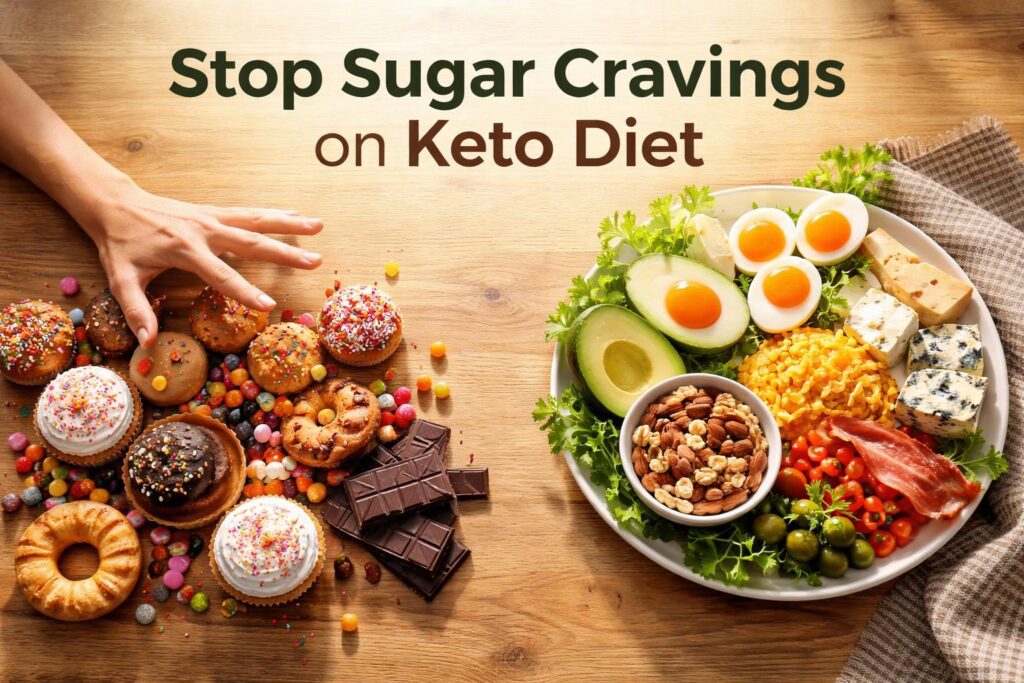
Switching to keto can feel like breaking up with sugar after a long relationship. For many people, the first days or weeks bring intense cravings for sweets, desserts, soda, bread, or even random sugary snacks they never cared about before. That reaction is common because your body is used to using glucose as its main fuel source.

When carbs suddenly drop, your brain and hormones often protest. The good news is that cravings are usually temporary, and they can be managed with the right strategy. Instead of relying on willpower alone, you can use nutrition, habits, and timing to make cravings fade naturally. If you have been wondering why keto feels easy for some people and difficult for others, the answer often lies in how they handle the transition stage.
Why Sugar Cravings Happen on Keto
Sugar cravings on keto are not just about weakness or discipline. They are usually driven by biology, routine, and emotional patterns. When you reduce carbs sharply, insulin levels change, stored glycogen drops, and the body begins learning how to burn fat for energy. During this adjustment, many people feel tired, moody, and hungry. Those symptoms can trigger a desire for quick energy, and sugar is the fastest shortcut the brain remembers. Old habits also play a role. If dessert followed dinner every night before keto, your mind expects that reward at the same time each day.
The Carb Withdrawal Phase
Research suggests that the early stage of ketogenic dieting may temporarily increase hunger and desire to eat during the first days or weeks before appetite settles down. One study found hunger rose early, then became less of an issue while participants remained in ketosis. That means cravings at the beginning do not automatically mean keto is failing. Often, they are part of the adaptation process.
Blood Sugar Swings and Habit Loops
Before keto, many people ride a rollercoaster of high-carb meals, sugar spikes, and energy crashes. That cycle can train the body to ask for more sugar whenever energy dips. Keto tries to flatten that rollercoaster. But if you keep cheating often, snacking on hidden carbs, or eating highly sweet keto treats all day, the cycle may continue.
What Research Says About Keto and Cravings
One of the most interesting findings in nutrition science is that restricting certain foods does not always increase cravings forever. In some cases, cravings decrease over time. A clinical study comparing low-carb and low-fat diets found people on a low-carb diet had larger decreases in cravings for carbohydrates/starches and preferences for high-sugar foods. That is encouraging because it means cravings can shrink instead of growing.
Another study on carbohydrate restriction also reported reduced food cravings after a low-carb intervention. In practical terms, keto often gets easier after the first adjustment phase. Many people assume they will miss sugar forever, but often the opposite happens. Taste buds change, sweetness tolerance resets, and foods like berries or dark chocolate start tasting much sweeter than before.
Still, some people continue to struggle. Usually, the cause is not keto itself but poor calorie intake, low protein, electrolyte imbalance, stress eating, sleep debt, or constantly teasing cravings with sweet-flavored processed products.
10 Proven Ways to Stop Sugar Cravings
1. Eat Enough Healthy Fat
Keto works best when meals are satisfying. If you are trying to do keto and low-calorie dieting at the same time, cravings can hit hard. Healthy fats help create fullness and steady energy. Add foods like avocado, olive oil, eggs, nuts, seeds, butter, and fatty fish. Think of fat as the slow-burning firewood that keeps the furnace running instead of the paper flash of sugar.
A breakfast with eggs and avocado will usually control cravings better than coffee alone. A salad with olive oil and grilled chicken beats a tiny “diet meal” that leaves you hunting cookies two hours later.
2. Prioritize Protein
Protein is one of the strongest hunger-control tools available. If cravings strike often, check whether you are under-eating protein. Include meat, poultry, fish, eggs, Greek yogurt if tolerated, tofu, or cottage cheese if it fits your plan. Protein helps stabilize appetite and preserves muscle while losing weight.
Many keto beginners focus only on fat and forget protein. That mistake can backfire quickly. A plate with salmon, vegetables, and butter often works better than fat bombs alone.
3. Fix Electrolytes
Many “sugar cravings” are actually fatigue, headaches, or low-energy symptoms from electrolyte imbalance. Keto lowers insulin, which can increase sodium and water loss. If sodium, potassium, and magnesium drop, you may feel awful and crave quick energy.
Try:
- Salting food adequately
- Drinking broth
- Eating leafy greens and avocado
- Using magnesium if appropriate
If cravings come with headaches, weakness, dizziness, or muscle cramps, electrolytes deserve attention.
4. Stay Hydrated
Mild dehydration often disguises itself as hunger. Before reaching for sweets, drink a large glass of water and wait ten minutes. This simple trick sounds basic because it is basic, but it works surprisingly often. Many people snack because the body sends a vague discomfort signal that gets mistaken for hunger.
5. Remove Trigger Foods
You do not need superhero discipline if temptation is not in the house. If cookies, cereal, chocolate bars, and sweet drinks are visible every day, cravings stay active. Environment shapes behavior more than motivation.
Create a kitchen that supports keto:
- Keep protein ready to eat
- Store nuts in portions
- Keep sparkling water available
- Hide or remove trigger foods when possible
6. Use Keto Sweet Alternatives Carefully
Sugar-free desserts can help some people stay consistent. For others, they keep the sweet obsession alive. If a keto cookie makes you want six more, it is not helping. If a sugar-free yogurt stops a binge, it may be useful. Know your personality.
Use alternatives strategically, not constantly:
- 85% dark chocolate
- Chia pudding with unsweetened cocoa
- Greek yogurt with cinnamon
- Homemade almond flour treats
7. Improve Sleep
Poor sleep raises hunger signals and lowers impulse control. After a bad night, pastries suddenly look like soulmates. If cravings are strongest after sleep loss, your body is giving clues.
Aim for:
- Regular sleep schedule
- Dark cool room
- Less screen time before bed
- Caffeine earlier in the day
8. Manage Stress
Stress cravings are real. Sugar can feel like emotional anesthesia. Keto cannot solve stress if food remains your coping tool. Build replacements such as walking, journaling, prayer, stretching, breathing exercises, or calling a friend.
When stress drops, cravings often drop with it.
9. Build a Craving Emergency Routine
Have a plan before cravings hit. Use a repeatable system:
- Drink water
- Eat protein first
- Walk for 10 minutes
- Wait 15 minutes
- If still hungry, choose a keto snack
This creates distance between impulse and action.
10. Be Consistent for 2–3 Weeks
Many people restart keto every Monday, then break it every Friday. That keeps cravings alive because the body never fully adapts. Consistency matters more than perfection. Give your body a clean run of two to three weeks with steady carbs kept low. Once ketosis becomes routine, cravings often soften.
Best Keto Snacks for Sweet Cravings
When cravings hit, fast action helps. Keep these options ready:
| Snack | Why It Helps | Net Carb Range |
| Greek yogurt + cinnamon | Creamy, filling, tangy | Low |
| Chia pudding | Fiber + texture | Low |
| Handful of almonds | Crunch + fat + minerals | Low |
| Boiled eggs | Protein powerhouse | Very low |
| 85% dark chocolate | Rich taste, small portion works | Moderate |
| Peanut butter (unsweetened) | Dense and satisfying | Low |
The best snack is the one that stops the craving without triggering more hunger.
Common Mistakes That Make Cravings Worse
Some keto struggles are self-created. Common mistakes include under-eating calories, skipping protein, relying on bulletproof coffee instead of meals, drinking diet soda all day, staying up late, and doing “cheat days” every weekend. Imagine trying to extinguish a fire while adding sparks every Saturday. That is what repeated sugar refeeds can do for cravings.
Another mistake is expecting zero cravings instantly. Your body may need time to rewire habits and metabolism. Patience is part of the plan.
Conclusion
Stopping sugar cravings on keto is less about fighting yourself and more about setting up your biology to cooperate. Eat satisfying meals with enough protein and healthy fat, correct electrolytes, stay hydrated, sleep well, and reduce triggers around you. Give the process time. In the beginning, cravings may roar like a loud engine, but consistency usually turns that noise into a whisper. Many people who once felt controlled by sugar eventually reach a point where sweets lose their grip. That can happen for you too.
FAQs
1. How long do sugar cravings last on keto?
For many people, the toughest phase lasts a few days to two weeks. Some need longer depending on past habits, stress, and consistency.
2. Can I eat artificial sweeteners on keto?
Yes, many people do, but they affect individuals differently. If sweeteners increase cravings, reduce or avoid them.
3. Why am I craving sugar even in ketosis?
Possible reasons include low calories, low protein, poor sleep, stress, emotional eating, or habit triggers rather than true carb need.
4. What is the fastest way to stop a sugar craving?
Drink water, eat protein, move your body for 10 minutes, and wait. Often the urge passes quickly.
5. Is fruit allowed if I crave sugar on keto?
Small portions of lower-carb fruit like berries can fit many keto plans. Portion size and daily carb targets matter.