
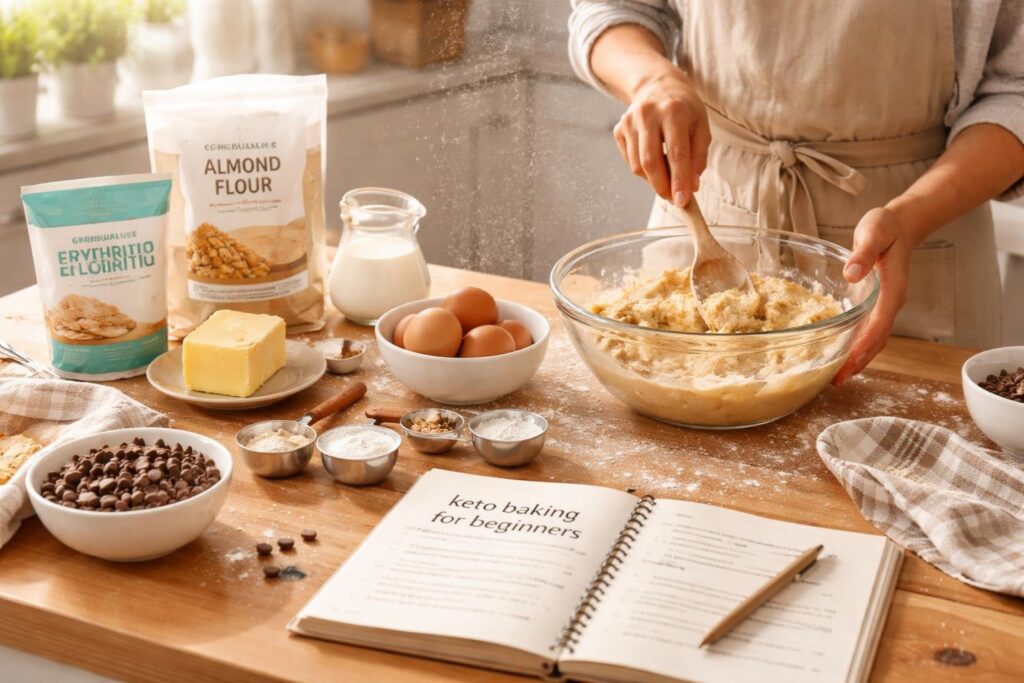
If you’ve ever tried baking on a keto diet and ended up with dry bread, crumbly cookies, or weird aftertastes, you’re definitely not alone. Many people start their journey into keto baking tips for beginners with excitement—only to feel frustrated when things don’t turn out like regular baking.

But here’s the truth: keto baking is not difficult. It just works differently.
Once you understand the ingredients, the science behind low-carb baking, and a few simple techniques, you can create soft cakes, chewy cookies, and delicious bread that actually fits your keto lifestyle.
This guide will walk you through everything step-by-step in a simple, human way—just like a friend explaining it in the kitchen while you bake together.
Low Carb Baking Basics with Keto Baking Fundamentals
Before diving into recipes, it’s important to understand what makes keto baking tips for beginners so different from traditional baking.
In regular baking, wheat flour and sugar are the main structure builders. But in keto baking, we remove both. That’s where things change.
Instead of wheat flour, we use low-carb flours like almond flour and coconut flour. Instead of sugar, we use natural sugar substitutes like erythritol or monk fruit. And instead of relying on gluten for structure, we often use eggs, cream cheese, or psyllium husk.
Think of it like this:
Traditional baking is like building a house with bricks and cement. Keto baking is like building it with alternative lightweight materials—you just need to know how to support it properly.
One beginner mistake is expecting the same texture. Once you adjust your expectations, everything becomes easier and more enjoyable.
Almond Flour vs Coconut Flour in Keto Baking Tips for Beginners
One of the most important parts of keto baking tips for beginners is understanding flour substitutes.
The two most popular options are almond flour and coconut flour, but they behave very differently.
Almond flour:
- Soft texture
- Slightly nutty flavor
- Great for cookies, cakes, pancakes
- Needs more eggs for structure
Coconut flour:
- Very absorbent
- Requires lots of liquid
- Used in smaller quantities
- Best for muffins and bread
A beginner-friendly tip is: never replace wheat flour 1:1 with almond or coconut flour.
I remember my first attempt at keto brownies. I thought almond flour would behave like regular flour. I used the same amount—and ended up with oily, flat brownies that felt like wet sand. It was disappointing, but it taught me a valuable lesson: keto baking is about ratios, not substitution.
Once you learn how each flour behaves, your results improve dramatically.
Sugar Substitutes for Keto Desserts and Low Carb Baking
Sugar is another major shift in keto baking tips for beginners.
Regular sugar not only adds sweetness but also affects texture, moisture, and browning. So replacing it properly is essential.
The most common keto-friendly sweeteners include:
- Erythritol – mild taste, cooling effect
- Monk fruit sweetener – very sweet, natural taste
- Stevia – powerful but slightly bitter if overused
- Allulose – closest to real sugar texture
Here’s a simple tip:
👉 Combine sweeteners for better flavor (for example, erythritol + monk fruit).
One beginner mistake is using too much stevia. I once made keto cupcakes with only stevia and they tasted like herbal medicine. Since then, I always balance sweeteners.
Also, don’t forget: sugar substitutes don’t caramelize like real sugar, so baking color may look lighter—but taste can still be amazing.
Common Mistakes in Gluten Free Keto Baking and How to Avoid Them
When people start keto baking tips for beginners, they often face similar problems:
1. Overmixing the batter
Unlike wheat flour, keto flours don’t need gluten development. Overmixing can make baked goods dense.
2. Wrong flour ratio
Using too much coconut flour is a common issue. It absorbs liquid quickly and can turn recipes dry.
3. Skipping binders
Ingredients like eggs, xanthan gum, or psyllium husk are essential for structure.
4. Not adjusting baking time
Keto baked goods often cook faster or slower depending on ingredients.
Think of keto baking like chemistry. Small changes make big differences.
A friend of mine once tried keto bread and left it in the oven like regular bread. The result? A rock-hard loaf that could probably stop a door from closing. After adjusting temperature and timing, her second attempt was soft and fluffy.
Mistakes are part of learning—but they don’t last long if you understand the basics.
Step-by-Step Keto Baking Tips for Beginners Guide for First Recipe
Let’s go through a simple beginner process for keto baking tips for beginners so you can confidently start your first recipe.
Step 1: Choose a simple recipe
Start with cookies, muffins, or pancakes—not bread or layered cakes.
Step 2: Gather keto-friendly ingredients
Make sure you have:
- Almond flour or coconut flour
- Keto sweetener
- Eggs
- Butter or coconut oil
Step 3: Measure carefully
Keto baking is sensitive. Use exact measurements.
Step 4: Mix gently
Combine wet and dry ingredients slowly. Don’t overwork the batter.
Step 5: Preheat oven properly
Temperature consistency matters more than you think.
Step 6: Watch closely while baking
Keto baked goods can brown quickly.
Step 7: Cool completely
This is important! Keto treats often firm up after cooling.
The first time I followed these steps, I baked almond flour cookies. They looked soft when I took them out, and I thought I had failed again. But after 20 minutes of cooling, they turned into perfect chewy cookies. That moment changed my confidence completely.
Carb Counting in Keto Desserts and Low Carb Baking Success
One of the biggest reasons people follow keto baking tips for beginners is to stay within daily carb limits.
Carb counting is simple once you get used to it:
- Track net carbs (total carbs minus fiber)
- Always check ingredient labels
- Be careful with hidden carbs in sweeteners
For example, almond flour has fewer carbs than coconut flour but higher fat content. Coconut flour has more fiber, which reduces net carbs.
A practical tip:
👉 Use apps or food tracking tools at the beginning until you get familiar.
Over time, you’ll naturally understand which ingredients are safe and which ones to limit.
Texture Secrets in Almond Flour Baking and Coconut Flour Recipes
Texture is where most beginners struggle in keto baking tips for beginners.
Here’s how to fix common issues:
Too dry?
- Add extra eggs or butter
- Use coconut oil for moisture
Too crumbly?
- Add xanthan gum or psyllium husk
- Reduce coconut flour
Too dense?
- Add baking powder
- Whip eggs for airiness
Think of keto baking like building softness through balance. Every ingredient plays a role.
I once made almond flour muffins that were so dense they felt like mini bricks. After adding an extra egg and reducing flour slightly, the texture improved completely.
Small changes matter a lot.
Easy Keto Dessert Recipes Using Sugar Free Baking Techniques
Once you understand keto baking tips for beginners, you can start experimenting with easy desserts like:
- Keto chocolate chip cookies
- Almond flour brownies
- Coconut flour muffins
- Keto cheesecake cups
The key is to keep recipes simple in the beginning. Avoid complicated layering or frosting techniques until you’re confident.
One of the easiest recipes I started with was keto mug cake. It took 2 minutes in the microwave and gave instant satisfaction. That small win kept me motivated to continue.
Real-Life Anecdote about Keto Baking Failure and Fix
Let me share a quick story.
A beginner friend of mine was excited about keto baking. She decided to impress her family with a keto chocolate cake. She followed a random recipe but didn’t understand ingredient behavior.
She replaced wheat flour with coconut flour in equal quantity.
The result? A dry, cracked cake that tasted like sweet sawdust.
She was ready to quit keto baking entirely.
But instead, she tried again after learning proper keto baking tips for beginners. This time she used almond flour, added extra eggs, and adjusted sweetness with monk fruit.
The second cake was soft, moist, and delicious. Her family couldn’t even tell it was keto.
That’s the power of learning the basics properly.
Pro Level Low Carb Baking Tips for Beginners to Improve Fast
To finish this guide, here are some advanced but simple improvements for keto baking tips for beginners:
- Always sift almond flour for smoother texture
- Use room temperature ingredients
- Add a pinch of salt to enhance sweetness
- Let dough rest before baking
- Experiment slowly—change one ingredient at a time
And most importantly, don’t rush perfection. Keto baking is a skill that improves with practice.
The more you bake, the more your intuition develops. Soon, you won’t even need recipes—you’ll just know what works.
Final Thoughts
Mastering keto baking tips for beginners is not about being perfect from the start. It’s about understanding ingredients, learning from mistakes, and improving step by step.
Once you get comfortable with almond flour, coconut flour, and sugar substitutes, keto baking becomes not just easy—but genuinely fun.
And who knows? Your next batch of cookies might be better than anything you’ve ever baked before