Dirty soda isn’t just another drink trend—it’s a full-blown cultural movement that’s reshaping how people think about beverages. At its core, a dirty soda is a customizable drink made by mixing soda with flavored syrups, cream, fruit purees, or other creative add-ins. What makes it special isn’t just the taste—it’s the experience. You’re not just ordering a drink; you’re designing one.

This trend started gaining traction years ago but has exploded recently thanks to social media platforms. According to recent reports, dirty soda has evolved from a niche concept into a nationwide obsession fueled by viral content and consumer demand for personalization . The appeal is simple: people love customization. It’s the same reason coffee chains thrived—everyone wants a drink that feels uniquely theirs.
Now here’s where it gets interesting. Younger audiences, especially Gen Z, are driving this trend. Nearly three-quarters of Gen Z consumers try a new beverage every month . That means vendors who offer creative, visually appealing drinks are tapping into a massive and constantly evolving market. Dirty soda fits perfectly into this behavior because it combines novelty, creativity, and shareability.
And let’s be honest—these drinks look amazing. Bright colors, layered textures, whipped cream tops—it’s basically made for social media. That visual appeal is exactly why platforms like Facebook are playing a huge role in pushing dirty soda vendors into the spotlight.
Origins of Dirty Soda Culture
The dirty soda movement began in Utah around 2010, where specialty soda shops introduced customizable drinks as an alternative to coffee and alcohol. Over time, chains grew rapidly, with some expanding to over 140 locations across multiple states . What started as a regional phenomenon quickly turned into a national trend.
Interestingly, the concept isn’t entirely new. It draws inspiration from old-school soda fountains where people mixed flavors into drinks. But modern dirty soda takes it to another level with endless combinations and premium ingredients.
Social Media & Facebook’s Role in Popularity
Facebook has quietly become one of the biggest platforms for local vendors to promote dirty soda businesses. While TikTok may spark trends, Facebook sustains them. Local groups, marketplace listings, and business pages allow vendors to connect directly with their communities.
People don’t just buy drinks—they share them. A single viral post showcasing a colorful soda can bring in hundreds of customers. That’s the power of visual marketing combined with social proof.
Market Growth and Real-Time Industry Insights
Dirty soda isn’t just trending—it’s growing fast. Industry data shows that menu penetration has increased significantly, with dirty soda offerings rising from 1.5% to 2.7% of eateries over the past decade . That might sound small, but it represents a rapidly expanding niche with huge potential.
Even more impressive, the market is already valued at over $70 million and continues to grow steadily . Prices typically range between $5 and $6 per drink, making it a high-margin product for vendors.
Target Audience and Consumer Behavior
The primary audience for dirty soda vendors includes:
- Gen Z and Millennials
- Social media enthusiasts
- Families looking for fun beverage options
- Non-coffee drinkers seeking alternatives
These customers aren’t just buying drinks—they’re buying an experience. They want something visually appealing, customizable, and shareable.
Why Dirty Soda Vendors Are Booming on Facebook
Facebook is the perfect platform for local food and beverage businesses. Unlike other platforms, it allows for deeper community engagement. Vendors can post menus, share customer photos, run promotions, and interact directly with their audience.
Viral Content Strategy
Successful vendors use content like:
- Slow-motion drink pours
- Before-and-after mixing videos
- Customer reactions
- Menu highlights
These types of posts generate engagement because they’re visually satisfying and easy to share.
Facebook Groups and Local Communities
Local Facebook groups act as powerful marketing channels. Vendors who actively engage in these communities often see rapid growth. Word-of-mouth spreads quickly when people start tagging friends in posts.
Dirty Soda Vendor Business Model Explained
Starting a dirty soda business doesn’t require a massive investment, which is part of its appeal. Vendors can operate from small booths, food trucks, or even pop-up stands.
Startup Costs and Profit Margins
The cost of ingredients is relatively low, while selling prices remain high. This creates strong profit margins. Many vendors report that beverages are among the most profitable items in the food industry.
Pricing Strategy and Upselling
Upselling is key. Vendors increase profits by offering:
- Extra flavor shots
- Premium toppings
- Larger sizes
Designing a Dirty Soda Booth That Attracts Crowds
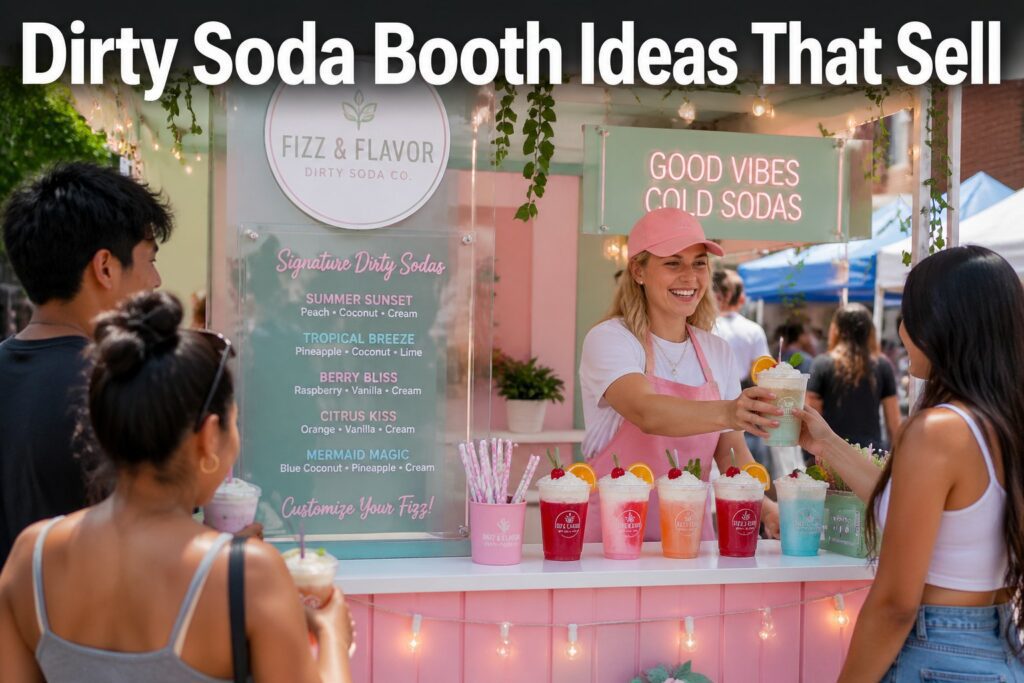
Your booth design is your first impression—and it matters more than you think. A visually appealing setup can stop people in their tracks.
Visual Branding Essentials
Branding should be bold, colorful, and consistent. Think vibrant signage, creative logos, and eye-catching displays.
Color Psychology and Aesthetic Appeal
Bright colors like pink, blue, and yellow create a fun, energetic vibe. These colors also photograph well, which is crucial for social media sharing.
Equipment and Setup Essentials
Running a smooth operation requires the right tools.
Must-Have Tools for Vendors
- Soda dispensers
- Syrup pumps
- Ice machines
- Clear cups for visual appeal
Mobile Booth vs. Permanent Setup
Mobile booths offer flexibility and lower costs, while permanent setups provide stability and branding opportunities.
Crafting a High-Converting Dirty Soda Menu
Your menu isn’t just a list—it’s a sales tool. The best menus are simple, creative, and visually appealing.
Core Menu Structure
A strong menu includes:
- Signature drinks
- Build-your-own options
- Seasonal specials
Trending Flavor Combinations
Popular combinations include coconut, vanilla, strawberry, and tropical fruit flavors . These flavors are not only delicious but also visually appealing.
| Drink Name | Base Soda | Flavors | Add-ons | Price |
| Tropical Bliss | Sprite | Coconut, Pineapple | Cream | $5.50 |
| Berry Pop | Dr Pepper | Strawberry, Vanilla | Whipped Cream | $5.75 |
| Citrus Dream | Mountain Dew | Mango, Lime | Sweet Cream | $5.25 |
| Blue Lagoon | Pepsi | Blue Raspberry | Coconut Cream | $5.95 |
Facebook Marketing Strategies for Dirty Soda Vendors
Marketing is where Facebook truly shines.
Content Ideas That Go Viral
Post ideas include:
- Customer testimonials
- Limited-time offers
- Behind-the-scenes videos
Ads, Reels, and Engagement Tactics
Facebook ads allow vendors to target local audiences effectively. Reels boost visibility and engagement.
Booth Inspiration Ideas for Maximum Impact
Design plays a huge role in attracting customers.
Minimalist vs. Colorful Concepts
Minimalist booths focus on clean design, while colorful setups create a fun atmosphere.
Instagrammable & Shareable Design Elements
Adding neon signs, themed cups, and creative displays encourages customers to take photos and share them online.
Common Mistakes to Avoid
Many vendors fail because they overlook key details like branding, menu clarity, or customer engagement. Avoid overcomplicating your menu and focus on quality and consistency.
Conclusion
Dirty soda vendors are riding one of the most exciting beverage trends of the decade. With strong growth, high profit margins, and massive social media appeal, this business model offers incredible opportunities. Facebook, in particular, provides a powerful platform for building a loyal customer base and driving consistent sales. Whether you’re starting a small booth or scaling into a full business, success comes down to creativity, branding, and engagement.
FAQs
1. What is a dirty soda made of?
A dirty soda typically includes a base soda mixed with flavored syrups, cream, and optional toppings like fruit or whipped cream.
2. Why are dirty sodas so popular?
They offer customization, visual appeal, and a unique alternative to coffee or alcohol.
3. How much does it cost to start a dirty soda business?
Startup costs can vary but are generally low compared to other food businesses.
4. Are dirty sodas profitable?
Yes, they have high profit margins due to low ingredient costs and premium pricing.
5. How can I promote my dirty soda business on Facebook?
Use engaging visuals, post regularly, join local groups, and run targeted ads.