




Protein pudding is one of those rare foods that sits comfortably between indulgence and nutrition. Imagine enjoying a creamy, dessert-like treat that tastes like chocolate mousse or vanilla custard, yet secretly fuels your body with essential protein. That’s exactly what protein pudding delivers—a guilt-free dessert alternative that supports your health goals while satisfying your sweet cravings.

Unlike traditional puddings loaded with sugar and empty calories, protein pudding is crafted using high-protein ingredients like whey, casein, or plant-based protein powders. The result? A thick, rich, and spoonable treat that can contain anywhere from 15 to 30 grams of protein per serving. It’s no surprise that fitness enthusiasts, busy professionals, and even dessert lovers are embracing it as a daily staple.
The beauty of protein pudding lies in its flexibility. You can tailor it to your dietary preferences—keto, vegan, low-carb, or high-calorie bulking diets. Whether you want a quick breakfast, a post-workout snack, or a midnight dessert that won’t derail your progress, protein pudding fits the bill effortlessly.
Why Protein Pudding Is Trending in 2026
Food trends evolve fast, but protein pudding has managed to stick around—and grow stronger. With the global focus shifting toward healthier eating habits and functional foods, people are looking for options that do more than just taste good. They want foods that nourish, energize, and support fitness goals.
Social media platforms are filled with quick, aesthetic protein pudding recipes that look just as good as they taste. Influencers are showcasing creative versions, from layered parfaits to frozen pudding pops, making it even more appealing to a wider audience.
Another major reason behind its popularity is convenience. In a world where time is limited, protein pudding offers a quick, no-fuss solution. You can whip it up in under five minutes, store it in the fridge, and enjoy it anytime. That combination of speed, taste, and nutrition makes it a standout choice in modern diets.
The Nutritional Benefits of Protein Pudding
Protein pudding isn’t just a trendy snack—it’s a powerhouse of nutrition. The primary benefit, of course, is its high protein content. Protein plays a crucial role in muscle repair, hormone production, and overall body maintenance. For individuals aiming to build muscle or maintain lean body mass, protein pudding becomes an easy and enjoyable way to meet daily protein requirements.
Another advantage is satiety. Protein-rich foods help you feel fuller for longer, reducing unnecessary snacking and calorie intake. This makes protein pudding particularly beneficial for those trying to lose weight without feeling deprived.
Many recipes also incorporate healthy fats, fiber, and essential vitamins, depending on the ingredients used. For example, adding chia seeds or almond butter boosts omega-3 fatty acids and fiber content, further enhancing the pudding’s nutritional profile.
Key Ingredients for the Perfect Protein Pudding
Creating the perfect protein pudding starts with choosing the right ingredients. While the recipe is simple, the quality and type of ingredients can dramatically affect the taste, texture, and nutritional value.
Choosing the Right Protein Powder
The foundation of any protein pudding is, unsurprisingly, protein powder. But not all protein powders are created equal. Whey protein is a popular choice due to its smooth texture and fast absorption. Casein protein, on the other hand, is thicker and creamier, making it ideal for pudding-like consistency.
Plant-based proteins such as pea, rice, or soy are excellent options for vegans. However, they may require additional blending or thickening agents to achieve the desired texture. Flavor also matters—a high-quality vanilla or chocolate protein powder can eliminate the need for extra sweeteners.
Experimentation is key here. Some protein powders blend seamlessly, while others may clump or create a grainy texture. Finding your go-to brand can make a huge difference in the final result.
Dairy vs Non-Dairy Bases
The liquid base you choose will determine the overall creaminess of your pudding. Traditional recipes often use milk or Greek yogurt for a rich, thick texture. Greek yogurt, in particular, adds extra protein and a slight tanginess that enhances flavor depth.
For those who prefer dairy-free options, almond milk, coconut milk, or oat milk work beautifully. Coconut milk provides a naturally creamy consistency, while almond milk keeps the pudding lighter and lower in calories.
Balancing the ratio of liquid to protein powder is essential. Too much liquid can make the pudding runny, while too little can result in a dense, unappetizing texture.
Classic Protein Pudding Recipe
Now let’s get to the heart of the matter—the actual recipe. This classic version is simple, versatile, and perfect for beginners.
Ingredients You’ll Need
- 1 scoop protein powder (chocolate or vanilla)
- ½ cup Greek yogurt or dairy-free alternative
- ¼ cup milk of choice
- 1 tablespoon cocoa powder (optional for chocolate flavor)
- 1–2 teaspoons honey or maple syrup
- ½ teaspoon vanilla extract
Step-by-Step Instructions
Start by adding your Greek yogurt and protein powder into a mixing bowl. Stir slowly to combine, ensuring there are no dry clumps. Gradually add the milk while mixing, adjusting the consistency as needed.
If you’re aiming for a chocolate flavor, mix in cocoa powder at this stage. Add your sweetener and vanilla extract, then continue stirring until the mixture becomes smooth and creamy.
For best results, refrigerate the pudding for at least 30 minutes. This allows the ingredients to thicken naturally and enhances the overall texture. Once chilled, give it a quick stir and enjoy.
Variations of Protein Pudding
One of the most exciting aspects of protein pudding is how easily it can be customized. With just a few tweaks, you can create entirely new flavor profiles.
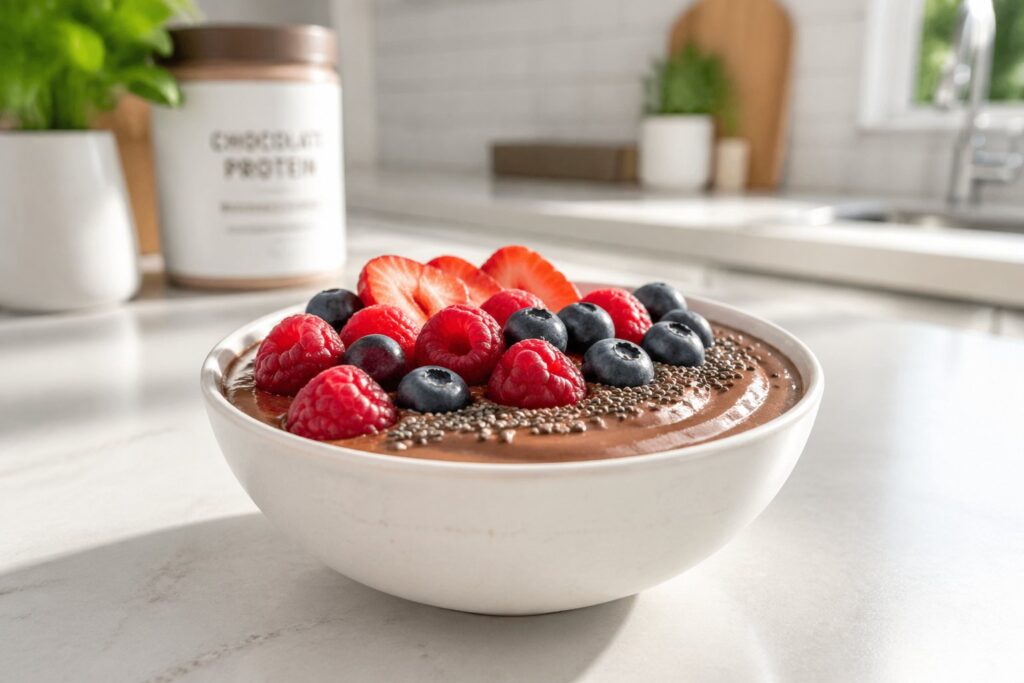
Chocolate Protein Pudding
Chocolate protein pudding is a fan favorite for obvious reasons—it tastes like dessert while still being healthy. By combining chocolate protein powder with cocoa powder and a touch of sweetener, you can achieve a rich, indulgent flavor that rivals traditional chocolate mousse.
Adding a pinch of salt can elevate the flavor even further, creating a balanced sweet-and-savory profile. For extra decadence, consider folding in dark chocolate chips or a drizzle of melted chocolate on top.
Vegan Protein Pudding
Vegan protein pudding is just as delicious as its dairy-based counterpart. Replace Greek yogurt with coconut yogurt or blended silken tofu for a creamy base. Use plant-based protein powder and sweeten with maple syrup or agave nectar.
The result is a smooth, dairy-free dessert that caters to vegan diets without compromising on taste or texture. It’s proof that healthy eating doesn’t have to feel restrictive.
High-Protein Add-Ins and Toppings
Toppings can transform a simple protein pudding into a gourmet experience. The right combination of textures and flavors can make each bite exciting.
Nut Butters and Seeds
Adding a spoonful of almond butter or peanut butter introduces healthy fats and enhances the creamy texture. Chia seeds and flaxseeds are also excellent choices, boosting fiber content and providing a subtle crunch.
These additions not only improve nutritional value but also make the pudding more satisfying, keeping hunger at bay for longer periods.
Fruits and Sweeteners
Fresh fruits like berries, bananas, or mangoes add natural sweetness and vibrant color. They also provide essential vitamins and antioxidants, making your pudding even healthier.
Natural sweeteners such as honey, dates, or stevia can be used to adjust sweetness levels without relying on refined sugar. This keeps the dessert wholesome and aligned with clean eating goals.
Protein Pudding for Weight Loss
If you’re trying to lose weight, protein pudding can become your secret weapon. Its high protein content helps control appetite, making it easier to maintain a calorie deficit.
How It Supports Fat Loss
Protein increases satiety, meaning you feel full for longer after eating. This reduces the likelihood of overeating or reaching for unhealthy snacks. Additionally, protein has a higher thermic effect compared to fats and carbohydrates, meaning your body burns more calories digesting it.
By replacing high-calorie desserts with protein pudding, you can significantly reduce your overall calorie intake without feeling deprived.
Portion Control Tips
Even healthy foods can lead to weight gain if consumed in excess. Stick to a single serving and measure your ingredients carefully. Using smaller bowls can also help create the illusion of a larger portion, making it easier to stay on track.
Protein Pudding for Muscle Gain
For those focused on building muscle, protein pudding is more than just a snack—it’s a recovery tool.
Post-Workout Benefits
After an intense workout, your muscles need protein to repair and grow. Protein pudding provides a quick and convenient source of amino acids, helping accelerate recovery and reduce muscle soreness.
Pairing it with a carbohydrate source, such as fruit or granola, can further enhance recovery by replenishing glycogen stores.
Best Time to Eat It
Timing matters when it comes to protein intake. Consuming protein pudding within 30 to 60 minutes after a workout can maximize muscle protein synthesis. However, it’s also a great option for breakfast or as a nighttime snack, especially if made with casein protein, which digests slowly.
Common Mistakes to Avoid
Even simple recipes can go wrong if you’re not careful. Avoiding common mistakes ensures consistent results every time.
Texture Issues
A runny pudding often results from too much liquid, while a thick, dry mixture indicates too little. Adjusting the ratio gradually can help you achieve the perfect consistency.
Flavor Problems
Using low-quality protein powder can lead to unpleasant flavors. Always choose a brand you enjoy, and don’t hesitate to experiment with natural flavor enhancers like vanilla extract or cinnamon.
Storage and Meal Prep Tips
Protein pudding is ideal for meal prep, saving you time throughout the week.
Refrigeration Guidelines
Store your pudding in an airtight container in the refrigerator. It typically stays fresh for up to 3 days, making it perfect for preparing in advance.
Make-Ahead Strategies
Preparing multiple servings at once allows you to have a healthy snack ready whenever hunger strikes. You can also portion them into individual containers for easy grab-and-go options.
Conclusion
Protein pudding is more than just a recipe—it’s a lifestyle upgrade. It bridges the gap between indulgence and nutrition, offering a delicious way to meet your health goals. Whether you’re aiming to lose weight, build muscle, or simply enjoy a healthier dessert, this versatile dish has something to offer.
Once you start experimenting with flavors, toppings, and textures, you’ll realize that protein pudding is anything but boring. It’s a canvas for creativity, allowing you to tailor each serving to your taste and nutritional needs.
FAQs
1. Can I make protein pudding without yogurt?
Yes, you can use milk, silken tofu, or plant-based alternatives to achieve a creamy texture.
2. How much protein does one serving contain?
Most servings contain between 15–30 grams of protein, depending on the ingredients used.
3. Is protein pudding good for kids?
It can be a healthy snack for kids, especially when made with natural ingredients and minimal sweeteners.
4. Can I freeze protein pudding?
Yes, freezing turns it into a delicious ice-cream-like treat, though the texture may change slightly.
5. What’s the best protein powder for pudding?
Casein protein is ideal for thickness, while whey and plant-based proteins work well with proper adjustments.