

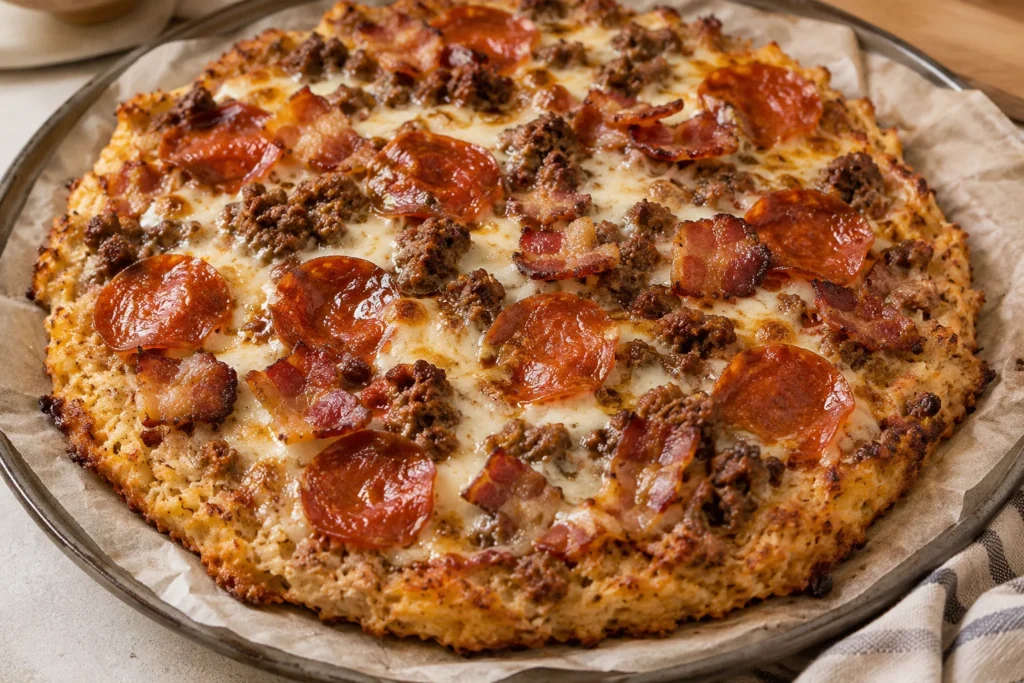
Craving pizza on a carnivore diet but tired of crusts that turn soggy, fall apart, or taste nothing like the pizza you enjoy? Finding a good flour-free pizza crust can be tricky, especially when you want something that holds your favorite toppings without using traditional wheat flour.
The good news is that you can make a delicious carnivore pizza crust with just ground chicken, eggs, mozzarella cheese, and salt. This simple chicken-based crust gives you a savory, protein-rich alternative to regular pizza dough without flour or yeast.
In this recipe, I’ll show you how to make carnivore pizza crust step by step, from mixing the ingredients to baking a firm base that holds your toppings.
I’ll also share practical tips for getting the right texture, avoiding excess moisture, fixing common crust problems, and storing leftovers. Give this easy recipe a try, follow the instructions below, and enjoy homemade pizza without traditional flour-based dough.
What Is This Carnivore Pizza Crust About?
A carnivore pizza crust is a meat-based alternative to traditional pizza dough. It uses animal-based ingredients instead of wheat flour, grains, and yeast. Most recipes use chicken, eggs, cheese, or pork rinds to create a firm crust that can hold pizza sauce and toppings.
Unlike regular pizza dough, this crust does not need flour or yeast to form its base. The ingredients work together to create its shape, texture, and structure.
The exact ingredients depend on the recipe. Some versions use ground chicken, while others use shredded or canned chicken. Eggs help bind the mixture, and cheese adds flavor and helps hold the crust together. Some recipes also use unrefined sea salt for seasoning.
Other carnivore pizza crust recipes take a different approach. They use pork panko, mozzarella, cream cheese, and eggs. Pork panko consists of finely crushed pork rinds. It gives the crust a different texture and adds a savory flavor.
Gelatin offers another option. Some recipes combine ground chicken, eggs, and unflavored gelatin to create a firmer, chewier crust. The result depends on the ingredient ratios and cooking method.
Here are the main ingredients you may find in carnivore pizza crust:
- Chicken: Ground chicken, shredded chicken, or canned chicken forms the base of many recipes. It gives the crust its meaty structure.
- Eggs: Eggs act as a binder. They help hold the ingredients together and prevent the crust from crumbling.
- Cheese: Mozzarella and cream cheese add flavor, fat, and structure. They also help create a golden, browned crust.
- Unrefined sea salt: Salt adds flavor and brings out the taste of the meat and cheese.
- Gelatin: Unflavored gelatin can help bind the ingredients and change the crust’s texture.
- Pork panko: Finely crushed pork rinds offer an alternative to chicken-based crusts. They add a savory taste and help form a firm base.
A carnivore pizza crust generally avoids traditional flour, wheat, grains, and plant-based ingredients. However, not every recipe follows the same rules. Some people include dairy products such as mozzarella and cream cheese, while others prefer dairy-free versions. Your ingredient choices determine how closely the finished pizza follows a strict carnivore approach.
The carnivore diet focuses on animal foods such as meat, poultry, fish, eggs, and some dairy products. It excludes plant foods such as fruits, vegetables, grains, legumes, nuts, and seeds, according to Harvard Health Publishing.
The main idea behind carnivore pizza crust is simple. You can enjoy the shape and familiar toppings of pizza without using traditional wheat-based dough. Each crust style offers a different texture, so your choice depends on the ingredients you enjoy and the type of pizza you want to make.
Ingredients You’ll Need for Carnivore Pizza Crust

You only need a few simple ingredients to make a homemade carnivore pizza crust. The exact ingredients depend on the type of crust you want. A chicken-based crust usually needs ground chicken, eggs, cheese, and salt. Other versions use shredded chicken, pork panko, or unflavored gelatin.
Here is a closer look at the ingredients and what each one does.
Ground Chicken
Ground chicken forms the base of many carnivore pizza crust recipes. It gives the crust its meaty structure and adds protein. Choose plain ground chicken without added fillers, starches, or seasonings.
Ground chicken also makes it easy to spread the mixture into a round pizza shape. Look for ground chicken with a suitable fat content. Very lean chicken can produce a drier crust, while chicken with more fat may release extra grease during baking.
Eggs
Eggs help hold the crust together. They act as a natural binder and help the chicken and other ingredients form a mixture that you can shape.
Use fresh, large eggs for a consistent result. The number of eggs matters because too much can make the mixture soft, while too little may cause the crust to break apart.
Mozzarella Cheese
Mozzarella adds a mild, creamy flavor to carnivore pizza crust. It also helps bind the ingredients and gives the crust a richer texture.
Shredded low-moisture mozzarella works well for many recipes because it contains less water than fresh mozzarella. This helps control excess moisture and makes it easier to get a firmer crust.
Unrefined Sea Salt
A little unrefined sea salt brings out the natural flavor of chicken and cheese. It also adds seasoning without introducing plant-based ingredients.
You can adjust the amount to suit your taste. Check the labels on canned chicken, cheese, and pork products before adding extra salt because some brands already contain a good amount of sodium.
Pork Panko
Pork panko offers another option for making carnivore pizza crust. It consists of finely ground pork rinds and works as a grain-free alternative to traditional breadcrumbs.
Pork panko adds a savory flavor and helps create a different crust texture. You can buy ready-made pork panko or crush plain pork rinds into fine crumbs at home.
Choose unseasoned pork rinds if you want to keep the ingredient list simple.
Cream Cheese
Cream cheese works well in cheese-based carnivore pizza crust recipes. It adds moisture, richness, and a mild tangy flavor.
Some recipes combine cream cheese with shredded mozzarella and eggs to create a dough-like mixture. Use plain, full-fat cream cheese without added flavors or unnecessary ingredients.
Unflavored Gelatin
Unflavored gelatin is another ingredient used in some chicken-based carnivore pizza crust recipes. It helps bind the mixture and can give the finished crust a firmer, chewier texture.
Choose plain, unflavored gelatin rather than sweetened or flavored products. Check the package instructions before adding it to your recipe.
Fresh or Canned Chicken
You can use fresh cooked chicken or canned chicken for certain carnivore pizza crust recipes.
Fresh chicken gives you more control over the cooking process. Canned chicken offers a convenient shortcut when you want to save preparation time.
If you choose canned chicken, drain it well before mixing it with the other ingredients. Excess liquid can make the crust too wet and harder to crisp.
A quick ingredient selection tip: You do not need every ingredient listed above for one recipe. Ground chicken, eggs, mozzarella, and salt make a common chicken-based combination. Pork panko and cream cheese belong to different crust variations, while gelatin suits recipes that use it as a binder.
Choose your ingredients based on the crust recipe you plan to follow. This will help you get the right texture without adding ingredients that the recipe does not need.
Step-by-Step Instructions on How to Make This Pizza Crust
Making a ground chicken carnivore pizza crust takes just a few simple steps. You need ground chicken, eggs, shredded mozzarella, and salt. The key is to mix the ingredients well, spread the mixture evenly, and pre-bake the crust before adding your favorite pizza toppings.
Follow these steps to get a firm crust with a golden outside and a tender center.
Step 1: Prepare the Ingredients
Preheat your oven to 400°F (200°C). Line a baking sheet or pizza pan with parchment paper.
Gather your ingredients:
- 1 pound ground chicken
- 1 large egg
- 1 cup shredded mozzarella cheese
- ½ teaspoon unrefined sea salt
Keep the ground chicken cold until you are ready to mix it. This makes it easier to handle and shape.
Step 2: Combine the Ingredients
Add the ground chicken, egg, shredded mozzarella, and sea salt to a large mixing bowl.
Mix everything with a spoon or clean hands until the ingredients come together. Make sure the egg and cheese spread evenly through the ground chicken.
The mixture should feel moist but hold its shape. Avoid adding extra liquid because too much moisture can make the crust soft.
Step 3: Shape the Pizza Crust
Transfer the chicken mixture to your prepared baking sheet or pizza pan.
Use your hands or the back of a spoon to spread it into a round pizza shape. Aim for an even thickness of about ¼ inch.
Keep the center and edges at a similar thickness. A very thick center may take longer to cook, while thin edges can dry out before the middle finishes.
Leave a slightly raised edge if you prefer a traditional pizza shape.
Step 4: Pre-Bake the Crust
Place the pan in your preheated oven and bake the chicken pizza crust for 20 to 25 minutes at 400°F (200°C).
The crust should become firm and develop a lightly golden surface. Ground chicken releases some moisture and fat during baking, so don’t worry if you notice liquid around the edges.
Check that the chicken reaches an internal temperature of 165°F (74°C) using a food thermometer. The USDA recommends this temperature for all poultry, including ground chicken.
You can carefully drain excess liquid after baking if needed.
Step 5: Add Your Favorite Pizza Toppings
Remove the pre-baked crust from the oven. Let it rest briefly so it becomes easier to handle.
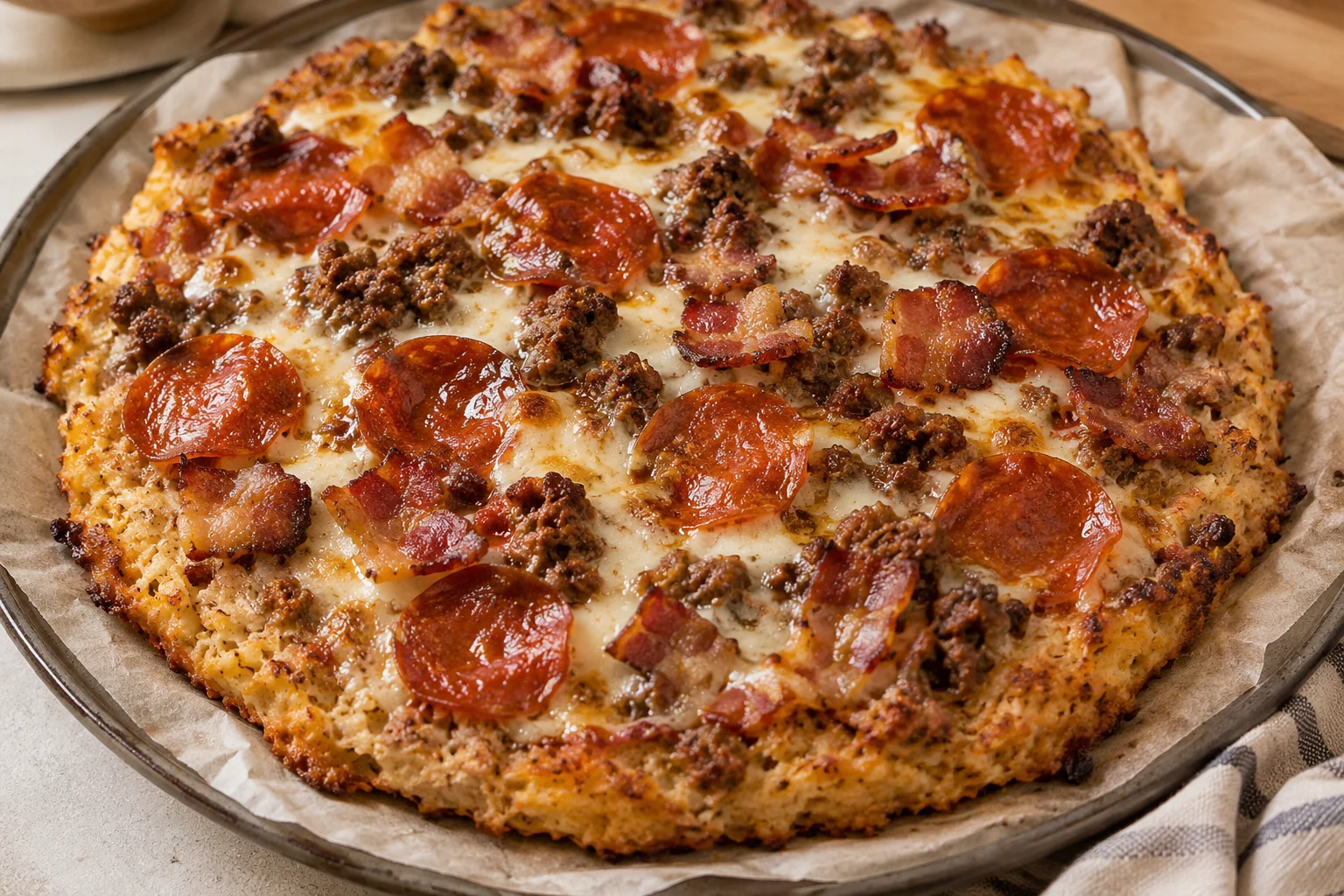
Add your favorite carnivore-friendly toppings. You can use:
- Shredded mozzarella cheese
- Pepperoni
- Cooked ground beef
- Crispy bacon
- Cooked sausage
Keep the toppings in a thin, even layer. Too much cheese, meat, or sauce can make the center soggy.
Step 6: Bake Until the Cheese Melts
Return the pizza to the oven and bake for another 5 to 10 minutes, or until the cheese melts and the toppings become hot.
Watch the edges so they don’t become too dry. If you like a more browned cheese topping, use the broiler briefly at the end. Keep a close eye on the pizza because cheese can burn quickly.
Remove the pizza from the oven and let it rest for a few minutes before slicing. This helps the crust settle and makes each slice easier to lift.
Cut into equal portions and serve warm.
Recipe tip: The most important steps are shaping the chicken mixture evenly and pre-baking it before adding toppings. These two steps help create a firmer carnivore pizza crust that holds its shape and supports your favorite toppings.
Why You Will Love This Carnivore Pizza Crust Recipe
If you enjoy pizza but want to skip traditional flour-based dough, this carnivore pizza crust is worth trying. It uses ground chicken, eggs, mozzarella cheese, and salt to create a simple, protein-rich pizza base. You don’t need wheat flour, yeast, or complicated ingredients.
Here are a few reasons to add this recipe to your meal plan.
Simple Ingredients
You only need four basic ingredients to make this chicken carnivore pizza crust. Ground chicken forms the base, eggs help hold everything together, and mozzarella adds flavor and texture. A little sea salt brings out the natural taste of the ingredients.
You can find these ingredients at most US grocery stores. You also don’t need special baking equipment or hard-to-find products.
High in Protein
Ground chicken, eggs, and mozzarella all provide protein. This makes the crust a protein-rich alternative to traditional pizza dough.
Protein supports muscle growth and repair and helps your body maintain healthy tissues. Your exact protein intake depends on the brands, ingredient amounts, and serving size you use.
No Traditional Flour or Yeast
This recipe skips wheat flour, bread flour, and yeast. Ground chicken takes the place of traditional pizza dough, while eggs and cheese help create a crust that holds together.
It’s a useful option if you want a flour-free pizza base. It also contains no gluten-containing grains when you use ingredients without added gluten. Always check product labels if you need to avoid gluten completely.
Easy to Customize
You can change the toppings to match your taste. Add pepperoni, cooked bacon, ground beef, sausage, or extra mozzarella for a meat-focused pizza.
You can also adjust the crust thickness to suit your preference. A thinner crust gives you a firmer bite, while a thicker crust creates a softer, meatier base.
Great for a Low-Carb Meal Plan
Traditional pizza dough contains wheat flour, which adds carbohydrates. This ground chicken version skips the flour and uses animal-based ingredients instead.
The total carbohydrate content depends on your cheese, toppings, and serving size. Check the nutrition labels and calculate the values from your actual ingredients rather than assuming the crust contains zero carbs.
Easy to Prepare at Home
You don’t need to knead dough, wait for yeast to rise, or spend hours preparing the base. Simply mix the ingredients, shape the chicken mixture, and bake it until firm.
Pre-bake the crust before adding your toppings. This helps it hold its shape and gives you a sturdy base for your favorite carnivore pizza ingredients.
Whether you’re following a carnivore diet or simply looking for a flour-free pizza alternative, this recipe offers a simple way to enjoy pizza with a chicken-based crust.
What Type of Chicken Is Used for Chicken Crust Pizza?
You can use ground chicken, shredded chicken, or canned chicken to make chicken crust pizza. Each option gives you a slightly different texture and preparation method.
For this recipe, ground chicken is the best choice because it mixes easily with eggs, mozzarella cheese, and salt. It also spreads into an even layer, which helps the crust cook at a steady rate.
Here is how the three options compare.
Ground Chicken
Ground chicken is a convenient choice for homemade carnivore pizza crust. It has a soft texture that makes it easy to mix with the other ingredients.
You can find ground chicken in the poultry section of most US grocery stores. Choose plain ground chicken without added fillers, starches, or seasonings.
Ground chicken with a little fat can help keep the crust moist. However, very fatty chicken may release more grease during baking.
For the best result, mix the chicken with the egg, mozzarella, and salt until everything combines evenly. Spread the mixture into a thin, even circle before baking.
Shredded Chicken
Shredded chicken offers another way to make a chicken-based pizza crust. It works well if you have leftover cooked chicken or want to prepare the meat yourself.
You can use boneless, skinless chicken breasts or thighs. Cook the chicken fully, let it cool slightly, and shred it into small pieces.
Smaller pieces help the egg and cheese hold the mixture together. Large chunks can make the crust uneven and harder to slice.
Shredded chicken also gives the crust a different texture from ground chicken. The finished base may feel more like a compact layer of shredded meat than traditional pizza dough.
Canned Chicken
Canned chicken provides a quick option when you don’t want to cook and shred fresh chicken.
Most grocery stores sell canned chicken in the canned meat section. Choose plain chicken without added sauces or unnecessary ingredients.
Before using it, drain the liquid thoroughly. Press the chicken gently with a clean paper towel to remove extra moisture. You can also break up large pieces with a fork.
Excess liquid can make the pizza crust soft and difficult to crisp. Removing as much moisture as possible helps the mixture hold together during baking.
Which Chicken Is Best for Carnivore Pizza Crust?
Here is a quick comparison to help you choose.
| Chicken type | Main benefit | Best for |
| Ground chicken | Easy to mix and shape | A smooth, even crust |
| Shredded chicken | Uses cooked chicken | A meatier texture |
| Canned chicken | Saves preparation time | A quick pizza crust |
My recommendation: Use plain ground chicken for this recipe. It combines easily with the egg and mozzarella, spreads evenly across the baking sheet, and creates a consistent base for your pizza toppings.
Whichever type you choose, pay attention to moisture and thickness. These two factors affect how well your chicken pizza crust holds together and cooks in the oven.
For food safety, cook ground chicken and all poultry to an internal temperature of 165°F (74°C). Check the thickest part with a food thermometer.
Tips for Making Carnivore Pizza
A good carnivore pizza starts with the right crust texture and a few simple cooking steps. Ground chicken releases moisture as it cooks, so small details can make a big difference in the final result.
Use these tips to make a chicken carnivore pizza that holds together, cooks evenly, and supports your favorite toppings.
Use the Right Baking Pan
A flat baking sheet or pizza pan works well for chicken crust pizza. Choose a pan large enough to spread the mixture into an even circle without making the crust too thick.
Line the pan with parchment paper to make removal easier. It also helps prevent the chicken mixture from sticking to the surface.
If you use a pizza stone, follow its heating instructions and make sure the chicken mixture has a suitable surface for baking.
Get the Right Mixture Consistency
Your chicken pizza mixture should feel moist but hold its shape when you spread it.
Ground chicken, egg, mozzarella, and salt should combine into a thick mixture. It should not look watery or runny.
If the mixture contains too much liquid, check the chicken for excess moisture. Also, measure the ingredients carefully. Adding too much egg can make the mixture softer and harder to shape.
Spread the Crust Evenly
Spread the ground chicken mixture into an even layer, about ¼ inch thick.
Try to keep the center and edges at a similar thickness. An uneven crust can cook poorly. Thin edges may dry out before the center finishes cooking.
Use the back of a spoon or clean hands to shape the mixture into a round pizza base.
Pre-Bake Before Adding Toppings
Always pre-bake the chicken crust before adding cheese, meat, or other toppings.
This step helps the chicken cook and allows the base to become firm enough to support the toppings.
Adding toppings too early can trap moisture and make the center soft. Let the crust finish its first baking stage before adding anything on top.
Remove Excess Moisture
Ground chicken releases water and fat during cooking. Too much moisture can leave the crust soft instead of firm.
After pre-baking, check the pan for excess liquid. Carefully drain it if needed before adding your toppings.
You can also use a paper towel to absorb excess grease around the edges. Avoid pressing the crust itself because this can damage its shape.
Choose Toppings That Don’t Add Too Much Moisture
Pepperoni, cooked bacon, sausage, and ground beef work well as meat-based pizza toppings.
Avoid adding too much sauce or wet ingredients. Extra moisture can soften the crust and make each slice difficult to lift.
If you use cooked ground beef or sausage, drain excess grease before adding them to the pizza.
Let the Pizza Rest Before Slicing
Once the pizza finishes baking, remove it from the oven and let it rest for a few minutes.
This gives the cheese time to settle and helps the crust hold its shape. It also makes slicing easier and reduces the chance of toppings sliding off.
Use a sharp pizza cutter or knife to cut the pizza into equal slices.
My best tip: Focus on three things: an even crust, proper pre-baking, and toppings with little excess moisture. These simple steps help your carnivore chicken pizza stay firm and make it easier to serve.
Tips for the Best Carnivore Pizza Crust
Getting a firm, flavorful carnivore pizza crust comes down to a few small details. The right ingredient balance, crust thickness, and baking method can make a big difference. Follow these tips to avoid a soft or crumbly base and get a crust that holds your favorite pizza toppings.
Use Fresh, Good-Quality Ground Chicken
Choose plain ground chicken without added fillers, starches, or seasonings. Fresh ground chicken mixes well with eggs and mozzarella and makes shaping the pizza base easier.
Check the package for added ingredients. Some ground chicken products contain extra sodium or other seasonings that can affect the final flavor.
Don’t Add Too Much Egg
Eggs help bind the ground chicken and cheese, but adding too much can make the mixture soft.
Follow the recipe measurements and use one large egg for every pound of ground chicken in this version. This balance helps the mixture hold its shape without becoming too wet.
Choose Low-Moisture Mozzarella
Low-moisture mozzarella works well in chicken pizza crust because it contains less water than fresh mozzarella.
It also melts nicely and adds a mild, cheesy flavor. Shred the cheese finely so it mixes evenly with the chicken and egg.
Avoid Making the Crust Too Thick
Spread the chicken mixture into an even layer of about ¼ inch. A thick center can stay soft while the edges cook faster.
An even layer helps the heat reach the entire crust and gives you a more consistent texture.
Pre-Bake Until the Crust Becomes Firm
Don’t rush the pre-baking step. Give the chicken crust enough time to cook and develop a firm surface before adding toppings.
Check the center with a food thermometer. Ground chicken needs to reach 165°F (74°C) for safe consumption.
Control Excess Moisture and Grease
Chicken releases moisture and fat during baking. Too much liquid can make the pizza base soft and difficult to slice.
Drain any excess liquid from the pan after pre-baking. Also, use cooked meat toppings and avoid adding too much sauce.
Let the Crust Rest Before Cutting
Give your carnivore pizza a few minutes to rest after baking. This helps the crust settle and makes it easier to cut into clean slices.
Use a sharp pizza cutter and avoid pressing too hard while slicing.
My recommendation: Don’t focus on browning alone. A good carnivore pizza crust should cook through, hold its shape, and support the toppings without falling apart. Keep the mixture balanced, spread it evenly, and give it enough time to bake.
The Best Carnivore Pizza Toppings
The right toppings can make your carnivore pizza even more satisfying. Since the crust already contains ground chicken, eggs, and mozzarella, you can add different meats and cheeses to create a flavorful pizza.
For a carnivore-friendly pizza, focus on animal-based ingredients such as beef, bacon, pepperoni, sausage, and cheese. Keep the toppings simple so they don’t add too much moisture or make the crust difficult to slice.
Here are some tasty topping ideas to try.
Pepperoni
Pepperoni is a classic pizza topping that adds a salty, savory flavor. Its rich taste pairs well with mozzarella and chicken crust.
Choose pepperoni with simple ingredients and check the label for added sugars, starches, or other fillers if you follow a strict carnivore diet.
Ground Beef
Cooked ground beef adds a hearty flavor and extra protein to your carnivore pizza.
Brown the beef in a skillet before adding it to the crust. Drain excess grease to prevent the pizza from becoming oily. Season with a little salt if needed.
Crispy Bacon
Bacon adds a smoky, salty flavor and a crisp texture. Cook it before adding it to your pizza so it doesn’t release too much fat during the final baking stage.
Break the cooked bacon into small pieces and spread them evenly over the mozzarella.
Sausage
Cooked pork or beef sausage makes a flavorful topping for meat lovers. Remove the sausage from its casing if needed, cook it in a skillet, and drain excess grease.
Choose plain sausage without added fillers or sweeteners if you want to keep your pizza close to a strict carnivore diet.
Grilled Chicken
Grilled chicken works well if you want an extra serving of meat on your pizza. Cut it into small pieces and spread them over the crust.
Use plain chicken breast or thighs seasoned with salt. Avoid adding too much chicken because a heavy topping layer can make the pizza harder to slice.
Salami
Salami brings a rich, salty flavor to carnivore pizza. Slice it thinly and arrange it over the cheese for an easy topping.
Check the ingredient label because some salami products contain added sugar, spices, or other ingredients that may not fit a strict carnivore approach.
Meatballs
Small cooked meatballs add a hearty touch to your pizza. You can use homemade ground beef or pork meatballs made with meat, eggs, and salt.
Cut larger meatballs into smaller pieces so they spread evenly across the pizza. This also makes each slice easier to eat.
Chorizo
Cooked chorizo adds a bold, savory flavor. It pairs well with mozzarella and ground beef.
Cook it in a skillet first and drain the excess fat. Check the label for added sugars, starches, and plant-based seasonings if you want to keep your toppings strictly animal-based.
Best Cheese Toppings
Mozzarella is a popular choice because it melts well and has a mild flavor. You can also try:
- Cheddar: Adds a sharper, richer flavor.
- Parmesan: Gives the pizza a salty, savory finish.
- Provolone: Melts well and adds a mild, buttery taste.
- Cream cheese: Creates a creamy base when used in small amounts.
What About Carnivore Pizza Sauce?
Traditional pizza sauce usually contains tomatoes, herbs, and other plant ingredients. If you follow a strict carnivore diet, you may prefer to skip it.
Here are a few animal-based alternatives:
- Melted butter: Adds richness and helps keep the pizza simple.
- Cream cheese: Creates a creamy base with a mild tangy flavor.
- Plain Alfredo-style sauce: Use heavy cream, butter, and Parmesan for a creamy topping.
- Melted mozzarella: Adds moisture and flavor without needing a separate sauce.
These options contain dairy, so choose according to your personal version of the carnivore diet.
My Favorite Carnivore Pizza Topping Combinations
If you’re unsure which toppings to combine, try these simple ideas:
| Pizza combination | Toppings |
| Classic meat pizza | Pepperoni, sausage, and mozzarella |
| Bacon cheeseburger pizza | Ground beef, bacon, and cheddar |
| Chicken cheese pizza | Grilled chicken and mozzarella |
| Three-meat pizza | Pepperoni, sausage, and bacon |
| Creamy cheese pizza | Cream cheese, mozzarella, and Parmesan |
My tip: Keep your toppings light and cook fatty meats before adding them to the pizza. This helps control excess grease and moisture while allowing the chicken crust to hold its shape. Always check ingredient labels if you want to follow a strict carnivore diet.
Different Types of Carnivore Pizza Crust
Carnivore pizza crust comes in several varieties. The main difference comes down to the ingredients used to create the base. Some recipes use ground chicken, while others rely on shredded chicken, pork rinds, cheese, or gelatin.
Each type has a different taste, texture, and preparation method. Your choice depends on the ingredients you enjoy and how firm or crispy you want your pizza crust to be.
Here are five popular types of carnivore pizza crust you can try.
Ground Chicken Carnivore Pizza Crust
Ground chicken is one of the easiest options for making a meat-based pizza crust. It combines with eggs, mozzarella cheese, and salt to create a mixture that you can spread into a round pizza shape.
This crust has a soft, meaty texture with a mild flavor. The mozzarella adds richness, while the egg helps hold everything together.
Pre-baking is important because it helps the ground chicken cook through and form a firm base before you add the toppings.
Best for: Beginners who want a simple, protein-rich carnivore pizza crust with easy-to-find ingredients.
Shredded Chicken Carnivore Pizza Crust
Shredded chicken offers a different approach. Instead of using raw ground chicken, you start with cooked chicken breast or thighs and shred the meat into small pieces.
Mix the shredded chicken with egg and mozzarella until the ingredients hold together. Spread the mixture across a lined baking sheet and bake until the crust becomes firm.
This version has a more noticeable chicken texture. It also works well when you have leftover cooked chicken in your refrigerator.
Best for: Anyone who prefers using cooked chicken or wants to use leftover chicken for a homemade pizza.
Pork Panko Carnivore Pizza Crust
Pork panko is another popular ingredient for carnivore pizza dough. It consists of finely crushed pork rinds that replace traditional breadcrumbs.
A typical pork panko crust combines shredded mozzarella, cream cheese, egg, and pork panko. The cheese melts and helps bind the mixture, while the pork crumbs add structure and a savory flavor.
Spread the mixture into a thin circle and bake until the edges become golden. You can also broil it briefly at the end for extra browning.
Best for: People who enjoy a cheese-based crust with a savory pork flavor and a firmer bite.
Gelatin-Based Carnivore Pizza Crust
Gelatin-based pizza crust uses unflavored gelatin as an additional binding ingredient. Some recipes combine ground chicken, egg, salt, and gelatin to create a firm, chewy base.
Gelatin comes from animal collagen and works well in recipes that avoid traditional flour and breadcrumbs. It can change the texture of the chicken mixture and help it hold together.
Follow the recipe measurements carefully because adding too much gelatin can make the crust overly firm or rubbery.
Best for: People who want to try a chicken-based crust without relying on cheese.
Dairy-Free Carnivore Pizza Crust
A dairy-free carnivore pizza crust skips mozzarella, cream cheese, and other milk-based ingredients. Ground chicken, eggs, and unflavored gelatin can form the base of this version.
It offers an alternative for people who avoid dairy but still want a meat-based pizza crust.
Keep in mind that dairy-free does not automatically mean suitable for every strict carnivore approach. Check all ingredient labels and choose products that fit your dietary preferences.
Best for: People who avoid dairy products but still want a chicken-based pizza alternative.
Which Carnivore Pizza Crust Should You Choose?
Each crust offers something different. Use this quick comparison to find the right option.
| Crust type | Main ingredients | Texture |
| Ground chicken | Chicken, egg, mozzarella, salt | Soft and meaty |
| Shredded chicken | Cooked chicken, egg, mozzarella | Firm with a shredded texture |
| Pork panko | Pork panko, mozzarella, cream cheese, egg | Savory and cheese-rich |
| Gelatin-based | Ground chicken, egg, gelatin, salt | Firm and chewy |
| Dairy-free | Ground chicken, egg, gelatin | Meat-focused without dairy |
My recommendation: Start with ground chicken if you’re making carnivore pizza for the first time. It uses simple ingredients, mixes easily, and gives you a good base for different meat toppings. Once you’re comfortable with the method, try pork panko or gelatin-based versions to explore different textures.
Common Carnivore Pizza Crust Problems and How to Fix Them
Making carnivore pizza crust takes a little practice. Ground chicken, eggs, and mozzarella behave differently from traditional flour-based pizza dough. Small mistakes with moisture, ingredient amounts, or baking time can affect the final texture.
The good news is that most problems have simple solutions. Here are some common chicken carnivore pizza crust problems and how to fix them.
Why Is My Carnivore Pizza Crust Too Soft?
A soft chicken pizza crust usually means the mixture contains too much moisture or needs more baking time.
Ground chicken naturally releases liquid as it cooks. Adding too much egg or using mozzarella with high moisture content can make the problem worse.
How to fix it:
- Drain excess liquid from the ground chicken before mixing.
- Use low-moisture shredded mozzarella instead of fresh mozzarella.
- Measure the egg carefully and follow the recipe quantities.
- Spread the mixture into an even layer.
- Give the crust enough time to pre-bake before adding toppings.
The crust should feel firm enough to support the toppings before you move to the next baking stage.
Why Does My Carnivore Pizza Crust Fall Apart?
A chicken pizza crust can crumble when the ingredients don’t bind properly. Too little egg, uneven mixing, or a crust that’s too thin can cause this problem.
Eggs help hold the ground chicken and cheese together. If the mixture doesn’t combine well, the crust may break when you lift or slice it.
How to fix it:
- Mix the ground chicken, egg, and mozzarella until evenly combined.
- Measure the ingredients carefully.
- Avoid spreading the mixture too thin.
- Let the crust rest for a few minutes after baking.
- Use a spatula to lift the crust instead of pulling it by hand.
If the mixture still falls apart, check whether you used the correct amount of egg and cheese.
How Do I Fix a Soggy Carnivore Pizza Crust?
A soggy pizza crust often comes from excess moisture in the chicken or too many wet toppings.
Ground chicken releases liquid during baking. Cheese, sauces, and other toppings can add even more moisture.
How to fix it:
- Drain excess liquid after pre-baking.
- Use low-moisture mozzarella.
- Avoid adding too much sauce.
- Cook ground beef and sausage before adding them.
- Keep the toppings in a thin, even layer.
You can also return the pizza to the oven for a few extra minutes if the crust needs more time to firm up. Watch the cheese and edges to prevent burning.
Why Is My Carnivore Pizza Crust Sticking to the Pan?
Chicken mixtures can stick to baking sheets, especially when they release moisture and fat during cooking.
This can make it difficult to remove the crust without breaking it.
How to fix it:
- Line your baking sheet with parchment paper.
- Spread the mixture evenly across the prepared surface.
- Avoid moving the crust before it becomes firm.
- Let it rest briefly after baking.
- Use a wide spatula to lift the crust carefully.
Parchment paper makes cleanup easier and helps you transfer the finished pizza without damaging its shape.
Why Is My Carnivore Pizza Crust Too Greasy?
A greasy crust usually comes from the fat in the ground chicken, melted cheese, or fatty meat toppings.
Some fat is normal, but too much can affect the crust’s texture and make each slice difficult to handle.
How to fix it:
- Choose ground chicken with a suitable fat content.
- Avoid adding excessive cheese.
- Pre-cook bacon and sausage before using them as toppings.
- Drain excess grease from cooked ground beef.
- Carefully remove extra liquid and fat after pre-baking.
You can also place the finished pizza on a plate lined with a paper towel for a short time to absorb surface grease.
Why Is My Carnivore Pizza Crust Burning Around the Edges?
Thin edges cook faster than the center. If you spread the ground chicken unevenly, the outer parts may dry out or brown too much before the middle becomes firm.
How to fix it:
- Spread the chicken mixture evenly.
- Avoid making the edges much thinner than the center.
- Follow the recommended oven temperature.
- Check the crust near the end of the baking time.
- Move the pan to the center rack if the edges brown too quickly.
A food thermometer also helps you check whether the chicken has reached a safe internal temperature of 165°F (74°C).
My tip: Most carnivore pizza crust problems come down to moisture, ingredient balance, or uneven baking. Measure your ingredients carefully, use parchment paper, and pre-bake the chicken crust before adding toppings. These simple steps can help you get a firmer crust that holds together when you slice and serve it.
How to Store and Reheat Carnivore Pizza Crust
You can make carnivore pizza crust ahead of time and save leftovers for another meal. Proper storage helps maintain the crust’s texture, flavor, and freshness.
Whether you have leftover chicken pizza crust or want to prepare a few crusts for busy days, follow these simple storage and reheating tips.
How to Store Carnivore Pizza Crust in the Refrigerator
Let the baked chicken pizza crust cool before storing it. Don’t leave cooked chicken at room temperature for more than two hours.
Follow these steps:
- Allow the crust to cool slightly after baking.
- Place it in an airtight container.
- Separate multiple crusts with parchment paper to prevent sticking.
- Store the container in the refrigerator at 40°F (4°C) or below.
Cooked chicken pizza crust can stay in the refrigerator for 3 to 4 days when stored properly.
If you have already added cheese and meat toppings, you can store the leftover pizza in the same way.
Can You Freeze Carnivore Pizza Crust?
Yes! Freezing is a good option if you want to prepare carnivore pizza crust in advance.
For the best results, freeze the crust without toppings. This makes it easier to use later and gives you more control over the finished pizza.
Here is how to freeze it:
- Let the baked crust cool completely.
- Wrap each crust tightly in plastic wrap or freezer-safe material.
- Place the wrapped crust in a freezer-safe bag or airtight container.
- Label the container with the preparation date.
- Keep it in the freezer at 0°F (-18°C) or below.
For the best quality, use frozen crust within 2 to 3 months. It may remain safe longer at a steady freezing temperature, but its texture and flavor can change over time.
When you’re ready to use it, thaw the crust in the refrigerator rather than leaving it on the kitchen counter.
How to Reheat Carnivore Pizza Crust
You can reheat leftover carnivore pizza crust in the oven, air fryer, or microwave. The oven and air fryer usually give you a firmer texture, while the microwave offers a quicker option.
Oven method
- Preheat your oven to 350°F (175°C).
- Place the crust on a baking sheet.
- Heat for about 5 to 10 minutes, depending on its thickness.
- Check that the center becomes hot before serving.
Air fryer method
- Preheat the air fryer to 325°F (163°C).
- Place the crust in the basket in a single layer.
- Heat for about 3 to 5 minutes.
- Check the texture and add a little more time if needed.
Microwave method
- Place a slice on a microwave-safe plate.
- Heat for 30 seconds.
- Check the center and continue in short intervals if needed.
- Avoid overheating because the chicken crust can become rubbery.
Cooking times vary by appliance and crust thickness. Always reheat leftovers until the center reaches 165°F (74°C).
Can You Store Carnivore Pizza Crust With Toppings?
Yes. You can refrigerate leftover carnivore pizza with toppings already added.
Place the cooled pizza slices in an airtight container and refrigerate them within two hours of cooking. Use them within 3 to 4 days.
If you plan to freeze the pizza, wrap individual slices and place them in a freezer-safe container. Keep in mind that cheese and toppings may change texture after freezing and reheating.
My tip: If you want the best texture, store the carnivore pizza crust separately from the toppings. Add fresh cheese and meat when you’re ready to make another pizza. This helps keep the crust firmer and gives you more control over the final result.
Conclusion
Making carnivore pizza at home doesn’t have to be difficult. Ground chicken, eggs, mozzarella, and salt give you a simple base that you can turn into a satisfying pizza with your favorite meat toppings. The key is to use the right ingredient amounts, spread the mixture evenly, and pre-bake the crust until it becomes firm. From my recipe preparation, [add your real experience here, such as what you noticed about the crust’s texture, flavor, or cooking method]. These small details can make a big difference in the final result. Whether you’re following a carnivore diet or simply looking for a flour-free pizza alternative, give this chicken crust recipe a try and make it your own.
Frequently Asked Questions About Carnivore Pizza Crust
Is Carnivore Pizza Crust Actually Carnivore-Friendly?
Yes. Carnivore pizza crust can fit a carnivore diet when you make it with animal-based ingredients such as ground chicken, eggs, meat, and dairy products. However, some recipes include ingredients that may not fit every person’s version of the diet. Check the ingredient list and choose a recipe that matches your dietary preferences.
Can I Make Carnivore Pizza Crust Without Cheese?
Yes. You can make a dairy-free carnivore pizza crust with ground chicken, eggs, and unflavored gelatin. Gelatin helps bind the ingredients and gives the crust a firmer texture. You won’t get the same cheesy flavor, but the chicken still creates a sturdy pizza base.
Can I Make Carnivore Pizza Crust Without Pork Rinds?
Yes. Pork rinds are optional. Ground chicken, eggs, mozzarella, and salt make a simple carnivore pizza crust without pork panko or pork rind crumbs. This version works well if you prefer a chicken-based pizza crust.
Does Carnivore Pizza Crust Taste Like Regular Pizza?
Not exactly. Traditional pizza crust has a bread-like taste and texture because it contains flour and yeast. Carnivore pizza crust has a more savory, meaty flavor. A chicken-based crust tastes mild, while a pork rind and cheese crust has a richer, saltier taste. Your toppings also affect the final flavor.
Can I Use Canned Chicken for Carnivore Pizza Crust?
Yes. Canned chicken offers a convenient alternative to fresh ground or shredded chicken. Drain the liquid thoroughly and break the chicken into small pieces before mixing. Removing excess moisture helps the crust hold together and cook properly.
Can I Make Carnivore Pizza Crust Ahead of Time?
Yes. You can prepare and bake the crust ahead of time. Let it cool, place it in an airtight container, and store it in the refrigerator for 3 to 4 days. You can also freeze it for longer storage. Add your favorite toppings when you’re ready to make the pizza.
How Long Does Carnivore Pizza Crust Last in the Fridge?
Cooked carnivore pizza crust lasts about 3 to 4 days in the refrigerator when stored in an airtight container at 40°F (4°C) or below. Refrigerate it within two hours of cooking. Reheat leftovers to an internal temperature of 165°F (74°C) before eating.