
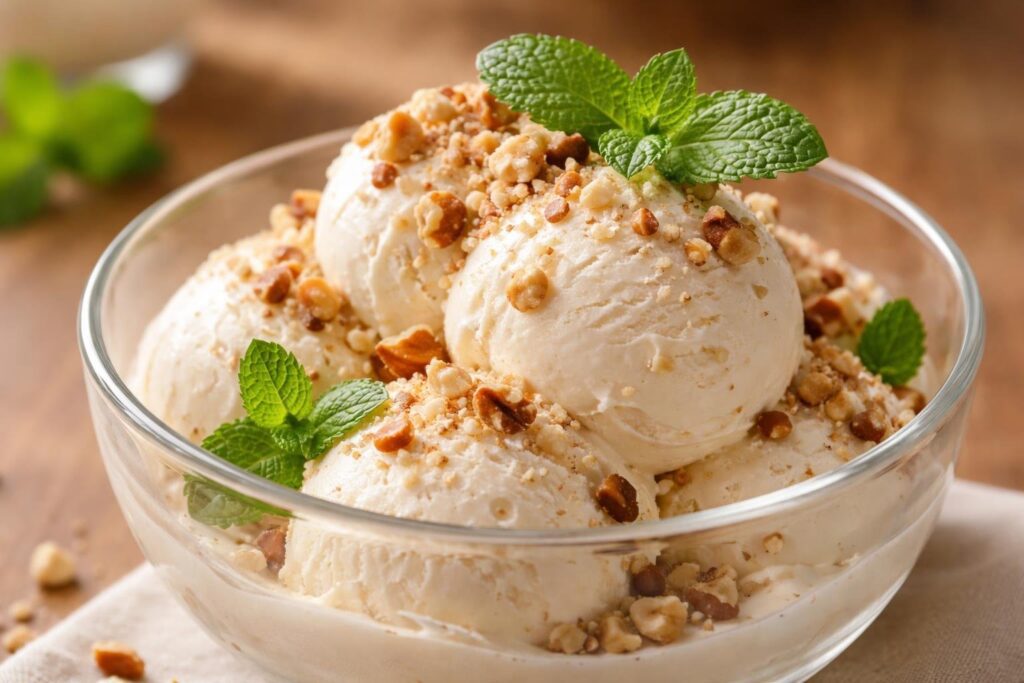
Homemade sugar free ice cream has become a favorite for people who want dessert without the heavy sugar load. Many store-bought “sugar-free” options still contain additives, fillers, or ingredients that leave an aftertaste. When you make it at home, you control every spoonful. You choose the milk, the cream, the sweetener, and even the flavor intensity. That means a cleaner dessert with better taste.

Interest in lower-sugar frozen desserts keeps growing as more people focus on balanced eating and blood sugar awareness. Recent health-focused recipe trends also show strong demand for homemade frozen treats using yogurt, fruit, coconut milk, and alternative sweeteners.
The biggest advantage? Freshness. Homemade ice cream tastes brighter and richer because it is made in small batches. Think of it like bakery bread compared to packaged bread. Both can work, but one feels alive. If you love dessert but want smarter choices, this is one of the easiest kitchen upgrades you can make.
What Makes Ice Cream Sweet Without Sugar
Traditional ice cream uses sugar for sweetness, texture, and softness. Remove sugar, and the recipe needs a replacement that does more than sweeten. That’s why choosing the right sweetener matters.
Best Natural Sweeteners
Monk fruit is popular because it adds sweetness without calories and usually has little effect on blood sugar. Stevia is another common option, though too much can taste bitter. Allulose has gained attention because it behaves more like real sugar in frozen desserts and can help improve softness and scoopability. Some recipe creators specifically prefer powdered sweeteners for smoother texture.
Sweeteners to Use Carefully
Sugar alcohols like erythritol are common, but some people experience bloating or digestive discomfort if they eat too much. That doesn’t mean they are bad for everyone—it simply means tolerance varies. The smartest move is to start with a small amount and test what works for your body.
Frozen foods also taste less sweet than room-temperature foods. So if your mixture tastes “just sweet enough” before freezing, it may taste milder later. Keep that in mind when adjusting sweetness.
Ingredients You Need for the Best Texture
Texture is the battlefield where homemade ice cream wins or loses. If it turns icy, people give up. If it turns creamy, they make it forever.
Dairy Base Options
For classic richness, use:
- Heavy cream
- Whole milk
- Greek yogurt
- Cream cheese (small amount for body)
Heavy cream adds fat, and fat creates creaminess. Whole milk lightens the mixture while keeping flavor balanced. Greek yogurt adds protein and a slight tang.
Dairy-Free Alternatives
If you avoid dairy, full-fat coconut milk is a top choice. It creates a thick, rich texture naturally. Healthline notes homemade coconut milk ice cream can be very low in carbs with no added sugar when sweetened properly.
You can also try almond milk, but because it is thinner, it usually needs help from coconut cream or xanthan gum for a better result.
Think of fat as the velvet jacket of ice cream—it gives that luxurious mouthfeel people love.
Classic Sugar Free Vanilla Ice Cream Recipe
This is the base recipe you can build on again and again.
Ingredients List
| Ingredient | Amount |
|---|---|
| Heavy cream | 2 cups |
| Whole milk | 1 cup |
| Powdered allulose or monk fruit blend | 1/2 cup |
| Vanilla extract | 2 tsp |
| Pinch of salt | 1/8 tsp |
| Egg yolks (optional for custard richness) | 3 |
Step-by-Step Method
In a bowl, whisk cream, milk, sweetener, vanilla, and salt until fully combined. If using egg yolks, heat the milk mixture gently, temper the yolks, then cook until slightly thickened. This adds a premium custard-style finish.
Chill the mixture for at least 2 hours. Cold base equals smoother ice cream. Pour into an ice cream machine and churn according to manufacturer instructions, usually 20–30 minutes. Transfer to a container and freeze for 2–4 hours before serving.
The flavor is clean, creamy, and satisfying. No sugar rush. No strange chemical taste. Just proper vanilla ice cream done intelligently.
No Ice Cream Machine Method
No machine? No problem. You can still make excellent homemade sugar free ice cream.
Pour the chilled mixture into a freezer-safe container. Freeze for 45 minutes, then remove and whisk or blend vigorously. Repeat every 30 minutes for 2 to 3 hours. This breaks ice crystals and adds air, helping create a softer texture.
A food processor or hand mixer works beautifully here. It feels a little like babysitting, but the reward is worth it. Each stir transforms frozen liquid into dessert.
How to Prevent Ice Crystals
Use these tricks:
- Use enough fat (cream or coconut milk)
- Chill mixture before freezing
- Cover tightly to block freezer air
- Add 1 tablespoon vodka or glycerin (optional, tiny amount) for softness
- Store in shallow containers
Ice crystals happen when water freezes separately. Your goal is to keep everything bonded like a good team.
Flavor Variations
Once the vanilla base is ready, the fun starts.
Chocolate Version
Add:
- 3 tablespoons unsweetened cocoa powder
- 2 tablespoons melted sugar-free dark chocolate
- Extra sweetener to taste
Chocolate naturally masks sweetener aftertaste, making it one of the best sugar-free flavors.
Strawberry Version
Blend in:
- 1 cup frozen strawberries
- 2 tablespoons Greek yogurt
- A squeeze of lemon juice
Fruit adds natural sweetness and freshness. Recent healthy dessert trends continue to highlight berry and mango frozen yogurt-style recipes.
Keto Version
Use:
- Heavy cream
- Unsweetened almond milk
- Allulose
- Egg yolks
Keep carbs low while preserving richness. Great for low-carb eaters.
Common Mistakes to Avoid
Many people say homemade sugar-free ice cream “doesn’t work,” but usually the recipe—not the concept—is the issue.
Mistake 1: Using too little fat
Low-fat liquids freeze hard and icy.
Mistake 2: Wrong sweetener ratio
Some sweeteners are much sweeter than sugar. Others are less sweet. Measure carefully.
Mistake 3: Skipping chill time
Warm mix churns poorly and forms crystals.
Mistake 4: Overfreezing
Homemade ice cream often gets harder than commercial brands because it lacks stabilizers. Let it sit 5–10 minutes before scooping.
Mistake 5: Expecting store-bought texture instantly
Commercial factories use advanced equipment and emulsifiers. Homemade versions trade some uniformity for cleaner ingredients and fresher taste.
Nutrition & Health Benefits
Sugar-free ice cream can be a smarter dessert option depending on ingredients and portion size. It may help reduce added sugar intake, which matters for people watching calories, blood sugar, or energy crashes.
Some homemade versions can also be higher in protein if made with Greek yogurt or cottage cheese. Healthline has featured homemade protein-forward frozen desserts using cottage cheese and yogurt bases.
That said, “sugar free” does not automatically mean “eat unlimited amounts.” Heavy cream still contains calories, and some sweeteners may upset digestion in large servings. The healthiest approach is balance.
A sensible bowl of homemade sugar-free ice cream can feel indulgent without wrecking your goals. That’s the sweet spot.
Storage Tips
Store your ice cream in an airtight container with parchment or plastic wrap pressed directly onto the surface. This reduces freezer burn and icy texture.
Best consumed within:
| Type | Best Quality Window |
|---|---|
| Dairy sugar-free ice cream | 2 weeks |
| Coconut milk version | 2 weeks |
| Fruit yogurt version | 1 week |
Before serving, leave it on the counter for 5 to 10 minutes. Homemade frozen desserts soften naturally and scoop better after resting.
If it freezes rock hard, blend chunks in a food processor for instant soft-serve texture.
Conclusion
Making a sugar free ice cream recipe homemade is easier than most people think. With the right base, the right sweetener, and a few texture tricks, you can create a frozen dessert that tastes rich, creamy, and satisfying. It beats many store-bought alternatives because you control the ingredients and customize every batch.
Whether you prefer vanilla, chocolate, strawberry, keto, or dairy-free, the process stays simple. Start with one base recipe, then experiment. Your kitchen becomes the ice cream shop—without the sugar overload.
The spoon is in your hand now.
FAQs
1. What is the best sweetener for sugar free ice cream?
Allulose is often preferred because it helps softness and tastes close to sugar. Monk fruit is also excellent.
2. Can I make sugar free ice cream without a machine?
Yes. Freeze the mixture and stir every 30 minutes until creamy.
3. Why is my homemade ice cream icy?
Usually too much water, too little fat, or not enough mixing during freezing.
4. Is sugar free ice cream good for diabetics?
It can be a better option, but ingredients and total carbs still matter. Check with a healthcare professional for personal guidance.
5. How long does homemade sugar free ice cream last?
For best taste and texture, enjoy within 1 to 2 weeks.