
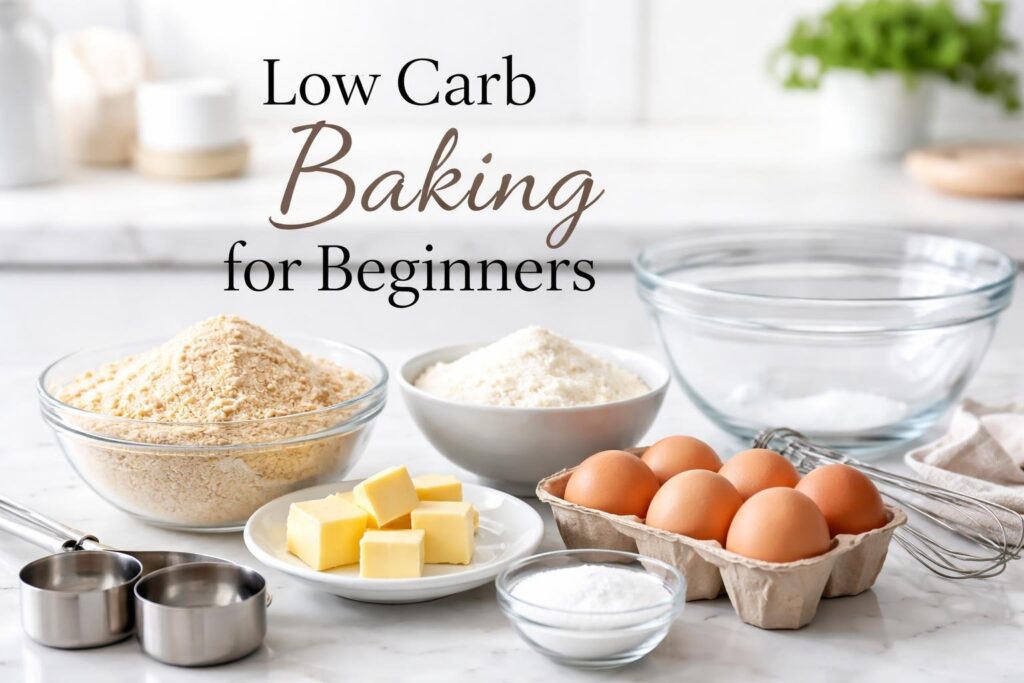
Low carb baking means making baked foods with ingredients that contain fewer digestible carbohydrates than standard flour-and-sugar recipes. Instead of all-purpose flour, bakers often use almond flour, coconut flour, flax meal, or specialty blends. Instead of sugar, many use monk fruit, erythritol, allulose, or stevia blends. The goal is to enjoy baked foods while reducing carb intake.

Many people use low carb baking for weight management, blood sugar control, or lifestyle plans such as keto and moderate-carb eating. Others simply enjoy the higher protein and healthy fat content of ingredients like almond flour. That makes low carb baking practical for more than one audience.
For beginners, it can feel strange at first because the doughs and batters behave differently. Wheat flour contains gluten, which creates elasticity and structure. Low carb flours do not behave the same way. That means you may need more eggs, extra moisture, or different mixing times.
Still, don’t let that scare you. Think of low carb baking like learning to cook with cast iron instead of nonstick pans. The rules change slightly, but once you learn them, the results can be fantastic.
Why People Choose Low Carb Baking
People often move into low carb baking because they miss comfort foods. Bread, muffins, brownies, pancakes, and cookies are emotional foods. They remind us of family kitchens, holidays, and cozy mornings. Low carb baking allows people to enjoy those moments while staying aligned with nutrition goals.
Another reason is ingredient quality. Almond flour contains protein, healthy fats, and fiber. Coconut flour is rich in fiber and highly absorbent. These ingredients can make baked foods more filling than white flour treats. According to current low-carb baking ingredient guides, almond flour remains one of the easiest beginner swaps due to texture and ease of use.
Low carb baking also gives you control. Store-bought “healthy snacks” can be expensive or full of fillers. When you bake at home, you choose the sweetener, texture, fats, portion size, and flavors. You become the architect of your own dessert.
And honestly? There’s something satisfying about pulling warm low carb cookies from the oven knowing they match your goals.
Essential Ingredients to Keep at Home
Your pantry is your toolbox. If the toolbox is stocked, baking becomes simple.
Almond Flour
Almond flour is the king of beginner low carb baking. It gives softness, richness, and mild nutty flavor. It works beautifully in muffins, cookies, pancakes, and cakes. Superfine blanched almond flour is usually best because it creates smoother textures.
Coconut Flour
Coconut flour is powerful but tricky. It absorbs much more liquid than almond flour, so recipes need extra eggs or liquid. Use recipes designed specifically for coconut flour rather than guessing substitutions.
Sweetener Options
| Sweetener | Taste | Best Use |
| Erythritol | Clean, cool finish | Cookies, cakes |
| Monk Fruit Blend | Sweet, balanced | General baking |
| Allulose | Browning, moist texture | Brownies, sauces |
| Stevia Blend | Strong sweetness | Small amounts |
Moisture Helpers
Butter, cream cheese, Greek yogurt, eggs, sour cream, and nut butters help improve texture and prevent dryness.
Must-Have Baking Tools
You don’t need a professional bakery setup. A few tools can make your life easier.
Measuring Tools
Use measuring cups and spoons, but a digital kitchen scale is even better. Low carb flours vary in density, and weight-based measurements improve consistency. Especially with coconut flour, small mistakes can change texture dramatically.
Mixing Tools
A hand whisk works for many recipes. A hand mixer is useful for cakes, whipped eggs, and cream cheese batters. Silicone spatulas help scrape bowls so you waste less batter.
Baking Pans
Start with:
- Muffin tray
- Loaf pan
- Cookie sheet
- 8×8 square pan
These four items can cover most beginner recipes.
Cooling Rack
Many beginners skip this. Don’t. Low carb baked goods often continue setting after baking. Cooling properly improves texture.
How Low Carb Flour Works
This is where beginners usually get confused. Traditional flour stretches and traps air because of gluten. Almond and coconut flours do not.
Almond flour behaves more like finely ground nuts than flour. It adds moisture and tenderness. Coconut flour behaves like a sponge. It drinks liquid fast and thickens batter quickly. That’s why recipes often use several eggs with coconut flour.
If your batter looks thinner than expected with almond flour, that can be normal. If it looks thick like clay with coconut flour, that can also be normal. Context matters.
Texture improves when you let batters rest for 2–5 minutes before baking. This allows ingredients to hydrate. It’s a tiny trick with a big payoff.
Think of low carb flour like different personalities. Almond flour is relaxed and rich. Coconut flour is intense and thirsty. Learn their behavior, and you’ll bake smarter.
Easy Beginner Recipes to Start With
Start simple. Confidence grows from small wins.
Low Carb Cookies
Cookies are forgiving and fast. Use almond flour, butter, sweetener, egg, vanilla, and chocolate chips. Scoop onto tray and bake until edges brown.
Cookies teach you:
- How sweeteners melt
- How almond flour browns
- Cooling firmness changes texture
Low Carb Muffins
Muffins are excellent for meal prep. Add blueberries, cinnamon, cocoa, or lemon zest.
They teach:
- Portion control
- Moisture balance
- Flavor customization
Low Carb Pancakes
Pancakes give instant gratification. Many beginners love almond flour pancakes because they are easier than bread.
They teach:
- Batter thickness
- Pan temperature
- Flip timing
Start where success is likely. Success creates momentum.
Common Mistakes to Avoid
Every beginner makes mistakes. The smart move is learning faster.
1. Swapping Flours 1:1
Do not replace wheat flour with coconut flour cup-for-cup. Coconut flour absorbs significantly more liquid.
2. Overbaking
Low carb baked goods dry out quickly. Remove them when centers are just set.
3. Skipping Cooling Time
Many recipes firm up after cooling. Cutting too early can make them crumble.
4. Too Much Sweetener
Some sugar alternatives become gritty or overpowering. Follow tested recipes first.
5. Expecting Exact Wheat Texture
This is the biggest mindset shift. Low carb baking can be delicious, but sometimes different. Different is not bad.
How to Save Money While Baking Low Carb
Low carb ingredients can cost more, but strategy matters.
Buy almond flour in larger bags when discounted. Freeze extra flour to extend freshness. Coconut flour often lasts longer because you use smaller amounts. Compare prices by weight, not package size.
Use simple recipes with repeat ingredients. If every recipe needs ten specialty items, costs rise fast. Instead, build around almond flour, eggs, butter, sweetener, baking powder, vanilla, and cocoa powder.
Bake in batches and freeze portions. Homemade low carb muffins or cookies often cost less per serving than packaged keto snacks.
The cheapest snack is the one you don’t waste.
How to Build Confidence as a Beginner
Confidence doesn’t come from reading recipes. It comes from doing them.
Choose one recipe and bake it three times. First time: follow exactly. Second time: improve timing. Third time: customize flavor. That repetition teaches more than chasing twenty recipes.
Keep notes:
- Oven temperature
- Texture result
- Sweetness level
- Baking time
- What to change next time
Soon you’ll stop “following recipes” and start understanding baking.
That’s when the fun begins.
Conclusion
Low carb baking for beginners is not about perfection. It’s about replacing confusion with simple systems. Start with almond flour for easier success, learn how coconut flour absorbs liquid, choose a sweetener you enjoy, and practice with cookies, muffins, or pancakes first.
The first batch may be imperfect. That’s normal. Every baker has produced dry muffins, flat cookies, or weird pancakes. The difference between beginners and experts is not talent—it’s repetition.
Your kitchen can absolutely produce delicious low carb treats. One tray, one bowl, one recipe at a time.
FAQs
1. What is the easiest flour for low carb baking beginners?
Almond flour is usually the easiest because it provides softer texture and is beginner-friendly.
2. Can I use coconut flour instead of almond flour?
Yes, but not equally. Coconut flour absorbs much more liquid, so recipes need adjustment.
3. Which sweetener tastes best for baking?
Many beginners prefer monk fruit blends or allulose for smoother flavor.
4. Why are my low carb muffins dry?
Likely overbaking, too much coconut flour, or not enough fat/moisture.
5. Can low carb baked goods be frozen?
Yes. Muffins, cookies, pancakes, and breads usually freeze very well.