





The demand for almond flour bread recipe no yeast has exploded in recent years, and 2026 is no different. More people are choosing gluten-free, grain-free, and low-carb meals without sacrificing comfort foods like bread. Traditional loaves often require yeast, kneading, rising time, and patience. But modern home bakers want faster options that still taste amazing. That is exactly where almond flour bread steps in like a hero wearing an apron.

Real-time recipe trends show continued interest in quick breads made with almond flour because they are simple, versatile, and beginner-friendly. Popular recipe sites continue updating no-yeast almond flour loaves with new variations in 2025 and 2026, proving this baking style is still booming.
This bread is ideal for busy mornings, healthy meal prep, or anyone who forgot to buy yeast. You mix the batter, pour it into a loaf pan, bake it, and enjoy warm slices in under an hour. That convenience feels like magic in a world where everyone is rushing. If you love shortcuts that still taste homemade, this recipe belongs in your kitchen.
Another reason it is popular? It works for keto, paleo, gluten-free, and many wellness-focused diets. One loaf can satisfy multiple dietary needs at the same table. That is rare in baking, where one recipe often excludes someone. Almond flour bread bridges the gap beautifully.
What Makes Almond Flour Perfect for Bread
Almond flour is not just a trendy ingredient. It brings real advantages to baking, especially when making bread without yeast. Since almond flour is made from finely ground almonds, it naturally contains healthy fats, protein, and a slightly sweet nutty flavor. That means your loaf already starts with richer taste before you add anything else.
Unlike wheat flour, almond flour contains no gluten. That makes it perfect for people avoiding gluten, but it also changes the texture. You do not get chewy artisan bread with dramatic air pockets. Instead, you get a moist, tender, hearty loaf that feels satisfying and soft. Think of it as the cozy sweater version of bread.
Nutrition is another huge benefit. Almond flour is typically lower in carbs than all-purpose flour and higher in protein and fiber. Many health-focused bakers prefer it for better blood sugar balance and satiety. Recipe publishers in 2025 highlighted almond flour bread as a practical low-carb alternative for sandwiches and toast.
It also browns beautifully in the oven because of its natural oils. That golden crust can look bakery-level impressive with minimal effort. The aroma alone can make your kitchen smell like a warm café. Once you experience that, store-bought bread starts losing its charm quickly.
Ingredients You Need
One of the best things about this almond flour bread recipe no yeast is the short ingredient list. You do not need specialty bakery tools or hard-to-find ingredients. Most items are already in a health-conscious pantry.
| Ingredient | Purpose |
| Almond flour | Main flour base |
| Eggs | Structure and binding |
| Baking powder | Helps bread rise |
| Baking soda | Extra lift and softness |
| Apple cider vinegar | Reacts with baking soda |
| Salt | Enhances flavor |
| Olive oil or melted butter | Moisture |
| Water or milk | Adjusts batter consistency |
Some updated recipes also use flaxseed or psyllium husk for better structure and sandwich-like texture. These additions help mimic traditional bread elasticity.
Want more flavor? Add garlic powder, rosemary, sesame seeds, shredded cheese, or sunflower seeds. If you like slightly sweeter bread, a teaspoon of honey can round out the nuttiness.
The key is using fine blanched almond flour, not coarse almond meal. Almond meal can make bread heavy and gritty. Fine almond flour creates a softer crumb and more even rise. That small detail can be the difference between bakery-worthy success and a brick-shaped disappointment.
Step-by-Step Almond Flour Bread Recipe
Mixing the Batter
Preheat your oven to 350°F (175°C). Grease or line a loaf pan with parchment paper. In a large bowl, whisk together 2 cups almond flour, 1 teaspoon baking powder, ½ teaspoon baking soda, and ½ teaspoon salt.
In another bowl, beat 4 eggs until frothy. Add 2 tablespoons olive oil and 1 tablespoon apple cider vinegar. Combine wet and dry ingredients slowly. Stir until smooth. If the batter seems too thick, add 1 to 2 tablespoons water or milk.
The texture should be thicker than cake batter but softer than cookie dough. Think scoopable and spreadable. If it pours like pancake batter, it may be too thin.
Baking Instructions
Transfer batter into the loaf pan and smooth the top. Sprinkle seeds or herbs if desired. Bake for 30 to 40 minutes until golden brown and a toothpick comes out mostly clean.
Many recent recipes suggest internal doneness is key, not just crust color. A loaf can brown early because almond flour contains oils. If the top darkens too fast, tent loosely with foil.
Cooling and Slicing Tips
This is where many bakers fail. Let the bread cool in the pan for 10 minutes, then move to a rack. Wait until fully cool before slicing. Warm almond flour bread is fragile and may crumble if rushed.
Once cool, slice with a serrated knife. You should get neat, tender slices perfect for toast. Patience here pays off like compound interest.
Common Mistakes to Avoid
Dense bread usually comes from old baking powder, overmixed batter, or skipping acidic ingredients like vinegar. Baking soda needs that acid reaction to create lift. Without it, your loaf may stay flat and heavy.
Crumbly bread often means not enough binding. Eggs play a major structural role in almond flour baking. If you reduce eggs without compensation, slices may fall apart. Some bakers add flaxseed or psyllium husk to strengthen texture.
Another mistake is underbaking the center. Because almond flour loaves stay moist, the inside can seem done before it truly sets. Always check the middle carefully.
Using coarse almond meal is another common issue. It creates a rougher texture and can make the bread greasy or dense. Fine almond flour is worth the extra cost.
Finally, slicing too soon is like opening a gift before it is wrapped. You ruin the final result. Let it cool fully so structure sets properly.
Best Ways to Serve Almond Flour Bread
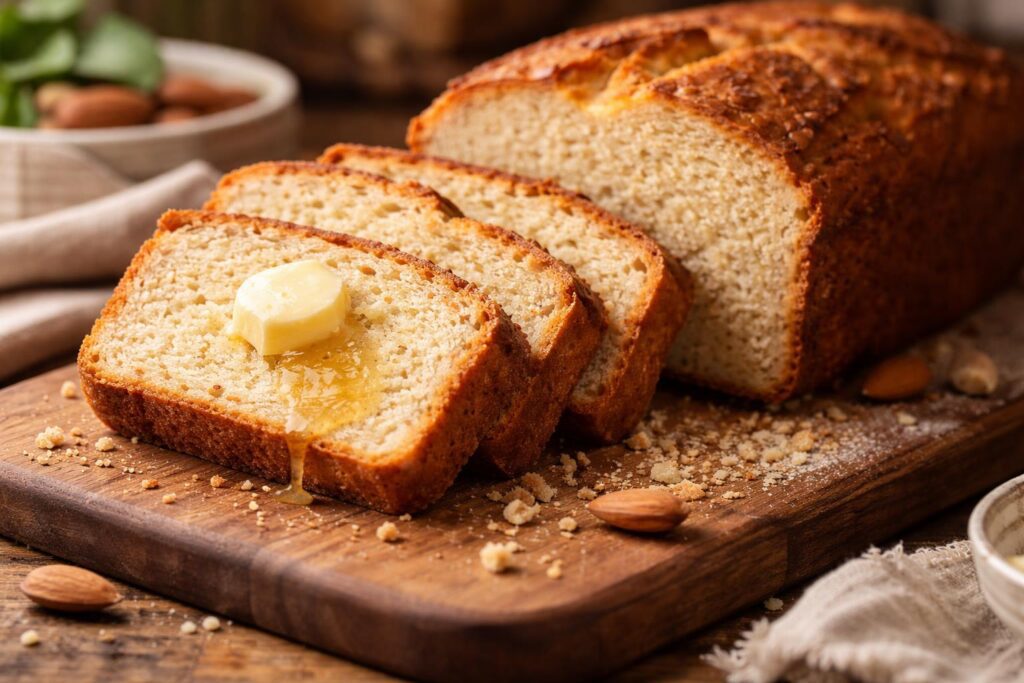
Fresh almond flour bread is incredibly versatile. Toasted slices with butter are simple and delicious. The nutty flavor pairs naturally with peanut butter, cream cheese, avocado, or jam.
For breakfast, top it with eggs and spinach. Use it as a base for French toast if you enjoy low-carb mornings. The bread toasts beautifully and becomes crisp outside while staying soft inside.
For lunch, use it for sandwiches. Turkey, chicken salad, tuna, or grilled vegetables all work well. Since slices are hearty, they hold fillings better than many gluten-free store breads.
Snack lovers can turn it into mini garlic toasts, croutons, or grilled cheese. If you cube stale slices and toast them, they make excellent salad toppers. Nothing goes to waste.
It also pairs wonderfully with soup. Imagine dipping warm toasted almond bread into tomato soup on a rainy day. That combination feels like comfort food got a healthy makeover.
Storage and Freezing Guide
Because almond flour contains natural fats, storage matters. Keep the loaf in an airtight container at room temperature for 2 days if your kitchen is cool. For longer freshness, refrigerate up to 1 week.
Many recipe creators recommend refrigeration because nut-based breads stay fresher when chilled. Just toast slices before serving to restore softness and flavor.
For freezing, slice the loaf first. Place parchment between slices and store in a freezer-safe bag. This lets you grab one slice at a time. Toast directly from frozen.
If the loaf feels moist after refrigeration, that is normal. A quick toast transforms it beautifully. Think of the toaster as your bread revival machine.
Meal preppers love this recipe because one loaf can support breakfasts and lunches for days. Few homemade breads offer that kind of convenience.
Conclusion
This almond flour bread recipe no yeast proves you do not need yeast, kneading, or long rising times to enjoy homemade bread. With simple ingredients and one bowl, you can create a flavorful loaf that fits modern lifestyles and multiple diets. It is moist, satisfying, naturally gluten-free, and easy enough for beginners.
Whether you want healthy toast, quick sandwiches, or a smarter bread option, this recipe delivers. Once you make it, you may wonder why you ever waited hours for yeast bread in the first place. Fast, nourishing, and delicious is a combination worth repeating.
FAQs
1. Can I make almond flour bread without eggs?
Yes, but texture changes. Use flax eggs or chia eggs, though slices may be more delicate.
2. Why did my almond flour bread sink in the middle?
Usually underbaking or too much moisture caused it. Bake longer and measure carefully.
3. Is almond flour bread keto-friendly?
Yes, most no-yeast almond flour breads are low in carbs and popular in keto diets.
4. Can I toast almond flour bread?
Absolutely. Toasting improves texture and adds crispness.
5. How long does almond flour bread last?
About 2 days at room temperature, 1 week refrigerated, or 3 months frozen.