




Crockpot mac and cheese sounds simple, but getting that smooth, creamy cheese sauce can be tricky. The pasta can turn mushy, the sauce can become too thick, or the cheese can separate and leave an oily texture. If you have ever spent time making homemade macaroni and cheese only to end up with a dish that nobody wants to eat, you know how frustrating that can be. The good news is that a few simple choices, such as using the right cheese, measuring the milk carefully, and checking the pasta before it overcooks, can make a real difference.
This crockpot mac and cheese recipe is a practical option for family dinners, holiday meals, and potlucks when you want a comforting side dish without constant attention at the stove. You will find clear cooking instructions, ingredient tips, and advice for avoiding common problems, along with ways to adjust the recipe to suit your needs. The goal is to help you make tender macaroni coated in a rich cheese sauce, with simple steps that beginner cooks can follow confidently.
What’s the Difference Between a Crock Pot and a Slow Cooker?
A Crock-Pot and a slow cooker do the same basic job: they cook food slowly at a low, steady temperature. The main difference is that Crock-Pot is a brand name, while slow cooker is the general name for the appliance.
A traditional slow cooker usually has a removable ceramic or stoneware pot inside a heating base. It warms the food gradually, making it useful for recipes that need several hours of cooking. Crock-Pot is one of the best-known brands that makes this type of appliance.
For crockpot mac and cheese, both a Crock-Pot and another brand of slow cooker can work well. However, cooking times may vary depending on the appliance’s size, heat settings, and design.
Here are a few things to keep in mind:
- LOW setting: Cooks at a lower heat over a longer period. This can give the cheese sauce time to warm and melt without excessive heat.
- HIGH setting: Cooks at a higher heat, so the pasta may become tender sooner. Check it early to avoid mushy macaroni or a sauce that becomes too thick.
- Slow cooker size: A smaller or larger cooker can heat the ingredients differently, especially when the recipe fills the pot to a different level.
- Stirring and cooking time: Pasta and dairy-based sauces need attention. Follow the recipe’s instructions and check the pasta for tenderness rather than relying on the clock alone.
Which one should you use? Use the slow cooker you already own, whether it is a Crock-Pot or another brand. For the best crockpot mac and cheese, follow the recipe’s recommended setting and cooking time, and check the texture as it cooks. Since slow cookers can vary, your first batch may need a small adjustment to get the creamy cheese sauce and tender pasta you want.
Why This Is the Best Crockpot Mac & Cheese Ever
This crockpot mac and cheese is a great choice when you want a creamy, cheesy comfort food without spending a lot of time in the kitchen. The slow cooker does most of the work, giving you a warm, satisfying dish that works well for family dinners, holiday meals, and potlucks.
Here’s what makes this slow cooker mac and cheese worth making.
- Rich, cheesy flavor: Sharp cheddar adds a bold cheese flavor, while other melting cheeses can help create a smoother sauce. Choose a cheese blend that suits your taste and your recipe.
- Creamy cheese sauce: Ingredients such as evaporated milk, whole milk, and cream cheese can help create a rich sauce. The right amounts and gentle cooking are important for keeping the cheese mixture smooth.
- Easy preparation: You can measure the ingredients, prepare the macaroni, and follow a few simple steps. Depending on the recipe, you may need to boil the pasta first or add it uncooked with enough liquid to cook properly.
- Less hands-on cooking: Once the ingredients are in the Crock-Pot, you can focus on other parts of your meal. You should still check the pasta as it cooks because slow cookers vary in heat and cooking time.
- Great for sharing: This homemade mac and cheese makes a comforting side dish for barbecue chicken, pulled pork, roasted vegetables, and holiday dinners. Check your slow cooker’s capacity before increasing the batch size.
- Easy to adjust: You can experiment with different cheeses, seasonings, or add-ins such as cooked bacon and broccoli, provided they work with the recipe’s cooking method.
What Makes Crockpot Mac and Cheese Different?
Unlike baked mac and cheese, which often develops a browned top in the oven, slow cooker macaroni and cheese is usually valued for its soft pasta and creamy cheese sauce. It also avoids the need to stand over a saucepan for the entire cooking process.
For the best results, use the cheese and dairy amounts listed in the recipe, avoid cooking the pasta longer than necessary, and check for tenderness before serving. These small steps help you get a creamy crockpot mac and cheese with a rich flavor and a texture that the whole family can enjoy.
Let’s Talk About a Few of These Ingredients…
The secret to creamy crockpot mac and cheese starts with choosing the right ingredients. Each one plays a role in the flavor, texture, and thickness of the cheese sauce. Here are a few ingredients worth knowing about before you start cooking.
– Elbow macaroni: This classic pasta shape holds cheese sauce well and is easy to serve. Follow the recipe’s instructions on whether to boil it first or add it uncooked. The amount of liquid and cooking time will depend on the method you use.
– Sharp cheddar cheese: Sharp cheddar gives homemade mac and cheese its familiar, rich cheese flavor. Grate it yourself from a block if possible, as freshly grated cheese often melts more smoothly than pre-shredded cheese, which may contain anti-caking agents.
– Evaporated milk: This canned milk has had much of its water removed, giving it a concentrated milk flavor and a thicker consistency than regular milk. It is a common ingredient in slow cooker mac and cheese because it helps create a rich sauce. Do not confuse it with sweetened condensed milk, which contains added sugar.
– Whole milk: Whole milk adds moisture and helps the cheese form a sauce around the macaroni. Measure it carefully because too much liquid can leave the finished dish runny, while too little may cause the sauce to become thick before the pasta is tender.
– Cream cheese: Some crockpot mac and cheese recipes use cream cheese to add body and a creamy texture. It can help create a richer sauce, but the amount should match the recipe. Adding too much may make the finished dish heavier than expected.
– Butter: Butter adds richness and helps round out the cheese flavor. Use the amount listed in the recipe so the sauce does not become overly greasy.
– Seasonings: Salt, black pepper, garlic powder, and a small amount of mustard powder can add flavor without overpowering the cheese. Taste the finished dish before adding extra salt, especially if your cheddar is already salty.
Can You Change the Ingredients?
Yes, but some substitutions affect the final texture. White cheddar can replace yellow cheddar without changing the basic cooking method, although the flavor may differ. Other melting cheeses, such as Monterey Jack, can add a milder taste and a softer texture.
For the most reliable results, follow the listed quantities for the macaroni, milk, and cheese on your first try. Once you know how your slow cooker behaves, you can test small changes while keeping the liquid balance and cooking time in mind.
How to Make Crock Pot Mac and Cheese
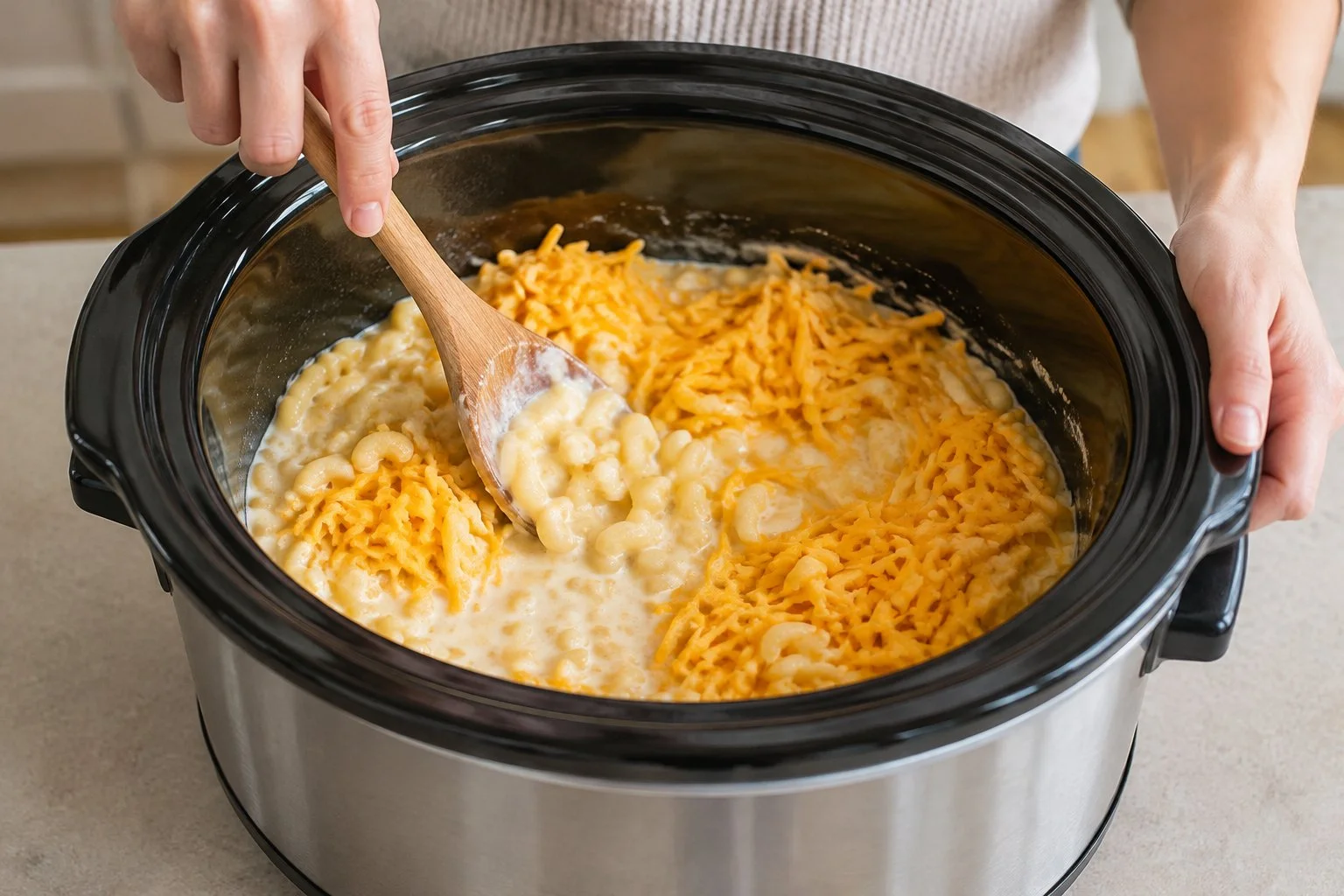
Making crock pot mac and cheese is simple, even if you are new to slow cooker recipes. The key is to prepare the ingredients correctly, use the right amount of liquid, and check the macaroni before it becomes too soft.
For this method, cook the macaroni on the stove first, then finish it in the slow cooker with the cheese sauce. This gives you more control over the pasta’s texture.
Step 1: Prepare the macaroni
Bring a pot of salted water to a boil and cook the elbow macaroni until it is just shy of al dente, following the package directions. Drain it well without rinsing. The pasta will soften a little more as it heats with the cheese sauce.
Step 2: Prepare the cheese and dairy ingredients
Grate the sharp cheddar cheese and measure the milk, evaporated milk, butter, and any cream cheese required by your recipe. Freshly grated cheddar usually melts more smoothly than pre-shredded cheese.
Cut cream cheese into small pieces if you are using it. This helps it soften and blend more easily into the sauce.
Step 3: Add the ingredients to the slow cooker
Lightly grease the inside of your Crock-Pot if your recipe recommends it. Add the cooked macaroni, measured dairy ingredients, butter, cheese, and seasonings according to the recipe instructions.
Stir gently to coat the pasta evenly. Avoid adding extra milk without a reason, since too much liquid can leave the finished mac and cheese runny.
Step 4: Cook on LOW
Cover the slow cooker and cook on LOW, checking the mixture early and following your recipe’s recommended cooking time. Stir gently when the recipe calls for it so the cheese sauce heats evenly.
Cooking time varies with the slow cooker, the amount of food, and the ingredients. Since the pasta is already partly cooked, avoid leaving it in the Crock-Pot longer than necessary.
Step 5: Check the texture
Check that the macaroni is tender and the cheese sauce is smooth and evenly mixed. If the sauce looks too thick, stir in a small splash of warm milk at a time until it reaches your preferred consistency.
If the sauce is still loose, give it a little time to settle and stir again before adding more cheese or changing the cooking setting.
Step 6: Serve while creamy
Once the pasta is tender and the cheese sauce is ready, serve your crock pot mac and cheese while it is warm and creamy. Add a little black pepper or a light sprinkle of freshly grated cheddar if desired.
For a family dinner, serve it alongside barbecue chicken, pulled pork, or roasted vegetables. If you are preparing it for a potluck, keep it at a safe serving temperature and avoid leaving it on heat for longer than needed, as the pasta can continue to soften.
Beginner tip: The most common mistake is overcooking the macaroni. Check it before the expected finish time, and remember that a slow cooker can keep heating the pasta even after it has reached the right texture.

Tips for Perfection
A few simple steps can make a big difference in the texture and flavor of your crockpot mac and cheese. Follow these tips to get a creamy cheese sauce and tender macaroni without making the dish too dry, mushy, or greasy.
Grate the cheese yourself. Freshly grated sharp cheddar usually melts more smoothly than pre-shredded cheese. Pre-shredded varieties often contain coatings that can affect how the cheese blends into the sauce.
Use the right amount of liquid. Whole milk and evaporated milk help create a rich cheese sauce, but the balance matters. Too much liquid can leave your mac and cheese runny, while too little can make it thick and dry.
– Avoid overcooking the pasta. Macaroni continues to soften as it cooks in the slow cooker. If your recipe calls for pre-cooked pasta, drain it when it is just shy of al dente. Check the dish early and stop cooking once the pasta reaches the texture you like.
– Keep the lid on while cooking. Each time you lift the slow cooker lid, heat escapes and cooking may take longer. Open it only when you need to check the pasta or stir according to your recipe.
– Stir gently when needed. Stirring helps distribute the cheese sauce, but frequent stirring can release extra starch from the pasta and affect its texture. Follow the recipe’s instructions rather than stirring constantly.
– Choose the right heat setting. LOW is a useful option for gentle cooking, but the best setting depends on your recipe and slow cooker. HIGH can cook the pasta faster, so check for doneness sooner rather than relying on the same timing.
– Add extra cheese carefully. More cheese can make the flavor richer, but adding too much may produce a thick or greasy sauce. Follow the ingredient quantities first, then adjust the seasoning or texture at the end if needed.
– Fix a thick sauce with a little warm milk. If the finished crockpot mac and cheese looks too thick, stir in warm milk one tablespoon at a time until the sauce loosens. Add it gradually so the dish does not become watery.
– Serve it at the right time. Slow cooker mac and cheese is usually creamiest soon after cooking. If it sits for too long, the pasta can absorb more sauce and become softer. Keep it at a safe temperature if serving over a longer period, and add a small amount of warm milk if needed to restore the texture.
My best tip: Check your crockpot mac and cheese before the expected cooking time ends. Slow cookers heat differently, and stopping at the right moment is one of the easiest ways to avoid mushy pasta and a dry cheese sauce.
Why Does Slow Cooker Mac and Cheese Curdle?
Slow cooker mac and cheese can curdle when the cheese sauce gets too hot or the dairy ingredients separate during cooking. Instead of a smooth, creamy sauce, you may notice small lumps, a grainy texture, or pools of oil on the surface.
The good news is that you can reduce the risk of curdling by choosing the right ingredients and keeping an eye on the cooking process.
What Causes Mac and Cheese to Curdle?
– Too much heat: High heat or cooking for too long can cause the proteins in milk and cheese to tighten and separate from the liquid. This can leave the sauce grainy or oily.
– The wrong cheese: Some cheeses melt more smoothly than others. Sharp cheddar adds a rich flavor, but it can separate if overheated. A small amount of cream cheese or another suitable melting cheese may help create a smoother sauce when used in the right proportions.
– Dairy that does not blend well: Milk, evaporated milk, and cheese behave differently when heated. Changing their quantities without adjusting the recipe can affect the sauce’s texture.
– Pre-shredded cheese: Packaged shredded cheese often contains anti-caking agents that can affect how smoothly it melts. Grating cheddar from a block is a good choice for a more even cheese sauce.
– Cooking for too long: Even if your crockpot mac and cheese looks creamy at first, extended cooking can cause the cheese sauce to break. Slow cookers vary, so the recipe’s stated time should be treated as a guide rather than a guarantee.
How to Prevent Curdled Crockpot Mac and Cheese
- Follow the recipe’s liquid measurements. Use the recommended amounts of milk, evaporated milk, and cheese to keep the sauce balanced.
- Choose cheese that melts well. Freshly grated cheddar works well for flavor. If your recipe includes cream cheese or another melting cheese, use the stated amount.
- Avoid unnecessary high heat. Use the recommended setting and check the dish before the cooking time ends.
- Do not leave it cooking after the pasta is ready. Once the macaroni is tender and the sauce is smooth, it is time to serve or follow safe instructions for keeping it warm.
- Stir gently when needed. Follow the recipe’s directions and avoid constant stirring, which can damage the pasta and change the sauce’s texture.
Can You Fix Curdled Mac and Cheese?
If the sauce looks slightly grainy or too thick, switch off the heat if the pasta is already cooked. Add a small splash of warm milk and stir gently to see whether the sauce becomes smoother.
If the sauce has separated badly, with visible oil and firm cheese clumps, it may not return to its original creamy texture. A little milk can improve the consistency, but it cannot always reverse the separation.
The main takeaway: For creamy slow cooker mac and cheese, control the heat, use the correct ingredient ratios, and avoid cooking the dish longer than necessary. These steps help keep the cheese sauce smooth and the macaroni tender.
Can I Make Substitutions With This Recipe?
Yes! You can make a few substitutions in crockpot mac and cheese to suit your taste or use ingredients you already have. However, some changes affect the flavor, thickness, and texture of the cheese sauce. For the best results, keep the main ingredient ratios the same and change one ingredient at a time.
Cheese Substitutions
- Sharp cheddar: You can use mild cheddar if you prefer a less bold cheese flavor. White cheddar also works well and gives the sauce a different color without greatly changing the taste.
- Monterey Jack: This cheese melts well and has a mild flavor. You can replace part of the cheddar with Monterey Jack for a softer, creamier cheese blend.
- Cream cheese: If your recipe calls for cream cheese, you can leave it out, but the sauce may be less thick and creamy. Avoid replacing it with an equal amount of another cheese without adjusting the recipe.
- Pre-shredded cheese: It is convenient, but freshly grated cheese often blends more smoothly. If pre-shredded cheese is what you have, it can still work, although the texture may vary.
Milk and Dairy Substitutions
- Evaporated milk: This adds a concentrated milk flavor and helps give the sauce a rich consistency. If you replace it with regular milk, the sauce may be thinner, so the change may require testing.
- Whole milk: You can use 2% milk, but the sauce may be less rich. Avoid using a large amount of low-fat milk without checking the liquid balance.
- Half-and-half: This can add richness when used in place of some whole milk. Since it contains more fat, the final texture and flavor may differ.
- Unsalted butter: Salted butter can replace unsalted butter. Simply taste the finished dish before adding extra salt.
Can I Use a Different Pasta Shape?
Yes. Elbow macaroni is the classic choice because its shape holds the cheese sauce well, but small pasta shapes such as shells or cavatappi can also work. Keep in mind that different shapes and sizes cook at different rates.
Follow the cooking instructions for your chosen pasta method. If the recipe calls for pre-cooking the macaroni, do not assume that another pasta shape will need exactly the same time.
Can I Add Extra Ingredients?
You can add cooked bacon, steamed broccoli, diced jalapeños, or a little garlic powder for extra flavor. Add ingredients in a way that suits their cooking needs, and avoid adding too much extra liquid or moisture.
My advice: For your first batch of crockpot mac and cheese, follow the recipe as written. Once you know how the cheese sauce and pasta turn out in your slow cooker, try small substitutions. This makes it easier to see which changes improve the flavor without leaving you with dry pasta or a runny sauce.
What Kind of Mac and Cheese Does This Make? Is It Creamy?
This crockpot mac and cheese makes a rich, cheesy side dish with tender macaroni and a soft, creamy cheese sauce. It is different from baked mac and cheese, which often has a firmer texture and a golden, crispy top. Slow cooker mac and cheese is usually softer, with the cheese sauce coating the pasta rather than forming a baked crust.
The final texture depends on the ingredients and cooking method. Sharp cheddar gives the dish a bold cheese flavor, while evaporated milk, whole milk, and cream cheese, when included in the recipe, help create a smooth, rich sauce.
How Creamy Is Crockpot Mac and Cheese?
When cooked correctly, the sauce should coat the macaroni evenly without looking watery or greasy. It may look slightly loose when the dish first finishes cooking, but it can thicken as it stands because the pasta continues to absorb liquid.
For the creamiest result:
- Use the recommended amounts of milk, cheese, and butter.
- Grate cheddar from a block when possible so it melts more evenly.
- Check the pasta before the end of the cooking time to prevent it from becoming mushy.
- Add a small splash of warm milk if the sauce becomes too thick.
- Serve the mac and cheese soon after cooking for the best texture.
Is it as creamy as stovetop mac and cheese? It can be rich and creamy, but the texture may be different. Stovetop mac and cheese allows you to control the sauce directly, while a slow cooker provides gentler, less hands-on cooking. Neither method guarantees a perfect sauce without the right ingredient balance and cooking time.
If you prefer mac and cheese with a crunchy, browned topping, you may prefer a baked version. If you want tender pasta coated in a warm cheese sauce with less hands-on work, this crockpot mac and cheese is a great choice.
How Do I Make This Work for a Potluck?
Crockpot mac and cheese is a great choice for a potluck because it is easy to serve, feeds a group, and pairs well with many main dishes. With a little planning, you can bring a creamy, cheesy side dish without spending the whole day in the kitchen.
Here are a few tips to help your slow cooker mac and cheese arrive ready to serve.
– Choose the right slow cooker size. Check how many servings your recipe makes and make sure your Crock-Pot has enough room for the full batch. If you need to double the recipe, use a cooker with enough capacity rather than filling a small one to the top.
– Cook the pasta until just tender. Macaroni can become mushy if it stays in the slow cooker too long. Check the pasta near the end of the cooking time, especially if you are making a larger batch.
– Prepare ingredients ahead of time. Measure the cheese, milk, seasonings, and other ingredients before cooking day. You can grate the cheddar and measure dry seasonings in advance, then refrigerate perishable ingredients safely until needed.
– Transport it safely. If you are taking the mac and cheese to another location, keep it hot in a suitable insulated carrier or transport it cold in a cooler and reheat it at the destination. Do not leave cooked macaroni and cheese at room temperature for extended periods.
– Keep it warm without overcooking. If the potluck location allows it, use the slow cooker’s approved warm setting after the dish is fully cooked. Stir as directed and check the texture so the pasta does not become too soft. Keep the food at 140°F (60°C) or above while hot-holding.
– Bring a little extra milk. If the cheese sauce thickens while the dish sits, stir in a small splash of warm milk to loosen it. Add it gradually so the sauce does not become watery.
– Label common allergens. Mac and cheese usually contains milk and wheat. Let guests know about the ingredients, especially if you add bacon, other toppings, or extra seasonings.
How Much Crockpot Mac and Cheese Should I Make?
Use your recipe’s stated serving size to estimate the amount you need. For a potluck with several side dishes, a smaller portion per guest may be enough. For a gathering where mac and cheese is a main side, plan for larger servings.
My best potluck tip: Finish cooking as close to serving time as practical, then keep the mac and cheese at a safe temperature. This helps protect its creamy texture while making it easier to serve a crowd.
Conclusion
Crockpot mac and cheese is a useful recipe to keep on hand when you need an easy, crowd pleasing side dish. The key is to balance the pasta, dairy, and cheese, follow the right cooking method, and check the texture before the macaroni becomes too soft. These practical steps can help reduce common problems such as grainy sauce, dry pasta, or an overly thick consistency. You can also adapt the cheese blend and seasonings to suit your family’s taste, as long as you keep the main ingredient ratios in balance.
A good recipe should do more than list ingredients; it should help you know what to look for as the food cooks and how to respond when the texture changes. Use the cooking times as a guide, since slow cookers can vary, and make small adjustments only when needed. Once you know how your own Crock-Pot behaves, it becomes easier to prepare creamy macaroni and cheese for weeknight meals, holidays, and gatherings with less guesswork.
Frequently Asked Questions
Can you put uncooked macaroni in a crockpot?
Yes, some crockpot mac and cheese recipes use uncooked macaroni. However, the pasta needs enough liquid and the correct cooking time to soften properly. Follow your recipe’s instructions because the liquid amounts and cooking method differ from recipes that use pre-cooked pasta.
How long does crockpot mac and cheese take to cook?
Cooking time depends on the recipe, slow cooker, and whether the macaroni is cooked before it goes into the pot. Check the pasta before the expected finish time and cook until it is tender. Avoid leaving it on heat longer than necessary, as it can become mushy.
What is the best cheese for crockpot mac and cheese?
Sharp cheddar is a popular choice because it gives mac and cheese a rich, familiar flavor. Monterey Jack can add a mild taste and smooth texture, while white cheddar offers a similar flavor to yellow cheddar. Freshly grated cheese often melts more smoothly than pre shredded cheese.
Why is my crockpot mac and cheese grainy?
A grainy cheese sauce can result from excessive heat, overcooking, or cheese that does not melt smoothly. Use the recommended cooking setting, measure the dairy ingredients carefully, and check the dish before the pasta becomes too soft.
Can I use evaporated milk instead of regular milk?
Evaporated milk is commonly used in slow cooker mac and cheese because it adds a rich milk flavor. You can use it if your recipe calls for it, but replacing regular milk with evaporated milk may change the sauce’s thickness. Follow the recipe’s quantities for the most reliable result.
Can I make crockpot mac and cheese ahead of time?
Yes, you can prepare some ingredients ahead of time, such as grating the cheese and measuring the seasonings. For the best texture, cook the dish close to serving time when possible. If you cook it ahead, refrigerate it promptly and reheat it safely before serving.
How do I keep crockpot mac and cheese creamy?
Use the recommended amounts of cheese and milk, avoid overcooking the pasta, and serve the dish soon after it is ready. If the sauce thickens, stir in a small amount of warm milk. Keep the dish at a safe temperature if you need to hold it for a gathering.
Can I double this crockpot mac and cheese recipe?
You can double the ingredients if your slow cooker has enough capacity. However, a larger batch may heat and cook differently, so do not assume the cooking time will stay the same. Check the pasta for tenderness and make sure the dish heats evenly.
Can I freeze leftover mac and cheese?
Yes, you can freeze leftover mac and cheese in an airtight, freezer safe container. The texture may change after thawing because cheese sauces can separate and pasta can soften. Thaw it safely in the refrigerator and reheat it thoroughly, adding a little milk if needed to improve the texture.