
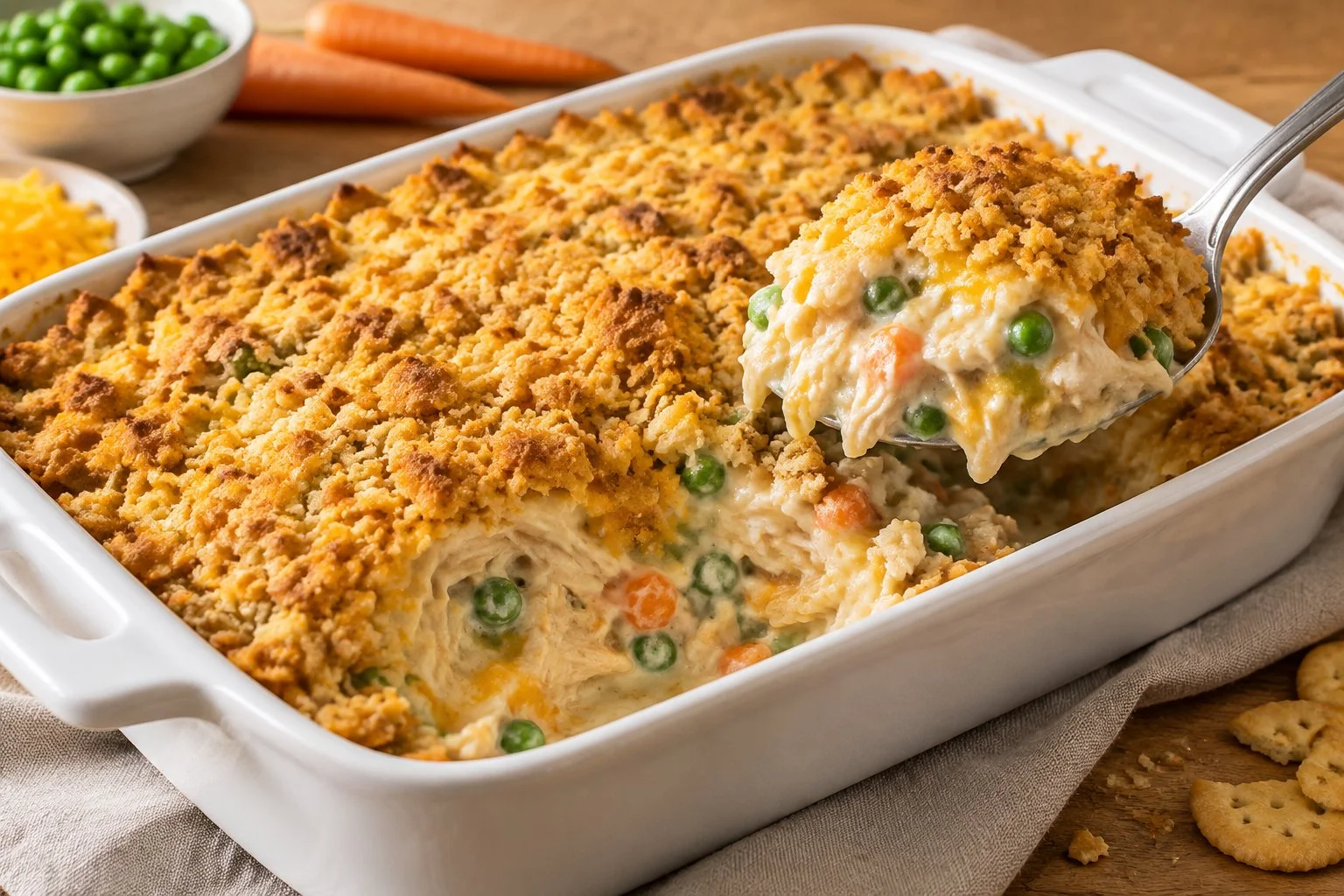
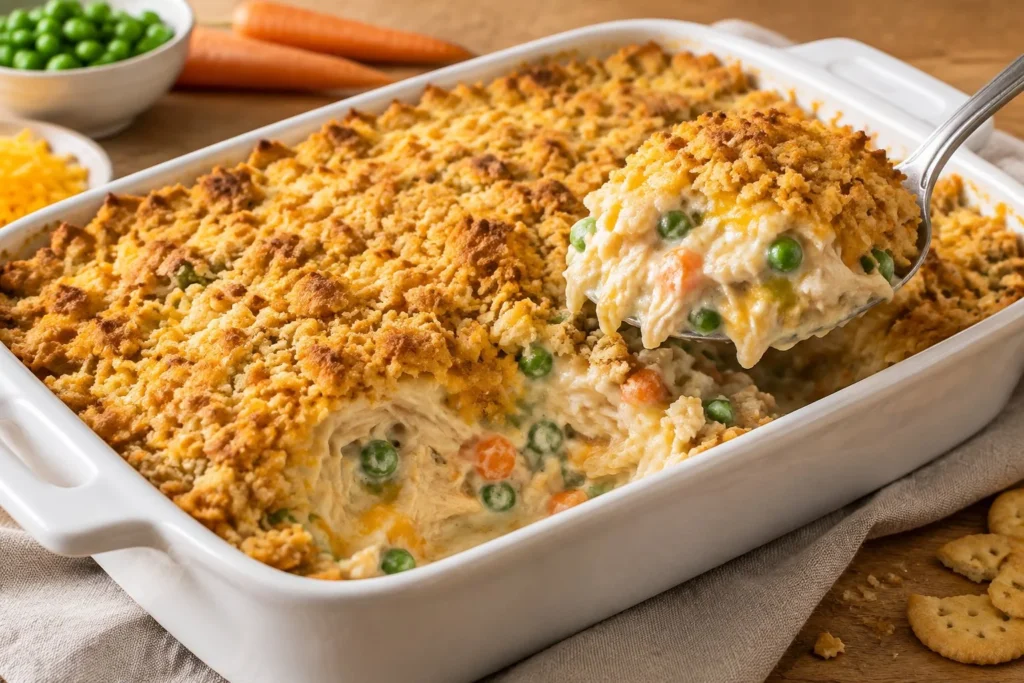
Finding an old fashioned chicken casserole recipe that turns out creamy instead of watery can be tricky. Sometimes the chicken dries out, the sauce feels too thick, or the cracker topping loses its crunch. This oven-baked chicken casserole brings together tender chicken, a rich, creamy filling, vegetables, and a golden, buttery topping for a comforting family dinner. It uses simple ingredients and clear steps, making it a good choice for busy weeknights, Sunday dinners, or using leftover rotisserie chicken.
The key to a good chicken casserole lies in getting the texture right. Drain excess moisture from the vegetables, measure the creamy ingredients carefully, and add the cracker topping just before baking. This approach helps you get a smooth filling and a crisp crust without extra work. Whether you are cooking for your family or preparing a meal ahead of time, this recipe gives you practical tips to help you serve a satisfying homemade dinner with confidence.
Ingredients for Old Fashioned Chicken Casserole
You only need a few simple ingredients to make old fashioned chicken casserole in the oven. This classic version uses cooked chicken, a creamy sauce, vegetables, cheese, and a buttery cracker topping. Each ingredient adds flavor or helps create the right texture.
- Cooked chicken: Use shredded chicken breast, chicken thighs, or leftover rotisserie chicken. Remove the bones and skin before shredding.
- Cream of chicken soup: This pantry staple creates a rich, creamy base and helps hold the filling together.
- Sour cream: Add sour cream for a smooth texture and a mild tangy flavor.
- Frozen mixed vegetables: Peas, carrots, and corn add color, flavor, and extra nutrients. Thaw and drain them if they release excess water.
- Cheddar cheese: Shredded cheddar adds a savory taste and a cheesy finish. Sharp cheddar gives the casserole a stronger flavor.
- Buttery crackers: Crushed crackers create a crisp, golden topping that contrasts with the creamy chicken filling.
- Melted butter: Mix melted butter with the crushed crackers to help them brown and add a rich flavor.
- Seasonings: Use salt, black pepper, garlic powder, and onion powder to bring out the flavor of the chicken and sauce.
Helpful tip: Shred the chicken into bite-sized pieces so it mixes evenly with the sauce and vegetables. If you use rotisserie chicken, taste the filling before adding extra salt because the chicken and canned soup may already contain plenty.
How to Make Old Fashioned Chicken Casserole in the Oven
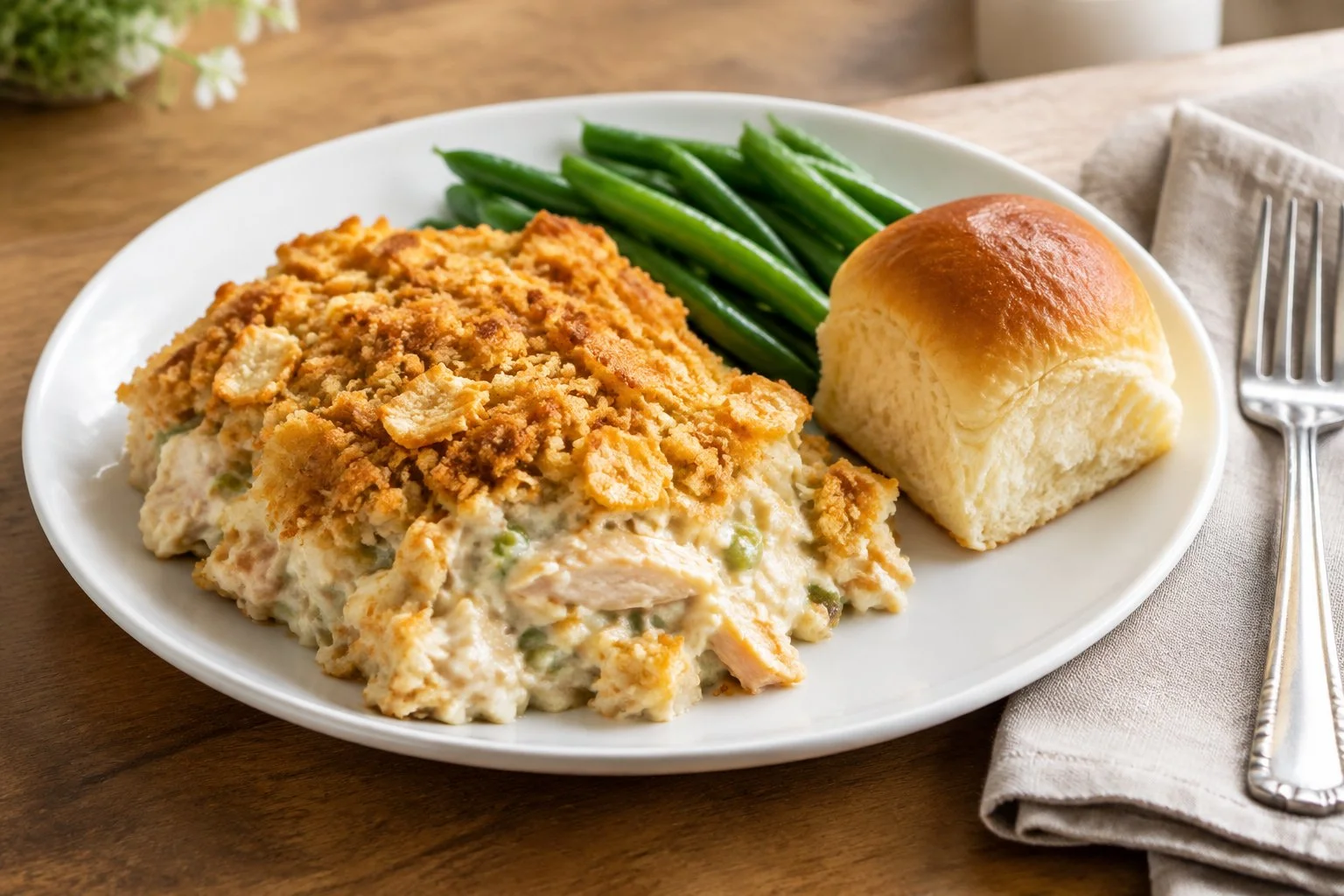
Follow these simple steps to make a creamy chicken casserole with tender chicken, flavorful vegetables, and a crispy cracker topping.
1. Preheat the oven
Set your oven to 350°F (175°C). Lightly grease a 9 × 13-inch baking dish with butter or cooking spray to prevent sticking.
2. Mix the creamy filling
Add the cooked, shredded chicken, cream of chicken soup, sour cream, shredded cheddar cheese, and mixed vegetables to a large mixing bowl. Stir in the salt, black pepper, garlic powder, and onion powder until everything combines evenly.
3. Prepare the casserole
Transfer the chicken mixture to the greased baking dish. Spread it into an even layer with a spoon or spatula. This helps the filling heat evenly in the oven.
4. Make the cracker topping
Crush the buttery crackers into small pieces. Mix them with melted butter until the crumbs look lightly coated. Sprinkle the mixture evenly over the chicken filling for a golden, crunchy crust.
5. Bake the casserole
Place the dish in the preheated oven and bake for about 25–35 minutes, or until the filling becomes hot and bubbly and the topping turns golden brown. Baking time may vary with the depth of the dish and the temperature of the filling.
- Check and serve. If you use previously cooked chicken, make sure the center reaches 165°F (74°C) before serving. Let the casserole rest for about 5 minutes so the filling can settle. Spoon it onto plates and serve while warm.
Beginner tip: Watch the topping near the end of baking. If it browns too quickly, loosely cover the dish with foil. Remove the foil once the casserole finishes cooking if you need to crisp the topping.
What Temperature Should You Bake Chicken Casserole At?
Bake old fashioned chicken casserole at 350°F (175°C) for a creamy filling and a golden, crunchy topping. This temperature works well for a casserole made with cooked chicken, cream of chicken soup, sour cream, vegetables, and shredded cheddar cheese.
Keep these tips in mind for the best results:
- Preheat the oven. Let the oven reach 350°F before placing the casserole inside. This helps it heat evenly.
- Use the middle rack. Place the baking dish on the center rack so the filling heats evenly and the cracker topping browns without burning too quickly.
- Check the center. The casserole should be hot and bubbly in the middle, not just around the edges. If it contains cooked chicken, reheat it to an internal temperature of 165°F (74°C).
- Adjust for a cold casserole. If you take the dish straight from the refrigerator, it may need extra baking time. Check the center before serving.
- Watch the topping. If the buttery crackers turn brown before the filling heats through, cover the dish loosely with aluminum foil.
Can you bake chicken casserole at 400°F? Yes, some recipes use a higher temperature, but the filling and topping may heat at different rates. For this creamy, old fashioned chicken casserole, stick to 350°F and check the center for safe reheating.
Food safety note: These instructions assume you use fully cooked chicken. If you start with raw chicken, follow a recipe tested for raw poultry and confirm that the thickest pieces reach 165°F (74°C) with a food thermometer.
How Long to Bake Chicken Casserole
Bake old fashioned chicken casserole at 350°F (175°C) for about 25–35 minutes when you use cooked chicken and chilled or room-temperature ingredients. The exact baking time depends on the depth of your casserole dish, the starting temperature of the filling, and the amount of food in the pan.
Use these guidelines to get the best results:
| Casserole condition | Approximate baking time |
| Cooked chicken with room-temperature ingredients | 25–30 minutes |
| Cooked chicken with chilled ingredients | 35–45 minutes |
| A deep or extra-large casserole | May need more time; check the center |
These times are estimates, not guarantees. A cold casserole may take longer, so check it before serving.
How do you know when chicken casserole is ready? Look for bubbling around the edges and a golden cracker topping. Then check the center with a food thermometer. Since this recipe uses cooked chicken, the center should reach 165°F (74°C) for safe reheating.
For the best texture, avoid baking the casserole longer than needed. Extra time can dry out the chicken and make the filling thick. If the topping browns too quickly, cover the dish loosely with foil while the center finishes heating.
Important: These timings apply to a casserole made with fully cooked chicken. If you use raw chicken, the cooking time and method will differ. Follow a tested recipe for raw poultry and confirm that the chicken reaches 165°F (74°C) at its thickest point.
Tips for a Creamy Filling and Crispy Topping
A good old fashioned chicken casserole should have a creamy center and a golden, crunchy topping. A few simple steps can help you get both without drying out the chicken.
- Use the right amount of sauce
Cream of chicken soup and sour cream create a rich filling. Measure them carefully so the casserole stays creamy without becoming runny.
- Drain excess liquid from the vegetables.
Frozen vegetables can release water as they bake. Thaw and drain them if needed before mixing them with the shredded chicken. This helps prevent a watery filling.
- Shred the chicken into small pieces.
Bite-sized pieces mix more evenly with the sauce. They also help every serving contain chicken, vegetables, and creamy filling.
- Choose freshly shredded cheddar.
Freshly shredded cheese melts smoothly and adds a rich, savory flavor. Pre-shredded cheese works too, but it may not melt quite as smoothly.
- Coat the cracker crumbs with melted butter.
Crush buttery crackers into small pieces, then mix them with melted butter. Spread the crumbs evenly over the casserole to help them brown and turn crisp.
- Add the topping before baking.
Place the buttered cracker mixture on the filling just before the dish goes into the oven. This helps keep the topping crisp instead of letting it absorb moisture while the casserole sits.
- Bake until hot, not until dry
. At 350°F (175°C), check the casserole after about 25 minutes. The filling should bubble around the edges, and the topping should look golden. Make sure the center reaches 165°F (74°C) when reheating cooked chicken.
- Let the casserole rest briefly.
Leave it on the counter for about 5 minutes after baking. This gives the sauce time to settle, making the casserole easier to serve without losing its creamy texture.
Quick fix:
If the topping browns before the center gets hot, cover the dish loosely with foil. If the filling looks watery, check that you drained the vegetables well and measured the sauce correctly next time. Avoid adding extra soup or liquid without adjusting the other ingredients.
Ingredient Substitutions and Variations
You can change this old fashioned chicken casserole recipe to suit your taste, use ingredients you already have, or meet your family’s needs. Make small changes at a time so the filling stays creamy and the topping turns crisp.
1. Swap the Chicken
Cooked shredded chicken breast works well, but you have other options.
- Rotisserie chicken: Remove the skin and bones, then shred the meat for a quick dinner.
- Chicken thighs: Use cooked, boneless chicken thighs for a richer flavor.
- Leftover turkey: Replace the chicken with cooked turkey for a useful way to use holiday leftovers.
2. Replace the Cream of Chicken Soup
Cream of chicken soup gives the casserole a thick, savory base. If you prefer to cook without canned soup, use a homemade white sauce made with butter, flour, milk, and chicken broth. Cook it until smooth and thick before mixing it with the other ingredients.
You can also use cream of mushroom soup if you enjoy its earthy flavor. Check the sauce’s thickness before adding it, since different soups may change the texture.
3. Change the Vegetables
Frozen mixed vegetables make preparation easy, but you can use other vegetables too.
- Peas and carrots: Add mild sweetness and familiar flavor.
- Broccoli: Cut it into small florets and cook it lightly before mixing it into the filling.
- Mushrooms: Sauté fresh mushrooms first to remove excess moisture.
- Corn: Add sweet corn for a slightly sweeter taste.
Drain cooked or thawed vegetables well. Extra water can make the chicken casserole runny.
4. Try Different Cheese
Cheddar gives the casserole a classic, savory flavor, but other cheeses work well.
- Monterey Jack: Adds a mild taste and melts smoothly.
- Colby Jack: Gives the filling a mild, creamy cheese flavor.
- Mozzarella: Creates a stretchy texture but has a milder taste than cheddar.
For the best flavor, use cheddar alone or combine it with a milder melting cheese.
5. Replace the Cracker Topping
Buttery crackers create a crisp, golden crust, but you can use other toppings.
- Panko breadcrumbs: Mix them with melted butter for a light, crunchy finish.
- Regular breadcrumbs: Use these for a finer, more even crust.
- French-fried onions: Sprinkle them over the casserole near the end of baking so they do not burn.
- Crushed pretzels: Use a small amount for a salty crunch, and reduce the added salt if needed.
6. Make It Without Sour Cream
If you do not have sour cream, plain full-fat Greek yogurt can provide a similar tangy taste. Stir it into the filling and avoid boiling the mixture, as high heat can cause some yogurt-based sauces to separate.
7. Make a Smaller Casserole
For a smaller household, divide the ingredients in half and use a smaller baking dish. Start checking the casserole early because a shallower dish may cook faster. Keep the same oven temperature, and make sure the center reaches 165°F (74°C) when reheating cooked chicken.
Helpful tip: Choose substitutions that work with the original recipe. Avoid adding several watery ingredients at once, and adjust seasonings after mixing the filling. This helps your chicken casserole keep its creamy texture and golden topping.
How to Make Chicken Casserole Ahead of Time
Preparing old fashioned chicken casserole ahead of time makes busy weeknights and family dinners easier. You can mix the creamy chicken filling in advance, store it safely, and bake it when you are ready to eat.
Prepare the Casserole the Night Before
- Mix the filling. Combine the cooked, shredded chicken, cream of chicken soup, sour cream, cheddar cheese, seasonings, and vegetables in a large bowl.
- Transfer to a baking dish. Spread the mixture evenly in a lightly greased casserole dish.
- Cover and refrigerate. Cover the dish tightly and refrigerate it at 40°F (4°C) or below. Bake the casserole within 24 hours for the best texture.
- Add the topping before baking. Keep the crushed buttery crackers and melted butter separate until you are ready to bake. This helps the topping stay crisp.
- Bake until hot. Preheat the oven to 350°F (175°C). Bake until the filling bubbles and the center reaches 165°F (74°C). A chilled casserole may need extra time, so check the center with a food thermometer.
Can You Assemble Chicken Casserole Two Days Ahead?
You can prepare the ingredients in advance, but avoid storing the fully assembled casserole for longer than necessary. For a two-day plan, mix the filling and store it in a covered container in the refrigerator, then assemble and bake it the next day. Keep the refrigerator at 40°F (4°C) or below, and follow safe storage times for cooked chicken.
Tips for the Best Make-Ahead Results
- Use fully cooked chicken. Cooked chicken breast, chicken thighs, or rotisserie chicken work well.
- Drain the vegetables. Excess moisture can make the filling watery after refrigeration and baking.
- Keep the topping separate. Add the buttery cracker crumbs just before baking to preserve their crunch.
- Allow extra baking time. A cold casserole takes longer to heat than one made with room-temperature ingredients. Avoid leaving it on the counter for an extended period.
- Store leftovers safely. Refrigerate leftover chicken casserole within two hours of cooking and eat it within three to four days. Reheat leftovers to 165°F (74°C).
Helpful tip: If you plan to serve this casserole for a holiday meal or family gathering, prepare the filling the night before and add the topping just before baking. You will save time without sacrificing the creamy center or crunchy crust.
What to Serve with Chicken Casserole
Old fashioned chicken casserole has a creamy filling, tender chicken, and a buttery topping. Pair it with fresh vegetables, a crisp salad, or warm bread to balance the rich flavors and make a complete family dinner.
1. Steamed Green Beans
Steamed green beans add a fresh, slightly crisp texture that balances the creamy chicken casserole. Season them with a little butter, black pepper, and garlic for a simple side dish.
2. Roasted Vegetables
Roasted broccoli, carrots, or Brussels sprouts bring a slightly sweet, savory flavor to the meal. Toss the vegetables with olive oil, salt, and pepper, then roast them until tender with lightly browned edges.
3. Fresh Garden Salad
A garden salad with lettuce, cucumbers, tomatoes, and a light vinaigrette adds freshness to the plate. The crisp vegetables and tangy dressing balance the rich cream of chicken soup and sour cream in the casserole.
4. Dinner Rolls or Biscuits
Soft dinner rolls, homemade biscuits, or crusty bread work well with chicken casserole. Use them to scoop up the creamy sauce left on the plate. Choose a lightly seasoned bread so it does not overpower the main dish.
5. Mashed Potatoes
Creamy mashed potatoes make the meal more filling and pair well with the chicken and savory sauce. For a lighter dinner, serve a smaller portion alongside green vegetables.
6. Corn on the Cob
Sweet corn adds color and a mild sweetness that complements the savory casserole. Serve it steamed or boiled with a little butter and black pepper.
7. Cranberry Sauce
For a holiday meal or Sunday dinner, a small serving of cranberry sauce adds a sweet and tangy contrast to the creamy filling. It works especially well if you use leftover turkey instead of chicken.
Helpful tip: Since chicken casserole already contains a creamy sauce and buttery topping, choose one fresh vegetable side and one bread or starch. Steamed green beans and dinner rolls make a simple, balanced meal without adding too much extra preparation.
How to Store, Freeze, and Reheat Chicken Casserole
Store leftover old fashioned chicken casserole properly to keep the chicken tender, the creamy filling flavorful, and the dish safe to eat. Let the casserole cool slightly, then refrigerate or freeze it promptly.
How to Store Chicken Casserole in the Refrigerator
- Cool and pack the leftovers. Transfer the leftover chicken casserole to shallow, airtight containers so it cools quickly.
- Refrigerate promptly. Place the leftovers in the refrigerator within two hours of cooking. Keep the temperature at 40°F (4°C) or below.
- Eat within three to four days. Label the container with the date so you know how long the leftovers have been stored.
For the best texture, store the casserole topping separately if you can. The buttery crackers may soften as they absorb moisture from the creamy chicken filling.
How to Freeze Chicken Casserole
Freezing works well if you want to save extra portions for a future meal.
- Let the casserole cool slightly, but do not leave it at room temperature for more than two hours.
- Divide it into meal-sized portions and place them in freezer-safe, airtight containers.
- Label each container with the name and date.
- Freeze at 0°F (-18°C) or below. For the best quality, use the casserole within two to three months.
You can freeze the casserole before or after baking. If freezing it before baking, use a freezer-safe dish and keep the cracker topping separate until you are ready to cook it.
How to Reheat Chicken Casserole in the Oven
The oven helps warm the filling evenly while restoring some crispness to the topping.
- Preheat the oven to 350°F (175°C).
- Place the refrigerated casserole in an oven-safe baking dish. Add a small splash of chicken broth if the filling looks dry.
- Cover the dish loosely with foil to prevent the top from browning too quickly.
- Heat until the center reaches 165°F (74°C). The time will vary with the portion size and starting temperature.
- Remove the foil for the last few minutes if you want to crisp the cracker topping.
If the casserole is frozen, thaw it in the refrigerator before reheating for more even results. Avoid thawing it on the kitchen counter.
How to Reheat Chicken Casserole in the Microwave
For a quick lunch, place one serving in a microwave-safe dish. Cover it loosely to hold in moisture, then heat in short intervals, stirring the filling when possible. Check that the center reaches 165°F (74°C) before eating.
The microwave may soften the buttery cracker topping. If you want it crisp again, finish the portion in a toaster oven if the dish and equipment allow it.
Food safety tip: Refrigerate cooked chicken casserole within two hours of cooking, or within one hour when the temperature is above 90°F (32°C). Keep leftovers refrigerated for no more than three to four days, and reheat them to 165°F (74°C). If the casserole has stayed out too long, discard it rather than relying on smell or appearance.
Conclusion
Old fashioned chicken casserole in the oven is a simple way to turn everyday ingredients into a comforting family meal. Cooked chicken, cream of chicken soup, sour cream, vegetables, cheddar cheese, and a buttery cracker topping create a filling dish that pairs well with green beans, garden salad, or warm dinner rolls. Pay attention to the moisture in the filling, keep an eye on the topping as it browns, and check that the center reaches 165°F (74°C) before serving.
In my recipe development work, I find that clear measurements and careful attention to texture make a real difference in baked casseroles. Small steps, such as draining vegetables and adding the topping just before baking, can help prevent common problems. Try this recipe for your next family dinner, adjust the vegetables or cheese to suit your taste, and save any leftovers for an easy meal later in the week.
Frequently Asked Questions
Can I use rotisserie chicken for old fashioned chicken casserole?
Yes. Rotisserie chicken saves time and adds flavor to the casserole. Remove the skin and bones, shred the meat, and mix it with the cream of chicken soup, sour cream, vegetables, and cheese.
Should I cover chicken casserole while baking?
You usually do not need to cover this casserole because the cracker topping needs direct heat to turn golden and crisp. If the topping browns too quickly, cover the dish loosely with aluminum foil until the filling heats through.
Can I make chicken casserole without cream of chicken soup?
Yes. Replace the canned soup with a homemade sauce made from butter, flour, milk, and chicken broth. Cook the sauce until smooth and thick before mixing it with the chicken and other ingredients.
Why is my chicken casserole watery?
Excess liquid from frozen vegetables, mushrooms, or a thin sauce can make the casserole watery. Drain vegetables well and measure the sauce carefully. Let the casserole rest for about five minutes after baking to help the filling settle.
Can I use raw chicken in this casserole?
This recipe works best with fully cooked chicken because the baking time focuses on heating the filling and browning the topping. If you want to use raw chicken, follow a tested recipe with the correct cooking time and confirm that the thickest pieces reach 165°F (74°C).
How do I know when chicken casserole is done?
Look for a hot, bubbly filling and a golden topping. Use a food thermometer to check the center. Since this recipe uses cooked chicken, the casserole should reach 165°F (74°C) before serving.
Can I prepare chicken casserole the night before?
Yes. Mix the filling, place it in a covered baking dish, and refrigerate it. Add the buttery cracker topping just before baking to keep it crisp. Bake until the center reaches 165°F (74°C), allowing extra time for the chilled filling to heat through.
Can I freeze old fashioned chicken casserole?
Yes. Store it in a freezer-safe, airtight container and freeze it at 0°F (-18°C) or below. For the best quality, use it within two to three months. Freeze the cracker topping separately when possible so it stays crisp after baking.
What temperature should I bake chicken casserole at?
Bake this old fashioned chicken casserole at 350°F (175°C). This temperature helps warm the creamy filling and brown the cracker topping without making the chicken dry. Check the center before serving.
What can I serve with chicken casserole?
Steamed green beans, roasted broccoli, fresh garden salad, dinner rolls, and corn on the cob all pair well with chicken casserole. Choose a fresh vegetable and one bread or starch for a simple family dinner.
How long do chicken casserole leftovers last?
Store leftovers in an airtight container in the refrigerator at 40°F (4°C) or below for three to four days. Reheat each portion to 165°F (74°C) before serving, and discard leftovers that have stayed at room temperature for more than two hours.