
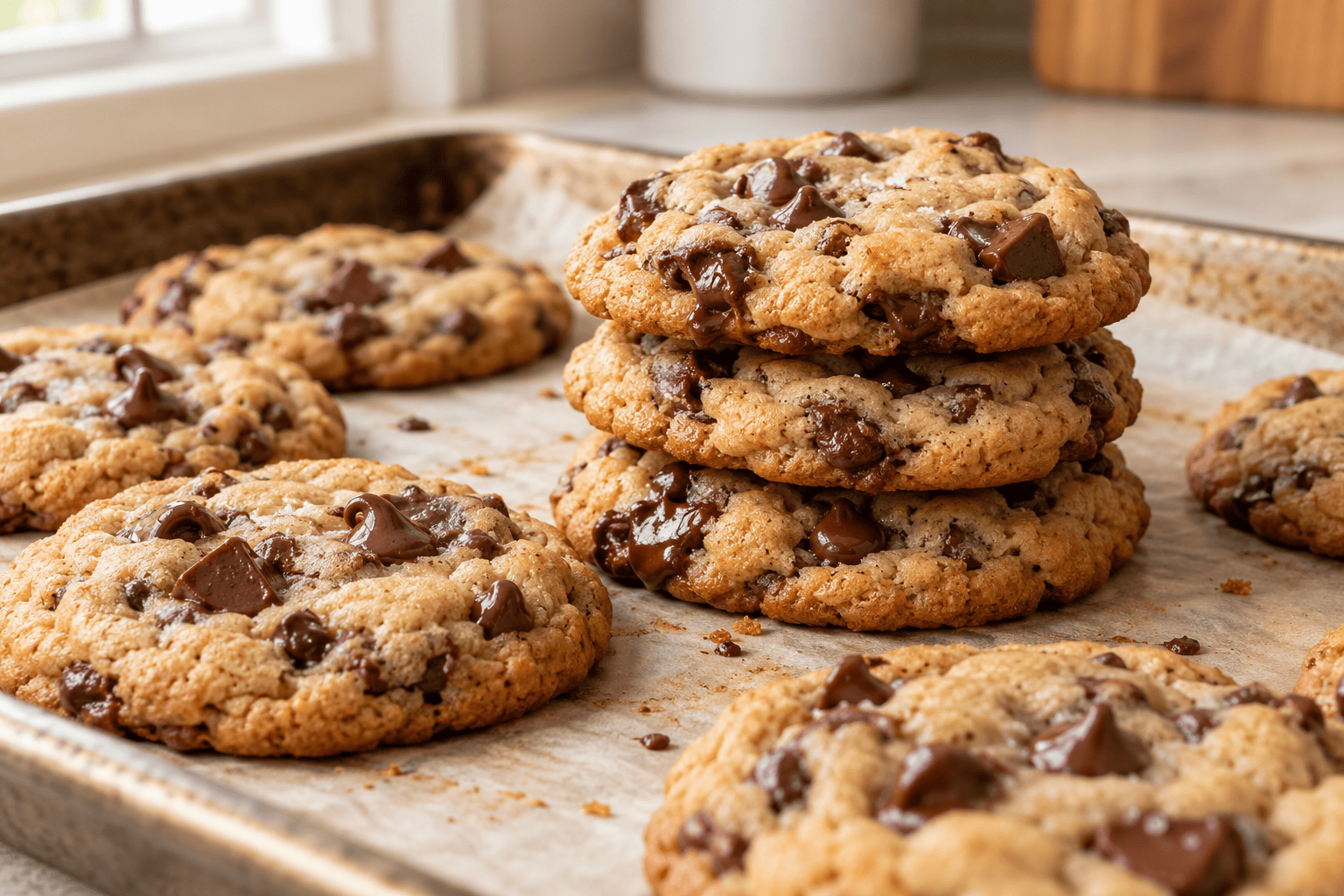
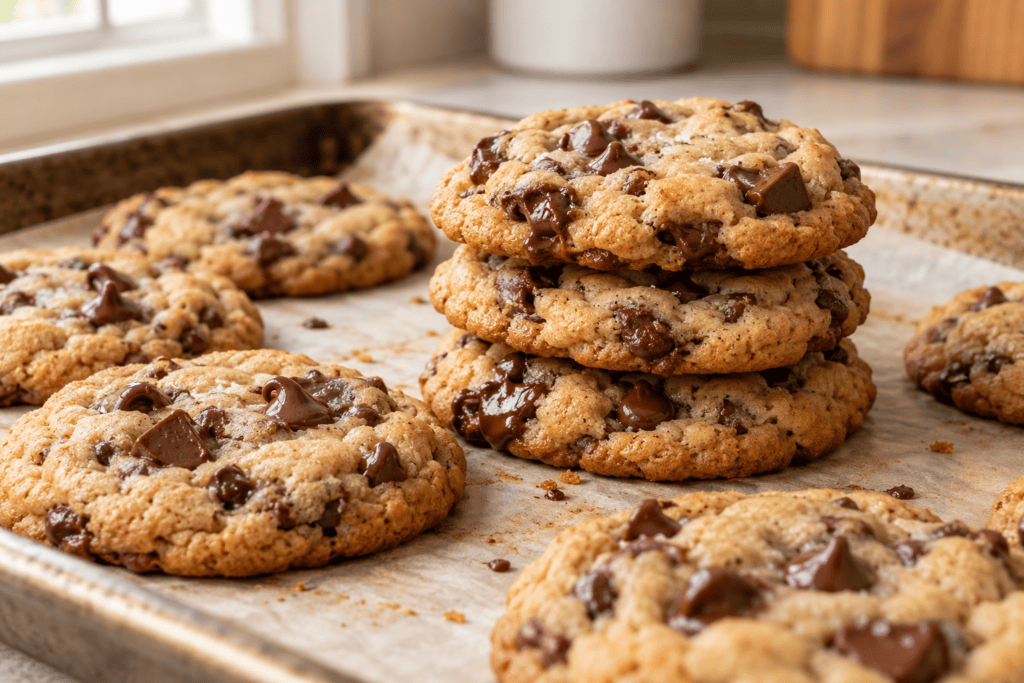
Have you ever gathered all your ingredients for chocolate chip cookies, preheated the oven, and then realized you’re out of both baking soda and baking powder? It can feel like your baking plans have fallen apart. You might worry that your cookies will turn flat, hard, or dry without these common ingredients. But you don’t need to abandon your cookie craving. You can make chocolate chip cookies without baking soda or baking powder if you use a recipe with the right balance of ingredients and follow the baking steps carefully.
This chocolate chip cookie recipe uses familiar pantry ingredients, including butter, brown sugar, white sugar, eggs, flour, vanilla extract, and chocolate chips. The key is to measure the flour correctly, use the right butter temperature, and watch the cookies closely as they bake. These details affect how much the dough spreads and how the cookies feel after cooling.
I’ll also explain common mistakes, ingredient substitutions, and the differences between baking soda and baking powder, so you can make informed choices and get better results in your own kitchen.. Whether you’re a beginner or an experienced home baker, this recipe gives you a practical way to enjoy homemade chocolate chip cookies without the usual leavening agents.
Chocolate Chip Cookie Recipe Ingredients
You only need a few basic ingredients to make chocolate chip cookies without baking soda or baking powder. Each ingredient plays a role in the flavor, texture, and structure of the cookies.
Ingredients You’ll Need
| Ingredient | Amount | Purpose |
| Unsalted butter, softened | ½ cup (113 g) | Adds richness and helps create a tender texture. |
| Brown sugar | ¾ cup (150 g) | Adds moisture, sweetness, and a deeper flavor. |
| Granulated white sugar | ¼ cup (50 g) | Adds sweetness and helps the cookies brown. |
| Large egg | 1 | Binds the ingredients and gives the dough structure. |
| Vanilla extract | 1 teaspoon | Adds a warm, sweet flavor. |
| All purpose flour | 1¼ cups (about 156 g) | Forms the main structure of the cookies. |
| Salt | ½ teaspoon | Balances the sweetness and brings out the chocolate flavor. |
| Semisweet chocolate chips | 1 cup (170 g) | Add rich chocolate flavor in every bite. |
A Few Ingredient Tips
Use softened butter, not melted butter. Softened butter mixes more easily with sugar and helps you control the dough’s texture.
Measure the flour carefully. Too much flour can make cookies dry and crumbly. For the best results, use a kitchen scale. If you use measuring cups, spoon the flour into each cup and level the top without packing it down.
Choose brown sugar for a softer texture. Brown sugar contains molasses, which adds moisture and a light caramel flavor. White sugar helps balance the sweetness and supports browning.
Use semisweet chocolate chips for a balanced flavor. You can also use milk chocolate chips, dark chocolate chips, or chopped chocolate. Each option changes the sweetness and flavor slightly.
Do not add baking soda or baking powder. This ingredient list leaves out both leavening agents. The egg and flour help hold the cookies together, but the finished cookies may have less lift than traditional chocolate chip cookies.
How to Make Chocolate Chip Cookies Without Baking Soda or Baking Powder
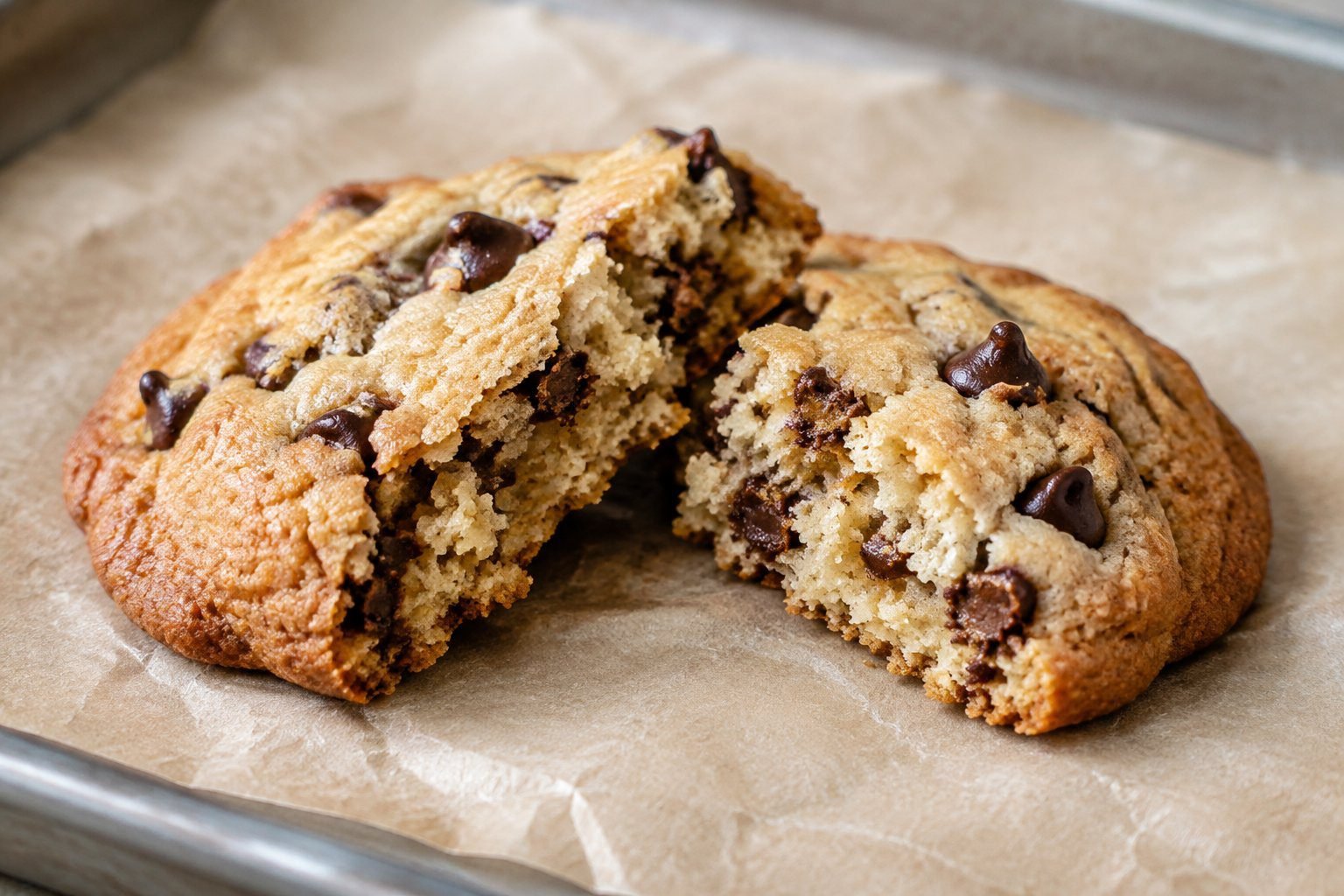
You can make chocolate chip cookies without baking soda or baking powder by mixing the ingredients in the right order and controlling the dough’s texture. Follow these steps for cookies with golden edges and soft centers.
- Preheat the oven. Set your oven to 350°F (175°C). Line a baking sheet with parchment paper to help prevent sticking and make cleanup easier.
- Mix the butter and sugars. Add softened butter, brown sugar, and white sugar to a large mixing bowl. Beat them until the mixture looks smooth and creamy. This step helps create the right texture and spreads the sugar evenly through the dough.
- Add the eggs and vanilla. Mix in the eggs and vanilla extract until everything combines. Scrape the sides of the bowl so no ingredients remain stuck to the edges.
- Combine the dry ingredients. In a separate bowl, mix the all purpose flour and salt. Add them to the wet mixture gradually. Stir just until the flour disappears. Overmixing can make cookies tough.
- Fold in the chocolate chips. Add your favorite semisweet chocolate chips and fold them into the dough. Mix gently so the chips spread evenly without overworking the dough.
- Shape the cookie dough. Scoop equal portions onto the prepared baking sheet. Leave enough space between each portion because the cookies may spread as the butter melts in the oven.
- Bake until the edges turn golden. Place the tray in the preheated oven and start checking the cookies near the end of the expected baking time. The edges should look set, while the centers may still appear slightly soft. Use the baking time from your tested recipe, since cookie size affects how long they need.
- Let the cookies cool. Leave the cookies on the baking sheet for a few minutes before moving them to a wire rack. They will continue to set as they cool. Moving them too soon can cause soft cookies to break.
Baking tip: Without baking soda or baking powder, cookies may spread differently and have less lift than traditional chocolate chip cookies. Measure the flour carefully, use the butter temperature specified in your recipe, and avoid overbaking to help achieve the texture you want.
What Can I Use Instead of Baking Soda in Chocolate Chip Cookies?
If you run out of baking soda while making chocolate chip cookies, you have a few options. You can use baking powder, choose a recipe made without leavening agents, or adjust your recipe based on the ingredients you have. The best choice depends on the texture you want and the recipe you plan to follow.
1. Baking Powder
Baking powder is the most common alternative to baking soda in cookies. It contains both a base and an acid, so it can help cookie dough rise without needing an extra acidic ingredient.
However, baking powder and baking soda do not work in exactly the same way. Baking soda reacts with acidic ingredients, while baking powder contains its own acid. Replacing baking soda with baking powder can change the cookies’ taste, spread, and texture.
Tip: Do not swap baking soda for baking powder in equal amounts without checking the recipe. Baking powder often requires a larger amount, and too much can affect the flavor and texture. Use a recipe tested with baking powder for the best results.
2. Make Chocolate Chip Cookies Without Either Ingredient
You can also make chocolate chip cookies without baking soda or baking powder. This option works best when you follow a recipe created for that purpose.
Eggs help bind the dough, while flour gives the cookies structure. Butter and sugar affect how much the cookies spread and how they brown. Together, these ingredients can produce tasty cookies without added leavening agents.
The texture may differ from traditional chocolate chip cookies. Your cookies may spread less, have less lift, or turn out denser, depending on the recipe.
3. Self Rising Flour
Self rising flour contains flour, baking powder, and salt. It can work in some cookie recipes, but it is not a direct replacement for baking soda on its own.
If you use self rising flour, check the recipe carefully. You may need to adjust the amount of flour, salt, and other ingredients to keep the dough balanced. For a recipe that specifically calls for all purpose flour and no leavening agents, stick with all purpose flour.
Which Baking Soda Substitute Should You Choose?
| Your situation | Best option |
| You have baking powder | Use a recipe that calls for baking powder. |
| You have neither ingredient | Follow a recipe made without baking soda or baking powder. |
| You have self rising flour | Use a recipe developed for self rising flour. |
| You want to keep your original recipe unchanged | Follow its ingredient list rather than guessing at substitutions. |
My recommendation: If you want chocolate chip cookies without baking soda or baking powder, choose a recipe made specifically for that method. You can still enjoy homemade cookies without making uncertain ingredient swaps.
Tips for Making This Chocolate Chip Recipe Without Baking Soda
A few small changes can make a big difference when you bake chocolate chip cookies without baking soda. Follow these tips to get better flavor, even baking, and the texture you want.
1. Measure the Flour Correctly
Too much flour can make cookies dry, thick, and crumbly. Use a kitchen scale for the most accurate results. If you use measuring cups, spoon the flour into the cup and level it with a straight edge. Avoid scooping flour directly from the bag because this can pack too much into the cup.
2. Use Butter at the Right Temperature
Follow the recipe’s instructions for butter temperature. Softened butter should feel cool and yield slightly when pressed. If the butter becomes too warm or melts, the dough may spread more than expected. If it is too cold, it may not mix well with the sugar.
3. Mix the Dough Without Overworking It
Cream the butter and sugar until they combine into a smooth, creamy mixture. Add the egg and vanilla, then mix in the dry ingredients. Stop stirring once the flour disappears. Too much mixing can develop gluten in the flour and make the cookies tougher.
4. Chill the Dough When Needed
Chilling cookie dough can help control spreading because cold butter takes longer to melt in the oven. It can also give the flour more time to absorb moisture.
Follow your recipe’s chilling instructions. If you want to know whether chilling makes a difference, bake one batch straight away and another after chilling. Compare their spread, thickness, and texture.
5. Leave Enough Space Between Cookies
Place the dough portions several inches apart on a parchment lined baking sheet. Cookies spread as the butter melts, and crowded dough portions can run together. Use similar amounts of dough for each cookie so they bake at a similar rate.
6. Watch the Baking Time Carefully
Without baking soda or baking powder, cookies may look different from traditional chocolate chip cookies. Start checking them near the end of the recipe’s baking time. Look for set edges and centers that still appear slightly soft. The cookies will continue to firm up as they cool.
Avoid waiting until the centers look completely firm in the oven. That can lead to dry, hard cookies after cooling.
7. Let the Cookies Rest Before Moving Them
Freshly baked cookies can feel fragile when they first come out of the oven. Leave them on the baking sheet for a few minutes before transferring them to a wire rack. This short resting period helps the cookies hold their shape without overbaking them.
8. Choose Chocolate Chips That Match Your Taste
Semisweet chocolate chips give cookies a balanced mix of sweetness and rich chocolate flavor. Milk chocolate makes them sweeter, while dark chocolate gives them a deeper, less sweet taste. You can also use chopped chocolate for larger melted pockets.
Keep the total amount of chocolate close to the recipe’s measurement so the dough holds together properly.
Final tip: The best chocolate chip cookies without baking soda come from accurate measurements, the right butter temperature, and careful baking. Follow the recipe as written the first time. Once you know how the dough behaves, you can make small changes to suit your preferred texture.
How Will Making Chocolate Chip Cookies Without Baking Soda Change My Cookies?
Baking soda affects how chocolate chip cookies spread, brown, and develop their texture. When you leave it out, your cookies can still taste delicious, but they may look and feel different from traditional chocolate chip cookies.
Here are the main changes you can expect.
1. Your Cookies May Have Less Lift
Baking soda releases carbon dioxide when it reacts with acidic ingredients. These gas bubbles help cookie dough rise and affect its texture.
Without baking soda or baking powder, your cookies won’t get that extra lift from a chemical leavening agent. Eggs and the mixing method still help give the dough structure, but the cookies may turn out denser.
2. Your Cookies May Spread Differently
Cookie spread depends on several factors, including butter temperature, sugar, flour, and dough temperature. Baking soda also affects the way the dough behaves during baking.
Without it, your cookies may spread less in some recipes. However, you shouldn’t expect every batch to stay thick. Warm butter, excess sugar, or a warm baking sheet can still cause extra spreading.
3. The Edges May Brown Differently
Baking soda makes cookie dough more alkaline. This can help the Maillard reaction, which creates the brown color and roasted flavors you often see in baked cookies.
Without baking soda, your chocolate chip cookies may have a lighter color and a slightly different flavor. The amount of sugar, oven temperature, and baking time also affect browning.
4. The Texture May Be Denser
Baking soda can help create a lighter texture by producing gas during baking. Without baking soda or baking powder, cookies may have a more compact crumb.
The final texture still depends on the recipe. A well-balanced dough can produce cookies with tender centers and crisp edges, even without chemical leavening agents.
5. The Flavor Can Still Be Rich and Buttery
Leaving out baking soda doesn’t mean you have to sacrifice flavor. Butter, brown sugar, vanilla extract, and chocolate chips all contribute to the taste of homemade cookies.
Brown sugar adds molasses notes, while semisweet chocolate chips provide a rich chocolate flavor. The cookies may taste slightly different from a traditional recipe, but they can still be delicious.
The bottom line: Chocolate chip cookies without baking soda or baking powder may have less lift, a different spread, and less browning. For the best results, use a recipe made specifically for this method and follow its measurements and baking instructions.
What Can I Add To Chocolate Chip Cookies?
Chocolate chip cookies taste great on their own, but a few extra ingredients can make them even more enjoyable. You can add nuts, different types of chocolate, or a little spice to change the flavor and texture. The key is to keep the dough balanced, especially when making cookies without baking soda or baking powder.
1. Chopped Nuts
Walnuts and pecans add a pleasant crunch that pairs well with sweet cookie dough. Chop them into small pieces so they spread evenly through the cookies. Start with about ½ cup of chopped nuts for a standard batch, and adjust to your taste.
2. Different Types of Chocolate
You don’t have to stick with semisweet chocolate chips. Try these options:
- Milk chocolate chips: Add a sweeter, creamier taste.
- Dark chocolate chunks: Give the cookies a deeper chocolate flavor.
- White chocolate chips: Add extra sweetness and a creamy texture.
- Chocolate chunks: Create larger pockets of melted chocolate throughout the cookie.
You can also mix two types of chocolate for more variety.
3. Peanut Butter Chips
Peanut butter chips add a sweet, nutty flavor that works well with chocolate. Replace part of the chocolate chips with peanut butter chips rather than adding a large amount of extra ingredients. This helps keep the dough balanced.
4. A Pinch of Cinnamon
Ground cinnamon adds warmth and pairs well with brown sugar and chocolate. Start with ¼ teaspoon for a standard batch. Use a small amount so the cinnamon complements the chocolate instead of covering its flavor.
5. Flaky Sea Salt
A small sprinkle of flaky sea salt on top of the dough can balance the sweetness and bring out the chocolate flavor. Add it just before baking. Use a light hand because too much salt can overpower the cookies.
6. Dried Cranberries
Dried cranberries add a sweet and slightly tart flavor. They pair especially well with dark chocolate and chopped walnuts. Start with about ⅓ cup and cut larger pieces into smaller bits if needed.
How Much Should You Add?
For a standard batch, start with about ¼ to ½ cup of additional ingredients. If you add several extras at once, the dough may become crowded and the cookies may not hold together as well.
My tip: Choose one or two additions for your first batch. Dark chocolate with walnuts or semisweet chocolate with a pinch of sea salt makes a great combination. Keep the main ingredient amounts unchanged, and avoid adding too many extras that could affect the dough’s texture.
Can You Make Chocolate Chip Cookies Without Baking Soda or Baking Powder?
Yes, you can make chocolate chip cookies without baking soda or baking powder. Both ingredients help cookies rise and affect their texture, but you can still bake a tasty batch without them. The key is to use a recipe with the right balance of butter, sugar, flour, and eggs.
Baking soda reacts with acidic ingredients to release carbon dioxide. Baking powder contains its own acid and releases gas when mixed with moisture and, in most types, heat. Without either leavening agent, your cookies will rely more on the structure formed by flour and eggs.
What Happens When You Leave Out Both Ingredients?
Your cookies may turn out slightly denser and flatter than traditional chocolate chip cookies. They may also brown less because baking soda raises the dough’s pH, which helps browning reactions occur.
However, the final result depends on your recipe. Butter temperature, sugar ratios, flour measurements, and baking time all affect how much the cookies spread and how soft they feel.
How Can You Get Good Results Without Leavening Agents?
Follow these simple tips:
- Measure the flour accurately. Too much flour can make cookies dry and crumbly.
- Use the butter temperature your recipe calls for. Very warm butter can cause excess spreading.
- Mix the dough just until combined. Overmixing can make the cookies tougher.
- Follow the recommended baking time. Remove the cookies when the edges look set and the centers still appear slightly soft.
- Let the cookies cool on the tray. They will continue to set as they cool.
You don’t need to add baking powder just because your recipe leaves out baking soda. If you want cookies without either ingredient, choose a recipe developed for that method instead of removing ingredients from a traditional recipe at random.
The bottom line: Chocolate chip cookies without baking soda or baking powder can still have a rich, buttery flavor and a pleasant texture. Follow a tested recipe, measure carefully, and pay attention to the cookies as they bake.
Why Do Chocolate Chip Cookies Spread Without Baking Soda?
Chocolate chip cookies can spread without baking soda because butter melts in the oven, sugar dissolves, and the dough softens as it heats. Baking soda affects the cookies’ texture and browning, but it does not control spread on its own. The amount of butter, sugar, and flour, along with the dough temperature, also plays a big role.
When you make cookies without baking soda or baking powder, the dough has no added chemical leavening agent to help it rise. Your cookies may turn out flatter or denser, but the result depends on the recipe and how you handle the dough.
What Causes Cookies to Spread Too Much?
- Butter is too warm. Softened butter should feel cool and hold its shape. If it becomes greasy or starts melting before baking, the dough may spread too quickly in the oven.
- The dough contains too much sugar. Sugar melts as the cookies bake and helps them spread. Changing the balance of brown sugar and white sugar can affect the final shape and texture.
- The dough has too little flour. Flour gives cookies structure. If you use too little, the dough may not hold its shape as the butter melts.
- The baking sheet is still hot. Placing fresh dough on a hot baking sheet starts melting the butter before the tray reaches the oven. Let the sheet cool between batches.
- The dough is too warm. Warm dough often spreads sooner than chilled dough. Chilling can help control spreading, although the amount of change depends on the recipe.
How to Control Cookie Spread Without Baking Soda
Use these simple steps to help your chocolate chip cookies keep their shape:
- Measure flour with a kitchen scale or use the spoon and level method.
- Follow the recipe’s instructions for butter temperature.
- Chill the dough if your recipe recommends it.
- Place dough portions on a cool baking sheet lined with parchment paper.
- Leave enough space between cookies so they do not run into each other.
The bottom line: Chocolate chip cookies can spread without baking soda because heat melts the butter and softens the dough. For better results, control the butter temperature, measure the flour carefully, and follow a recipe made without baking soda or baking powder.
Common Mistakes When Making Chocolate Chip Cookies Without Baking Soda
Making chocolate chip cookies without baking soda or baking powder is simple, but a few small mistakes can affect the final result. Your cookies may turn out flat, dry, hard, or unevenly baked. Here are the problems to watch for and how to avoid them.
1. Using Too Much Flour
Too much all purpose flour can make cookie dough dry and crumbly. It can also prevent the cookies from spreading enough in the oven.
How to avoid it: Weigh the flour with a kitchen scale for better accuracy. If you use measuring cups, spoon the flour into the cup and level it off without packing it down.
2. Using Melted Butter Instead of Softened Butter
Butter temperature affects how cookie dough behaves in the oven. Melted butter can cause extra spreading, while very cold butter may not mix evenly with the sugar.
How to avoid it: Follow the butter temperature listed in your recipe. If it calls for softened butter, it should feel cool and give slightly when pressed, without looking oily or melted.
3. Overmixing the Cookie Dough
Mixing the dough for too long after adding flour can develop more gluten. This can make chocolate chip cookies tough rather than tender.
How to avoid it: Mix the flour into the wet ingredients just until no dry patches remain. Fold in the chocolate chips gently at the end.
4. Expecting the Cookies to Rise Like Traditional Cookies
Baking soda and baking powder help cookies rise and affect their texture. Without both ingredients, your cookies may have less lift and a denser crumb.
How to avoid it: Use a recipe developed without chemical leavening agents. Do not add extra flour or change the sugar ratio just to make the dough look thicker.
5. Skipping Dough Chilling When the Recipe Requires It
Warm cookie dough can spread too quickly because the butter melts sooner in the oven. This may lead to thin cookies with crisp edges.
How to avoid it: Follow the recipe’s chilling instructions. If the dough feels very soft or greasy, chilling may help it firm up before baking.
6. Baking the Cookies for Too Long
Cookies can look soft in the center when you remove them from the oven. That does not always mean they need more time. They continue to set as they cool.
How to avoid it: Watch for set edges and centers that still look slightly soft. Start checking near the end of the recommended baking time, since smaller cookies bake faster than larger ones.
7. Placing Dough on a Hot Baking Sheet
A hot baking sheet can start melting the butter before the dough enters the oven. This can cause uneven spreading and different results between batches.
How to avoid it: Let the baking sheet cool completely before adding another batch. Parchment paper also helps prevent sticking and makes cleanup easier.
8. Moving the Cookies Too Soon
Freshly baked cookies can be fragile, especially when they contain melted chocolate. Moving them immediately may cause them to break apart.
How to avoid it: Let the cookies rest on the baking sheet for a few minutes. Then transfer them to a wire rack to finish cooling.
The key takeaway: Accurate measurements, the right butter temperature, gentle mixing, and careful baking help you get better chocolate chip cookies without baking soda. Follow your recipe closely before making changes, and adjust one factor at a time if the first batch does not turn out as expected.
Baking Soda vs. Baking Powder in Chocolate Chip Cookies
Baking soda and baking powder both help baked goods rise, but they work in different ways. In chocolate chip cookies, they can affect spread, browning, thickness, and texture. Knowing the difference helps you choose the right recipe, especially if you want to make cookies without either ingredient.
What Is Baking Soda?
Baking soda, also called sodium bicarbonate, is a base. It reacts with acidic ingredients, such as brown sugar’s molasses, to release carbon dioxide gas. These gas bubbles help change the cookie’s texture during baking.
Baking soda also raises the dough’s pH. This can help cookies brown and develop deeper, toasted flavors. The amount you use matters because too much baking soda can leave a bitter or soapy taste.
What Is Baking Powder?
Baking powder contains sodium bicarbonate, an acid, and a starch that helps keep the mixture dry. It can produce carbon dioxide when the ingredients get wet and, in double acting baking powder, again as the dough heats in the oven.
Unlike baking soda, baking powder does not need a separate acidic ingredient to react. It can help cookies rise, but it may also change their texture and flavor.
Key Differences Between Baking Soda and Baking Powder
| Feature | Baking soda | Baking powder |
| Main ingredient | Sodium bicarbonate | Sodium bicarbonate plus an acid |
| Needs an acidic ingredient? | Yes, for its usual reaction in cookie dough | No separate acid is needed |
| Effect on browning | Can increase browning by raising dough pH | Usually has less effect on browning |
| Effect on texture | Can encourage spread and a crisp edge | Can help cookies rise and affect thickness |
| Can you swap them directly? | No | No |
Can You Replace Baking Soda With Baking Powder?
Yes, in some recipes, but you should not replace them in equal amounts without checking the recipe. Baking powder has a different chemical makeup, so changing the amount can affect the cookies’ taste, spread, and texture.
For the best results, use a chocolate chip cookie recipe tested with baking powder if you have no baking soda. If you have neither ingredient, choose a recipe made without both.
What Happens If You Leave Out Both?
Without baking soda or baking powder, your cookies lose the extra gas production that chemical leavening agents provide. They may have less lift, a denser texture, and lighter browning.
However, butter, sugar, flour, eggs, and mixing technique still shape the final result. A recipe balanced for no leavening agents can produce tasty chocolate chip cookies without either ingredient.
The bottom line: Baking soda helps cookies brown and spread, while baking powder can provide lift through its built in acid. Neither works as a direct one to one substitute for the other. Choose the method that matches your ingredients and follow a recipe tested for that method.
Conclusion
Making chocolate chip cookies without baking soda or baking powder is possible, but the recipe needs the right balance of ingredients. Accurate measurements, proper butter temperature, gentle mixing, and careful baking can help you avoid common problems such as dry dough, excessive spreading, and hard cookies. My practical recommendation is to follow the recipe as written for your first batch, then make one small change at a time if you want to adjust the texture. Let the cookies rest on the baking sheet before moving them, since they continue to set as they cool. With these simple steps, you can make homemade chocolate chip cookies without either leavening agent and enjoy them straight from your own kitchen.
Frequently Asked Questions
1. Can I make chocolate chip cookies without baking soda?
Yes. You can make chocolate chip cookies without baking soda by following a recipe developed for that method. Butter, sugar, flour, and eggs help create the cookies’ structure, flavor, and texture. Your cookies may spread and brown differently from traditional cookies, but they can still taste delicious.
2. Can I make chocolate chip cookies without baking soda or baking powder?
Yes. You can bake chocolate chip cookies without either leavening agent. Choose a recipe that balances the ingredients for this method. The cookies may have less lift and a denser texture than cookies made with baking soda or baking powder.
3. What can I use instead of baking soda in chocolate chip cookies?
Baking powder is a common substitute, but you should use a recipe that calls for it rather than swapping equal amounts without checking. Self rising flour may also work in recipes developed for it. If you have neither ingredient, choose a recipe that leaves out both.
4. Will chocolate chip cookies spread without baking soda?
Yes, they can still spread. Butter melts in the oven, while sugar softens and helps the dough spread. The amount of flour, butter temperature, dough temperature, and sugar balance all affect how much the cookies spread.
5. How do I make chewy chocolate chip cookies without baking soda?
Use a recipe with the right balance of brown sugar, butter, flour, and eggs. Measure the flour carefully and avoid overbaking. Remove the cookies when the edges look set but the centers still appear slightly soft. Let them rest on the baking sheet as they cool.
6. Why are my chocolate chip cookies hard after baking?
Cookies can turn hard if you add too much flour, overmix the dough, or bake them for too long. Measure the flour accurately, mix just until the ingredients combine, and check the cookies near the end of the recommended baking time.
7. Can I use melted butter instead of softened butter?
Not always. Melted butter can make cookie dough spread more, while softened butter helps the dough hold its shape during mixing. Follow the recipe’s instructions because changing the butter temperature can change the cookies’ texture.
8. Do I need to chill chocolate chip cookie dough without baking soda?
Not always. Chilling can firm up the butter and help control spreading. It can also give the flour more time to absorb moisture. Follow your recipe’s instructions, or test chilled and unchilled dough to see which result you prefer.
9. How long should I bake chocolate chip cookies without baking soda?
The baking time depends on the dough, cookie size, and oven temperature. Many chocolate chip cookie recipes bake at around 350°F (175°C), but you should follow the temperature and timing for your specific recipe. Look for set edges and slightly soft centers rather than relying on time alone.
10. Can I freeze chocolate chip cookie dough without baking soda?
Yes. Scoop the dough into individual portions, place them on a tray until firm, and transfer them to a freezer safe container or bag. Label the container with the date. Follow tested freezing and baking instructions for your recipe, since frozen dough may need extra time in the oven.
11. Will cookies without baking soda taste different?
They can. Baking soda affects browning and can influence flavor by changing the dough’s acidity. Without it, cookies may have a lighter color and a slightly different taste. Butter, brown sugar, vanilla extract, and chocolate chips still provide plenty of flavor.
12. Can I use self rising flour instead of all purpose flour?
Only if the recipe supports that substitution. Self rising flour already contains a leavening agent and salt, so replacing all purpose flour may change the texture and rise. Use a recipe written for self rising flour rather than swapping it directly into a recipe without baking soda or baking powder.