
Have you ever started making banana bread only to discover that you have run out of baking soda? It can feel frustrating when your bananas are ripe, your ingredients are ready, and you do not want another trip to the grocery store. You may wonder if baking powder will work, whether the bread will rise, or if the center will turn out dense and gummy. The good news is that you can make banana bread without baking soda by choosing the right recipe and measuring your ingredients carefully.
The secret lies in using very ripe bananas, the right flour, and a suitable leavening method. Baking powder and self rising flour can both help your loaf rise, although each works differently. In this guide, you will learn how to make banana bread without baking soda, choose ingredient substitutes, avoid common baking mistakes, and store your loaf so it stays moist. Each tip focuses on practical baking methods that help beginners get better results in their own kitchens.
The Magic Behind 4 Ingredient Banana Bread
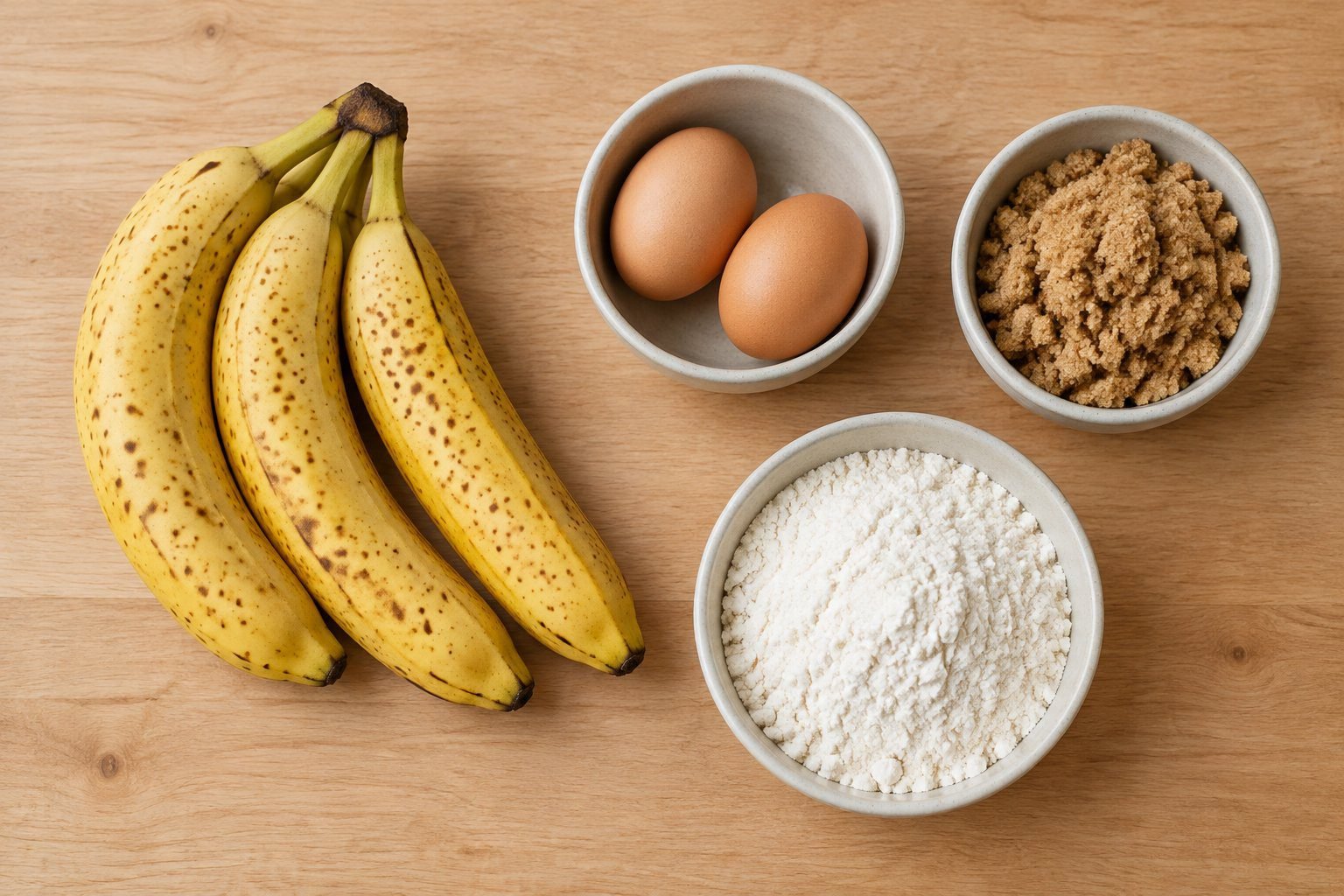
The secret to four-ingredient banana bread is choosing ingredients that do more than one job. You do not need a long shopping list to make a tasty loaf. With ripe bananas, eggs, brown sugar, and self-rising flour, you can make banana bread without adding baking soda.
Each ingredient has a clear role. Ripe bananas bring natural sweetness, moisture, and a rich banana flavor. Eggs hold the batter together and help give the loaf its structure. Brown sugar adds sweetness and a deeper flavor. Self-rising flour helps the bread rise because it already contains flour, a leavening agent, and salt.
Why these four ingredients work
- Ripe bananas: They add moisture, sweetness, and the main flavor. Very ripe bananas with brown spots work best.
- Eggs: They bind the ingredients and help the loaf hold its shape. Room-temperature eggs also mix more easily with the other ingredients.
- Brown sugar: It sweetens the bread and adds a mild caramel flavor. It also helps keep the crumb moist.
- Self-rising flour: It provides the structure and leavening needed for the loaf to rise. In the US, self-rising flour usually contains flour, baking powder, and salt.
The key is to use very ripe bananas and avoid overmixing the batter. Stir just until the flour disappears. Too much mixing can make the bread dense and firm instead of soft and tender. This simple method makes four-ingredient banana bread a good choice for beginner bakers.
Why You’ll Love This Recipe
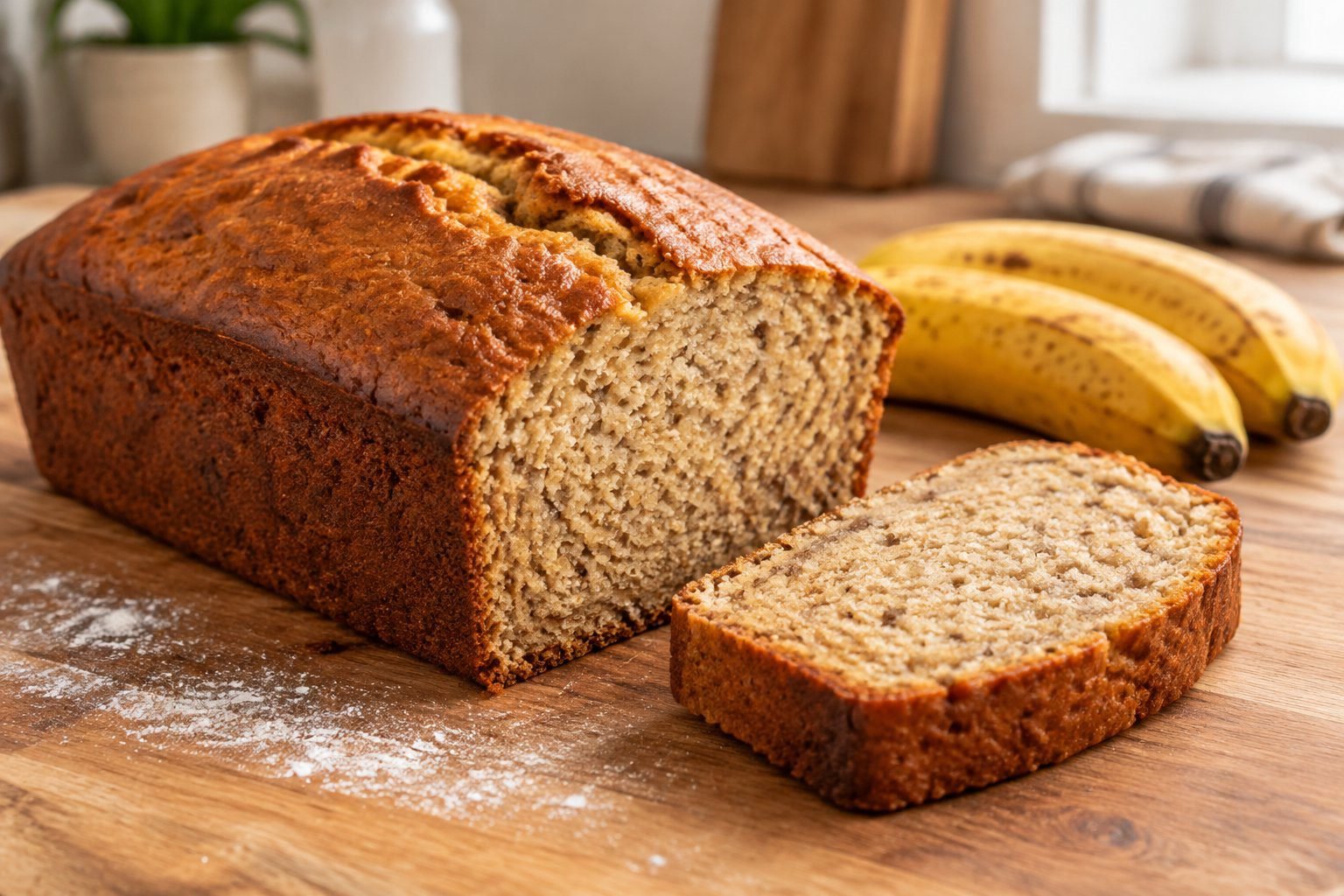
– Only four simple ingredients: You need ripe bananas, eggs, brown sugar, and self-rising flour. Each ingredient has a clear purpose, so shopping and preparation stay simple.
– No baking soda needed: Self-rising flour helps the bread rise without adding baking soda separately. This makes the recipe useful when your pantry is missing a common baking ingredient.
– Easy for beginners: You do not need special baking skills or complicated equipment. Mash the bananas, mix the ingredients, pour the batter into a loaf pan, and bake.
– Soft, moist texture: Ripe bananas add moisture and natural sweetness. Brown sugar adds a warm, rich flavor that pairs well with the bananas.
– Less time in the kitchen: The short ingredient list means less measuring and fewer dishes to wash. You can prepare the batter in just a few simple steps.
– Easy to customize: Add chocolate chips, chopped walnuts, pecans, or a little ground cinnamon if you want extra flavor and texture.
– Great for ripe bananas: Instead of throwing away overripe bananas, turn them into homemade banana bread. The riper the bananas, the sweeter and more flavorful your loaf can be.
Enjoy a slice for breakfast, as an afternoon snack, or with a cup of coffee. This simple banana bread recipe offers a practical way to make a homemade treat without adding baking soda.
Ingredients
You only need four simple ingredients to make moist banana bread without baking soda. Each ingredient helps create a sweet, soft loaf with a rich banana flavor.
- Ripe bananas
Use 3 very ripe medium bananas. Look for yellow peels with plenty of brown spots. These bananas taste sweeter and mash easily. Mash them well with a fork before adding them to the batter.
- Eggs
Use 2 large eggs at room temperature. Eggs help bind the ingredients and give the banana bread structure. Let cold eggs sit at room temperature for a short time before mixing.
- Brown sugar
Use 1 cup of packed brown sugar. It adds sweetness and a warm, caramel like flavor. Pack the sugar firmly into your measuring cup to get the right amount.
- Self rising flour
Use 2 cups of self rising flour. This flour contains a leavening agent and salt, which help the bread rise without adding baking soda separately. Measure the flour carefully to avoid a dry or dense loaf.
A Few Ingredient Tips
Choose soft, ripe bananas for the best flavor. Measure the flour with care, and avoid packing it tightly into the measuring cup. If you use all purpose flour instead of self rising flour, you will need to adjust the recipe because all purpose flour does not contain a leavening agent.
Equipment
You do not need special baking tools to make banana bread without baking soda. A few basic kitchen items will help you prepare the batter and bake an evenly cooked loaf.
- 1. Loaf pan: Use an 8 × 4 inch loaf pan for a traditional shape. Grease the pan with butter or cooking spray, or line it with parchment paper to make removal easier.
- Mixing bowl: Choose a medium or large bowl with enough space to mix the mashed bananas, eggs, brown sugar, and self rising flour.
- 3. Fork or potato masher: Use a fork to mash the ripe bananas until they become soft and mostly smooth.
- Whisk: Beat the eggs and brown sugar together until they combine well.
- 5. Rubber spatula or wooden spoon: Stir the ingredients gently. Stop as soon as the flour disappears to help keep the banana bread soft.
- Measuring cups and spoons: Measure each ingredient carefully. Accurate amounts help the loaf rise and bake properly.
- Oven: Preheat your oven to 350°F before baking. An oven thermometer can help you check the temperature if your oven runs too hot or too cool.
- 8. Toothpick or thin skewer: Insert it into the center of the loaf near the end of baking. If it comes out clean or with a few moist crumbs, the bread is usually ready. Wet batter on the toothpick means it needs more time.
- Wire cooling rack: Let the loaf cool in the pan briefly, then move it to a rack to cool completely. This helps prevent the bottom from becoming soggy.
These basic tools make the process simple, even if you are baking banana bread for the first time.
Directions
Follow these simple steps to make moist banana bread without baking soda. You only need four ingredients and a few basic kitchen tools.
Step 1: Preheat the oven
Preheat your oven to 350°F. Grease an 8 × 4 inch loaf pan with butter or cooking spray. You can also line it with parchment paper to remove the bread easily after baking.
Step 2: Mash the bananas
Peel 3 ripe medium bananas and place them in a large mixing bowl. Mash them with a fork until they become soft and mostly smooth. A few small lumps are fine.
Step 3: Mix the wet ingredients
Add 2 large eggs and 1 cup of packed brown sugar to the mashed bananas. Whisk until the ingredients combine into a smooth mixture. Make sure you break up any large lumps of brown sugar.
Step 4: Add the self rising flour
Add 2 cups of self rising flour to the banana mixture. Use a rubber spatula or wooden spoon to stir gently. Stop as soon as you no longer see dry flour. Overmixing can make your banana bread dense and firm.
Step 5: Fill the loaf pan
Pour the batter into your prepared loaf pan. Spread it evenly with a spatula so the batter reaches the corners. Gently tap the pan on the counter to release any large air pockets.
Step 6: Bake the banana bread
Place the pan on the center rack of your preheated oven. Bake for about 50 to 60 minutes. Baking time may vary depending on your oven and the moisture in your bananas.
Start checking the bread after 45 minutes. Insert a toothpick into the center. If it comes out clean or with a few moist crumbs, the bread is ready. If you see wet batter, bake for another 5 minutes and check again.
Step 7: Cool before slicing
Remove the pan from the oven and let the banana bread cool in the pan for about 10 to 15 minutes. Transfer it to a wire rack and let it cool further before slicing. This helps the loaf hold its shape and gives the center time to set.
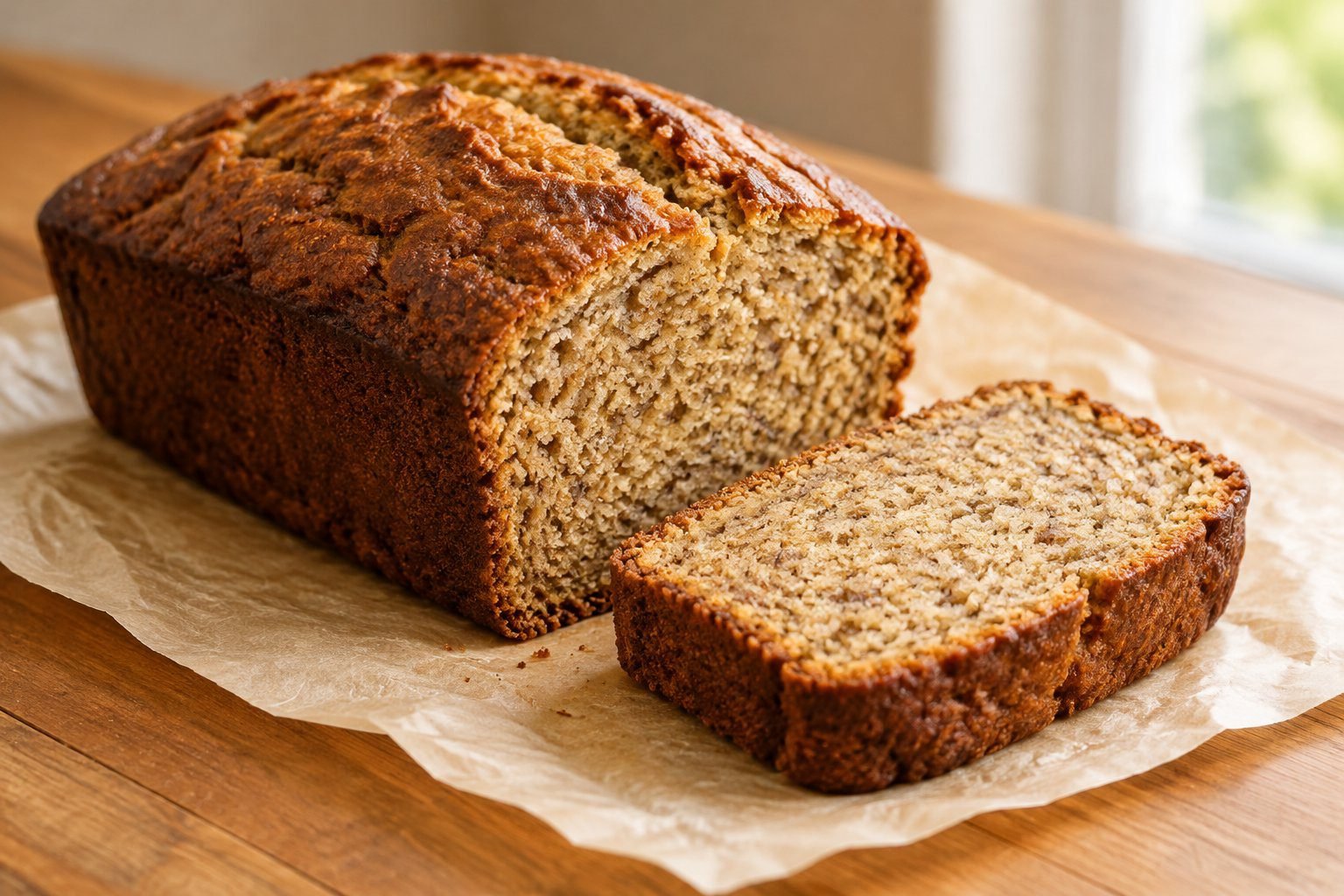
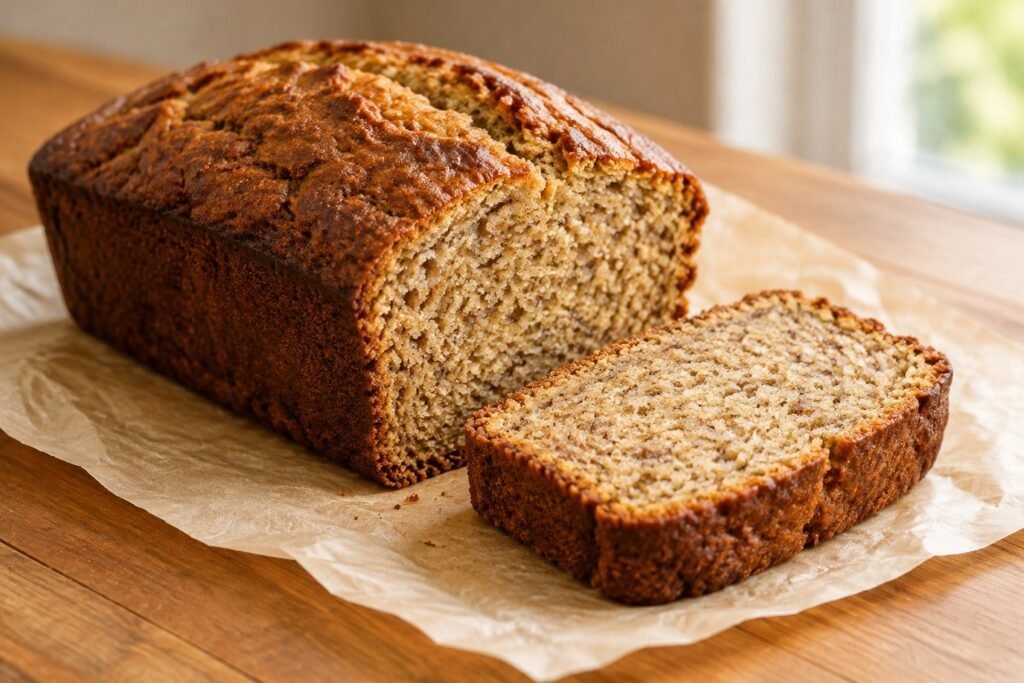
Your banana bread is ready to enjoy. It should have a golden brown crust, a soft center, and a sweet banana flavor. Serve a slice for breakfast, as a snack, or with your favorite hot drink.
How Do You Make Banana Bread Without Baking Soda?
You can make banana bread without baking soda by using self rising flour instead. It already contains a leavening agent that helps the batter rise as it bakes. This four ingredient recipe uses ripe bananas, eggs, brown sugar, and self rising flour to create a soft, sweet loaf.
Follow these simple tips for the best results.
- Choose very ripe bananas. Use bananas with brown spots on the peel. They add more sweetness and mash easily into the batter.
- Measure the ingredients carefully. Too much flour can make banana bread dry, while too much banana can leave the center wet. Follow the recipe measurements for a balanced texture.
- Mix the batter gently. Stir the self rising flour into the wet ingredients until the dry flour disappears. Overmixing can make the loaf dense.
- Use the right loaf pan. An 8 × 4 inch loaf pan works well for this recipe. A different pan size can change the baking time and the loaf’s thickness.
- Bake in a preheated oven. Set your oven to 350°F. Place the loaf pan on the center rack so the bread cooks evenly.
- Check the center before removing the bread. Insert a toothpick into the thickest part of the loaf. It should come out clean or with a few moist crumbs, not wet batter.
Can You Use Baking Powder Instead?
Yes, you can make banana bread with baking powder instead of baking soda. However, baking powder and self rising flour are different options. Baking powder is a leavening agent that you add separately, while self rising flour already contains a leavening agent and salt.
If you choose all purpose flour and baking powder, use a recipe tested with those ingredients rather than swapping them without adjusting the quantities. This helps you get the right rise and avoid a dense or overly bitter loaf.
The key to good banana bread without baking soda is choosing a suitable leavening method, measuring accurately, and avoiding overmixing. These steps help you make a tender loaf with a rich banana flavor using everyday ingredients.
Baking Soda vs. Baking Powder in Banana Bread
Baking soda and baking powder both help banana bread rise, but they work in different ways. Knowing the difference helps you choose the right ingredient for a soft, well risen loaf.
Baking soda is a pure alkaline ingredient called sodium bicarbonate. It needs an acidic ingredient, such as yogurt, buttermilk, or brown sugar with enough acidity, to produce carbon dioxide. These gas bubbles help the batter rise during baking.
Baking powder contains sodium bicarbonate, an acid, and a starch that keeps the ingredients dry. Most baking powder sold in the United States is double acting. It releases some gas when you mix it with liquid and more as the batter heats in the oven. This makes it useful in banana bread recipes that do not include baking soda.
Which One Is Better for Banana Bread?
The best choice depends on your recipe.
| Feature | Baking soda | Baking powder |
| Main ingredient | Sodium bicarbonate | Sodium bicarbonate plus an acid and starch |
| Needs extra acid | Usually yes | No, because it already contains an acid |
| Main job | Helps the batter rise and balances acidity | Helps the batter rise |
| Best use | Recipes with enough acidic ingredients | Recipes that need a separate leavening agent |
| Can you use it alone? | Only when the recipe provides enough acid | Often, if the recipe is formulated for it |
Can You Replace Baking Soda With Baking Powder?
Yes, but you should not swap them in equal amounts. Baking powder is less concentrated than baking soda, so a recipe may need a larger amount to get a similar rise. A common starting point is about three times as much baking powder as baking soda, but the right amount depends on the recipe’s ingredients and acidity.
Adding too much baking powder can leave a bitter or chemical taste and affect the bread’s texture. For the best results, follow a recipe that specifically uses baking powder.
What If You Have Neither Ingredient?
You can use self rising flour if your recipe supports it. Self rising flour already contains flour, a leavening agent, and salt. It can help banana bread rise without adding baking soda or baking powder separately.
However, a recipe made with self rising flour needs the right balance of wet and dry ingredients. Do not replace all purpose flour with self rising flour in equal amounts without checking the recipe.
The bottom line: Baking soda needs an acidic ingredient to work, while baking powder contains its own acid. Both can help banana bread rise, but the right choice depends on the recipe.
What Can You Use Instead of Baking Soda in Banana Bread?
If you have run out of baking soda, you can still make banana bread at home. The best substitute depends on the ingredients in your pantry and the recipe you plan to use. Baking powder and self rising flour are two practical options.
1. Baking Powder
Baking powder is a common substitute for baking soda in banana bread. It contains an acid and a base that react to produce carbon dioxide, helping the batter rise.
A common starting point is to use about 3 teaspoons of baking powder for every 1 teaspoon of baking soda. However, this ratio does not work perfectly in every recipe. Too much baking powder can affect the taste and texture, so use a recipe that accounts for the change.
2. Self Rising Flour
Self rising flour offers another easy option. It combines all purpose flour with a leavening agent and salt. This makes it useful for recipes that do not require you to add baking soda separately.
For the four ingredient banana bread recipe, use the stated amount of self rising flour. Do not add extra baking powder unless the recipe calls for it. Too much leavening can cause the loaf to rise quickly and then sink.
3. Whipped Eggs
Whipped eggs can add air to a batter and help create a lighter texture. This method works best in recipes developed for beaten eggs. It is not a direct replacement for baking soda, and it may not give a traditional banana bread the same rise.
If you want to try this method, choose a tested recipe that explains how long to beat the eggs and when to fold in the other ingredients.
4. A Recipe Made Without Added Leavening
Some banana bread recipes rely on self rising flour, while others use a different mixing method to create their texture. You can also make a loaf without baking soda or baking powder, but it will usually be denser than a loaf made with a suitable leavening agent.
Do not simply leave out the baking soda from a recipe that depends on it. The loaf may turn out heavy, and the center may not cook as expected.
Which Substitute Should You Choose?
| What you have | Best option |
| Baking powder | Use a recipe formulated with baking powder |
| Self rising flour | Follow a recipe that uses self rising flour |
| Eggs and basic ingredients only | Choose a tested recipe developed without added leavening |
| No suitable substitute | Use a recipe that matches the ingredients you have |
For most home bakers, baking powder or self rising flour is the simplest choice. Both can help produce a good loaf when you use the correct recipe and measurements.
Can You Make Banana Bread Without Baking Soda or Baking Powder?
Yes, you can make banana bread without adding baking soda or baking powder separately. The easiest option is to use self rising flour, which already contains a leavening agent and salt. This lets you make a simple banana bread with ripe bananas, eggs, and brown sugar.
If you want to avoid both baking soda and baking powder entirely, check the ingredients on your flour package. Most self rising flour contains baking powder, so it does not meet that stricter requirement.
How to Make Banana Bread Without Either Ingredient
You can make a loaf without chemical leavening agents, but the method and texture will differ from traditional banana bread.
- Mash the bananas. Use very ripe bananas for natural sweetness and moisture. Mash them until mostly smooth.
- Beat the eggs well. Whisking eggs adds air to the mixture. This air can help create a lighter texture, although it will not provide the same rise as baking powder.
- Mix in the sugar. Stir in brown sugar until it blends evenly with the banana and egg mixture.
- Fold in the flour. Add the flour gradually and mix gently. Avoid overmixing, which can make the loaf tough.
- Bake until the center sets. Pour the batter into a prepared loaf pan. Bake according to a recipe tested without chemical leavening agents, and check the center before removing the loaf.
What Will the Texture Be Like?
Without baking soda or baking powder, banana bread usually rises less. The loaf may feel denser and have a tighter crumb. Beating the eggs can help add some air, but it cannot guarantee the same soft, fluffy texture as a recipe with a suitable leavening agent.
For the most reliable result, choose a recipe that was developed specifically for your ingredients. If you simply remove baking soda and baking powder from a regular banana bread recipe, the loaf may turn out heavy or gummy.
Best tip: If you want a soft, well risen loaf without adding baking soda, use a tested recipe with self rising flour. If you want to avoid baking powder as well, choose a recipe designed to work without chemical leavening agents.
Overripe Bananas Are the Best for This Recipe
Overripe bananas give banana bread a sweeter taste, a stronger banana flavor, and plenty of moisture. As bananas ripen, their starch turns into sugar, making them softer and easier to mash. This makes them ideal for banana bread without baking soda.
How to Choose the Best Bananas
Look for bananas with yellow peels covered in brown spots. They should feel soft when you press them gently. Bananas with mostly brown or dark peels can also work if the fruit inside still looks and smells normal.
Avoid bananas with visible mold, a rotten smell, or signs of spoilage. A dark peel alone does not mean the fruit has gone bad.
Why Ripe Bananas Make Better Banana Bread
More natural sweetness: Ripe bananas taste sweeter than green or firm bananas. They help create a rich flavor without relying only on added sugar.
Easier to mash: Soft bananas break down quickly with a fork. They blend smoothly into the eggs and brown sugar, making the batter easier to mix.
Better moisture: Mashed bananas add moisture to the loaf. This helps keep the crumb soft, which matters when you want tender banana bread without baking soda.
Stronger banana flavor: Very ripe bananas have a deeper, sweeter flavor that stands out after baking.
What If Your Bananas Are Not Ripe Enough?
If your bananas are still firm and mostly yellow or green, wait until they soften and develop brown spots. If you need them sooner, you can place unpeeled bananas on a baking sheet and heat them in a 300°F oven until the skins darken and the fruit softens. Let them cool before peeling and mashing.
This oven method softens the fruit, but it does not produce exactly the same flavor as naturally ripened bananas.
How Many Bananas Should You Use?
For this recipe, use 3 medium ripe bananas. Mash them before measuring so you can check the amount. Banana size and moisture levels vary, so using too much mashed banana may make the center wet or gummy.
For the best result, choose soft, spotted bananas, measure the mashed fruit carefully, and mix it into the batter without overworking the flour.
Quick Banana Bread Substitutions and Variations
You can change this banana bread recipe to suit your taste or use ingredients you already have at home. A few simple swaps can add new flavors or change the texture. However, some substitutions affect how the loaf rises and bakes, so choose them carefully.
1. All Purpose Flour Instead of Self Rising Flour
You can use all purpose flour, but it does not contain a leavening agent or added salt. You will need a recipe that includes baking powder or another suitable method to help the bread rise. Do not replace self rising flour with the same amount of all purpose flour without adjusting the recipe.
2. White Sugar Instead of Brown Sugar
White sugar works if you do not have brown sugar. It provides sweetness, but the banana bread will have a lighter flavor with less of the caramel taste that brown sugar adds. Use the same amount as a starting point.
3. Butter Instead of Oil
Melted butter can add a rich flavor to banana bread. Oil often gives baked goods a softer texture because it stays liquid at room temperature. Use a recipe that specifies the right amount of fat, as this four ingredient version does not include butter or oil.
4. Chocolate Chip Banana Bread
Stir chocolate chips into the finished batter for a sweeter loaf. Semi sweet chocolate chips work well because their flavor balances the ripe bananas. Fold them in gently just before pouring the batter into the loaf pan.
5. Banana Bread With Nuts
Add chopped walnuts or pecans for a crunchy texture. Start with about half a cup and stir them into the batter. Chop the nuts into small pieces so they spread evenly through the loaf.
6. Cinnamon Banana Bread
Add about half a teaspoon of ground cinnamon for a warm, sweet spice flavor. Mix it with the dry ingredients before adding them to the wet mixture. Cinnamon pairs well with ripe bananas and brown sugar.
7. Dairy Free Banana Bread
The four ingredient recipe contains no milk or butter, so it already avoids those common dairy ingredients. Check the labels on your other ingredients if you need to avoid dairy completely, especially if you add chocolate chips or other extras.
8. Egg Free Banana Bread
Eggs help bind the ingredients and give banana bread its structure. Replacing them can change the texture and rise, especially in a recipe that uses only four ingredients. For the best results, choose a tested egg free banana bread recipe rather than removing the eggs without a replacement.
9. Pumpkin Banana Bread
You can add pumpkin puree for a seasonal variation, but pumpkin adds extra moisture. It may leave the loaf dense or undercooked if you simply add it to the original batter. Use a recipe developed for both pumpkin and banana, with the right flour and liquid balance.
Tips for Successful Substitutions
Change one ingredient at a time so you can see how it affects the result. Keep the amount of mashed banana consistent, measure the flour carefully, and avoid overmixing the batter. If you add chocolate chips or nuts, fold them in gently.
For the most reliable banana bread without baking soda, follow the original recipe when possible. Save larger ingredient changes for a version tested specifically for those substitutions.
How Do You Freeze Bananas?
Freezing ripe bananas is an easy way to save them for your next batch of banana bread. Frozen bananas work well in baking because they soften as they thaw and become easy to mash. You can freeze whole bananas or prepare them in portions so you can use the exact amount your recipe needs.
How to Freeze Bananas for Banana Bread
Step 1: Choose ripe bananas
Use bananas with yellow peels and plenty of brown spots. They should feel soft but show no signs of mold or spoilage. Ripe bananas give banana bread a sweeter taste and richer flavor.
Step 2: Decide whether to peel them.
You can freeze bananas with their peels on or peel them first. Leaving the peels on saves preparation time, while peeling them first makes portioning easier.
Step 3: Prepare the bananas.
For peeled bananas, mash them or cut them into chunks. If you plan to use them for a specific recipe, measure the mashed banana into portions before freezing.
Step 4: Pack them in freezer bags.
Place the bananas or measured portions in freezer safe bags or airtight containers. Remove as much air as possible before sealing. Label each bag with the date and amount.
Step 5: Freeze until firm.
Lay the bags flat in the freezer so they take up less space. For the best quality, use frozen bananas within about 2 to 3 months.
How to Use Frozen Bananas in Banana Bread
Thaw frozen bananas in the refrigerator or in a sealed bag placed in cold water. Once thawed, peel them if needed and mash them with a fork. Frozen bananas often release liquid as they thaw.
Measure the mashed banana after thawing. If the mixture contains a large amount of extra liquid, drain some of it before adding the bananas to your batter. Too much liquid can make banana bread dense or leave the center undercooked.
Can You Freeze Bananas With the Peel On?
Yes. You can freeze whole bananas with their peels on. The peel will turn dark or black in the freezer, but that color change alone does not mean the fruit has spoiled. Let the bananas thaw, remove the peel, and check the fruit before using it.
Helpful tip: Freeze ripe bananas in recipe sized portions. This makes it easier to prepare banana bread without baking soda whenever you have a craving, without waiting for fresh bananas to ripen.
How to Make Banana Bread Moist Without Baking Soda
Moist banana bread starts with the right balance of ingredients and careful mixing. You do not need baking soda to make a tender loaf, but you do need a recipe with a suitable leavening method. For this four ingredient version, self rising flour helps the bread rise, while ripe bananas add sweetness and moisture.
1. Use Very Ripe Bananas
Choose soft bananas with plenty of brown spots on the peel. They mash easily and bring a sweet, rich banana flavor to the batter. Measure the mashed bananas carefully because too much can make the center wet and gummy.
2. Measure the Flour Correctly
Too much flour can make banana bread dry and crumbly. Spoon the flour into your measuring cup and level the top with a straight edge. Avoid scooping directly from the flour bag because this can pack in too much flour.
3. Avoid Overmixing the Batter
Once you add the self rising flour, stir gently until no dry flour remains. Overmixing develops gluten in the flour, which can make the loaf tough or dense. A few small lumps in the batter are fine.
4. Use Fresh Self Rising Flour
Self rising flour contains a leavening agent that helps the bread rise. If the flour has been stored for a long time or exposed to moisture, its leavening quality may decline. Store it in a sealed container in a cool, dry place.
5. Bake at the Right Temperature
Preheat the oven to 350°F before placing the loaf inside. An oven that runs too hot can brown the outside before the center cooks. An oven that runs too cool can leave the middle wet for too long.
6. Avoid Overbaking
Start checking the loaf near the end of the expected baking time. Insert a toothpick into the center. It should come out clean or with a few moist crumbs, not raw batter. Remove the loaf once it has finished baking so the crumb does not dry out.
7. Let the Bread Cool Before Slicing
Allow the banana bread to rest in the pan for 10 to 15 minutes, then transfer it to a wire rack. Let it cool before cutting. Slicing too early can cause the soft center to break apart because the crumb needs time to set.
8. Store It Properly
Once the loaf has cooled completely, wrap it tightly or place it in an airtight container. Keep it at room temperature for a few days, or freeze individual slices for longer storage. Avoid sealing warm bread because trapped steam can make the surface damp.
The key to moist banana bread without baking soda is balance. Use ripe bananas, measure the ingredients accurately, mix gently, and bake only until the center is done. These simple habits help you make a soft, flavorful loaf without a dry crust or gummy middle.
How to Tell When Banana Bread Is Done
Banana bread can look golden on the outside while the center remains wet. To make sure your banana bread without baking soda cooks through, check its color, texture, and center before removing it from the oven.
1. Check the Color of the Crust
The top should look golden brown, and the edges should feel set. A few cracks along the top are normal. However, a dark crust does not always mean the center has finished baking.
2. Use the Toothpick Test
Insert a clean toothpick or thin skewer into the center of the loaf.
- If it comes out clean, the bread is likely ready.
- If it has a few moist crumbs, the bread is usually done.
- If it has wet batter on it, bake the loaf for another 5 minutes and test again.
Always test the thickest part of the loaf. The edges cook faster than the center.
3. Check the Center for Firmness
Gently press the top of the loaf near the center. It should feel set and spring back slightly. If the middle feels soft, wet, or sunken, it may need more baking time.
Avoid pressing too hard, as this can damage the crust.
4. Check the Internal Temperature
For a more precise check, insert a food thermometer into the center of the banana bread without touching the pan. A temperature around 200 to 205°F is a useful guide for many quick breads. Use it alongside the toothpick test and the recipe instructions.
5. Follow the Baking Time, but Check Early
This four ingredient banana bread may take about 50 to 60 minutes at 350°F, depending on your oven, pan, and the moisture in your bananas. Start checking near the end of the expected baking time rather than relying on the clock alone.
If the top browns too quickly while the center remains wet, loosely cover the loaf with aluminum foil and continue baking until the center sets.
Why Is the Center Still Wet?
A wet center can result from too much mashed banana, excess liquid from thawed frozen bananas, an oven that runs too cool, or removing the loaf too early. Measure the bananas carefully and allow enough baking time for the middle to cook through.
Once the banana bread is done, let it rest in the pan for 10 to 15 minutes before transferring it to a wire rack. Allow it to cool before slicing so the crumb can set and hold its shape.
The best sign of fully baked banana bread is a set center with no raw batter. Use the toothpick test and check the loaf’s texture together to avoid a gummy middle or an overbaked, dry crumb.
Common Banana Bread Problems and How to Fix Them
Banana bread without baking soda can turn out soft and delicious, but small mistakes can affect its texture, rise, and flavor. The good news is that most problems have simple solutions. Use these tips to get better results with your next loaf.
1. Why Is My Banana Bread Dense?
Dense banana bread often results from too much flour, overmixing, or a recipe that lacks enough leavening.
How to fix it:
Measure the flour carefully and use self rising flour if your recipe calls for it. Stir the batter gently until the flour disappears. Avoid mixing for too long, as this can make the crumb tough.
2. Why Is the Center of My Banana Bread Wet?
A wet or gummy center can mean the bread needs more baking time. Too much mashed banana or excess liquid from thawed frozen bananas can also cause this problem.
How to fix it:
Measure the mashed bananas instead of relying only on their size. Drain excess liquid from thawed bananas if needed. Bake at 350°F and check the center with a toothpick before removing the loaf.
3. Why Did My Banana Bread Sink in the Middle?
A sunken center can result from underbaking, too much moisture, or too much leavening. Opening the oven door too early can also affect the loaf as it rises.
How to fix it:
Follow the ingredient measurements closely. Use fresh self rising flour and avoid adding extra baking powder unless the recipe calls for it. Keep the oven door closed during the early part of baking, and check that the center has cooked through.
4. Why Is My Banana Bread Dry?
Dry banana bread may contain too much flour or may have spent too long in the oven. Using bananas that are not ripe enough can also reduce sweetness and moisture.
How to fix it:
Use soft, ripe bananas and measure the flour accurately. Start checking the loaf near the end of the recommended baking time. Remove it once a toothpick comes out clean or with a few moist crumbs.
5. Why Is My Banana Bread Too Sweet?
Very ripe bananas and brown sugar both add sweetness. Using extra sugar or adding sweet ingredients such as chocolate chips can make the flavor too strong.
How to fix it:
Follow the recipe’s sugar measurement. If you want to reduce the sweetness, choose a recipe tested with less sugar rather than cutting out a large amount without adjusting the other ingredients.
6. Why Did My Banana Bread Not Rise?
Banana bread without baking soda still needs a suitable method to create a light texture. If you use self rising flour, an old or poorly stored product may not rise as well. Incorrect flour measurements can also affect the result.
How to fix it:
Check the freshness of your self rising flour and store it in a sealed container in a cool, dry place. Measure it carefully and avoid replacing it with plain all purpose flour without adjusting the recipe.
7. Why Is the Outside Dark but the Inside Undercooked?
The oven may be too hot, or the pan may be too close to the heating element. A large, deep loaf can also need more time for the center to cook.
How to fix it:
Use the recommended loaf pan and place it on the center rack. Check your oven temperature if this happens often. If the crust browns too quickly, cover the top loosely with aluminum foil and continue baking until the center is done.
8. Why Does My Banana Bread Crumble When I Slice It?
A loaf can crumble if you cut it while it is hot, use too much flour, or allow it to dry out during baking.
How to fix it:
Let the bread rest in the pan for 10 to 15 minutes, then transfer it to a wire rack. Wait until it has cooled before slicing. Use a sharp serrated knife to cut neat slices without crushing the soft crumb.
Quick Troubleshooting Guide
| Problem | Likely cause | Best fix |
| Dense loaf | Overmixing or too much flour | Mix gently and measure accurately |
| Wet center | Underbaking or excess banana moisture | Bake longer and measure mashed bananas |
| Sunken middle | Underbaking or too much leavening | Follow the recipe and check the center |
| Dry texture | Too much flour or overbaking | Measure flour and check early |
| Poor rise | Weak leavening or incorrect flour | Use fresh self rising flour |
| Dark crust | Oven too hot | Check oven temperature and cover loosely if needed |
| Crumbly slices | Cutting while hot | Cool completely before slicing |
The best way to prevent banana bread problems is to measure carefully, mix gently, and check the center before removing the loaf from the oven. These habits help you make soft, evenly baked banana bread without baking soda.
What Is the Best Way to Store Banana Bread?
The best way to store banana bread is to let it cool completely, then wrap it tightly or place it in an airtight container. This helps keep the loaf soft and prevents it from drying out. Proper storage also protects the bread from outside moisture and odors.
1. Let the Banana Bread Cool Completely
After baking, leave the loaf in the pan for 10 to 15 minutes. Transfer it to a wire rack and let it cool completely before wrapping it.
Wrapping warm banana bread traps steam inside the packaging. This can make the crust damp and the surface sticky.
2. Store Banana Bread at Room Temperature
If you plan to eat the loaf within a few days, room temperature storage works well.
- Let the bread cool completely.
- Wrap the whole loaf tightly in plastic wrap or place it in an airtight container.
- Keep it in a cool, dry place away from direct sunlight and heat.
- Enjoy it within 2 to 3 days for the best texture and flavor.
A whole loaf often stays moist longer than individual slices because less of its surface comes into contact with air.
3. Should You Refrigerate Banana Bread?
Refrigeration can help slow mold growth, but it may also make banana bread firm or dry faster. For a loaf you plan to eat within a few days, room temperature storage usually gives a better texture.
If your kitchen is very hot or humid, or you need to keep the bread longer, refrigeration may be a practical option. Wrap the loaf well and keep it in an airtight container. Discard it if you notice mold or an unusual smell.
4. How to Keep Banana Bread Moist
Use these simple tips to protect the texture of your banana bread without baking soda.
- Cool the loaf fully before storing it.
- Keep it wrapped or sealed in an airtight container.
- Avoid leaving cut slices exposed on the counter.
- Use a clean, dry knife when cutting slices.
- Store leftover slices together to reduce air exposure.
How Long Does Banana Bread Last?
| Storage method | Typical storage time |
| Room temperature | 2 to 3 days |
| Refrigerator | About 1 week |
| Freezer | Best quality within 2 to 3 months |
These times are general quality guidelines. Temperature, humidity, and how well you wrap the bread can affect how long it keeps. Discard the loaf if you see mold. Do not eat around the affected area.
For the softest banana bread, cool it completely and seal it in an airtight container. If you cannot finish the loaf within a few days, freezing is a better choice than leaving it out for too long.
Nutrition Facts
Banana bread without baking soda provides carbohydrates for energy, along with small amounts of protein, fiber, and minerals. The exact nutrition depends on the size of your loaf, the ingredients you use, and how many slices you cut.
This four ingredient banana bread recipe contains ripe bananas, eggs, brown sugar, and self rising flour. Bananas contribute carbohydrates, fiber, and potassium. Eggs provide protein and fat. Brown sugar adds carbohydrates, while self rising flour supplies most of the remaining carbohydrates and some protein.
Estimated Nutrition Per Slice
The following values are general estimates for a loaf made with the four ingredients listed in this recipe. They are not laboratory tested values.
| Nutrient | Estimated amount per slice |
| Calories | 200 to 250 |
| Carbohydrates | 40 to 48 g |
| Protein | 4 to 6 g |
| Total fat | 2 to 5 g |
| Dietary fiber | 1 to 2 g |
| Total sugars | 20 to 28 g |
| Sodium | Varies by flour brand |
These estimates assume the loaf contains 10 to 12 slices. Your results may differ based on banana size, flour brand, ingredient measurements, and serving size.
How to Calculate the Nutrition More Accurately
For a closer estimate, enter the exact ingredient amounts and brands into a nutrition calculator. Add the nutritional values for the full recipe, then divide the totals by the number of slices you cut.
Keep in mind that brown sugar contributes added sugar, while bananas provide naturally occurring sugars. Self rising flour can also contribute sodium because it usually contains salt.
For accurate nutrition information, calculate the values from the final recipe you prepare rather than relying on estimates alone.
Conclusion
Making banana bread without baking soda does not need to be difficult. The key is to follow a recipe that matches the ingredients you have, use ripe bananas, measure the flour accurately, and avoid overmixing the batter. Baking powder or self rising flour can help your loaf rise, while careful baking and proper cooling help create a soft center and a golden crust. If your first loaf turns out too dense or slightly wet in the middle, small changes to your measurements and baking time can help you improve the next one.
A reliable baking method comes from knowing what each ingredient does and paying attention to the results. Use the toothpick test to check the center, let the loaf cool before slicing, and store leftovers in an airtight container. You can also freeze ripe bananas for another batch later. With the right ingredients and a little care, you can enjoy homemade banana bread even when baking soda is missing from your pantry.
Frequently Asked Questions
1. Can you make banana bread without baking soda?
Yes. You can make banana bread without baking soda by using a recipe that calls for baking powder or self rising flour. Both options can help the loaf rise and develop a soft texture when you use the correct measurements.
2. What can I use instead of baking soda in banana bread?
Baking powder and self rising flour are common options. Baking powder works as a separate leavening agent, while self rising flour already contains a leavening agent and salt. Choose a recipe that matches the ingredient you have.
3. Can I use baking powder instead of baking soda?
Yes, but baking powder and baking soda do not work in equal amounts. A common starting point is about 3 teaspoons of baking powder for every 1 teaspoon of baking soda. The exact amount depends on the recipe, so a tested baking powder recipe gives the most reliable results.
4. Can I make banana bread without baking soda or baking powder?
Yes, but the loaf may turn out denser and rise less. Some recipes use beaten eggs to add air, while others use self rising flour. Check the flour label because self rising flour usually contains baking powder.
5. Can I use self rising flour for banana bread?
Yes. Self rising flour contains flour, a leavening agent, and salt. It works well in recipes developed for it. Avoid adding extra baking powder unless the recipe calls for it, as too much leavening can affect the texture and taste.
6. How ripe should bananas be for banana bread?
Choose soft bananas with yellow peels covered in brown spots. They are sweeter and easier to mash than firm, green bananas. Very ripe bananas help give banana bread a rich flavor and moist texture.
7. Can I use frozen bananas for banana bread?
Yes. Thaw frozen bananas before using them, then mash and measure the fruit. Frozen bananas often release extra liquid as they thaw. Drain some of that liquid if needed, since too much moisture can make the center gummy.
8. Why is my banana bread dense without baking soda?
Dense banana bread can result from overmixing, too much flour, excess banana moisture, or a recipe without enough leavening. Measure the ingredients carefully and stir the batter only until the flour disappears.
9. How do I know when banana bread is fully baked?
Insert a toothpick into the center of the loaf. It should come out clean or with a few moist crumbs, not wet batter. The top should look golden brown, and the center should feel set. If the toothpick shows raw batter, bake for another 5 minutes and check again.
10. How do I keep banana bread moist after baking?
Let the loaf cool completely before wrapping it or placing it in an airtight container. Keep it at room temperature for about 2 to 3 days, or freeze it for longer storage. Avoid wrapping warm bread because trapped steam can make the surface damp.
11. Can I make banana bread without eggs?
Yes, but you need a recipe that uses a suitable egg substitute. Eggs help bind the ingredients and give the loaf structure, so removing them without a replacement can change the texture and rise.
12. Can I add chocolate chips or walnuts to banana bread without baking soda?
Yes. Fold chocolate chips, chopped walnuts, or pecans into the batter just before baking. Start with about half a cup of add ins. Mix gently so the batter stays tender and the ingredients spread evenly through the loaf.