

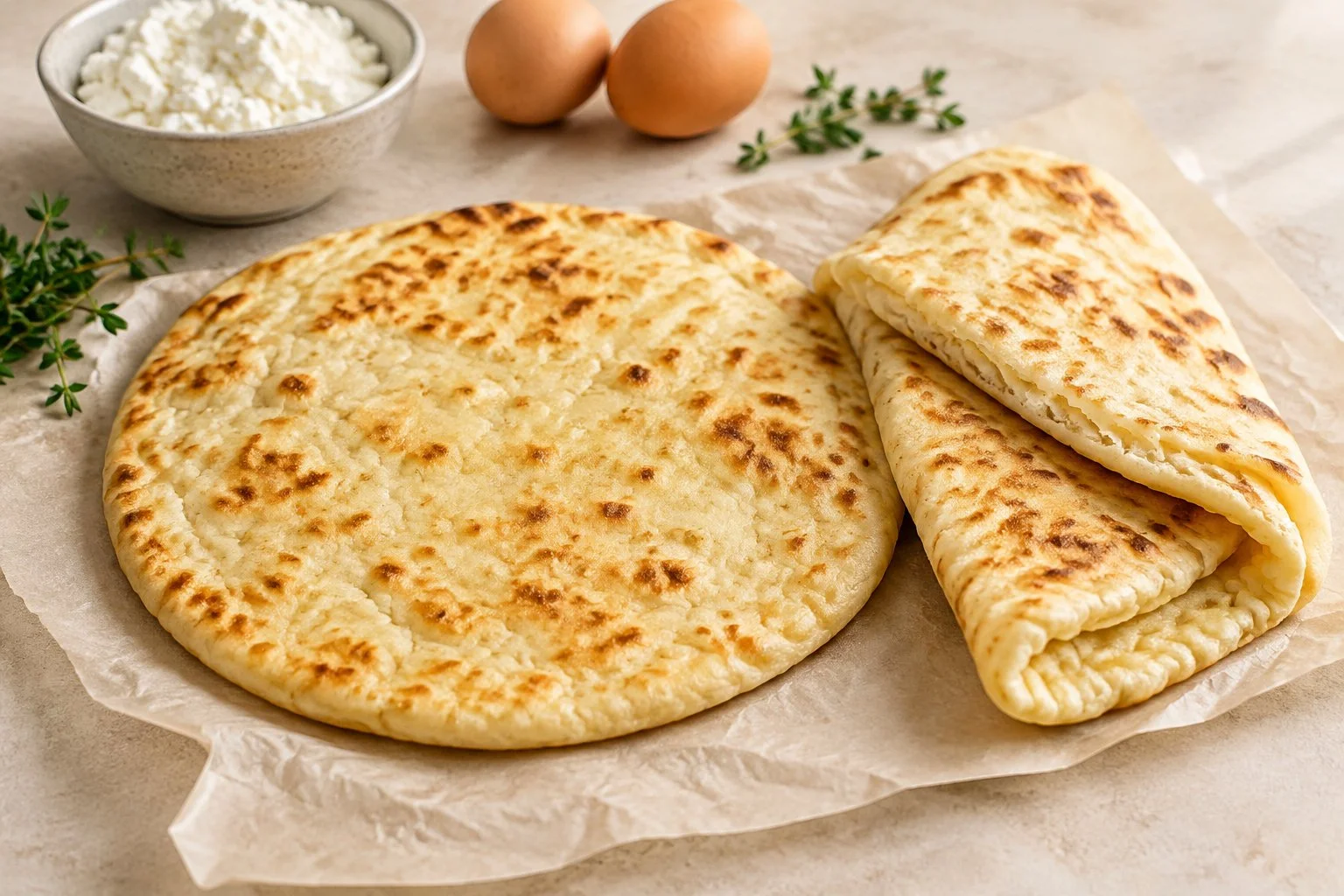
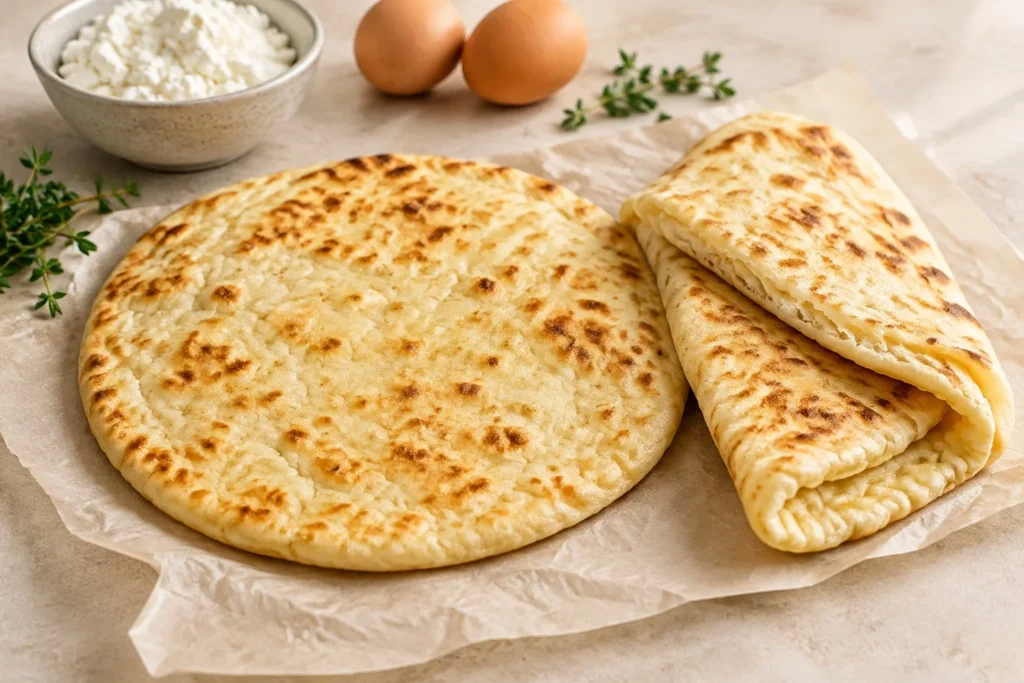
If you have ever tried making keto cottage cheese flatbread and ended up with a soggy center, dry edges, or a flatbread that falls apart when you fold it, you are not alone. This simple cottage cheese flatbread recipe uses just two main ingredients—cottage cheese and eggs—to create a low-carb alternative to traditional bread without wheat flour.
It is easy to prepare, rich in protein, and versatile enough for wraps, sandwiches, and homemade pizza. The key to getting it right is blending the ingredients until smooth, spreading the batter evenly, and baking it until the center is fully set. Keep reading for the step-by-step method, nutrition tips, and practical fixes for common flatbread problems so you can get better results in your own kitchen.
Whether you are following a keto diet, reducing carbohydrates, or looking for a simple gluten-free bread alternative, this recipe is a useful option to try. You will also learn how to choose the right cottage cheese, keep the flatbread soft and flexible, store leftovers, and reheat frozen portions without making them too dry.
Use the tips below to adjust the recipe to your needs, and check the nutrition labels on your ingredients to estimate the carbs per serving. Try this easy cottage cheese flatbread recipe and see which texture and seasonings work best for your meals.
Ingredients Needed for Baked Cottage Cheese Flatbread
You only need two main ingredients to make baked cottage cheese flatbread: cottage cheese and eggs. Together, they create a simple, protein-rich flatbread without regular flour. A few optional seasonings can add more flavor without adding much to the carb count.
– Cottage cheese: Use 1 cup of cottage cheese as a starting point. Full-fat cottage cheese can give the flatbread a richer taste, while low-fat cottage cheese is another option. Check the amount of liquid in the container, as excess whey may make the mixture too wet. The curds should blend smoothly for an even texture.
– Eggs: Use 2 large eggs to help bind the cottage cheese and give the flatbread structure as it bakes. Eggs also add protein and help the flatbread hold together after cooling.
– Garlic powder (optional): Add ¼ teaspoon for a mild garlic flavor.
– Italian seasoning (optional): Add ¼ teaspoon for a blend of herbs that works well with wraps, sandwiches, and pizza toppings.
– Salt and black pepper (optional): Add a small amount to improve the flavor. Check the cottage cheese label first because some brands already contain plenty of sodium.
Equipment You’ll Need
- Blender or food processor: Blends the cottage cheese and eggs into a smooth mixture. A hand blender can also work.
- Baking sheet: Provides a flat surface for spreading the batter.
- Parchment paper: Helps prevent sticking and makes it easier to lift the baked flatbread from the tray.
- Spatula or spoon: Helps spread the mixture evenly.
Beginner tip: Avoid adding almond flour or coconut flour unless you are following a tested variation. The basic two-ingredient recipe relies on the right balance of cottage cheese and eggs. Extra ingredients can change the texture, cooking time, and nutrition facts.
For a keto-friendly result, check the nutrition label on your cottage cheese and calculate the carbs from the exact ingredients you use. Different brands can have different amounts of carbohydrates, protein, fat, and sodium.
2 Ingredient Cottage Cheese Flatbread Recipe
This 2 ingredient cottage cheese flatbread recipe uses cottage cheese and eggs to make a simple, flourless flatbread in the oven. It is a useful option for anyone looking for a low-carb, high-protein alternative to regular bread. You do not need yeast, wheat flour, or a long mixing process.
The secret to getting a good result is to blend the ingredients until smooth, spread the mixture evenly, and let the flatbread cool before removing it from the baking sheet.
Ingredients
- 1 cup cottage cheese
- 2 large eggs
Optional: Add garlic powder, Italian seasoning, or black pepper for extra flavor. These seasonings are not needed for the basic two-ingredient recipe.
Instructions
- Preheat the oven. Set your oven to 350°F (175°C). Allow it to heat fully before baking.
- Prepare the baking sheet. Line a flat baking sheet with parchment paper. Make sure the paper lies flat so the mixture spreads evenly.
- Blend the cottage cheese and eggs. Add both ingredients to a blender or food processor. Blend until the mixture is smooth, with no large cottage cheese curds remaining. This helps create a more even texture after baking.
- Spread the mixture. Pour the blended batter onto the prepared baking sheet. Use a spatula to spread it into a thin, even rectangle. Avoid making the edges much thinner than the center, as they may cook faster.
- Bake the flatbread. Place the tray in the preheated oven and bake for about 30–40 minutes. The exact time depends on the thickness of the mixture and your oven. Look for a set center and lightly golden edges rather than relying on time alone.
- Let it cool. Remove the tray from the oven and allow the flatbread to cool for several minutes. Carefully peel it away from the parchment paper once it has firmed up. Removing it while it is very hot can cause it to tear.
- Cut and serve. Slice the cottage cheese flatbread into portions. Use it for sandwiches, low-carb wraps, or a simple flatbread base for your favorite toppings.
Tips for the Best Results
- Blend thoroughly: A smooth batter helps reduce lumps and gives the flatbread a more even finish.
- Spread evenly: An even layer helps the center and edges cook at a similar rate.
- Check the center: If the middle still looks wet or soft, continue baking and check again after a few minutes.
- Cool before folding: Cooling helps the flatbread firm up and makes it easier to handle.
- Check your ingredients: Cottage cheese brands differ in moisture and carbohydrate content, so the final texture and nutrition values can vary.
This easy cottage cheese flatbread recipe contains no added flour and can suit a keto or low-carb eating plan, depending on the ingredients and portion size. For accurate nutrition information, calculate the calories, protein, fat, and net carbs using the products you actually use.
Step-by-Step Method for Making Keto Cottage Cheese Flatbread
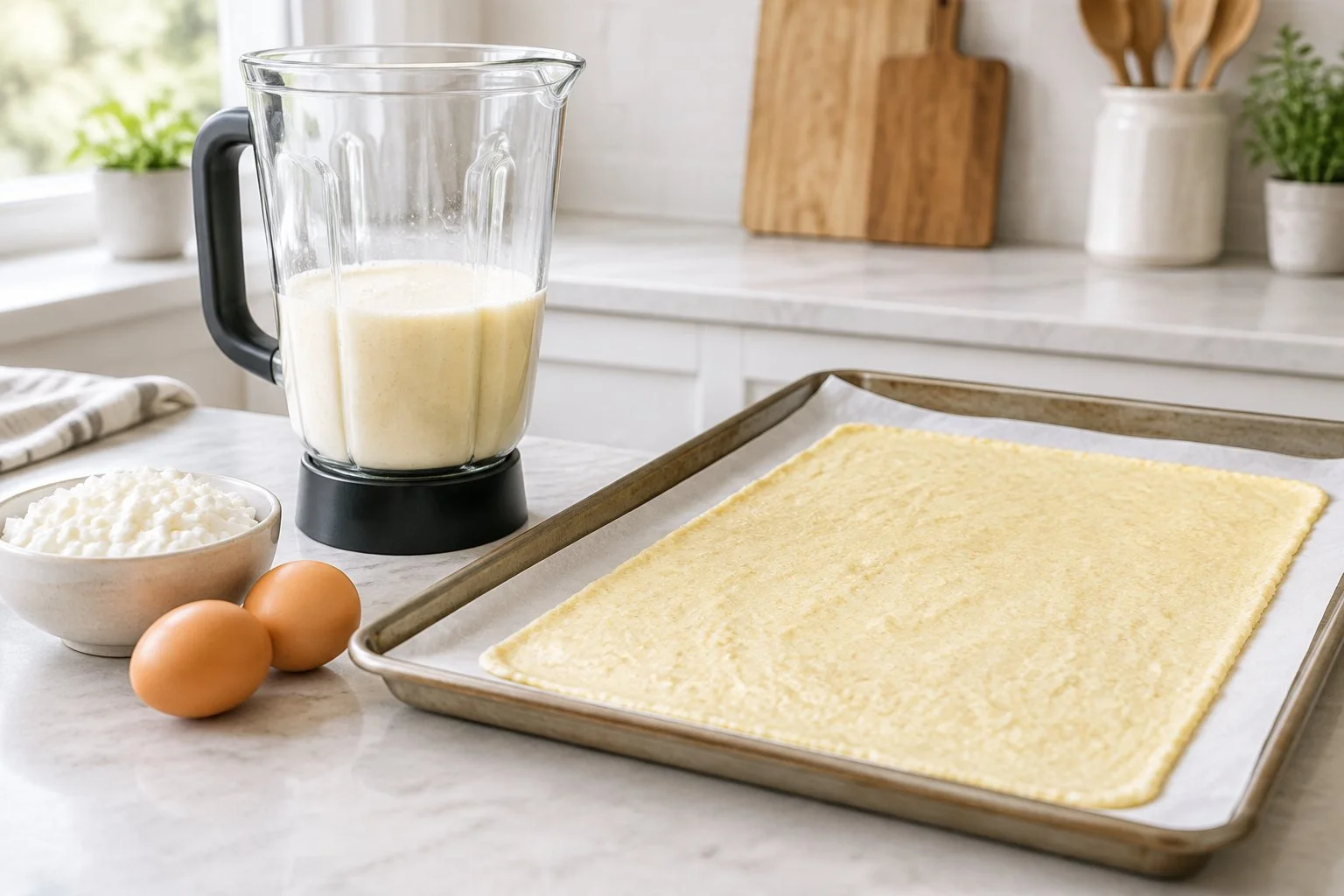
Follow these simple steps to make keto cottage cheese flatbread at home. You only need cottage cheese, eggs, a blender, and a baking sheet. The key is to create a smooth batter, spread it evenly, and bake until the center is fully set.
Step 1: Preheat the Oven
Preheat your oven to 350°F (175°C). Line a flat baking sheet with parchment paper to help prevent sticking. Make sure the paper covers the area where you plan to spread the batter.
Step 2: Blend the Cottage Cheese and Eggs
Add 1 cup of cottage cheese and 2 large eggs to a blender or food processor. Blend for about 30–60 seconds, or until the mixture looks smooth and creamy.
Break up any remaining cottage cheese lumps so the batter has an even texture. If you want extra flavor, add a little garlic powder, Italian seasoning, or black pepper.
Step 3: Spread the Batter Evenly
Pour the mixture onto the parchment-lined baking sheet. Use a spatula to spread it into a rectangle with an even thickness.
Avoid spreading the batter too thin around the edges. Thin edges may become dry or brown before the center finishes cooking.
Step 4: Bake Until the Flatbread Is Set
Place the baking sheet in the preheated oven and bake for approximately 30–40 minutes. Baking time can vary depending on the amount of moisture in the cottage cheese, the thickness of the batter, and your oven.
Look for these signs that your keto flatbread is ready:
- The center looks set rather than wet or liquid.
- The edges are lightly golden.
- The surface feels firm instead of sticky.
If the center still looks wet, continue baking for a few more minutes and check again.
Step 5: Cool Before Removing
Take the flatbread out of the oven and let it cool on the baking sheet for several minutes. This gives it time to firm up and makes it easier to remove without tearing.
Gently lift an edge with a spatula. If it sticks, allow it to cool a little longer before peeling it away from the parchment paper.
Step 6: Cut and Serve
Transfer the cooled cottage cheese flatbread to a cutting board and slice it into your preferred portions.
Use it as a low-carb sandwich bread, fill it with chicken and vegetables for a wrap, or add suitable toppings for a quick flatbread pizza.
Beginner tip: Do not judge the texture while the flatbread is still very hot. It may feel soft straight out of the oven but become firmer as it cools. For the best result, let it rest before folding or cutting it.
Baking Your Flatbread
Baking cottage cheese flatbread at the right temperature helps it cook evenly, hold its shape, and develop lightly golden edges. Since this recipe uses cottage cheese and eggs instead of regular flour, the batter stays moist until it has baked long enough to set.
What Temperature Should You Use?
Preheat your oven to 350°F (175°C) before placing the flatbread inside. Line a baking sheet with parchment paper so you can remove the flatbread more easily after baking.
Spread the blended cottage cheese and egg mixture into an even layer. Keep the thickness consistent across the pan to help the center and edges cook at a similar rate.
How Long Does Cottage Cheese Flatbread Take to Bake?
Bake the flatbread for approximately 30–40 minutes, checking it as it approaches the end of the cooking time. The exact time depends on your oven, the thickness of the batter, and how much moisture is in your cottage cheese.
Look for these signs of doneness:
- Golden edges: The edges should look lightly browned rather than pale and wet.
- Set center: The middle should not look liquid or shiny with uncooked batter.
- Firm surface: The flatbread should feel set when gently touched after it has cooled slightly.
If the center remains wet, return the tray to the oven for a few more minutes and check again.
How to Stop Your Flatbread From Sticking
Parchment paper is helpful because the egg and cottage cheese mixture can stick to a bare baking tray. Spread the batter over the lined surface without leaving very thin patches around the edges.
After baking, let the flatbread rest for several minutes before removing it. If it resists peeling away from the paper, give it more time to cool and gently loosen the edges with a spatula.
Why Cooling Matters
Freshly baked cottage cheese flatbread may feel soft when it first comes out of the oven. Cooling helps the structure firm up, making it easier to cut, fold, or use for sandwiches and wraps.
Avoid folding it immediately while it is hot, as this can cause the flatbread to tear. Once cooled, check its flexibility before filling it with chicken, vegetables, cheese, or other low-carb ingredients.
Baking tip: Use the cooking time as a guide rather than a strict rule. A set center and lightly golden edges are better signs of readiness than the timer alone.
Keto Flatbread
Keto flatbread is a useful alternative to regular wheat bread for people following a low-carb or ketogenic diet. This cottage cheese flatbread uses cottage cheese and eggs instead of flour, creating a simple bread alternative that provides protein without the need for yeast or kneading.
The recipe is easy to prepare at home and works well for lunch, dinner, or meal prep. You can serve it with sandwich fillings, use it as a wrap, or add toppings for a quick flatbread pizza.
What Makes Cottage Cheese Flatbread Suitable for Keto?
The main benefit is that the basic recipe contains no added wheat flour, sugar, or starch. Cottage cheese provides protein, while eggs help bind the mixture during baking.
However, cottage cheese contains some natural carbohydrates, so the flatbread is not automatically carb-free. To check whether it fits your keto diet, calculate the total carbohydrates and net carbs using the nutrition labels on your ingredients and the number of servings you make.
How Does Keto Cottage Cheese Flatbread Taste?
The flatbread has a mild, slightly eggy flavor with a soft texture when baked correctly. Cottage cheese adds a light dairy taste, while seasonings can make it more savory.
For extra flavor, try adding:
- Garlic powder: Gives the flatbread a savory taste.
- Italian seasoning: Works well for sandwiches and pizza-style toppings.
- Black pepper: Adds a gentle, spicy note.
- Grated Parmesan: Adds a salty, cheesy flavor, although it changes the recipe’s nutrition.
Start with small amounts of seasoning so the flavor of the flatbread stays balanced.
How to Use Keto Flatbread in Everyday Meals
You can use cooled cottage cheese flatbread in several ways:
- Fill it with grilled chicken, lettuce, and cucumber for a low-carb lunch.
- Add eggs and cheese for a breakfast sandwich.
- Use it as a base for pizza toppings.
- Serve it alongside soup or a salad.
- Cut it into smaller pieces for a quick snack with a suitable dip.
For the best texture, let the flatbread cool before folding it. If it breaks easily, try spreading the batter more evenly or baking it until the center is fully set.
Keto tip: Check the serving size before adding the flatbread to your meal. Its carbohydrate content depends on the cottage cheese brand, egg size, and portion you eat. This helps you track your daily carbs more accurately while enjoying a homemade bread alternative.
Cottage Cheese Flatbread Pizza

Cottage cheese flatbread pizza is an easy way to turn your homemade keto flatbread into a quick, low-carb meal. Instead of using a traditional wheat-flour pizza crust, you use baked cottage cheese and egg flatbread as the base, then add your favorite pizza toppings.
The key is to bake the flatbread until it is firm enough to hold the toppings. Let it cool slightly before adding sauce and cheese so the base is less likely to tear.
Ingredients for Cottage Cheese Flatbread Pizza
- 1 baked cottage cheese flatbread: Use your prepared flatbread as the pizza base.
- 1–2 tablespoons pizza sauce: Choose a low-carb sauce with no added sugar, and avoid using too much to prevent a soggy crust.
- ¼ cup shredded mozzarella cheese: Adds a familiar cheesy pizza texture.
- Pizza toppings: Try sliced mushrooms, bell peppers, olives, or cooked chicken.
- Italian seasoning: Add a small pinch for extra flavor.
Adjust the amounts to fit the size of your flatbread.
How to Make Cottage Cheese Flatbread Pizza
- Preheat the oven: Set the oven to 375°F (190°C).
- Prepare the base: Place the baked cottage cheese flatbread on a parchment-lined baking sheet.
- Add the sauce: Spread a thin layer of pizza sauce over the surface, leaving a small border around the edges.
- Add cheese and toppings: Sprinkle mozzarella over the sauce, then add your chosen toppings. Make sure any meat is fully cooked before adding it.
- Bake the pizza: Return the flatbread to the oven for about 5–10 minutes, or until the cheese melts and the toppings are hot.
- Cool and serve: Let the pizza rest for a minute or two before slicing. This helps the cheese settle and makes the flatbread easier to handle.
Cooking time may vary depending on the thickness of your flatbread and the amount of toppings you use.
Tips for a Better Keto Flatbread Pizza
- Avoid excess sauce: Too much liquid can soften the flatbread and make it difficult to lift.
- Use moderate toppings: A heavy layer can weigh down the base.
- Choose low-carb ingredients: Check the labels on pizza sauce, cheese, and packaged toppings if you are tracking carbohydrates.
- Use a firm base: If your flatbread is still soft in the center, bake it a little longer before adding the toppings.
Is Cottage Cheese Flatbread Pizza Keto-Friendly?
It can fit into a ketogenic diet if the ingredients and serving size meet your daily carbohydrate target. Cottage cheese, pizza sauce, mozzarella, and toppings all contribute to the total nutrition.
For an accurate estimate, calculate the calories, protein, fat, and total carbohydrates from the ingredients you use. This gives you a clearer picture of how the finished cottage cheese flatbread pizza fits into your meal plan.
What To Eat With Cottage Cheese Flatbread
Keto cottage cheese flatbread pairs well with a variety of low-carb meals, dips, and toppings. Its soft texture makes it a good choice for wraps, sandwiches, and quick snacks. Since this flatbread is made with cottage cheese and eggs instead of regular flour, it can fit into a low-carb meal plan when you keep the ingredients and portion sizes in mind.
Best Foods to Serve With Cottage Cheese Flatbread
- Grilled chicken: Add sliced grilled chicken, lettuce, cucumber, and a little mayonnaise to make a filling low-carb wrap.
- Scrambled eggs: Serve the flatbread with scrambled eggs and avocado for a simple breakfast.
- Tuna salad: Fill it with tuna, mayonnaise, celery, and black pepper for an easy lunch.
- Fresh vegetables: Pair it with lettuce, spinach, tomatoes, bell peppers, or cucumber for extra freshness.
- Cheese and avocado: Spread mashed avocado over the flatbread and add shredded cheddar or mozzarella for a creamy snack.
- Keto-friendly dips: Serve it with garlic dip, cream cheese spread, or a low-carb herb dip.
- Grilled vegetables: Add cooked zucchini, mushrooms, or bell peppers for a flavorful side or filling.
Use Cottage Cheese Flatbread for Wraps and Sandwiches
Once the flatbread has cooled, add your favorite fillings and fold it gently. Chicken, turkey, eggs, tuna, cheese, and leafy greens all work well. If your flatbread feels firm, warm it briefly before adding the filling to make it easier to fold.
For a quick meal, spread cream cheese over the flatbread, add cooked chicken and spinach, then roll it into a wrap. You can also cut it into smaller pieces and serve it with a dip.
What to Serve With Keto Flatbread
For a balanced low-carb meal, serve cottage cheese flatbread with a protein source, vegetables, and a suitable dip. Check the nutrition labels on sauces, dressings, and spreads because some contain added sugar or extra carbohydrates.
Tip: Store leftover flatbread in an airtight container in the refrigerator and add fresh fillings just before serving. This helps prevent the flatbread from becoming soggy.
How to Store Cottage Cheese Flatbread
Proper storage helps keep your keto cottage cheese flatbread fresh, soft, and ready for your next meal. Since this flatbread is made with cottage cheese and eggs, it needs refrigeration and should not be left at room temperature for long periods.
How to Store Flatbread in the Refrigerator
- Let it cool completely: Allow the baked cottage cheese flatbread to cool before storing it. Packing it while warm can trap steam and make it soggy.
- Use an airtight container: Place the flatbread in an airtight food container or a sealed storage bag to help maintain its texture.
- Separate the pieces: If you are storing several pieces, place parchment paper between them to prevent sticking.
- Refrigerate promptly: Store the flatbread in the refrigerator at 40°F (4°C) or below and use it within 3–4 days.
Keep the flatbread plain until you are ready to eat it. Adding pizza sauce, vegetables, or other wet fillings before storage can make it softer and harder to handle.
Can You Freeze Cottage Cheese Flatbread?
Yes, you can freeze cottage cheese flatbread if you want to prepare it ahead of time. Freezing is a useful option for meal prep and reducing food waste.
- Let the flatbread cool completely after baking.
- Cut it into individual portions if needed.
- Place parchment paper between each piece to prevent them from sticking together.
- Store the pieces in a freezer-safe bag or airtight container.
- Label the container with the date and freeze at 0°F (-18°C) or below.
For the best quality, use frozen flatbread within 2–3 months. It may become slightly softer after thawing because cottage cheese contains moisture.
How to Reheat Stored Flatbread
You can reheat refrigerated or thawed cottage cheese flatbread using an oven, skillet, or microwave.
- Oven: Heat at 325°F (165°C) for about 5–10 minutes, checking until warmed through.
- Skillet: Warm over low to medium heat for 1–2 minutes per side.
- Microwave: Heat in short 15–20-second intervals. This is quick, but the flatbread may become softer.
For a firmer texture, use the oven or skillet instead of the microwave. If the flatbread is frozen, thaw it in the refrigerator before reheating.
Food safety tip: Refrigerate cooked flatbread within two hours of baking, or within one hour if the room temperature is above 90°F (32°C). Discard it if it has been left out too long or shows signs of spoilage, such as an unusual smell, mold, or a slimy texture.
Is Cottage Cheese Flatbread Keto Friendly?
Yes, cottage cheese flatbread can be keto-friendly because the basic recipe uses cottage cheese and eggs instead of regular wheat flour. It contains protein and fat, with fewer carbohydrates than many traditional flatbreads. However, whether it fits your keto diet depends on the ingredients, serving size, and your daily carbohydrate limit.
Why Cottage Cheese Flatbread Can Fit a Keto Diet
- No regular flour: The basic two-ingredient recipe does not need wheat flour, which helps keep carbohydrates lower.
- Good source of protein: Cottage cheese and eggs provide protein to help support muscle maintenance and keep you feeling satisfied.
- Low in added carbohydrates: The basic recipe contains no added sugar or starch.
- Easy to customize: You can add keto-friendly seasonings, cheese, or low-carb toppings without using high-carb ingredients.
How Many Carbs Are in Keto Cottage Cheese Flatbread?
Cottage cheese contains natural carbohydrates, mainly in the form of lactose, so this flatbread is not completely carb-free. The exact carbohydrate content depends on the type and brand of cottage cheese, the size of the eggs, and how many portions you make.
For example, if you make one flatbread using 1 cup of cottage cheese and 2 large eggs, check the nutrition labels to calculate the total carbohydrates in the recipe. Divide that amount by the number of servings to estimate the carbs per serving.
Net carbs are calculated by subtracting dietary fiber from total carbohydrates. Since the basic recipe contains little or no fiber, its net carbs may be close to its total carbs.
How to Keep Cottage Cheese Flatbread Keto-Friendly
Follow these simple tips to keep your flatbread suitable for a low-carb meal plan:
- Choose plain cottage cheese without added sugar or unnecessary carbohydrate-rich ingredients.
- Check the nutrition label for total carbohydrates per serving.
- Avoid adding regular flour, breadcrumbs, or cornstarch unless you have calculated how they affect the carb count.
- Use low-carb toppings such as eggs, grilled chicken, spinach, avocado, or mozzarella cheese.
- Choose pizza sauce, dips, and dressings with little or no added sugar.
- Keep track of portion sizes to stay within your daily carbohydrate target.
Is Cottage Cheese Flatbread Better Than Regular Bread for Keto?
Cottage cheese flatbread can be a useful alternative to regular bread because its basic recipe replaces flour with cottage cheese and eggs. Traditional wheat bread usually contains more carbohydrates per serving, but the actual difference depends on the products and portion sizes being compared.
Bottom line: Cottage cheese flatbread can fit a ketogenic diet, but it is not automatically carb-free. Check the nutrition information, calculate the carbohydrates per serving, and choose low-carb fillings and toppings to keep your meal aligned with your keto goals.
Cottage Cheese Flatbread Nutrition Facts and Net Carbs
Cottage cheese flatbread is a high-protein, low-carb alternative to traditional flour-based flatbread. Its nutrition facts depend on the cottage cheese brand, egg size, portion size, and any extra ingredients you add. The basic two-ingredient recipe contains cottage cheese and eggs, with no added flour or sugar.
Cottage Cheese Flatbread Nutrition Facts
The following table gives an approximate nutritional estimate for a flatbread made with 1 cup of cottage cheese and 2 large eggs. The figures are illustrative and can vary by brand, especially depending on whether you use full-fat, low-fat, or fat-free cottage cheese.
| Nutrient | Approximate amount for the whole recipe |
| Calories | 250–350 |
| Protein | 28–35 g |
| Total carbohydrates | 8–12 g |
| Dietary fiber | 0 g |
| Net carbohydrates | 8–12 g |
| Fat | 10–20 g |
These estimates are for the entire recipe, not one serving. If you divide the flatbread into two equal portions, divide each value by two. For the most accurate results, use the nutrition labels on your cottage cheese and eggs.
How Many Net Carbs Are in Cottage Cheese Flatbread?
The basic cottage cheese flatbread recipe contains approximately 8–12 grams of net carbs per whole recipe, although the exact amount depends on the ingredients used.
Net carbs are the carbohydrates your body can digest, calculated by subtracting dietary fiber from total carbohydrates.
Net carbs = Total carbohydrates − Dietary fiber
For example, if your flatbread contains 10 grams of total carbohydrates and 0 grams of fiber, it has 10 grams of net carbs.
Because the basic recipe contains little or no fiber, its net carb count is usually close to its total carbohydrate count.
Does Full-Fat or Low-Fat Cottage Cheese Change the Nutrition?
Yes. The type of cottage cheese affects the calories, fat, and sometimes the carbohydrate and protein content of your flatbread.
- Full-fat cottage cheese: Usually provides more fat and calories, which may help you feel satisfied for longer.
- Low-fat cottage cheese: Usually contains less fat and fewer calories while still providing protein.
- Fat-free cottage cheese: Often has fewer calories, but its texture and nutritional values vary by brand.
Always check the nutrition label rather than assuming that every cottage cheese product has the same carbohydrate content.
How to Calculate Nutrition Per Serving
To calculate the nutrition facts for your homemade keto cottage cheese flatbread:
- Check the nutrition labels for your cottage cheese and eggs.
- Add the calories, protein, fat, total carbohydrates, and fiber from all ingredients.
- Subtract dietary fiber from total carbohydrates to calculate net carbs.
- Divide each total by the number of servings.
For example, if the whole recipe contains 10 grams of net carbs and you cut it into two equal servings, each serving contains approximately 5 grams of net carbs.
Tip: If you add mozzarella, pizza sauce, almond flour, or other toppings, include their nutrition values in your calculation. This gives you a more accurate picture of the calories, protein, fat, and net carbs in your finished flatbread.
How to Make Cottage Cheese Flatbread Soft and Flexible
To make cottage cheese flatbread soft and flexible, blend the cottage cheese and eggs until smooth, spread the mixture evenly, and avoid overbaking it. The goal is to create a flatbread that holds together well and bends easily for wraps, sandwiches, and other low-carb meals.
1. Blend the Ingredients Until Smooth
Use a blender or food processor to mix 1 cup of cottage cheese with 2 large eggs. Blend for about 30–60 seconds, or until the mixture has a smooth, even texture.
Large cottage cheese curds can leave lumps in the batter, which may cause uneven baking. A smooth mixture helps the flatbread cook evenly and gives it a more consistent texture.
2. Spread the Batter Evenly
Line a baking sheet with parchment paper and spread the mixture into a thin, even rectangle.
- Aim for an even thickness across the entire flatbread.
- Avoid spreading the batter too thin, as it can become dry and brittle.
- Avoid thick patches, which may stay soft or wet in the center.
An even layer helps the edges and middle finish baking at roughly the same time.
3. Avoid Overbaking
Bake the flatbread at 350°F (175°C) for about 30–40 minutes, checking it as it approaches the end of the baking time. The exact time depends on your oven and the thickness of the batter.
Look for a set center and lightly golden edges. The flatbread should be cooked through but should not look excessively dark, dry, or crisp.
Overbaking removes too much moisture, making the flatbread stiff and more likely to crack when folded.
4. Let the Flatbread Cool Before Removing It
After baking, allow the cottage cheese flatbread to cool on the baking sheet for several minutes. This gives it time to firm up and makes it easier to lift from the parchment paper.
Use a thin spatula to loosen the edges before removing the whole piece. Trying to peel it off while it is very hot can cause tearing.
5. Choose the Right Cottage Cheese
The type of cottage cheese can affect moisture, texture, and flexibility.
- Full-fat cottage cheese: May produce a richer, softer texture.
- Low-fat cottage cheese: Can also work well, although results vary by brand.
- Watery cottage cheese: Excess liquid may make the center take longer to set.
If your cottage cheese has a large amount of separated whey, drain the excess liquid before blending. Do not remove all the moisture, because the ingredients need enough liquid to form a smooth batter.
6. Warm the Flatbread Before Making a Wrap
If your flatbread has cooled and feels firm, warm it briefly in a skillet over low heat or in the microwave for a few seconds. This may make it easier to bend without cracking.
Add fillings such as grilled chicken, scrambled eggs, avocado, spinach, or cheese after warming. Avoid overfilling the flatbread, as too much filling can cause it to split.
Common Mistakes That Make Flatbread Stiff
- Baking it for too long: Check for doneness instead of relying only on the timer.
- Spreading the batter too thin: Leave enough thickness for the flatbread to hold together.
- Using too much liquid: Drain excess whey if the cottage cheese is very watery.
- Removing it too early: Allow the center to set and cool slightly before lifting.
- Folding it while cold: Warm it gently before using it as a wrap.
Best tip: For soft, flexible keto cottage cheese flatbread, focus on a smooth batter, even thickness, and careful baking. Since this recipe contains no traditional flour, its texture will differ from wheat tortillas, but these steps can help it bend more easily without breaking.
Why Is My Cottage Cheese Flatbread Soggy?
Cottage cheese flatbread can turn soggy when the mixture contains too much moisture, the batter is spread too thickly, or the flatbread is underbaked. Since the basic recipe uses cottage cheese and eggs without flour, getting the moisture level and baking time right is important for a firm, flexible texture.
1. Your Cottage Cheese Contains Too Much Liquid
Cottage cheese naturally contains moisture, and some brands have more separated whey than others. Excess liquid can make the flatbread wet in the center, even when the edges look cooked.
How to fix it: If your cottage cheese looks watery, drain the excess whey before blending it with the eggs. You do not need to remove all the moisture. Use a consistent amount of cottage cheese so the batter does not become too runny.
2. The Flatbread Is Undercooked
If the middle feels wet, sticky, or soft while the edges are already golden, the flatbread may need more time in the oven.
How to fix it: Bake at 350°F (175°C) for about 30–40 minutes, checking the center before removing it. If the middle is still wet, continue baking for a few more minutes and check again. Oven temperatures and batter thickness can affect the cooking time.
3. The Batter Is Spread Too Thickly
A thick layer takes longer to cook through. The edges may become firm while the center stays damp.
How to fix it: Spread the cottage cheese and egg mixture into an even layer on a parchment-lined baking sheet. Keep the thickness consistent so the flatbread cooks evenly from edge to center.
4. You Added Wet Toppings Too Soon
Ingredients such as pizza sauce, fresh tomatoes, and watery vegetables can release moisture onto baked cottage cheese flatbread. This can make the surface soft, especially if the flatbread is stored with the toppings.
How to fix it: Let the flatbread finish baking and cool slightly before adding fillings. Drain cooked vegetables, use a moderate amount of sauce, and add fresh toppings just before serving.
5. You Stored the Flatbread While It Was Warm
Placing warm flatbread in an airtight container traps steam. That moisture can collect on the surface and make the flatbread soggy.
How to fix it: Let the flatbread cool before storing it. Place it in an airtight container and refrigerate it promptly, within two hours of cooking. If stacking pieces, separate them with parchment paper.
How to Fix Cottage Cheese Flatbread That Is Already Soggy
If your flatbread is cooked through but still feels too moist, try these steps:
- Return it to the oven at 325–350°F (165–175°C) for a few minutes to help release excess moisture.
- Place it in a dry skillet over low to medium heat to firm up the surface.
- Let it rest briefly after reheating so excess steam can escape.
If the center is still raw or wet, continue cooking until it is fully set. Do not eat flatbread that has been left at room temperature for too long or shows signs of spoilage.
Best tip: For a less soggy keto cottage cheese flatbread, start with cottage cheese that is not overly watery, spread the batter evenly, and bake until the center is set. Allow it to cool before storing or adding wet fillings.
Why Does Cottage Cheese Flatbread Fall Apart?
Cottage cheese flatbread usually falls apart when it is too thin, underbaked, overbaked, or removed from the baking sheet before it has cooled enough to hold together. Since this keto flatbread uses cottage cheese and eggs instead of regular flour, its texture is different from traditional bread or wheat tortillas. The right ingredient ratio, baking time, and cooling method can help it stay intact.
1. The Flatbread Is Too Thin
Spreading the cottage cheese and egg mixture too thinly can make the flatbread fragile. Thin edges may dry out during baking, causing them to crack when you lift or fold the flatbread.
How to fix it: Spread the batter into an even layer on a parchment-lined baking sheet. Avoid making the edges much thinner than the center, and leave enough thickness for the flatbread to hold together.
2. The Flatbread Is Undercooked
If the center has not set properly, the flatbread may tear or break when you remove it from the parchment paper. The outside can look cooked while the middle remains soft and weak.
How to fix it: Bake at 350°F (175°C) for about 30–40 minutes, depending on the thickness and your oven. Check that the center is set before taking it out. If it still looks wet, continue baking for a few more minutes.
3. The Flatbread Is Overbaked
Baking the flatbread for too long can remove too much moisture. This makes the edges dry, brittle, and more likely to crack when folded into a wrap.
How to fix it: Watch the flatbread near the end of the baking time. Remove it when the center is set and the edges are lightly golden rather than dark and crisp.
4. You Remove It While It Is Too Hot
Freshly baked cottage cheese flatbread can be delicate. Pulling it off the baking sheet immediately may cause it to tear, especially if it is still soft in the center.
How to fix it: Let the flatbread rest on the baking sheet for several minutes. Loosen the edges with a thin spatula, then lift it carefully once it has firmed up.
5. The Cottage Cheese Contains Too Much Moisture
Excess whey in cottage cheese can make the batter too wet. A mixture with too much liquid may struggle to set evenly, leaving the finished flatbread weak or difficult to handle.
How to fix it: If your cottage cheese looks watery, drain the excess whey before blending. Blend the cottage cheese and eggs until smooth, but do not add extra liquid to the mixture.
6. You Try to Fold It Like a Regular Tortilla
Cottage cheese flatbread does not contain the gluten found in wheat flour, so it will not have the same stretch as a traditional tortilla. Trying to fold it sharply or overfilling it can cause cracks.
How to fix it: Warm the flatbread briefly in a skillet or microwave before folding. Add moderate amounts of filling, such as grilled chicken, eggs, avocado, spinach, or cheese. Fold it gently rather than bending it sharply.
How to Keep Cottage Cheese Flatbread From Breaking
For the best results, follow these simple tips:
- Use the correct amounts of cottage cheese and eggs.
- Blend the ingredients until the mixture is smooth.
- Spread the batter evenly without making it too thin.
- Bake until the center is fully set.
- Let the flatbread cool slightly before removing it from the parchment paper.
- Warm it gently before using it as a wrap.
- Avoid adding too much filling or wet sauce.
Best tip: If your cottage cheese flatbread keeps falling apart, check the center first. A properly baked flatbread that has cooled slightly is easier to lift and handle. Remember that this flourless, low-carb flatbread will be more delicate than a regular wheat tortilla, but careful baking and gentle handling can help it hold together.
Best Cottage Cheese for Keto Flatbread
The best cottage cheese for keto flatbread is plain cottage cheese with a smooth texture, a suitable moisture level, and no added sugar. Both full-fat and low-fat cottage cheese can work well in this simple two-ingredient recipe. Your choice affects the flatbread’s flavor, texture, calories, fat, and carbohydrate content.
1. Full-Fat Cottage Cheese
Full-fat cottage cheese is a good choice if you want a richer flavor and a more satisfying flatbread. It contains more fat than low-fat varieties, although the exact nutrition depends on the brand.
- Best for: Rich flavor and a higher-fat keto meal.
- Texture: Can produce a tender flatbread, depending on its moisture content.
- Nutrition: Usually has more calories and fat than low-fat cottage cheese.
Choose plain, unsweetened cottage cheese and check the nutrition label for total carbohydrates per serving.
2. Low-Fat Cottage Cheese
Low-fat cottage cheese also works well for keto cottage cheese flatbread. It provides protein while usually containing fewer calories and less fat than the full-fat version.
- Best for: People who want to reduce calories or fat.
- Texture: Can produce a good flatbread, although results vary by brand.
- Nutrition: Compare protein and carbohydrate values on the label before buying.
You do not need full-fat cottage cheese to make this recipe work. The egg-to-cottage-cheese ratio and baking method also affect the final texture.
3. Small-Curd or Large-Curd Cottage Cheese
Both small-curd and large-curd cottage cheese can be used for flatbread. The main difference is the size of the curds, not whether the product is suitable for keto.
- Small-curd cottage cheese: May blend more easily into a smooth mixture.
- Large-curd cottage cheese: Works well when blended thoroughly in a blender or food processor.
For the smoothest batter, blend the cottage cheese with the eggs until no large curds remain. This helps the flatbread bake more evenly.
4. Choose Cottage Cheese With the Right Moisture Level
Cottage cheese naturally contains liquid, often called whey. A product with excessive separated liquid can make your flatbread batter watery and may affect how well it sets.
Look for cottage cheese that is creamy but not excessively watery. If there is a large amount of liquid in the container, drain the excess before blending. Avoid removing all the moisture, as the mixture still needs enough liquid to combine smoothly with the eggs.
What to Check on the Nutrition Label
If you are making keto cottage cheese flatbread, compare these details before choosing a product:
- Total carbohydrates: Choose a product that fits your daily carb target.
- Added sugar: Plain cottage cheese without added sugar is a suitable option.
- Protein: Cottage cheese naturally provides protein, which contributes to the recipe’s nutritional value.
- Fat and calories: Choose full-fat or low-fat according to your meal plan.
- Serving size: Check the amount listed on the package so you can calculate the nutrition for your recipe accurately.
Which Cottage Cheese Is Best for Keto Flatbread?
For most home cooks, plain full-fat or low-fat cottage cheese with moderate moisture and no added sugar is a practical choice. The brand matters less than the product’s nutrition, consistency, and how well it blends.
For the basic recipe, use 1 cup of cottage cheese with 2 large eggs. Blend until smooth, spread evenly on a parchment-lined baking sheet, and bake at 350°F (175°C) until the center is set.
Tip: If your first batch turns out too wet or fragile, try draining excess whey or using a cottage cheese brand with a thicker consistency before changing the recipe.
Cottage Cheese Flatbread Variations and Substitutions
One of the best things about cottage cheese flatbread is how easy it is to customize. The basic recipe uses just two ingredients—cottage cheese and eggs—but you can change the flavor, add seasonings, or adjust the toppings to suit your taste. These variations work well for keto meals, low-carb lunches, wraps, and homemade flatbread pizza.
1. Garlic and Herb Cottage Cheese Flatbread
Add extra flavor to your flatbread with simple dried herbs and spices.
Ingredients to add:
- ½ teaspoon garlic powder
- ½ teaspoon Italian seasoning
- A pinch of black pepper
- A small pinch of salt, if needed
Blend the cottage cheese and eggs until smooth, then mix in the seasonings. Spread the batter on a parchment-lined baking sheet and bake as usual.
This savory version pairs well with grilled chicken, scrambled eggs, cream cheese, or a low-carb dipping sauce.
2. Cheesy Cottage Cheese Flatbread
For a richer flavor, add a small amount of shredded mozzarella or cheddar cheese to the mixture.
Start with 2–3 tablespoons of shredded cheese and blend or stir it into the batter. Bake until the center is set and the edges are lightly golden.
Cheese adds flavor and changes the nutrition values, so include it when calculating calories, protein, fat, and net carbs.
3. Italian-Style Cottage Cheese Flatbread
Italian seasoning makes this flatbread a good base for pizza-inspired meals and Mediterranean fillings.
Try adding:
- Garlic powder
- Dried oregano
- Dried basil
- Black pepper
After baking, top the flatbread with a small amount of low-carb pizza sauce, mozzarella, mushrooms, or cooked chicken. Return it to the oven until the cheese melts.
Avoid adding too much sauce because excess moisture can make the flatbread soggy.
4. Spicy Cottage Cheese Flatbread
If you enjoy a little heat, add chili flakes, cayenne pepper, or a small amount of paprika to the batter.
Start with a pinch and adjust the seasoning to your preference. Serve the finished flatbread with grilled chicken, eggs, avocado, or a creamy dip to balance the spicy flavor.
These seasonings add flavor without significantly changing the carbohydrate content in typical amounts.
5. Can You Make Cottage Cheese Flatbread Without Eggs?
Eggs help bind the cottage cheese mixture and give the flatbread structure. Replacing them can change how well the flatbread sets and holds together.
There is no guaranteed one-to-one substitute that produces the same texture in this two-ingredient recipe. If you need an egg-free version, use a tested recipe specifically developed without eggs rather than simply removing them.
6. Can You Use Ricotta Instead of Cottage Cheese?
Ricotta cheese may work in a modified flatbread recipe, but it has a different texture and moisture level from cottage cheese. The finished result may be softer or more delicate.
If you try ricotta, choose a thick variety and check whether it contains excess liquid. You may need to adjust the recipe, and the nutrition values will differ from those of cottage cheese flatbread.
7. Can You Add Almond Flour or Coconut Flour?
Yes, almond flour or coconut flour can be used in some modified flatbread recipes, but they are not direct replacements for cottage cheese. Both absorb moisture differently, and coconut flour is especially absorbent.
The original cottage cheese and egg recipe does not require flour. If you want to add almond flour or coconut flour, follow a tested recipe with measured quantities to avoid a dry, crumbly, or overly thick flatbread.
8. How to Keep Your Variations Keto-Friendly
If you are following a ketogenic diet, keep these tips in mind:
- Choose plain cottage cheese without added sugar.
- Use low-carb seasonings, herbs, and spices.
- Check the carbohydrate content of cheese, sauces, and other additions.
- Measure flour substitutes carefully because they change the recipe’s texture and nutrition.
- Calculate net carbs using the nutrition labels for all ingredients.
Best tip: Start with the basic two-ingredient cottage cheese flatbread recipe, then add one or two seasonings at a time. This makes it easier to control the flavor and texture while keeping the flatbread suitable for your preferred meal plan.
How to Freeze and Reheat Cottage Cheese Flatbread
Freezing cottage cheese flatbread is an easy way to prepare keto-friendly meals ahead of time. You can make a batch, freeze individual portions, and reheat them whenever you need a quick wrap, sandwich, or low-carb snack. Proper storage helps prevent the flatbread from sticking together and keeps its texture as good as possible.
How to Freeze Cottage Cheese Flatbread
Follow these simple steps to freeze homemade cottage cheese flatbread:
- Let it cool completely. After baking, allow the flatbread to cool on the baking sheet. Freezing it while warm can create condensation and ice crystals.
- Cut it into portions. Divide the flatbread into pieces that suit your usual meals. Smaller portions are easier to thaw and reheat.
- Separate each piece. Place parchment paper between the pieces to prevent them from sticking together.
- Use a freezer-safe container. Place the portions in an airtight container or freezer bag. Remove as much excess air as possible to help prevent freezer burn.
- Label and freeze. Write the freezing date on the container and store the flatbread in the freezer at 0°F (-18°C) or below.
For the best quality, use frozen cottage cheese flatbread within 2–3 months. It may remain safe longer when continuously frozen at the correct temperature, but its texture and flavor can decline over time.
How to Thaw Frozen Cottage Cheese Flatbread
You can thaw frozen flatbread in the refrigerator before reheating it.
- Remove the number of portions you need from the freezer.
- Keep them covered in the refrigerator until thawed.
- Separate the pieces carefully before warming them.
Thawing in the refrigerator helps the flatbread warm more evenly. Avoid leaving it on the counter for several hours to thaw.
You can also reheat small portions directly from frozen, although they may need extra time.
Best Ways to Reheat Cottage Cheese Flatbread
The best reheating method depends on whether you want a soft flatbread for wraps or a firmer surface for serving with toppings.
6 ways to heat food without a microwave oven
- Skillet — best for a firmer texture
Heat a dry skillet over low to medium heat. Warm the flatbread for about 1–2 minutes per side, checking until heated through. This method can help restore a firmer surface without making it too dry.
- Oven — best for several portions
Preheat the oven to 325°F (165°C). Place the flatbread on a baking sheet and warm it for about 5–10 minutes, checking regularly. Allow extra time for frozen portions.
- Microwave — best for a quick meal
Place one portion on a microwave-safe plate and heat for 15–20 seconds at a time until warm. Add more time as needed. The flatbread may become softer, so avoid overheating it.
Tips for Maintaining the Best Texture
- Freeze the flatbread plain, without pizza sauce or other wet toppings.
- Use parchment paper between portions to make separating them easier.
- Reheat only the amount you plan to eat.
- Warm the flatbread gently to prevent it from becoming dry or brittle.
- Add fresh fillings, sauces, and vegetables after reheating.
Can You Refreeze Cottage Cheese Flatbread?
For the best quality, avoid repeatedly thawing and refreezing the flatbread. Freeze it in individual portions so you can take out only what you need. If it has thawed in the refrigerator but has remained safely chilled, refreezing may be possible, although the texture can suffer.
Discard flatbread that has been left at room temperature for more than two hours, or more than one hour when temperatures exceed 90°F (32°C).
Best tip: Freeze cottage cheese flatbread in separate portions with parchment paper between each piece. Reheat it in a skillet for a firmer finish or in the microwave for a quick, soft wrap.
Common Mistakes to Avoid When Making Cottage Cheese Flatbread
Cottage cheese flatbread is easy to make with just cottage cheese and eggs, but a few small mistakes can affect its texture. Your flatbread may turn out soggy, break apart, stick to the baking sheet, or become too dry. These simple tips can help you make a well-baked, flexible flatbread that works for keto wraps, sandwiches, and pizza.
1. Using Cottage Cheese With Too Much Liquid
Cottage cheese contains moisture, and some brands have more separated whey than others. Too much liquid can make the batter watery and leave the center soft or soggy.
How to avoid it: Check your cottage cheese before blending. If it looks excessively watery, drain the extra whey while keeping enough moisture for a smooth mixture.
2. Not Blending the Ingredients Properly
Large cottage cheese curds can leave lumps in the batter. This may lead to an uneven texture and make the flatbread harder to handle.
How to avoid it: Blend 1 cup of cottage cheese with 2 large eggs for about 30–60 seconds, or until the mixture is smooth. A blender or food processor works well for this step.
3. Spreading the Batter Unevenly
If one part of the flatbread is thick and another is thin, they will cook at different rates. Thin edges may become brittle while the center remains undercooked.
How to avoid it: Spread the batter evenly on a parchment-lined baking sheet. Keep the thickness consistent across the entire flatbread.
4. Baking at the Wrong Temperature
An oven that is too hot can dry out the edges before the middle is fully cooked. A temperature that is too low may leave the flatbread soft and wet.
How to avoid it: Preheat your oven to 350°F (175°C). Bake for approximately 30–40 minutes, adjusting the time based on your oven and the thickness of the batter.
5. Removing the Flatbread Before It Is Fully Cooked
The flatbread may look golden around the edges while the center is still wet. Removing it too early can cause tearing when you lift it from the parchment paper.
How to avoid it: Check that the center is set and no longer looks wet. If needed, bake it for a few more minutes and check again.
6. Overbaking the Flatbread
Leaving cottage cheese flatbread in the oven for too long can remove too much moisture. This makes it dry, stiff, and more likely to crack when folded.
How to avoid it: Start checking near the end of the recommended baking time. Look for a set center and lightly golden edges rather than waiting for the entire surface to become dark and crisp.
7. Skipping the Parchment Paper
Cottage cheese flatbread can stick to a baking sheet, especially if the mixture is moist. Pulling it off a bare tray may tear the flatbread.
How to avoid it: Line your baking sheet with parchment paper before spreading the batter. Let the flatbread cool slightly, then loosen the edges with a thin spatula before lifting it.
8. Trying to Fold It While It Is Too Hot or Cold
Freshly baked flatbread can be delicate, while refrigerated flatbread may feel firmer and crack when folded.
How to avoid it: Let the flatbread rest for several minutes after baking. If it has been refrigerated, warm it briefly in a skillet or microwave before making a wrap.
9. Adding Too Much Sauce or Filling
Wet toppings such as pizza sauce, tomatoes, and watery vegetables can make the flatbread soggy. Heavy fillings may also cause it to split.
How to avoid it: Use a moderate amount of sauce and drain cooked vegetables before adding them. Fill the flatbread with manageable portions of chicken, eggs, cheese, avocado, or leafy greens.
10. Changing the Recipe Without Adjusting the Ingredients
Adding almond flour, coconut flour, extra eggs, or other ingredients can change the moisture level and structure of the original two-ingredient recipe. These additions may produce a dry, thick, or crumbly flatbread if the quantities are not balanced.
How to avoid it: Start with the basic recipe of 1 cup cottage cheese and 2 large eggs. If you want to add flour or other ingredients, use a tested variation with measured quantities rather than guessing.
11. Storing the Flatbread While It Is Still Warm
Warm flatbread releases steam. If you seal it in an airtight container immediately, trapped moisture can make it soggy.
How to avoid it: Let the flatbread cool before storing it. Place it in an airtight container, separate stacked pieces with parchment paper, and refrigerate promptly.
Quick Checklist for Better Cottage Cheese Flatbread
Before baking your next batch, check these key steps:
- Use the correct amounts of cottage cheese and eggs.
- Drain excess whey if the cottage cheese is very watery.
- Blend until the batter is smooth.
- Spread the mixture in an even layer.
- Bake at 350°F (175°C) until the center is set.
- Use parchment paper to prevent sticking.
- Let the flatbread cool slightly before removing it.
- Store leftovers properly and reheat gently before serving.
Final tip: Most cottage cheese flatbread problems come from excess moisture, uneven thickness, or incorrect baking time. Get these three things right, and your homemade keto flatbread is more likely to turn out firm enough to handle while remaining soft enough for wraps and sandwiches.
Conclusion
Keto cottage cheese flatbread is a simple way to add variety to low-carb meals without relying on traditional flour-based bread. The basic combination of cottage cheese and eggs keeps the ingredient list short, while seasonings, cheese, and suitable fillings let you change the flavor to match your preferences.
In practice, the most useful things to pay attention to are the moisture in your cottage cheese, the thickness of the batter, and the baking time. These details can make the difference between a flatbread that holds together and one that turns soggy or breaks when folded.
For the best results, start with the basic two-ingredient recipe, follow the baking instructions, and make small adjustments only after you see how your first batch turns out. Store leftovers safely in the refrigerator or freeze individual portions for later meals.
Remember that the carbohydrate content varies by brand and serving size, so check your ingredients if you are tracking net carbs for a ketogenic diet. With a little practice, you can find a version that works well for your wraps, sandwiches, and flatbread pizzas.
Frequently Asked Questions About Keto Cottage Cheese Flatbread
1. Is cottage cheese flatbread keto-friendly?
Yes, cottage cheese flatbread can fit a ketogenic diet because the basic recipe uses cottage cheese and eggs instead of regular flour. However, cottage cheese contains natural carbohydrates, so check the nutrition label and calculate the net carbs per serving to make sure it fits your daily carb limit.
2. How many carbs are in cottage cheese flatbread?
The total carbohydrates depend on the cottage cheese brand, egg size, and serving size. A flatbread made with 1 cup of cottage cheese and 2 large eggs may contain approximately 8–12 grams of total carbohydrates for the entire recipe. Check your ingredient labels for a more accurate estimate.
3. Can I make cottage cheese flatbread with only two ingredients?
Yes. The basic recipe requires just 1 cup of cottage cheese and 2 large eggs. Blend them until smooth, spread the mixture on a parchment-lined baking sheet, and bake at 350°F (175°C) for about 30–40 minutes, or until the center is set.
4. Do I need a blender to make cottage cheese flatbread?
A blender or food processor is recommended because it breaks down the cottage cheese curds and creates a smooth batter. Without one, you can mash the cottage cheese thoroughly and whisk it with the eggs, but the texture may be less even.
5. Why is my keto cottage cheese flatbread soggy in the middle?
A soggy center usually means the batter contains too much moisture or the flatbread needs more baking time. Drain excess whey from watery cottage cheese, spread the batter evenly, and bake until the center is set. Avoid storing the flatbread while it is still warm.
6. Why does my cottage cheese flatbread break when I fold it?
The flatbread may be underbaked, overbaked, too thin, or too cold. Let it cool slightly after baking, and warm refrigerated flatbread briefly before folding. Keep the batter evenly spread and avoid baking it until the edges become too dry and brittle.
7. Can I use full-fat or low-fat cottage cheese?
Yes, both full-fat and low-fat cottage cheese work in this recipe. Full-fat cottage cheese usually provides more fat and calories, while low-fat varieties generally contain less. The moisture level and nutrition values vary by brand, so check the label before choosing.
8. Can I add almond flour or coconut flour?
You can use almond flour or coconut flour in a modified recipe, but neither is a direct replacement for cottage cheese. These flours absorb moisture differently and can change the flatbread’s texture. Follow a tested recipe with measured quantities for the best results.
9. Can I make cottage cheese flatbread without eggs?
Eggs help bind the ingredients and give the flatbread structure. Simply removing them may cause the flatbread to fall apart. If you need an egg-free version, choose a tested recipe developed specifically without eggs.
10. How do I know when cottage cheese flatbread is fully baked?
The center should look set rather than wet, and the edges may be lightly golden. At 350°F (175°C), baking often takes about 30–40 minutes, but the exact time depends on your oven and the thickness of the batter.
11. How long does cottage cheese flatbread last in the fridge?
Store cooled cottage cheese flatbread in an airtight container in the refrigerator at 40°F (4°C) or below. Use it within 3–4 days. Separate stacked pieces with parchment paper to reduce sticking and help manage moisture.
12. Can I freeze keto cottage cheese flatbread?
Yes. Let the flatbread cool completely, cut it into portions, and place parchment paper between the pieces. Store them in a freezer-safe bag or airtight container at 0°F (-18°C) or below. For the best quality, use within 2–3 months.
13. What is the best way to reheat cottage cheese flatbread?
A skillet is a good option if you want a firmer surface. Warm the flatbread over low to medium heat for about 1–2 minutes per side. You can also heat it in a 325°F (165°C) oven for 5–10 minutes or microwave it in short intervals.
14. Can I use cottage cheese flatbread for pizza?
Yes. Bake the flatbread first, then add a thin layer of low-carb pizza sauce, mozzarella, and your preferred toppings. Return it to the oven until the cheese melts. Avoid adding too much sauce or watery vegetables, as they can make the base soggy.
15. Does cottage cheese flatbread taste like regular bread?
No. Cottage cheese flatbread has a mild, slightly eggy and cheesy flavor. Its texture is also different from wheat bread because it contains no traditional flour. Garlic powder, Italian seasoning, and other herbs can add flavor and make it more suitable for wraps, sandwiches, or pizza.
16. Can I meal prep cottage cheese flatbread?
Yes. Bake a batch, let it cool, and divide it into individual portions. Refrigerate what you plan to eat within 3–4 days and freeze the rest. Keep fillings and sauces separate until serving to help prevent the flatbread from becoming soggy.