
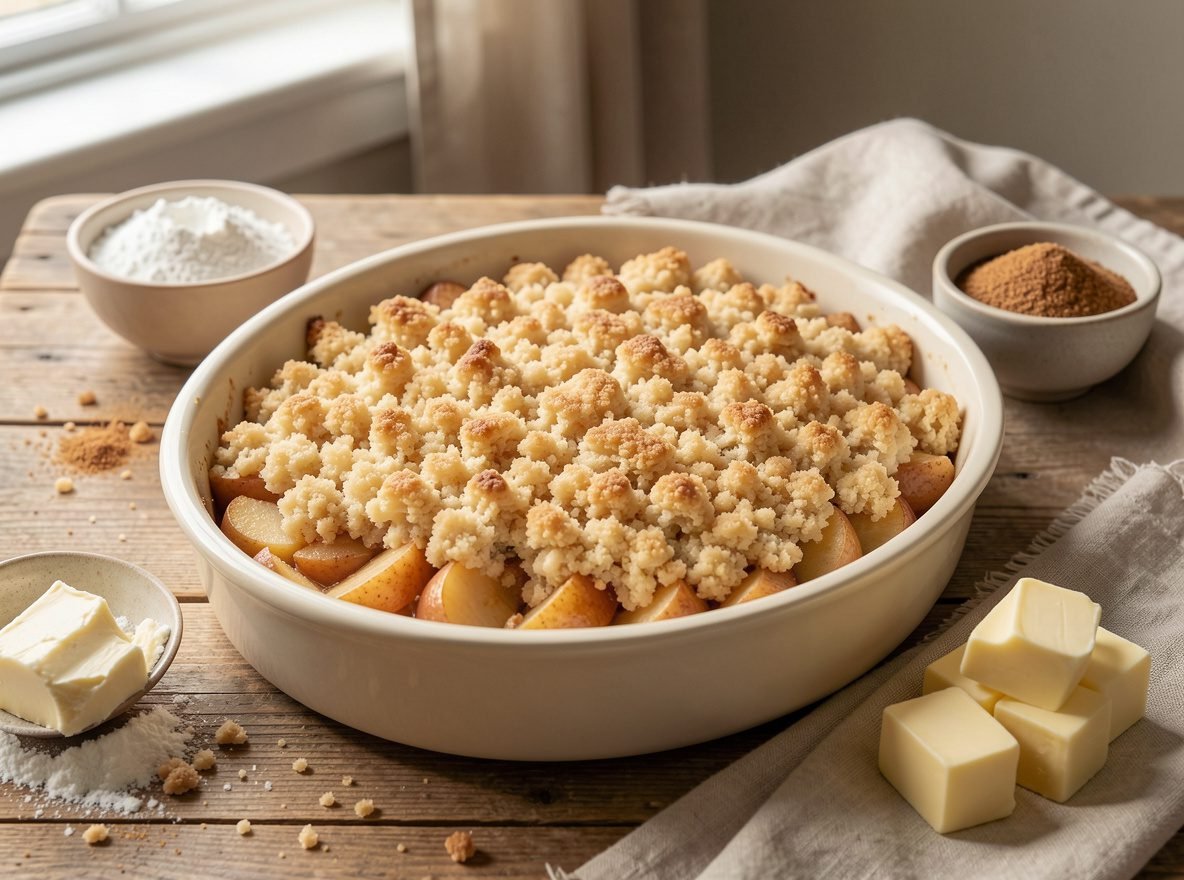
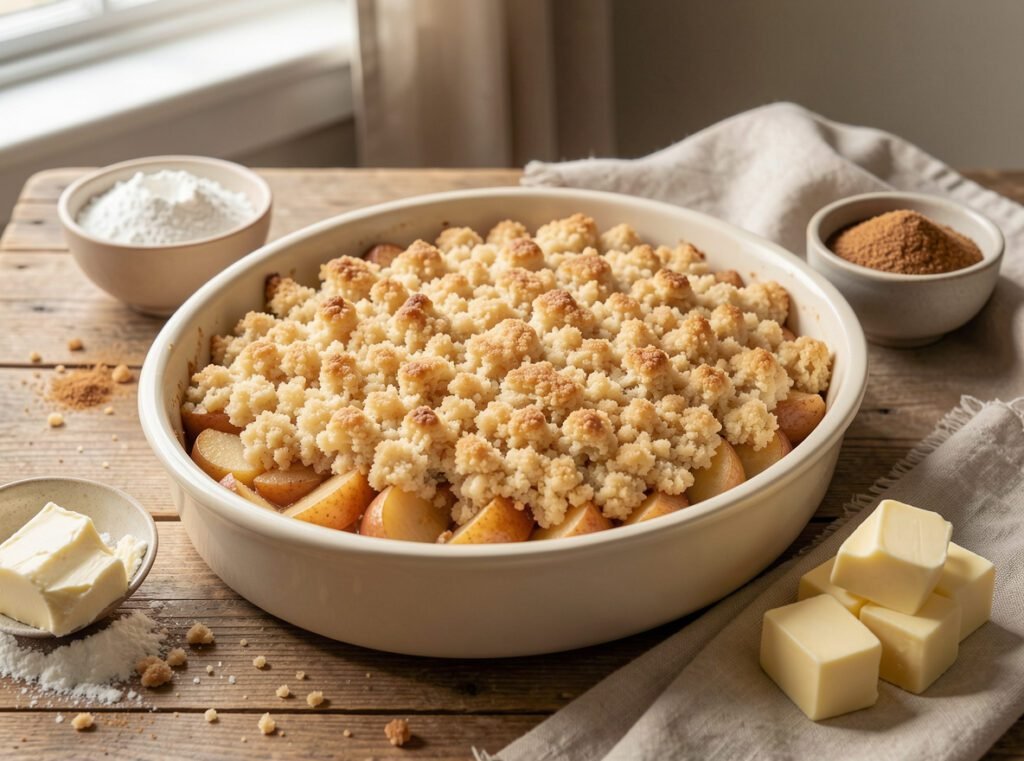
Have you ever made a fruit crumble only to find the topping dry, powdery, or disappointingly soggy? A good crumble topping should be buttery, sweet, and crisp, with golden crumbs that pair perfectly with soft, juicy fruit. The good news is that you don’t need oats, special equipment, or complicated techniques to get that texture.
This easy crumble topping recipe uses just three simple ingredients: all-purpose flour, butter, and sugar. You can prepare it in minutes and use it for apple crumble, peach crisp, berry desserts, muffins, and coffee cake.
The secret to a reliable homemade crumble topping lies in the ingredient balance, butter temperature, and mixing method. Cold butter helps create distinct crumbs, while the right amount of flour and sugar gives the topping its structure and flavor.
In this guide, you’ll learn how to make crumble topping, adjust the ingredients, avoid common mistakes, and store it for later use. Try this simple recipe for your next dessert, and use the tips below to get a golden, crumbly finish.
3 Simple Ingredients
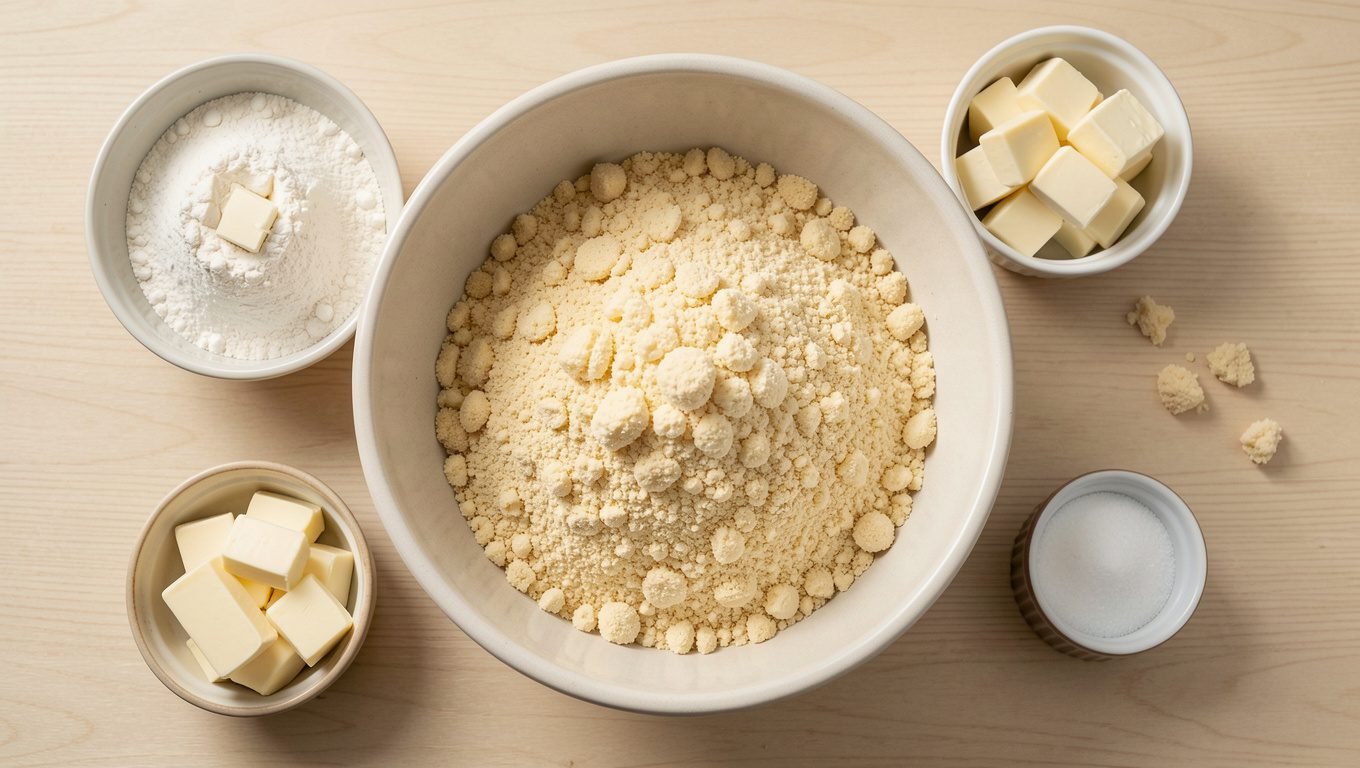
You only need three basic ingredients to make a classic crumble topping: all-purpose flour, butter, and sugar. Each ingredient has a job. Flour gives the topping its structure, butter creates rich flavor and helps form crumbs, and sugar adds sweetness while helping the topping turn golden as it bakes. BBC Food also uses these three ingredients in its basic crumble method.
BBC Food+1
1. All-Purpose Flour
All-purpose flour forms the base of your homemade crumble topping. It combines with the butter to create small crumbs and larger clusters. As the topping bakes, the flour helps the crumbs hold their shape.
Measure the flour carefully. Too much flour can make the mixture dry and powdery. Too little can leave it greasy or too soft. Spoon the flour into your measuring cup and level it with a knife instead of packing it down.
2. Butter
Butter gives crumble topping its rich taste and tender, crumbly texture. Cold butter works well for a classic crumble topping because it stays firm while you mix it into the flour. Cut the butter into small cubes, then rub it into the flour with your fingertips until the mixture looks like coarse breadcrumbs.
Keep a few larger crumbs in the mixture if you want chunky clusters. Avoid melting the butter for this version, as it can change the texture. Christina’s Cucina also uses cold butter in its three-ingredient crumble topping recipe.
Christina’s Cucina
3. Sugar
Sugar adds sweetness and helps the topping brown during baking. White granulated sugar gives a clean, sweet taste. Brown sugar adds a deeper flavor and a hint of molasses.
You can use either type, depending on your preference. You can also combine them for a balance of sweetness and rich flavor. Martha Stewart’s crumb topping recipe uses both light brown sugar and granulated sugar, while Christina’s Cucina offers brown sugar as an alternative to white sugar.
Martha Stewart+1
Quick tip: Start with these three ingredients for a simple fruit crumble topping. You can add cinnamon, rolled oats, or chopped nuts if you want more flavor and texture, but they are optional.
How to Make Crumble Topping
Making homemade crumble topping takes just a few minutes and requires no special equipment. You can mix the ingredients by hand or use a pastry cutter. The goal is a crumbly mixture with a mix of small crumbs and larger clusters that turn golden and crisp in the oven.
Step 1: Combine the Flour and Sugar
Add the all-purpose flour and sugar to a medium mixing bowl. Stir them together with a fork or whisk until evenly combined. If you want extra flavor, add a pinch of salt or a little ground cinnamon.
Step 2: Cut in the Cold Butter
Cut cold butter into small cubes and add them to the flour mixture. Use your fingertips, a pastry cutter, or two forks to work the butter into the dry ingredients.
Stop when the mixture looks like coarse breadcrumbs. Some larger clumps are fine. These clusters create the crisp, crunchy texture that makes a good crumble topping.
Beginner tip: Keep the butter cold and work quickly. If the mixture starts to feel greasy or the butter begins to melt, place the bowl in the refrigerator for 10–15 minutes before using it.
Step 3: Check the Crumble Texture
Pick up a small handful and gently squeeze it. The mixture should hold together in loose clumps, then break apart when you rub it between your fingers.
- Too dry and powdery? Work in a little more cold butter, a small piece at a time.
- Too wet or greasy? Add a small amount of flour and mix gently.
- Too uniform? Leave a few larger clusters for a more rustic, crunchy topping.
Avoid mixing until the crumbs become a smooth dough. You want a loose mixture, not a pastry.
Step 4: Use or Chill the Topping
Your crumble topping is now ready to use. Sprinkle it evenly over sliced apples, berries, peaches, or another fruit filling before baking. You can also use it on muffins, cakes, and other baked desserts.
For a more even texture, distribute the small crumbs and larger clusters across the fruit. If you are preparing the topping ahead of time, cover it and refrigerate it until needed. Keeping the butter cold helps the crumbs hold their shape during baking.
The key to a great crumble topping: Mix just until crumbs form, keep the butter cold, and leave some larger clusters for a crisp, golden finish.
Baking Directions for Crumble Topping Recipe
The right oven temperature and baking time help your crumble topping turn golden brown and crisp without burning. The exact timing depends on how you use the topping, how thickly you spread it, and whether you bake it over fresh fruit or on its own.
How to Bake Crumble Topping on Fruit
- Preheat the oven to 350°F (175°C). Check your recipe for a specific temperature, as some fruit crumbles bake at a higher heat.
- Prepare the fruit filling. Add sliced apples, peaches, berries, or other fruit to a baking dish. If your filling contains extra liquid, adjust the recipe to help prevent a soggy topping.
- Add the crumble mixture. Sprinkle the prepared topping evenly over the fruit. Leave some larger clusters for a crunchy texture.
- Bake until golden. Most fruit crumbles take about 30–45 minutes, depending on the fruit, dish size, and oven temperature. Look for a golden-brown topping and bubbling fruit around the edges.
- Check the fruit. Insert a knife into the fruit beneath the topping. It should feel tender, especially when baking apples or firm peaches.
- Let it rest before serving. Allow the crumble to cool for about 10–15 minutes. The filling will thicken slightly, making it easier to serve.
How to Bake Crumble Topping on Its Own
If you want a crunchy crumble topping for yogurt, ice cream, muffins, or other desserts, you can bake it separately.
- Preheat the oven to 350°F (175°C).
- Spread the crumble mixture in a thin, even layer on a parchment-lined baking sheet.
- Bake for about 10–15 minutes, checking frequently toward the end.
- Stir gently halfway through if you want more even browning. Keep some clusters intact if you prefer larger crumbs.
- Remove the tray when the topping turns lightly golden. Let it cool completely before using it.
The topping may feel soft when it first comes out of the oven. It usually becomes crisper as it cools, so avoid baking it until it looks dark brown.
How to Get a Golden, Crunchy Crumble Topping
- Use cold butter: It helps create distinct crumbs and clusters.
- Spread the topping evenly: A uniform layer helps it bake at a similar rate.
- Avoid excess moisture: Wet fruit filling can soften the bottom of the topping.
- Watch the final minutes: Sugar and butter can brown quickly near the end of baking.
- Allow time to cool: Cooling helps the topping firm up and develop a crisp texture.
Important: Baking times are estimates, not fixed rules. Use the color and texture of the topping, along with the tenderness of the fruit, to judge when your crumble is ready.
Variations
One of the best things about homemade crumble topping is how easy it is to change. You can adjust the sweetness, add warm spices, or include oats and nuts for extra crunch. Keep the basic flour, butter, and sugar mixture as your starting point, then try these simple variations to match your dessert.
1. Brown Sugar Crumble Topping
Replace the white sugar with an equal amount of packed light or dark brown sugar. Brown sugar adds a deeper, caramel-like flavor that pairs well with apples, peaches, pears, and berries. Light brown sugar gives a milder taste, while dark brown sugar adds a stronger molasses flavor.
2. Cinnamon Crumble Topping
Add ½–1 teaspoon of ground cinnamon to the flour and sugar mixture before adding the butter. Cinnamon brings a warm, sweet aroma that works especially well with apple crumble, pear desserts, peach crisp, and baked oatmeal.
For a little extra warmth, add a small pinch of nutmeg or ginger.
3. Oatmeal Crumble Topping
Replace part of the all-purpose flour with old-fashioned rolled oats. For example, use ¾ cup flour and ½ cup oats instead of 1¼ cups flour. Oats add a hearty texture and a more rustic appearance.
Old-fashioned oats give the topping a distinct bite, while quick oats create a finer texture. Avoid replacing all the flour with oats, as the mixture may not hold together in the same way.
4. Crumble Topping Without Oats
Prefer a classic, smooth crumb? Leave out the oats and use all-purpose flour as the main dry ingredient. This version creates a more traditional, shortbread-like crumble with crisp edges and tender crumbs.
You can still add cinnamon or brown sugar for extra flavor without changing the basic texture too much.
5. Nutty Crumble Topping
Mix in ¼–½ cup of chopped pecans, walnuts, or almonds. Nuts add crunch and a rich flavor that pairs well with apples, pears, peaches, and plums.
Chop the nuts into small pieces so they distribute evenly through the topping. Keep in mind that nuts brown quickly, so check the topping near the end of baking.
6. Gluten-Free Crumble Topping
Use a 1:1 gluten-free baking flour blend in place of all-purpose flour. Choose a blend made for baking, preferably one that contains a binder such as xanthan gum. Mix it with the butter and sugar as you would for a standard crumble topping.
The texture can vary by brand, so check the mixture before baking. If you add oats, choose oats labeled gluten-free to reduce the risk of cross-contact.
7. Dairy-Free Crumble Topping
Replace the butter with a firm, plant-based butter alternative suitable for baking. Choose a block-style product rather than a soft spread, which may contain more water and produce a looser mixture.
Keep the plant-based butter cold and work it into the flour and sugar until crumbs form. The flavor and browning may differ from a version made with dairy butter.
8. Less-Sweet Crumble Topping
Reduce the sugar slightly if your fruit filling is already sweet. This works well with ripe peaches, sweet apples, and berries that have been sweetened before baking.
Avoid removing too much sugar, as it contributes to the topping’s flavor, browning, and texture. Taste the fruit filling first and adjust the sweetness based on the fruit you use.
My tip: For an easy everyday version, combine brown sugar with cinnamon. For extra crunch, add rolled oats or chopped pecans. Make one small change at a time so you can see how each ingredient affects the final crumble topping.
How to Use
Homemade crumble topping adds a sweet, buttery crunch to fruit desserts, cakes, muffins, and other baked treats. You can sprinkle it over fresh fruit before baking or use it to add texture to desserts that are already prepared. The best approach depends on the dish and whether you want a soft fruit filling, a crisp topping, or both.
1. Apple Crumble
Sprinkle the crumble mixture over peeled, sliced apples tossed with cinnamon and a little sugar. Bake until the topping turns golden brown and the apples become tender. Brown sugar and cinnamon work especially well with the natural sweetness of apples.
2. Berry Crumble
Use the topping over fresh or frozen blueberries, raspberries, strawberries, or blackberries. Place the berries in a baking dish and add a little sugar and cornstarch if needed to help thicken the fruit juices. Spread the crumble topping evenly over the berries and bake until the fruit bubbles around the edges.
3. Peach or Pear Crumble
Peaches and pears pair well with a buttery crumble topping. Slice the fruit, add a little sugar and your favorite spice, then cover it with the crumb mixture. Try cinnamon with pears or a pinch of ginger with peaches for a subtle flavor change.
4. Muffins and Coffee Cake
Sprinkle crumble topping over muffin batter or coffee cake batter just before baking. The topping forms a sweet, crisp layer that contrasts with the soft cake beneath it. Keep the crumbs loose rather than pressing them into the batter.
For muffins, use a light layer so the topping does not weigh down the batter. For coffee cake, add a more generous layer if you want a thick, crumbly finish.
5. Crisps and Other Fruit Desserts
Use the same topping for apple crisp, peach crisp, plum crumble, or mixed-fruit desserts. If you enjoy a heartier texture, add rolled oats or chopped nuts. The fruit provides moisture while the topping browns in the oven.
6. Ice Cream, Yogurt, and Pudding
For a crunchy dessert garnish, bake the crumble topping separately on a lined baking sheet until lightly golden. Let it cool completely, then sprinkle it over vanilla ice cream, Greek yogurt, custard, or pudding.
Cool the topping before adding it to cold desserts. This helps preserve its crisp texture and prevents the heat from melting ice cream too quickly.
7. Baked Oatmeal
Scatter a small amount of crumble topping over baked oatmeal before putting it in the oven. It adds a sweet, crisp finish that works well with apples, berries, bananas, and cinnamon.
Tips for Using Crumble Topping
- Match the topping to the fruit: Brown sugar and cinnamon suit apples and pears, while plain or oat-based crumbs work well with berries and peaches.
- Avoid excess moisture: Very juicy fruit can soften the topping. A suitable thickener, such as cornstarch, can help create a thicker filling.
- Use a light hand on cakes and muffins: Too much topping can make the surface heavy.
- Bake separately for a crunchy garnish: This works best when you want crumbs for ice cream or yogurt rather than a baked fruit dessert.
- Add the topping at the right time: For fruit crumbles, add it before baking. For cold desserts, bake and cool it first.
Best tip: If you want a classic warm dessert, use the crumble topping over fresh fruit and bake until golden. If you want a crunchy garnish for ice cream or yogurt, bake the topping separately and let it cool before serving.
Storing Oatmeal Brown Sugar Crumble Topping
You can make oatmeal brown sugar crumble topping ahead of time and store it until you need it. Proper storage helps preserve its buttery flavor and crumbly texture, whether you plan to bake it over fruit or use it as a crunchy dessert topping.
How to Store Unbaked Crumble Topping
If you have mixed the flour, rolled oats, brown sugar, and butter but have not baked the topping, follow these steps:
- Transfer the crumble mixture to an airtight container.
- Refrigerate it for up to 3 days.
- Keep the container sealed to prevent the mixture from absorbing odors or moisture from other foods.
- When you’re ready to bake, break up any large clumps if needed, then sprinkle the topping over your fruit filling.
Cold storage helps keep the butter firm, which makes it easier to maintain a crumbly texture.
Can You Freeze Crumble Topping?
Yes! Freezing is a convenient option if you want to prepare crumble topping in advance.
- To freeze: Place the unbaked mixture in a freezer-safe airtight container or resealable freezer bag. Label it with the date.
- Storage time: For the best quality, use it within about 3 months.
- To use: Sprinkle the frozen crumble topping directly over your prepared fruit filling. You usually don’t need to thaw it first. Add a little baking time if needed, and check that the topping turns golden and the fruit cooks through.
Freezing individual portions can also help you use only the amount you need.
How to Store Baked Crumble Topping
If you baked the oatmeal brown sugar crumble topping separately to use on ice cream, yogurt, or pudding, let it cool completely first. Transfer it to an airtight container and store it at room temperature in a cool, dry place for about 3–5 days.
Moisture can make baked crumbs lose their crunch, so avoid sealing them while they are still warm. If the topping softens, spread it on a baking sheet and warm it in a 300°F (150°C) oven for a few minutes. Let it cool before serving.
Can You Store Crumble Topping on a Fruit Dessert?
Yes, but storage needs differ once the topping has been baked over fruit. Refrigerate leftover fruit crumble in a covered container within 2 hours of baking. For food safety, keep it refrigerated and eat it within 3–4 days.
The topping may soften as it absorbs moisture from the fruit. Reheat individual portions in the oven to help restore some crispness. A microwave warms the dessert quickly, but it usually leaves the topping softer.
Quick storage guide
| Crumble topping | Storage method | Recommended time |
| Unbaked mixture | Refrigerator | Up to 3 days |
| Unbaked mixture | Freezer | About 3 months for best quality |
| Baked topping, stored separately | Airtight container at room temperature | About 3–5 days |
| Baked fruit crumble | Refrigerator | 3–4 days |
Storage times are general quality guidelines. Use clean containers, keep refrigerated foods cold, and discard any food that shows signs of spoilage.
How to Get Crispy Crumble Topping
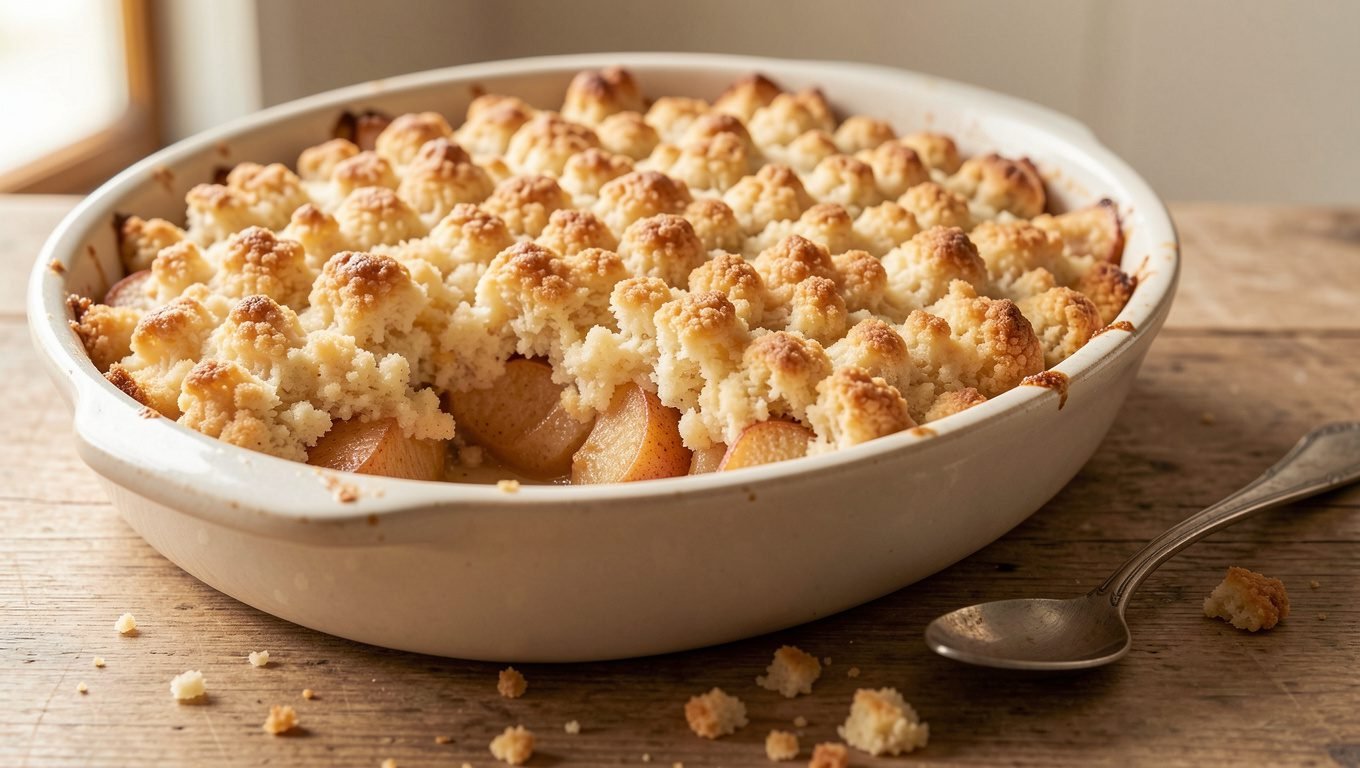
The secret to crispy crumble topping is the right balance of butter, flour, and sugar, along with enough oven heat to remove excess moisture and brown the crumbs. A few simple techniques can help you get a golden, crunchy topping without burning it or leaving it greasy.
1. Use Cold Butter
Start with cold butter cut into small cubes. Rub it into the flour and sugar until the mixture forms coarse crumbs. Cold butter helps you create distinct crumbs and clusters instead of a smooth, greasy paste.
Avoid overworking the mixture with your hands. The heat from your fingers can soften the butter and make the topping less crumbly.
2. Leave Some Large Clusters
A good crumble topping should have a mix of fine crumbs and larger pieces. Gently squeeze a small handful of the mixture to form clusters, then scatter them over your fruit or baking sheet.
These larger clusters create a satisfying crunch and give the finished topping a homemade texture.
3. Measure the Ingredients Correctly
Too much flour can make the topping dry and powdery, while too much butter can leave it greasy. Measure your ingredients carefully and add extra flour or butter only when the mixture clearly needs adjustment.
Brown sugar adds a rich, caramel-like flavor, while granulated sugar gives a more neutral sweetness. Both work well in a classic crumble topping.
4. Avoid Excess Moisture From the Fruit
Juicy apples, peaches, and berries can release liquid as they bake. Too much moisture can soak into the crumble topping and leave the bottom layer soft.
To help prevent this:
- Use the amount of liquid called for in your fruit crumble recipe.
- Add a suitable thickener, such as cornstarch, when the fruit filling needs it.
- Spread the crumble topping evenly over the fruit without pressing it down.
- Bake until the fruit filling bubbles and the topping turns golden brown.
The topping that touches the fruit may remain softer than the exposed surface. This is normal for a fruit crumble.
5. Bake at the Right Temperature
For many fruit crumbles, an oven temperature of 350°F (175°C) works well, although some recipes call for a higher temperature. Follow the temperature specified in your recipe and watch the topping as it bakes.
If the topping stays pale, it may need more time. If it browns too quickly while the fruit remains firm, loosely cover the dish with foil and continue baking until the fruit is tender.
6. Bake the Topping Separately for Extra Crunch
If you want a crisp crumble topping for ice cream, yogurt, or pudding, bake it separately from the fruit.
Spread the raw crumble mixture on a parchment-lined baking sheet and bake at 350°F (175°C) for about 10–15 minutes, checking frequently. Let it cool completely before using it. The crumbs will firm up as they cool.
This method gives you more control over browning and helps prevent fruit juices from softening the topping.
7. Let the Crumble Cool Before Serving
A freshly baked crumble topping may feel slightly soft when it comes out of the oven. Give it time to cool so the butter firms up and the crumbs become more crisp.
For a fruit crumble, let the dish rest for about 10–15 minutes before serving. For separately baked crumbs, wait until they reach room temperature before storing or sprinkling them over a dessert.
The best tip for crispy crumble topping: Keep the butter cold, create a mix of small crumbs and large clusters, and avoid excess moisture in the fruit filling. These steps help you get a golden, crunchy finish with a tender fruit layer underneath.
Why Is My Crumble Topping Soggy?
Crumble topping can turn soggy when excess moisture from the fruit soaks into the crumbs, the butter melts too quickly, or the topping does not bake long enough. The good news is that a few simple changes can help you get a golden, crisp topping with a soft fruit filling underneath.
1. The Fruit Filling Contains Too Much Liquid
Apples, peaches, strawberries, and other fruits release juice as they bake. If the filling contains too much liquid, the bottom of the crumble topping can absorb that moisture and become soft.
How to fix it: Use the amount of liquid specified in your recipe. For juicy fruit, add a suitable thickener, such as cornstarch, to help the filling set. Avoid adding extra water unless the recipe calls for it.
2. The Butter Was Too Warm
Soft or melted butter can make the crumble mixture greasy before it reaches the oven. Instead of forming separate crumbs and clusters, the mixture may spread into a dense layer.
How to fix it: Use cold butter cut into small cubes. Rub it into the flour and sugar until the mixture resembles coarse breadcrumbs. If the mixture feels greasy or sticky, refrigerate it for 10–15 minutes before baking.
3. The Crumble Topping Did Not Bake Long Enough
A topping may look cooked on the surface while the crumbs underneath remain pale and soft. This can happen if you remove the dessert from the oven too early.
How to fix it: Bake until the exposed crumbs turn golden brown and the fruit filling bubbles around the edges. Check the fruit for tenderness, too. If the topping browns before the fruit cooks through, cover the dish loosely with foil and continue baking.
4. You Pressed the Topping Down Too Firmly
Packing the crumble mixture tightly over the fruit can prevent heat from reaching the crumbs evenly. It may also create a dense layer that feels more like a crust than a crumbly topping.
How to fix it: Scatter the mixture loosely over the fruit. Leave a mix of small crumbs and larger clusters so the topping can brown evenly and develop a crisp texture.
5. The Baking Dish Is Too Deep
A deep dish or an unusually thick layer of fruit can trap steam beneath the topping. That moisture can soften the crumbs, especially near the center.
How to fix it: Use the baking dish size recommended by your recipe. Spread the fruit in an even layer and distribute the topping across the surface without creating an excessively thick covering.
6. You Covered the Crumble While It Was Still Hot
Steam escapes from a freshly baked fruit crumble. If you cover it tightly while it is still hot, the trapped steam can collect on the lid and drip back onto the topping.
How to fix it: Let the crumble rest uncovered for about 10–15 minutes before serving. If you plan to store leftovers, refrigerate them safely in a covered container after the initial cooling period.
7. You Stored the Baked Crumble for Too Long
Even a perfectly baked topping can soften over time because the fruit continues to release moisture. Refrigeration also changes the texture of the crumbs.
How to fix it: Reheat leftover fruit crumble in an oven at 350°F (175°C) until warmed through. Leave the dish uncovered if the topping needs to dry out slightly, and check it often to prevent over-browning. A microwave heats the dessert quickly but usually leaves the topping softer.
Can You Fix Soggy Crumble Topping After Baking?
Yes, you can often improve the texture. Place the crumble in an oven-safe dish and heat it uncovered at 350°F (175°C) for several minutes, checking frequently. This can help dry the topping’s surface and restore some crunch, although it may not fully crisp the layer touching the fruit.
If you want a very crunchy finish, bake a small amount of crumble mixture separately on a lined baking sheet until golden. Let it cool, then sprinkle it over each serving.
Quick answer: Excess fruit juice is one of the most common reasons for soggy crumble topping. Use cold butter, avoid packing the crumbs down, bake until golden, and allow steam to escape before covering the dessert.
How to Make Crumble Topping Without Oats
You can make a classic crumble topping without oats using just three ingredients: all-purpose flour, butter, and sugar. This version creates a buttery, sweet topping with crisp edges and tender crumbs. It works well for apple crumble, peach crumble, berry desserts, coffee cake, and muffins.
Unlike an oatmeal crumble topping, this recipe has a finer texture that resembles buttery shortbread crumbs. You don’t need special equipment or extra ingredients to make it.
Ingredients for Crumble Topping Without Oats
- 1 cup all-purpose flour: Forms the base and gives the topping its crumbly structure.
- ½ cup cold unsalted butter: Adds rich flavor and helps the crumbs hold together.
- ½ cup granulated sugar or brown sugar: Sweetens the mixture and helps it brown during baking.
You can use white sugar for a simple, sweet flavor or brown sugar for a deeper, caramel-like taste. If you use salted butter, reduce or skip any added salt.
How to Make It
Step 1: Mix the flour and sugar. Add the all-purpose flour and sugar to a medium bowl. Stir until evenly combined.
Step 2: Add the cold butter. Cut the butter into small cubes and add it to the dry ingredients. Use your fingertips, a pastry cutter, or two forks to work the butter into the flour mixture.
Step 3: Create the crumbs. Continue mixing until the ingredients form coarse crumbs. Squeeze a small handful gently if you want larger clusters, but avoid mixing the ingredients into a smooth dough.
Step 4: Use the topping. Scatter the mixture over your prepared fruit filling, muffin batter, or coffee cake before baking. Follow the baking temperature and time for your chosen recipe.
Tips for the Best Oat-Free Crumble Topping
- Keep the butter cold. Warm butter can make the mixture greasy and harder to crumble.
- Measure the flour correctly. Too much flour can leave the topping dry and powdery.
- Leave some larger crumbs. Clusters give the topping a more varied texture.
- Avoid overmixing. Stop once the butter and dry ingredients form loose crumbs.
- Add cinnamon if desired. About ½ teaspoon of ground cinnamon works well with apples, pears, and peaches.
Can You Make Crumble Topping Without Oats and Brown Sugar?
Yes. Use granulated sugar instead of brown sugar, along with all-purpose flour and cold butter. The result will have a lighter flavor and a classic sweet, buttery texture.
You can also use a combination of white and brown sugar if you have both available. The basic method stays the same.
Best result: For a simple crumble topping without oats, use equal amounts of cold butter and sugar by volume for every two parts flour. Adjust the quantities to suit your baking dish, and keep the mixture crumbly rather than turning it into a dough.
Crumble Topping Ingredients and Measurements in Grams
Measuring crumble topping ingredients by weight helps you get consistent results every time. Cups can vary depending on how you fill them, especially with flour and brown sugar. A kitchen scale gives you more control over the balance of flour, butter, and sugar, so your topping forms crisp crumbs instead of turning dry or greasy.
For a simple, oat-free crumble topping, use the measurements below.
Crumble Topping Recipe: Grams and Cups
| Ingredient | US measurement | Weight in grams |
| All-purpose flour | 1 cup | 120 g |
| Unsalted butter | ½ cup (1 stick) | 113 g |
| Granulated sugar | ½ cup | 100 g |
| Light brown sugar, packed | ½ cup | 110 g |
Note: These weights are approximate. Flour brands, measuring methods, and how firmly you pack brown sugar can affect the final weight. Use either granulated sugar or brown sugar for this basic recipe; you do not need both.
How to Measure Crumble Topping Ingredients
All-purpose flour: For the most reliable cup measurement, spoon flour into the measuring cup and level the top with a straight edge. Avoid scooping directly from the bag, which can pack in extra flour.
Butter: One US stick of butter weighs about 113 grams and equals ½ cup. Cut cold butter into small cubes before mixing it into the dry ingredients.
Granulated sugar: One US cup weighs about 200 grams, so ½ cup weighs approximately 100 grams. Granulated sugar gives the crumble topping a clean, sweet flavor.
Brown sugar: Half a US cup of packed light brown sugar weighs about 110 grams. Brown sugar adds a deeper flavor and a hint of molasses. Pack it into the measuring cup when measuring by volume.
How to Adjust the Recipe
You can scale the ingredients up or down to suit your baking dish. Keep the same proportions so the crumble topping retains its texture.
| Ingredient | Half batch | Full batch | Double batch |
| All-purpose flour | 60 g | 120 g | 240 g |
| Unsalted butter | 57 g | 113 g | 226 g |
| Granulated sugar | 50 g | 100 g | 200 g |
This table uses granulated sugar. If you prefer brown sugar, use approximately 55 g for a half batch, 110 g for a full batch, or 220 g for a double batch.
What Is the Best Flour-to-Butter Ratio for Crumble Topping?
A useful starting point is about 2 parts flour to 1 part butter by weight, with sugar added for sweetness. For example, 120 g flour, 113 g butter, and 100 g granulated sugar make a rich, sweet crumble mixture.
The exact balance depends on your preferred texture. More flour can produce a drier topping, while more butter can create richer, denser crumbs. Start with the listed measurements and adjust only if the mixture looks unusually dry or greasy.
Kitchen tip: If you bake often, keep a digital kitchen scale nearby. Weighing flour, butter, and sugar makes it easier to repeat a crumble topping recipe with reliable results.
Crumble Topping vs. Streusel vs. Crisp Topping
Crumble topping, streusel, and crisp topping all add a sweet, crunchy layer to baked desserts. They share many ingredients, including flour, butter, and sugar, but their recipes and common uses can differ. Knowing the difference helps you choose the right topping for apple desserts, berry crisps, muffins, and coffee cakes.
What Is the Difference?
| Topping | Common ingredients | Texture | Best uses |
| Crumble topping | Flour, butter, sugar | Buttery crumbs with small or large clusters | Apple crumble, peach crumble, berry crumble |
| Streusel topping | Flour, butter, sugar; often cinnamon | Fine crumbs or chunky, sweet clusters | Muffins, coffee cake, quick breads |
| Crisp topping | Often flour, butter, sugar, and rolled oats | Crunchy, textured layer | Apple crisp, peach crisp, berry crisp |
These names sometimes overlap. A recipe may call an oat-based fruit topping a crumble, while another calls a similar dessert a crisp. Ingredients and regional naming habits often determine which term a recipe uses.
1. Crumble Topping
A traditional crumble topping uses flour, butter, and sugar to create a buttery layer of crumbs over baked fruit. Some recipes include oats or chopped nuts, but many classic versions leave them out.
Use a flour-based crumble topping for apple crumble, peach crumble, pear crumble, or mixed berry desserts. The crumbs bake into a golden layer while the fruit softens underneath.
2. Streusel Topping
Streusel is a sweet crumb mixture often used on cakes and other baked goods. A basic streusel contains flour, butter, and sugar. Cinnamon, brown sugar, and chopped nuts are common additions. Some streusel recipes also include oats.
King Arthur Baking+1
Sprinkle streusel over blueberry muffins, banana bread, coffee cake, or quick breads before baking. It adds a sweet, buttery crunch and works well with cinnamon and brown sugar.
3. Crisp Topping
In many American recipes, a crisp topping includes rolled oats along with flour, butter, and sugar. The oats add texture and help create a crunchy, rustic finish. Apple crisp, peach crisp, and blueberry crisp are popular examples.
King Arthur Baking+1
Use old-fashioned rolled oats for a more noticeable texture or quick oats for a finer topping. The exact ingredients vary by recipe, so check the ingredient list rather than relying on the dessert’s name alone.
Which Topping Should You Choose?
- For baked fruit: Choose crumble topping for a simple, buttery crumb layer or an oat-based crisp topping for extra texture.
- For muffins and coffee cake: Choose streusel for sweet crumbs that complement soft cake.
- For extra crunch: Add rolled oats or chopped nuts to your preferred mixture.
- For a simple three-ingredient recipe: Use flour, butter, and sugar. You can add cinnamon or brown sugar if you want more flavor.
The key difference is the recipe’s ingredients and intended use. Crumble and streusel can be very similar, while American crisp recipes often include oats. Since the terms overlap, choose your topping based on the texture and flavor you want rather than the name alone.
Recipe Testing Notes and Ingredient Substitutions
A good crumble topping should bake into golden crumbs with a buttery flavor and a crisp texture. Small changes in ingredient amounts, butter temperature, or mixing method can affect the final result. Use these recipe-testing notes to get consistent results and make simple substitutions with ingredients you already have.
Recipe Testing Notes
- Measure flour carefully. Too much flour can make the topping dry and powdery. Weighing the flour gives you more consistent results than measuring by volume.
- Use cold butter. Cold butter helps the mixture form distinct crumbs instead of a greasy paste.
- Mix until crumbs form. Stop when the mixture resembles coarse breadcrumbs with a few larger clusters. Do not mix it into a smooth dough.
- Check the texture before baking. When you squeeze a small handful, it should hold together loosely and break apart with a gentle touch.
- Watch the color as it bakes. The topping should turn golden brown. Check it near the end of the baking time because sugar and butter can brown quickly.
- Allow time to cool. The crumbs often become firmer as they cool, so do not judge the final crunch while the topping is still piping hot.
Ingredient Substitutions
| Original ingredient | Possible substitute | What to expect |
| All-purpose flour | A 1:1 gluten-free baking flour blend | Texture may vary by brand. Choose a blend intended for baking. |
| Unsalted butter | Firm plant-based butter | Flavor and browning may differ slightly. |
| Granulated sugar | Light or dark brown sugar | Adds a deeper flavor and a hint of molasses. |
| Brown sugar | Granulated sugar | Gives a cleaner, lighter sweetness with less molasses flavor. |
| All-purpose flour | A partial amount of rolled oats | Adds texture, but too many oats can make the topping less cohesive. |
| Butter | Cold vegan baking stick | Can work in dairy-free recipes; avoid soft spreads with high water content. |
Can You Use Melted Butter Instead of Cold Butter?
Yes, but melted butter changes how the topping forms. It can produce denser crumbs and a more compact texture. For a classic crumble topping with distinct clusters, cold butter is a reliable choice.
If your recipe specifically calls for melted butter, follow its method and measurements rather than switching between the two without adjusting the recipe.
Can You Make Crumble Topping Ahead of Time?
Yes. Prepare the mixture, place it in an airtight container, and refrigerate it for up to three days. You can also freeze unbaked crumble topping for about three months for the best quality. Label the container with the date and keep the mixture sealed to protect its flavor and texture.
How Do You Know If the Ingredient Ratio Is Right?
The mixture should look crumbly, not wet or powdery. If it seems too dry to form any clusters, work in a little cold butter at a time. If it feels greasy or sticky, chill it briefly and check the proportions before adding more flour.
Final testing tip: Change only one ingredient at a time when testing a new version. For example, replace white sugar with brown sugar before trying oats or nuts. This makes it easier to see which change affects the flavor, browning, and texture.
Conclusion
A great crumble topping doesn’t need a long ingredient list or a complicated method. With all-purpose flour, cold butter, and sugar, you can make a buttery topping for apples, peaches, berries, muffins, and other baked treats. Focus on measuring the ingredients carefully, mixing until loose crumbs form, and baking until the topping turns golden. If you prefer extra texture, add rolled oats or chopped nuts; if you want a classic fine crumb, leave them out.
My biggest recommendation is to pay attention to the texture before baking rather than relying on measurements alone. The mixture should form loose clusters when squeezed, not feel greasy or remain completely powdery. Once you get comfortable with that texture, you can adjust the sugar, try different flavors, and prepare the topping ahead of time. Give this three-ingredient crumble topping a try, and share which fruit or dessert you paired it with.
Frequently Asked Questions
1. What Are the Three Ingredients in Crumble Topping?
The three basic ingredients in crumble topping are all-purpose flour, butter, and sugar. Flour provides structure, butter creates a rich flavor and crumbly texture, and sugar adds sweetness and helps the topping brown during baking. You can use granulated sugar or brown sugar, depending on your preferred flavor.
2. What Is the Best Ratio for Crumble Topping?
A useful starting point is 2 parts flour, 2 parts butter, and about 1.7 parts granulated sugar by weight. For a simple batch, try 120 g all-purpose flour, 113 g cold butter, and 100 g granulated sugar. The exact ratio varies by recipe, so adjust it based on the texture you want.
3. Should Butter Be Cold or Melted for Crumble Topping?
Cold butter works well for a classic crumble topping because it helps form distinct crumbs and clusters. Cut the butter into small cubes and rub it into the flour and sugar until the mixture resembles coarse breadcrumbs. Melted butter can also work, but it often creates a denser texture.
4. Can I Make Crumble Topping Without Oats?
Yes. A classic crumble topping needs only all-purpose flour, butter, and sugar. Oats are optional and add a heartier texture. Without oats, the topping has finer crumbs and a buttery, shortbread-like finish.
5. Can I Use Brown Sugar Instead of White Sugar?
Yes. Brown sugar adds a deeper, caramel-like flavor because it contains molasses. Granulated sugar gives a cleaner, more neutral sweetness. You can use either one or combine them, depending on the flavor you want.
6. Why Is My Crumble Topping Dry and Powdery?
A dry, powdery crumble topping often contains too much flour or too little butter. Check your measurements and make sure the mixture forms loose crumbs when you squeeze a small handful. If needed, work in a little cold butter at a time until the texture improves.
7. Why Does My Crumble Topping Turn Soggy?
Excess moisture from fruit is a common cause. Apples, peaches, and berries release juice as they bake, which can soften the layer touching the filling. Use the right amount of liquid, add cornstarch when appropriate to thicken juicy fruit, and bake until the topping turns golden brown.
8. How Long Should Crumble Topping Bake?
The baking time depends on how you use it. A fruit crumble often takes about 30–45 minutes at 350°F (175°C), depending on the fruit, dish, and recipe. If you bake the topping separately, it may take around 10–15 minutes at the same temperature. Look for a golden color and check frequently near the end.
9. Can I Make Crumble Topping Ahead of Time?
Yes. Prepare the mixture and store it in an airtight container in the refrigerator for up to three days. You can also freeze unbaked crumble topping for about three months for the best quality. Keep it sealed to protect it from moisture and odors.
10. Can I Freeze Homemade Crumble Topping?
Yes. Place the unbaked mixture in a freezer-safe container or bag, remove excess air, and label it with the date. You can usually scatter it over prepared fruit while still frozen. Check the dessert as it bakes and allow extra time if needed.
11. Can I Use Crumble Topping on Muffins and Cakes?
Yes. Sprinkle it over muffin batter, coffee cake, quick breads, or fruit cakes before baking. A light, even layer adds a sweet, crunchy finish. Avoid pressing the crumbs into the batter, as this can make the topping dense.
12. How Do I Make Crumble Topping Extra Crispy?
Use cold butter, measure the ingredients accurately, and leave a mix of small crumbs and larger clusters. Avoid excess moisture in the fruit filling, and bake until the topping turns golden. For an especially crunchy garnish, bake the mixture separately and let it cool completely before serving.
13. Is Crumble Topping the Same as Streusel?
They are very similar. Both often use flour, butter, and sugar to create sweet crumbs. Streusel commonly tops muffins and coffee cakes, while crumble topping often covers baked fruit. The terms overlap, and individual recipes may include cinnamon, oats, or nuts.
14. Can I Make Crumble Topping Gluten-Free or Dairy-Free?
Yes. For a gluten-free version, use a 1:1 gluten-free baking flour blend. For a dairy-free version, use firm plant-based butter suitable for baking. Check the mixture’s texture before baking because substitutions can affect how the crumbs hold together and brown.
15. How Should I Store Leftover Baked Fruit Crumble?
Refrigerate leftover fruit crumble in a covered container within two hours of baking. As a general food-safety guideline, eat it within three to four days. Reheat it in the oven to help restore some crispness, since refrigeration can soften the topping.