
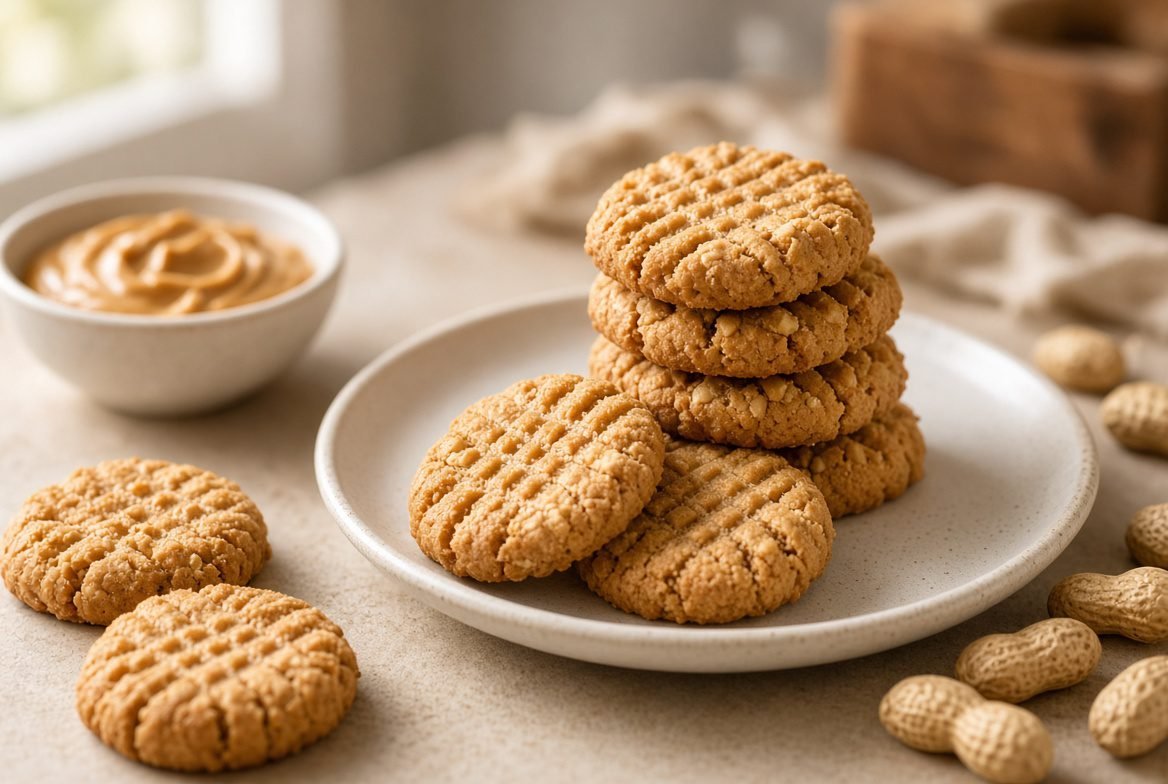


If you have ever baked keto peanut butter cookies that turned out dry, crumbly, greasy, or barely sweet, you know how frustrating low-carb baking can be. The good news is that you can make delicious keto peanut butter cookies with simple, low-carb ingredients without relying on regular sugar or wheat flour.
The key is choosing unsweetened peanut butter, the right keto sweetener, and a balanced recipe that gives the cookies enough structure while keeping their rich peanut butter flavor.
In this guide, you’ll learn how to make keto peanut butter cookies step by step, including a simple three-ingredient version, ingredient substitutions, baking tips, and fixes for common cookie problems.
You’ll also find guidance on achieving soft, chewy, or crunchy cookies, calculating net carbs, and storing or freezing your batch. Whether you’re new to keto baking or looking for a more reliable low-carb cookie recipe, follow the tips below to make a batch that suits your taste and carbohydrate goals. Let’s get started!
Why You’ll Love This Recipe
These keto peanut butter cookies are a great choice when you want a homemade treat without the added sugar found in many traditional peanut butter cookies. They have a rich peanut butter flavor, a tender texture, and a simple preparation method that even beginner bakers can follow.
- Easy to make: You can prepare the cookie dough with a few simple ingredients and basic kitchen tools. No special baking skills are needed.
- Low in carbs: Made with suitable low-carb ingredients and a keto-friendly sweetener, these cookies can fit into a ketogenic diet. The exact net carbs depend on the ingredients, serving size, and recipe you use.
- Rich peanut butter flavor: Peanut butter gives the cookies their familiar nutty taste. Choose a variety with no added sugar to help keep the carbohydrate count low.
- No complicated baking steps: Mix the ingredients, shape the dough, flatten the cookies with a fork if your recipe calls for it, and bake until done.
- Easy to customize: Depending on the recipe, you can try crunchy peanut butter, sugar-free chocolate chips, or a different keto sweetener. Check how each substitution affects the texture and nutrition.
- Great for meal prep: Make a batch ahead of time and store the cooled cookies in an airtight container. You can also freeze them if your recipe supports freezing.
- Useful for portion control: Making individual cookies lets you track your serving size and estimate calories, total carbohydrates, and net carbs more easily.
Whether you’re following a keto diet, reducing added sugar, or simply looking for an easy low-carb dessert, these peanut butter cookies offer a simple way to enjoy a homemade sweet treat.
Ingredients & Substitutions
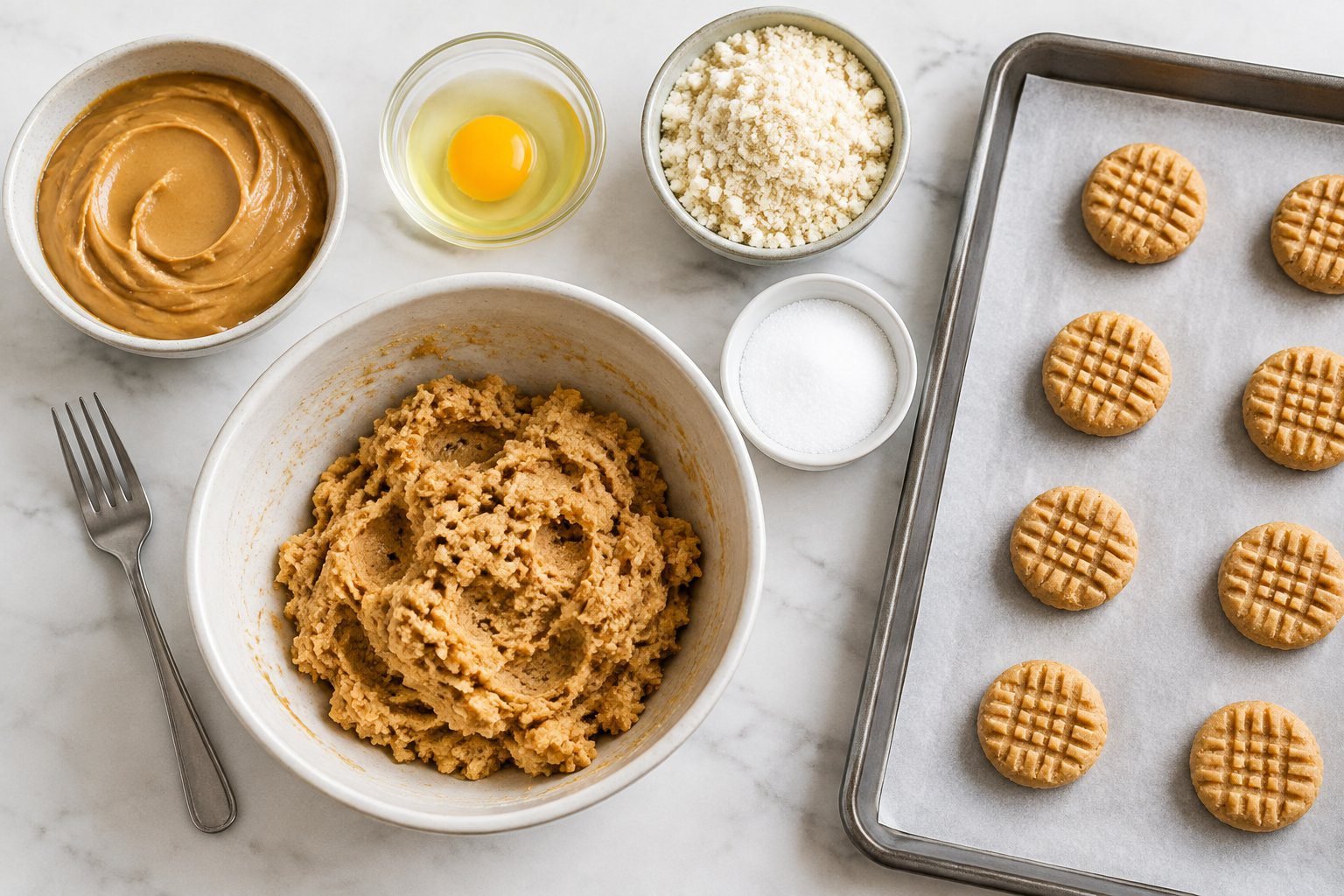
You only need a few simple ingredients to make keto peanut butter cookies at home. Each ingredient plays a role in the flavor, sweetness, and texture of the finished cookies. For the best results, measure everything carefully and check the labels on your peanut butter and sweetener to keep the recipe low in carbohydrates.
1. Peanut Butter
Peanut butter is the main ingredient in this recipe. It gives the cookies their rich, nutty flavor and helps hold the dough together.
What to choose: Use smooth, unsweetened peanut butter with no added sugar. Natural peanut butter can work well, but stir it thoroughly before measuring because the oil often separates at the top.
Substitution: You can use crunchy peanut butter for extra texture. Almond butter may also work, but it can change the flavor, moisture level, and final texture. Check the nutrition label on any substitute.
2. Keto-Friendly Sweetener
A keto-friendly sweetener adds sweetness without using regular white sugar. The best choice depends on the taste and texture you want.
- Powdered erythritol: A useful option for a smooth cookie texture, although some people notice a cooling aftertaste.
- Monk fruit sweetener blend: A convenient alternative, but the sweetness depends on the other ingredients in the blend.
- Allulose: Can produce softer cookies and more browning, so the baking time may need to change.
Substitution tip: Different sweeteners do not always work in equal amounts. Check the product’s sweetness level and follow a tested substitution ratio. Replacing one sweetener with another can affect cookie spread, crispness, and browning.
3. Egg
If your recipe includes an egg, it helps bind the ingredients and gives the cookies structure. It also adds moisture, which can reduce the chance of a dry, crumbly result.
Substitution: For an egg-free version, a flax egg may work in some recipes, but the cookies may have a different texture and may not hold together as well. Test the replacement before serving the cookies to guests.
4. Almond Flour (If Using)
Almond flour is made from ground almonds and is often used in low-carb baking. It can give peanut butter cookies a more tender, cake-like texture and help absorb moisture.
Substitution: If you want flourless keto peanut butter cookies, use a recipe specifically developed without almond flour rather than simply leaving it out of an almond-flour recipe. Removing the flour changes the balance of moisture and structure.
Avoid replacing almond flour with coconut flour in equal amounts. Coconut flour absorbs much more liquid, so it usually needs a different recipe ratio.
5. Vanilla Extract (Optional)
Vanilla extract adds a warm, sweet aroma that complements peanut butter. A small amount can make the cookies taste more like traditional homemade peanut butter cookies.
Substitution: You can leave it out if you do not have any. If using vanilla-flavored sweetener, check whether it already adds a similar flavor.
6. Salt (Optional)
A small pinch of salt can balance the sweetness and bring out the peanut butter flavor. If your peanut butter is already salted, you may need less or none at all.
Ingredient Substitution Guide
| Ingredient | Alternative | What to expect |
| Smooth peanut butter | Crunchy peanut butter | More texture and small peanut pieces |
| Peanut butter | Almond butter | Different flavor and possibly different moisture levels |
| Erythritol | Monk fruit sweetener blend | Results depend on the blend and sweetness ratio |
| Erythritol | Allulose | Softer cookies and potentially more browning |
| Egg | Flax egg | Different texture and binding |
| Almond flour | Flourless recipe | Requires a recipe formulated for that method |
| Vanilla extract | Omit it | Slightly less aromatic flavor |
A final ingredient tip: For reliable results, use the same peanut butter and sweetener brands each time you bake. Natural peanut butter can vary in thickness and oil content, while sweetener blends can differ in sweetness and carbohydrate content. These small differences can affect how the cookies spread, how they feel after cooling, and the final nutrition facts.
How To Make Keto Peanut Butter Cookies
Making keto peanut butter cookies at home is simple, even if you are new to baking. The key is to mix the ingredients evenly, shape the dough gently, and give the cookies enough time to cool after baking. Follow these steps for cookies with a rich peanut butter flavor and a tender texture.
Step 1: Preheat the Oven
Preheat your oven to 350°F (175°C). Line a baking sheet with parchment paper to help prevent sticking and make cleanup easier.
Measure your ingredients before you begin. If your recipe uses natural peanut butter, stir it well so the oil is evenly mixed throughout.
Step 2: Mix the Cookie Ingredients
Add the peanut butter, keto-friendly sweetener, egg, and any other ingredients required by your chosen recipe to a mixing bowl.
Stir until everything is evenly combined and a thick cookie dough forms. Scrape the sides of the bowl as needed so no dry sweetener or peanut butter remains unmixed.
The dough should hold together when pressed between your fingers. If it seems unusually oily or dry, check your ingredient measurements before making changes.
Step 3: Shape the Cookies
Scoop the dough into equal-sized portions and roll each portion gently into a ball. Place the dough balls on the prepared baking sheet, leaving space between them.
Use a fork to press a crisscross pattern into the top of each cookie. This classic peanut butter cookie shape also helps flatten the dough so it bakes more evenly.
If the dough sticks to the fork, lightly dampen the fork with water before pressing. Try to keep the cookies a similar thickness so they finish baking at roughly the same time.
Step 4: Bake Until the Edges Are Set
Place the baking sheet in the preheated oven and bake for approximately 8–12 minutes, checking early because cookie size and ingredient ratios affect baking time.
Look for edges that appear set and a surface that no longer looks like wet dough. The centers may still feel soft when the cookies first come out of the oven.
Avoid waiting for the cookies to become completely firm in the oven. Low-carb peanut butter cookies can dry out if they bake for too long, and they usually become firmer as they cool.
Step 5: Let the Cookies Cool
Remove the baking sheet from the oven and leave the cookies on it for about 10–15 minutes before moving them.
This step matters because keto peanut butter cookies can be delicate while hot. Cooling allows the cookies to firm up and hold their shape.
Once they are stable enough to handle, transfer them to a wire rack to finish cooling. Wait until they have cooled before storing them in an airtight container.
Step 6: Check the Texture Before Serving
After cooling, break one cookie in half to check the center. It should match the texture you want, whether that is soft, chewy, or slightly crisp.
If the cookies crumble easily, check whether they were moved before cooling or baked for too long. If they spread too much, review the peanut butter consistency, ingredient measurements, and dough temperature before changing the recipe.
Beginner tip: The first batch is a useful test. Keep the cookie size consistent and record the baking time that gives you the best results. Small changes in peanut butter, sweetener, and cookie thickness can affect how quickly the cookies bake.
Optional Add-Ins
One of the best things about keto peanut butter cookies is how easy they are to customize. You can add extra flavor, a little crunch, or a hint of chocolate without making the recipe much harder. Choose add-ins that fit your taste and check their labels to keep the cookies low in carbohydrates.
1. Sugar-Free Chocolate Chips
Sugar-free chocolate chips add a rich chocolate flavor that pairs well with peanut butter. Fold a small handful into the cookie dough just before shaping the cookies. Choose a product with no added sugar or one sweetened with a keto-friendly sweetener, and check the nutrition label because sugar-free does not always mean low-carb.
2. Chopped Peanuts
If you enjoy crunchy peanut butter cookies, add a few tablespoons of chopped roasted peanuts. They give each bite extra crunch and strengthen the natural peanut flavor. Use unsalted peanuts if your peanut butter already contains salt.
3. Vanilla Extract
A small amount of vanilla extract adds warmth and makes the cookies taste sweeter without requiring more sweetener. Mix it into the wet ingredients before adding the dry ingredients, if your recipe includes any.
4. Cinnamon
Ground cinnamon gives keto peanut butter cookies a warm, slightly spicy flavor. Start with about ¼ teaspoon for a small batch and adjust to your taste. Cinnamon works especially well with peanut butter and vanilla.
5. Unsweetened Shredded Coconut
Unsweetened shredded coconut adds a light coconut flavor and a little texture. Start with 1–2 tablespoons and mix it into the dough. Coconut absorbs moisture, so adding too much may make the cookies dry or crumbly.
6. Sea Salt
A small pinch of flaky sea salt on top can balance the sweetness and bring out the peanut butter flavor. Add it before baking so it sticks to the dough.
7. Chopped Dark Chocolate
Finely chopped dark chocolate can add a richer taste than chocolate chips. Choose a variety with a suitable carbohydrate count and chop it into small pieces so it spreads evenly through the dough.
Tips for Using Add-Ins
- Start with small amounts. Too many extras can change the dough’s texture and prevent the cookies from holding together.
- Keep the dough balanced. If an add-in absorbs moisture, such as shredded coconut, the cookies may become drier.
- Check the nutrition label. Chocolate, nuts, and coconut can add carbohydrates, calories, and fat.
- Mix gently. Fold your chosen add-ins into the finished dough until evenly distributed.
- Test one change at a time. This makes it easier to see how each ingredient affects the flavor, spread, and texture.
For a simple combination, try sugar-free chocolate chips with chopped peanuts. If you prefer a more classic flavor, use vanilla extract and a small pinch of sea salt. Both options add variety while keeping the main peanut butter flavor at the center of the recipe.
My Recipe Tips
– Use natural peanut butter: Choose unsweetened peanut butter with no added sugar. Stir well if the oil has separated before measuring it. Peanut butter made with only peanuts and salt works well, but check the label for hidden sugars.
– Measure ingredients accurately: Too much peanut butter can make the dough greasy, while too much almond flour can produce dry cookies. Use standard measuring cups and level off dry ingredients for more consistent results.
– Choose the right keto sweetener: Granulated erythritol, monk fruit blends, and allulose can affect sweetness, browning, and texture differently. Check the product label for conversion guidance, since some sweeteners are sweeter than regular sugar.
– Avoid overmixing the dough: Stir until the ingredients are combined and the dough holds together. Overworking the mixture is unnecessary and may make shaping the cookies harder.
– Make evenly sized cookies: Use a tablespoon or small cookie scoop to portion the dough. Similar-sized cookies bake at a similar rate, helping prevent some from becoming too dry while others remain underbaked.
– Press the cookies gently: Keto peanut butter cookie dough may not spread as much as traditional cookie dough. Flatten each ball slightly with a fork, creating a crisscross pattern for even baking and the classic peanut butter cookie appearance.
– Watch the baking time: Bake at 350°F (175°C), checking near the lower end of the recipe’s suggested baking time. The edges should look set, while the centers may still feel soft. Almond flour cookies can dry out quickly if baked too long.
– Let the cookies cool before moving them: Freshly baked keto cookies are often fragile because they lack the structure provided by regular wheat flour. Leave them on the baking sheet for about 10–15 minutes, then transfer them carefully to a cooling rack.
– Adjust the texture to your preference: For softer cookies, avoid overbaking and allow them to cool naturally. For a firmer bite, bake until the edges are more set, keeping a close eye on browning. The final texture also depends on the peanut butter, sweetener, and flour used.
– Test one batch before changing the recipe: If the cookies spread too much, crumble, or taste too sweet, change one ingredient or technique at a time. This makes it easier to identify what improves the next batch.
My biggest tip: Do not judge keto peanut butter cookies while they are still hot. Their texture becomes firmer as they cool, so give them time to set before deciding whether the recipe needs an adjustment.
How to Make Soft, Chewy, or Crunchy Keto Peanut Butter Cookies
The texture of keto peanut butter cookies depends on the ingredients, dough thickness, baking time, and cooling method. Since these cookies often use almond flour or no flour at all, they may behave differently from traditional cookies made with wheat flour and sugar. Use these tips to get the texture you enjoy most.
How to Make Soft Keto Peanut Butter Cookies
For soft peanut butter cookies, aim for a tender center and avoid overbaking.
- Watch the baking time: Remove the cookies when the edges look set but the centers still appear slightly soft. They will continue to firm up as they cool.
- Keep the dough slightly thick: Shape the dough into balls and flatten them gently instead of pressing them very thin.
- Choose your sweetener carefully: Different keto sweeteners affect moisture and texture. Allulose can help cookies stay softer, while erythritol may produce a firmer texture.
- Cool the cookies on the baking sheet: Let them rest for about 10–15 minutes before transferring them to a cooling rack.
How to Make Chewy Keto Peanut Butter Cookies
Chewy keto peanut butter cookies need a balance of moisture, structure, and gentle baking.
- Use creamy peanut butter: Natural peanut butter with a smooth consistency helps the dough mix evenly. Stir separated oil into the peanut butter before measuring.
- Add almond flour if your recipe calls for it: Almond flour can give the cookies more structure without adding much carbohydrate. Measure it carefully to avoid a dry, crumbly dough.
- Avoid adding too much flour: Excess almond flour can make cookies dense and dry rather than chewy.
- Do not overbake: Baking for too long removes moisture and can leave the cookies hard after cooling.
- Let the cookies cool completely: Their texture develops as they rest, so judge the chewiness only after they have cooled.
Keep in mind that flourless, three-ingredient keto peanut butter cookies may have a more delicate texture than versions made with almond flour.
How to Make Crunchy Keto Peanut Butter Cookies
If you prefer cookies with crisp edges and a firmer bite, make a few simple adjustments.
- Flatten the dough more: Thin, evenly shaped cookies generally bake more evenly and become crisper.
- Bake a little longer: Extend the baking time in small increments, checking frequently to prevent burning.
- Allow moisture to escape: Once the cookies have set, a little extra baking can help dry them out. Watch the edges closely because peanut butter can brown quickly.
- Cool on a wire rack: Air circulation helps the cookies cool without trapping steam underneath.
- Store only after cooling: Warm cookies release steam inside a storage container, which can soften their crisp texture.
Quick Guide to Keto Peanut Butter Cookie Texture
| Desired texture | What to do |
| Soft | Remove when the edges are set and the centers are slightly soft. |
| Chewy | Use creamy peanut butter, measure almond flour carefully, and avoid overbaking. |
| Crunchy | Flatten the dough, bake a little longer, and cool on a wire rack. |
Best tip: Change one factor at a time, starting with baking time. Peanut butter brands, keto sweeteners, and flour choices can all affect the final result, so small adjustments make it easier to find your preferred texture without changing the whole recipe.
Common Keto Peanut Butter Cookie Problems and How to Fix Them
Keto peanut butter cookies can turn out crumbly, dry, greasy, or too soft if the ingredient ratios or baking time are off. The good news is that most problems have a simple fix. Use this guide to troubleshoot your low-carb peanut butter cookies and get better results with your next batch.
1. Why Are My Keto Peanut Butter Cookies Crumbling?
Keto cookies can crumble because they lack the gluten found in wheat flour. Flourless peanut butter cookies are especially delicate when they are hot.
How to fix it:
- Let the cookies cool on the baking sheet for 10–15 minutes before moving them.
- Check that you added the correct amount of egg, which helps bind the ingredients.
- If using almond flour, measure it carefully. Too much can make the dough dry and crumbly.
- If the dough falls apart before baking, mix in a small amount of peanut butter and check whether it holds together.
2. Why Are My Keto Peanut Butter Cookies Too Dry?
Dry cookies usually result from too much almond flour, too little peanut butter, or excessive baking.
How to fix it:
- Measure almond flour accurately instead of scooping extra into the measuring cup.
- Use creamy peanut butter with a smooth consistency.
- Check the cookies a few minutes before the suggested baking time ends.
- Avoid adding coconut flour as a direct replacement for almond flour. Coconut flour absorbs much more liquid and requires a different recipe ratio.
3. Why Are My Keto Peanut Butter Cookies Too Soft or Undercooked?
Some softness is normal when the cookies first come out of the oven. They firm up as they cool, so do not assume they are undercooked immediately.
How to fix it:
- Check that the edges look set before removing the cookies from the oven.
- Allow them to cool for 10–15 minutes on the baking sheet.
- If the centers remain doughy after cooling, bake the next batch slightly longer.
- Make cookies a similar size and thickness so they bake evenly.
4. Why Are My Keto Peanut Butter Cookies Too Hard?
Hard cookies are often caused by overbaking or using too much dry ingredient.
How to fix it:
- Reduce the baking time slightly.
- Remove the cookies when the edges are set but the centers are still a little soft.
- Measure almond flour and keto sweetener according to the recipe.
- Let the cookies cool naturally rather than leaving them in the hot oven.
5. Why Are My Keto Peanut Butter Cookies Spreading Too Much?
Cookies may spread if the peanut butter contains excess oil, the dough is too warm, or the ingredient ratios are unbalanced.
How to fix it:
- Stir separated oil into natural peanut butter before measuring.
- Chill the dough for 15–30 minutes if it feels very soft or greasy.
- Use the specified amount of egg and peanut butter.
- If the dough remains unusually loose, add a small amount of almond flour only if your recipe includes it.
6. Why Are My Keto Peanut Butter Cookies Not Sweet Enough?
Keto sweeteners vary in sweetness, so the same amount may taste different depending on the product.
How to fix it:
- Check whether your sweetener is a pure ingredient or a blend.
- Follow the package conversion instructions when replacing regular sugar with a keto-friendly sweetener.
- Taste the unbaked dough only if it contains no raw egg; otherwise, adjust sweetness in a future batch.
- Avoid adding large amounts of powdered sweetener without testing, as it can change the cookie texture.
7. Why Do My Keto Peanut Butter Cookies Taste Bitter or Have a Cooling Aftertaste?
Some sugar substitutes, particularly certain erythritol products, can leave a cooling sensation or aftertaste. Peanut butter itself may also taste bitter if it is old or has developed an off flavor.
How to fix it:
- Try a different keto sweetener or a monk fruit blend that suits your taste.
- Check the peanut butter ingredients for added sweeteners or flavorings.
- Use fresh peanut butter and avoid products that smell rancid.
- Adjust the sweetener gradually rather than changing the amount dramatically.
8. Why Are My Keto Peanut Butter Cookies Greasy?
Greasy cookies usually contain too much oil relative to the other ingredients. This can happen when natural peanut butter has separated or when extra oil is added to the dough.
How to fix it:
- Stir the peanut butter thoroughly before measuring.
- Do not add oil unless the recipe specifically calls for it.
- Chill soft dough before baking.
- If the dough is still greasy and your recipe includes almond flour, add a small amount at a time until it becomes easier to shape.
Quick Troubleshooting Guide
| Cookie problem | Most likely cause | Best first fix |
| Crumbly cookies | Not enough binding or too much almond flour | Cool fully and check ingredient measurements |
| Dry cookies | Excess flour or overbaking | Reduce baking time |
| Soft centers | Insufficient baking or incomplete cooling | Cool first, then check doneness |
| Hard cookies | Overbaking | Shorten baking time |
| Excessive spreading | Oily or warm dough | Stir peanut butter and chill the dough |
| Bitter aftertaste | Sweetener or peanut butter flavor | Try a different sweetener or fresh peanut butter |
| Greasy dough | Excess oil | Measure peanut butter carefully |
My best troubleshooting tip: Change only one thing per batch. Start with accurate measurements and baking time before adjusting the ingredients. This helps you find the cause of the problem and make consistent, low-carb peanut butter cookies.
Best Peanut Butter and Sweeteners for Keto Cookies
The peanut butter and keto sweetener you choose can affect the flavor, texture, sweetness, and net carbs in your keto peanut butter cookies. For the best results, choose peanut butter without added sugar and a low-carb sweetener that works well in baked goods.
Best Peanut Butter for Keto Cookies
- Unsweetened, creamy peanut butter
Unsweetened creamy peanut butter is a reliable choice for keto cookies because it mixes easily and gives the dough a smooth consistency. Look for a product made mainly from peanuts, with or without salt, and check the nutrition label for added sugar and total carbohydrates.
- Natural peanut butter
Natural peanut butter often contains just peanuts and salt. Some brands separate during storage, leaving oil on top. Stir the oil back in before measuring so the dough has a consistent texture. If the peanut butter is unusually runny, your cookies may spread more during baking.
- Crunchy peanut butter
Crunchy peanut butter adds small peanut pieces and a little extra texture. It works well if you enjoy cookies with a nutty bite, although the dough may be less smooth than one made with creamy peanut butter.
What to avoid: Sweetened peanut butter, honey-roasted peanut butter, and peanut butter with added syrups can increase the carbohydrate count. Always check the ingredient list rather than relying on the product name alone.
Best Keto Sweeteners for Peanut Butter Cookies
Different sugar substitutes behave differently in cookie dough. Some provide a crisp texture, while others help cookies stay softer.
| Keto sweetener | Effect on cookies | Best use |
| Erythritol | Can produce a firmer texture and a cooling aftertaste | Cookies where a crisp bite is preferred |
| Monk fruit sweetener blend | Sweetness and texture depend on the other ingredients in the blend | Everyday low-carb cookies |
| Allulose | Often helps cookies brown and remain softer | Soft or chewy peanut butter cookies |
| Stevia blend | Can be very sweet, so the amount needed varies | Recipes that specify the correct conversion |
| Powdered keto sweetener | Mixes smoothly and reduces a grainy texture | Softer dough and smoother cookie texture |
Choose a sweetener based on the recipe and the texture you want. Granulated sweeteners may leave a slightly grainy texture, while powdered versions usually blend more smoothly. Pure stevia and some monk fruit extracts are much sweeter than sugar, so they should not be substituted cup for cup unless the product label says otherwise.
How to Choose a Sweetener for Your Recipe
- For soft cookies: Allulose is often a useful option because it helps retain moisture, though cookies may brown faster.
- For crisp cookies: Erythritol can help create a firmer result, but the final texture depends on the recipe.
- For balanced sweetness: A monk fruit and erythritol blend can work well if you like its taste and follow the package conversion guidance.
- For a smooth texture: Try powdered sweetener if your recipe allows it.
Avoid switching sweeteners in equal amounts without checking their sweetness and baking properties. A change in sweetener can affect browning, spreading, and moisture, so the results may differ even when the other ingredients stay the same.
How Peanut Butter and Sweetener Affect Net Carbs
Peanut butter naturally contains carbohydrates, even when no sugar is added. The amount varies by brand and serving size. Keto sweeteners also differ: some contribute little or no net carbohydrate under common nutrition-label calculations, while others may be counted differently depending on the ingredient and local labeling rules.
To estimate net carbs per cookie:
- Check the nutrition label for the peanut butter, almond flour, and sweetener.
- Add the carbohydrates for all ingredients used in the recipe.
- Subtract fiber and eligible sugar alcohols when appropriate for the product and labeling method.
- Divide the result by the number of cookies made.
Do not assume every product labeled sugar-free or keto-friendly has zero net carbs. Check serving sizes and ingredients, and use the same calculation method for each ingredient.
Best overall choice: Start with unsweetened creamy peanut butter and a granulated monk fruit blend or another keto sweetener recommended by your recipe. If you prefer softer cookies, test allulose; if you prefer a firmer bite, try erythritol. Make one change at a time so you can find the combination that gives your keto peanut butter cookies the flavor and texture you like.
Flourless vs. Almond Flour Keto Peanut Butter Cookies
Flourless and almond flour keto peanut butter cookies are both popular options for a low-carb diet. The main difference is their ingredients and texture. Flourless cookies rely on peanut butter and binding ingredients to hold together, while almond flour cookies use finely ground almonds to add structure and a more traditional cookie texture.
Neither option is automatically better for every baker. Your choice depends on how simple you want the recipe to be, the texture you prefer, and your carbohydrate goals.
Flourless Keto Peanut Butter Cookies
Flourless keto peanut butter cookies skip almond flour and coconut flour. A simple recipe may use just three ingredients: unsweetened peanut butter, a keto-friendly sweetener, and an egg.
Benefits of flourless cookies:
- Require fewer ingredients and less preparation.
- Have a rich, concentrated peanut butter flavor.
- Work well for quick, simple low-carb baking.
- Avoid nut flours, although peanut butter itself is still a legume-based allergen.
Possible drawbacks:
- Can be fragile or crumbly, especially while warm.
- May have a denser texture than cookies made with almond flour.
- Depend heavily on the peanut butter’s consistency and the egg for structure.
For the best results, measure the ingredients accurately and let the cookies cool before moving them. Flourless dough may feel softer than expected, but adding flour is not necessary if the recipe is correctly balanced.
Almond Flour Keto Peanut Butter Cookies
Almond flour keto peanut butter cookies contain finely ground blanched almonds or almond meal, depending on the recipe. Almond flour adds bulk and helps create a more structured cookie that may be easier to shape and handle.
Benefits of almond flour cookies:
- Often hold their shape more easily.
- Can have a tender, slightly nutty texture.
- Provide more structure for add-ins such as sugar-free chocolate chips or chopped peanuts.
- Offer another way to make cookies without wheat flour.
Possible drawbacks:
- Require an extra ingredient and careful measuring.
- Can become dry or dense if too much almond flour is added.
- May have a slightly grainier texture when almond meal is used instead of fine almond flour.
Use the type of almond flour specified in the recipe when possible. Almond flour and almond meal can differ in texture, and the results may not be identical.
Flourless vs. Almond Flour Cookies: Key Differences
| Feature | Flourless keto cookies | Almond flour keto cookies |
| Main ingredients | Peanut butter, egg, keto sweetener | Peanut butter, almond flour, and other recipe ingredients |
| Preparation | Usually simpler | Requires measuring an extra ingredient |
| Texture | Dense, rich, and sometimes delicate | Often more structured and tender |
| Shape | May spread or crack, depending on the recipe | Often easier to shape |
| Peanut butter flavor | Usually more concentrated | Balanced with the flavor of almonds |
| Best for | Simple, minimal-ingredient recipes | Cookies with added structure |
Which Type Has Fewer Net Carbs?
The answer depends on the exact recipe and serving size. Peanut butter contains carbohydrates naturally, and almond flour also contributes carbohydrates and fiber. Flourless cookies may have fewer ingredients, but that does not guarantee fewer net carbs per cookie.
To compare the two versions, calculate the total carbohydrates and fiber from each ingredient, account for eligible sugar alcohols when appropriate, and divide by the number of cookies. Check product labels because peanut butter brands, almond flour, and keto sweeteners can vary.
Can You Replace Almond Flour With Coconut Flour?
No, not in equal amounts. Coconut flour absorbs much more liquid than almond flour, so a direct swap can produce dry, crumbly cookies. Coconut flour recipes usually require different amounts of egg and liquid to achieve the right consistency.
Which should you choose? Pick flourless keto peanut butter cookies if you want a simple recipe with a strong peanut butter flavor. Choose almond flour keto cookies if you prefer more structure and a tender, traditional cookie texture. Both can fit a low-carb eating plan when the ingredients and portion sizes suit your carbohydrate goals.
Are Peanut Butter Cookies Keto-Friendly?
Yes, peanut butter cookies can be keto-friendly if they are made with low-carb ingredients and contain a suitable amount of net carbs per serving. Traditional peanut butter cookies usually contain wheat flour and regular sugar, which can add a significant amount of carbohydrates. Keto peanut butter cookies replace these ingredients with options such as unsweetened peanut butter, almond flour, and a keto-friendly sweetener.
However, not every peanut butter cookie is suitable for a ketogenic diet. The ingredients, portion size, and net carbohydrate count all matter.
What Makes Peanut Butter Cookies Keto-Friendly?
Keto peanut butter cookies typically use these ingredients:
- Unsweetened peanut butter: Provides peanut flavor, fat, and some protein without the added sugar found in many sweetened varieties.
- Almond flour: Replaces wheat flour and can help reduce the amount of digestible carbohydrates in the recipe.
- Keto-friendly sweeteners: Erythritol, allulose, and some monk fruit blends can provide sweetness with fewer digestible carbohydrates than regular sugar. Check product labels because formulations vary.
- Eggs: Help bind the ingredients together and provide structure without adding significant carbohydrates.
Some recipes are flourless and use only peanut butter, egg, and a keto sweetener. Others include almond flour for a different texture. Both versions can work for a low-carb diet, depending on their nutrition facts.
How Many Net Carbs Are in Keto Peanut Butter Cookies?
The net carbs per cookie depend on the recipe, ingredient brands, cookie size, and number of servings. A small cookie made with unsweetened peanut butter and a suitable low-carb sweetener may contain fewer net carbs than a large cookie made with sweetened peanut butter or regular sugar.
To estimate net carbs, use this general calculation:
Net carbs = Total carbohydrates − fiber − eligible sugar alcohols
The calculation can vary by country and sweetener type. Some sugar alcohols may be absorbed differently, so do not automatically subtract every sugar alcohol in full. Check the nutrition label and use a consistent calculation method.
For the most accurate result, add the carbohydrate values for all recipe ingredients, make the cookies into evenly sized portions, and divide the total by the number of cookies.
Can You Eat Peanut Butter on a Keto Diet?
Yes, peanut butter can fit into a ketogenic diet when eaten in appropriate portions. Although peanuts are relatively low in carbohydrates compared with many sweet snack ingredients, peanut butter still contains some carbs.
For a keto-friendly choice:
- Choose peanut butter with no added sugar or syrup.
- Check total carbohydrates and serving size on the nutrition label.
- Measure your portion instead of estimating it.
- Be mindful of extras such as honey, chocolate coatings, or sweetened flavorings.
Peanut butter also contains fat and protein, which contribute to the cookies’ richness and texture. Still, it is easy to eat more than one serving, so portion size matters.
Are Regular Peanut Butter Cookies Keto?
Traditional peanut butter cookies are generally not ideal for a strict keto diet because they often contain granulated sugar, brown sugar, and wheat flour. These ingredients increase the carbohydrate content.
To make a lower-carb version, use unsweetened peanut butter, replace regular sugar with an appropriate keto sweetener, and choose a recipe made with almond flour or no flour. Always check the finished recipe’s nutrition information rather than assuming a cookie is keto-friendly based on its name.
Bottom line: Peanut butter cookies can fit a ketogenic diet when they use low-carb ingredients and provide a manageable amount of net carbs per serving. Check the nutrition facts, choose unsweetened peanut butter, and keep portions consistent to help the cookies fit your daily carbohydrate target.
Ingredient Substitutions and Recipe Variations
One of the best things about keto peanut butter cookies is how easy they are to customize. You can adjust the sweetener, change the flour, add chocolate chips, or make a few ingredient swaps to suit your taste and dietary needs. However, some substitutions affect the dough’s moisture, binding, and final texture, so it helps to know which changes work best.
Peanut Butter Substitutions
- Natural peanut butter: Use unsweetened peanut butter made primarily from peanuts, with or without salt. Stir in any separated oil before measuring to keep the dough consistent.
- Crunchy peanut butter: Replace creamy peanut butter with crunchy peanut butter for small peanut pieces and extra texture. The cookies may be slightly less smooth.
- Almond butter: Swap peanut butter for unsweetened almond butter if you prefer its flavor. Since almond butter can have a different oil content, the dough may spread or feel different.
- Sunflower seed butter: This can be an option for people avoiding peanuts or tree nuts. Choose an unsweetened variety and check the label for added sugar. Sunflower seed butter may also react with baking soda in some recipes, causing a greenish color that is harmless.
Tip: Nut and seed butters do not always behave the same way. If you change the main butter, bake a small test batch before preparing the full recipe.
Keto Sweetener Substitutions
The sweetener affects sweetness, browning, and cookie texture. Choose one that suits your recipe rather than replacing every sweetener in equal amounts.
| Sweetener | What to know |
| Erythritol | Provides sweetness but may leave a cooling aftertaste or make cookies firmer. |
| Monk fruit blend | Often works well in low-carb baking, but sweetness depends on the other ingredients in the blend. |
| Allulose | Can help produce softer cookies and more browning. Watch the baking time closely. |
| Powdered keto sweetener | Blends smoothly into dough and can reduce a grainy texture. |
| Stevia blend | May be much sweeter than sugar, so follow the product’s conversion instructions. |
Avoid regular white sugar, brown sugar, honey, and maple syrup if your goal is to keep the cookies low in carbohydrates. These ingredients add sugar and can change the recipe’s net carb count.
Almond Flour and Flourless Variations
For almond flour cookies: Use finely ground blanched almond flour for a tender texture and more structure. Measure carefully because too much flour can make the cookies dry.
For flourless cookies: Choose a recipe specifically developed without flour. A simple combination of peanut butter, egg, and keto sweetener can work, but the cookies may be more delicate and need time to cool before handling.
For coconut flour cookies: Use a recipe formulated for coconut flour rather than swapping it one-to-one for almond flour. Coconut flour absorbs much more liquid, so the amounts of egg and other wet ingredients usually need to change.
Easy Keto Peanut Butter Cookie Add-Ins
Add a little extra flavor or texture without changing the basic recipe too much.
- Sugar-free chocolate chips: Add a chocolate flavor while keeping added sugar low. Check the nutrition label because products vary.
- Chopped peanuts: Give the cookies a stronger peanut flavor and crunchy texture.
- Vanilla extract: Adds a warm, sweet aroma without requiring much.
- Ground cinnamon: Adds gentle spice that pairs well with peanut butter.
- Unsweetened shredded coconut: Provides a chewy texture and mild coconut flavor.
- Flaky sea salt: A small sprinkle can balance the sweetness.
- Chopped sugar-free dark chocolate: Creates pockets of chocolate throughout the cookies.
Start with a small amount of add-ins, such as a few tablespoons per batch. Too many extra ingredients can make the dough difficult to shape or cause the cookies to break apart.
Recipe Variations to Try
Chocolate Chip Keto Peanut Butter Cookies
Fold sugar-free chocolate chips into the finished dough. Use a product with a carbohydrate count that fits your goals, and avoid overloading the dough with extra chips.
Crunchy Peanut Butter Cookies
Use crunchy peanut butter or add chopped roasted peanuts. Flatten the dough evenly so the cookies bake at a similar rate.
Soft and Chewy Cookies
Try a recipe that uses allulose and avoid overbaking. Let the cookies cool before judging the final texture.
Three-Ingredient Flourless Cookies
Use peanut butter, egg, and a keto-friendly sweetener in a recipe tested for those proportions. This variation keeps the ingredient list short and the peanut butter flavor strong.
Can You Make Keto Peanut Butter Cookies Without Eggs?
Yes, but egg-free substitutions may change how well the cookies hold together. A flax egg, usually made by mixing ground flaxseed with water and allowing it to thicken, may work in some recipes. The cookies may be softer or more fragile than the original version.
For the best result, use a recipe tested with an egg substitute instead of assuming every replacement will work equally well.
How to Keep Recipe Variations Low-Carb
- Choose unsweetened nut or seed butter.
- Check the nutrition label on sugar-free chocolate chips and keto sweeteners.
- Measure add-ins rather than pouring them in freely.
- Calculate net carbs using the ingredients and serving size in your modified recipe.
- Change one ingredient at a time so you can identify what affects the flavor and texture.
Best tip: Keep the original recipe’s ingredient ratios as close as possible when trying your first variation. Once you know how the dough should look and feel, you can test new flavors with less risk of ending up with dry, greasy, or crumbly keto peanut butter cookies.
How to Store and Freeze Keto Peanut Butter Cookies
Proper storage helps keto peanut butter cookies keep their flavor and texture for longer. Whether you make flourless peanut butter cookies or an almond flour version, let them cool completely before storing them. Packing warm cookies can trap steam and make them soft or soggy.
How to Store Keto Peanut Butter Cookies at Room Temperature
If your cookies contain only shelf-stable ingredients and are fully baked, you can generally store them in an airtight container at room temperature for about 3–5 days. Follow your recipe’s storage guidance, especially if it includes ingredients that need refrigeration.
- Let the cookies cool completely on a cooling rack.
- Place them in a clean, airtight container.
- Keep the container in a cool, dry place away from direct sunlight and heat.
- Separate layers with parchment paper to prevent sticking or breaking.
- Keep the container sealed between servings to help maintain freshness.
Flourless keto peanut butter cookies can be delicate, so stack them carefully. If the weather is hot or humid, refrigeration may help maintain their quality.
How to Refrigerate Keto Peanut Butter Cookies
Refrigeration is useful if you want to keep the cookies fresh for longer or if your recipe recommends chilled storage.
- Allow the cookies to cool completely.
- Place them in an airtight container.
- Separate layers with parchment paper if needed.
- Refrigerate for up to about one week, following the recipe’s storage guidance.
Refrigerated cookies may become firmer, especially when made with erythritol or almond flour. Let a cookie sit at room temperature for a few minutes before eating if you prefer a softer bite.
Can You Freeze Keto Peanut Butter Cookies?
Yes. Freezing is a convenient way to prepare keto peanut butter cookies ahead of time and save extra portions for later. Properly wrapped cookies generally maintain good quality for around 2–3 months in the freezer.
How to freeze baked cookies:
- Cool the cookies completely.
- Arrange them in a single layer on a baking sheet.
- Freeze until firm, usually for about 1–2 hours.
- Transfer them to a freezer-safe bag or airtight container.
- Label the container with the date and store it in the freezer.
Freezing the cookies on a baking sheet first helps prevent them from sticking together. Parchment paper between layers also helps protect delicate cookies.
Can You Freeze Keto Peanut Butter Cookie Dough?
Yes. Freezing the dough can save preparation time when you want freshly baked cookies later.
- Mix the dough according to the recipe.
- Shape it into individual balls or portions.
- Place the portions on a lined baking sheet and freeze until firm.
- Transfer the frozen portions to a labeled freezer-safe bag or container.
When you’re ready to bake, follow the recipe’s instructions. Frozen dough may need extra baking time, so check that the edges are set and the centers are baked through. If the recipe requires flattening the dough with a fork, do that before baking.
How to Thaw and Reheat Frozen Keto Peanut Butter Cookies
For the best texture, thaw frozen baked cookies at room temperature for about 30–60 minutes, depending on their size and thickness.
If you prefer them warm, place a cookie in the microwave for about 5–10 seconds, then check it before heating again. Avoid overheating, as this can make the cookie dry or overly soft.
For a slightly firmer texture, let the thawed cookies rest uncovered for a few minutes before serving.
How Long Do Keto Peanut Butter Cookies Last?
| Storage method | General storage time | Best practice |
| Room temperature | About 3–5 days | Use an airtight container in a cool, dry place |
| Refrigerator | Up to about 1 week | Keep sealed to prevent drying out |
| Freezer | About 2–3 months for best quality | Use a freezer-safe, airtight container |
These are general guidelines, not guarantees. Storage time can vary depending on the ingredients, humidity, and handling. Discard cookies if you notice mold, an unusual smell, or other signs of spoilage.
Best storage tip: Freeze extra cookies in individual portions. That way, you can thaw only what you need while keeping the remaining keto peanut butter cookies protected from moisture and freezer odors.
Nutrition Facts and Net Carbs per Cookie
Keto peanut butter cookies can be a low-carb dessert, but the exact nutrition facts depend on the ingredients, sweetener, cookie size, and number of servings. Cookies made with unsweetened peanut butter and a keto-friendly sweetener generally contain fewer carbohydrates than traditional peanut butter cookies made with regular sugar and wheat flour.
How Many Net Carbs Are in a Keto Peanut Butter Cookie?
A keto peanut butter cookie may contain around 1–3 grams of net carbs per cookie, but this is only a general estimate. Some recipes contain more, especially when they use larger portions, almond flour, or peanut butter with added sugar.
For accurate nutrition information, calculate the values using the specific ingredients and quantities in your recipe rather than relying on a general estimate.
Estimated Nutrition Facts
The following table shows an illustrative estimate for one small keto peanut butter cookie. These figures are not verified nutrition data for a specific recipe.
| Nutrition information | Estimated amount per cookie |
| Calories | 80–110 |
| Total carbohydrates | 2–4 g |
| Dietary fiber | 0.5–1.5 g |
| Net carbohydrates | 1–3 g |
| Protein | 2–4 g |
| Fat | 6–9 g |
| Added sugar | 0 g when made without added sugar |
Actual values may fall outside these ranges. Peanut butter brands, almond flour quantities, sweetener types, and cookie sizes can all change the final numbers.
How to Calculate Net Carbs per Cookie
Net carbs are an estimate of the carbohydrates remaining after subtracting fiber and, where appropriate, certain sugar alcohols from total carbohydrates.
Use this general formula:
Netcarbs=Totalcarbs-Fiber-Eligiblesugaralcohols
For example, if one cookie contains 4 grams of total carbohydrates, 1 gram of fiber, and 1 gram of an eligible sugar alcohol, the estimated net carbs would be 2 grams.
This calculation depends on the ingredients and nutrition-label rules. Do not automatically subtract all sugar alcohols in full, because different types are absorbed differently.
Which Ingredients Affect Net Carbs the Most?
- Peanut butter: Naturally contains carbohydrates, even when it has no added sugar. Check the serving size and nutrition label.
- Almond flour: Adds carbohydrates, fiber, fat, and protein. The amount used affects the nutrition per cookie.
- Keto sweetener: Erythritol and some other sugar substitutes may contribute little or no net carbs under common calculations, while other products may count differently.
- Chocolate chips and other add-ins: Sugar-free chocolate chips, coconut, and chopped nuts can change the total carbohydrate count. Check each product’s label.
- Cookie size: Larger cookies contain more of every ingredient, so they generally have more calories and net carbs per serving.
Are Keto Peanut Butter Cookies Good for a Low-Carb Diet?
They can fit into a low-carb or ketogenic eating plan if their net carbs align with your daily carbohydrate target. However, keto-friendly does not mean carbohydrate-free or unlimited. Peanut butter is calorie-dense, and serving size still matters.
For the most reliable results, calculate the nutrition facts for the full recipe, divide by the actual number of cookies, and recalculate whenever you change an ingredient.
Nutrition note: The estimates above are for general guidance only. For a published recipe, use the exact ingredient quantities and nutrition data from product labels or a reliable nutrition database to provide a more accurate calorie count, total carbohydrates, fiber, net carbs, protein, and fat per cookie.
Conclusion
Keto peanut butter cookies can be a simple, satisfying treat when you use the right ingredients and pay attention to baking time. Unsweetened peanut butter, a suitable keto sweetener, and carefully measured ingredients provide a good starting point, while almond flour or a flourless recipe lets you choose the texture you prefer. As a practical baking principle, it’s best to let the cookies cool completely before judging their texture, since they often firm up as they rest.
If your first batch turns out too dry, crumbly, or soft, adjust one factor at a time rather than changing the whole recipe. Check the nutrition information for your specific ingredients, keep portions consistent, and store extra cookies properly. Ready to bake? Try the recipe, use the troubleshooting tips when needed, and find your favorite version of these low-carb peanut butter cookies.
Frequently Asked Questions
1. Can I make keto peanut butter cookies with only three ingredients?
Yes. A simple three-ingredient recipe can use unsweetened peanut butter, a keto-friendly granulated sweetener, and one egg. Mix the ingredients, shape the dough, flatten each cookie with a fork, and bake according to the recipe instructions. Let the cookies cool before moving them because they can be fragile while warm.
2. Do keto peanut butter cookies need almond flour?
No. Flourless keto peanut butter cookies can be made without almond flour if the recipe uses the correct balance of peanut butter, egg, and sweetener. Almond flour adds structure and changes the texture, but it is not essential for every recipe.
3. Can I use regular peanut butter for keto cookies?
You can, but check the nutrition label first. Some regular peanut butter contains added sugar, honey, or syrup, which increases the carbohydrate count. Unsweetened peanut butter made primarily from peanuts is generally a better choice for low-carb baking.
4. Why are my keto peanut butter cookies falling apart?
Keto peanut butter cookies may crumble because they lack the structure of wheat flour, are underbound, or contain too much almond flour. Let the cookies cool on the baking sheet for 10–15 minutes before transferring them. If the dough also crumbles before baking, check the ingredient measurements and binding ingredients.
5. Why are my keto peanut butter cookies dry?
Dry cookies usually result from too much almond flour or overbaking. Measure the flour carefully and begin checking the cookies near the lower end of the recommended baking time. If you are making flourless cookies, follow a recipe developed specifically for that version instead of adding flour without adjusting the other ingredients.
6. How do I make keto peanut butter cookies soft and chewy?
Use a recipe with the right balance of peanut butter and dry ingredients, avoid overbaking, and allow the cookies to cool naturally. Allulose may help produce a softer cookie, although the final texture depends on the full recipe. Keep in mind that flourless cookies may have a different texture from almond flour cookies.
7. Can I use almond flour instead of coconut flour?
Not in equal amounts. Coconut flour absorbs much more liquid than almond flour, so a direct substitution can make the dough dry and crumbly. Use a recipe specifically formulated for coconut flour if you want to make that change.
8. Which sweetener is best for keto peanut butter cookies?
Erythritol, monk fruit sweetener blends, and allulose can all work in keto cookie recipes. Erythritol may create a firmer texture, while allulose often helps cookies stay softer and brown more readily. Follow the sweetener’s conversion instructions because different products vary in sweetness and baking performance.
9. How many net carbs are in one keto peanut butter cookie?
Net carbs vary by recipe, cookie size, and ingredient brands. A small keto peanut butter cookie may contain around 1–3 grams of net carbs, but this is only a general estimate. Calculate the nutrition facts from your exact ingredients and divide the total by the number of cookies made.
10. Are keto peanut butter cookies gluten-free?
They can be. Cookies made with peanut butter, eggs, keto sweetener, and almond flour or no flour are naturally free of wheat flour. However, check ingredient labels for cross-contact warnings and confirm that any packaged add-ins, such as chocolate chips, meet your gluten-free requirements.
11. Can I make keto peanut butter cookies without eggs?
Yes, some recipes can use a flax egg made from ground flaxseed and water. However, egg substitutes may change how well the cookies bind and can make them softer or more fragile. Choose a recipe tested with an egg substitute for more reliable results.
12. How long do keto peanut butter cookies last?
Fully baked cookies made with shelf-stable ingredients generally keep for about 3–5 days in an airtight container at room temperature. They can usually be refrigerated for up to a week or frozen for around 2–3 months for best quality. Follow the recipe’s storage guidance and discard cookies showing signs of spoilage.
13. Can I freeze keto peanut butter cookie dough?
Yes. Shape the dough into individual portions, freeze them on a baking sheet until firm, and transfer them to a freezer-safe container or bag. Label the container with the date and follow the recipe’s baking instructions, allowing extra time if needed.
14. Can I add chocolate chips to keto peanut butter cookies?
Yes. Sugar-free chocolate chips or chopped low-sugar dark chocolate can add a chocolate flavor. Check the nutrition label because sugar-free products can still contain carbohydrates. Add a moderate amount so the dough remains easy to shape and the cookies hold together.
15. Are peanut butter cookies keto-friendly if they contain no added sugar?
Not necessarily. Peanut butter and almond flour contain naturally occurring carbohydrates, even when no sugar is added. Check the total carbohydrates, fiber, serving size, and sweetener type to estimate net carbs and decide whether the cookies fit your ketogenic diet.